HelloGrowthCRM software
Built for real small-business sales teams
HelloGrowthCRM helps reps qualify faster, follow up on time, and close more deals—with practical automation in one place.
- AI lead scoring and pipeline visibility
- Built-in dialer, WhatsApp, and email automation
- Sales forecasting and RevOps-ready reporting
Sales letter formats are templates that organize your sales message to make it clear, persuasive, and action-oriented. Using a proper format helps you connect with your prospects, highlight your offer’s benefits, and motivate them to respond. This guide explains why sales letter formats matter, walks you through creating one step-by-step, shows a practical example with numbers, points out common mistakes, and describes how HelloGrowthCRM can assist your sales process.
Why this comes up / what goes wrong
Small-business owners often need to send sales letters to potential customers but struggle with how to structure them effectively. Without a clear format, sales letters can be confusing, too long, or fail to prompt action, leading to lost leads and missed sales. Many owners write sales letters as informal emails or scattered messages, missing the chance to persuade and convert prospects. They also may forget follow-ups or lose track of responses without a system. Understanding sales letter formats helps owners write letters that get results and manage follow-up efficiently.
Step-by-step
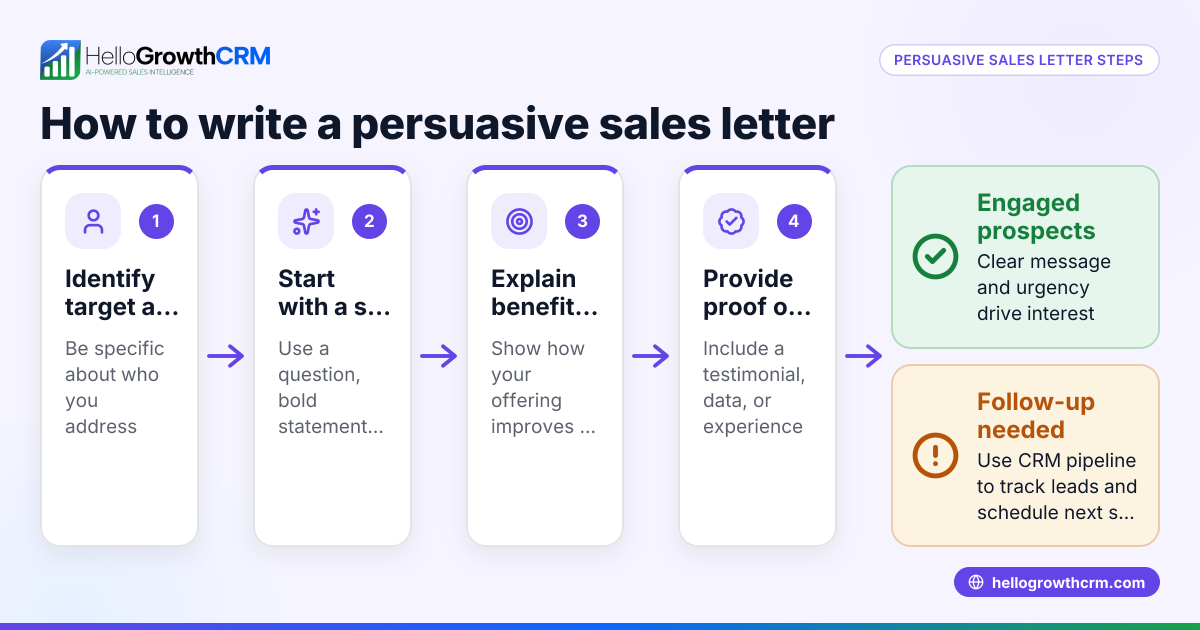
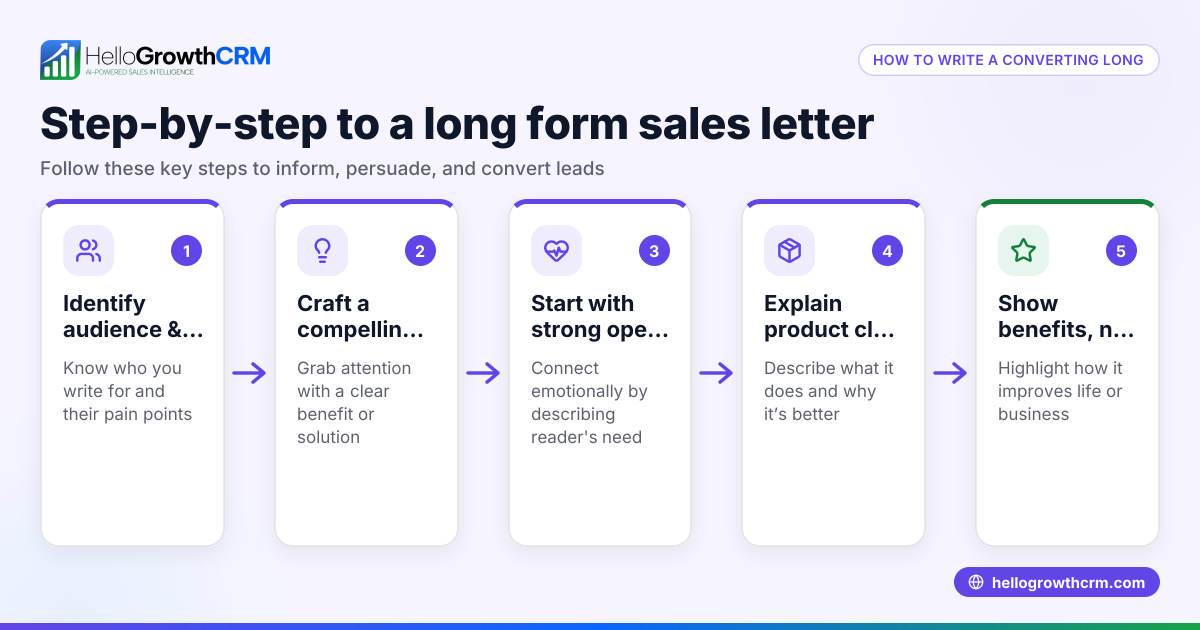
- Start with a compelling headline or opening line. It should grab attention and relate to the prospect’s needs or pain points. Check it is clear and specific.
- Introduce yourself and your business briefly. State why you are reaching out and build credibility.
- Present the main benefit or offer clearly. Focus on how your product or service solves a problem or improves the prospect’s situation.
- Provide supporting details or proof. Use testimonials, statistics, or examples that build trust.
- Include a clear call to action (CTA). Tell the reader exactly what to do next—call, reply, visit a website, or schedule a meeting.
- Add your contact information. Make it easy for the prospect to reach you.
- Close politely. Thank the reader for their time and express willingness to assist.
- Review and edit. Check for clarity, spelling, and tone. Make sure the letter fits on one page if printed.
- Track and follow up. Use a system to log when letters were sent and schedule follow-ups.
Using tools like HelloGrowthCRM helps manage follow-ups by showing deals at the 'quote sent' stage with follow-up dates, so no lead is forgotten. Learn more about its Deals (pipeline) feature.
Example (fictional figures)
GreenLeaf Landscaping, based in Charlotte, North Carolina, sends a sales letter on 03/15/2026 to a commercial property owner offering spring cleanup services.
- Headline: "Spring Cleanup to Boost Your Property’s Curb Appeal"
- Introduction: "I’m Sarah from GreenLeaf Landscaping, serving Charlotte businesses for 10 years."
- Main benefit: "Our spring cleanup package removes debris and preps your grounds for a vibrant season."
- Proof: "Last year, we helped 50 local businesses increase customer visits by improving their landscape appearance."
- CTA: "Call us at (704) 555-1234 by 03/22/2026 to schedule your service and get a 10% discount."
- Contact: Phone and email provided.
Calculation example for the discount:
Service price = $1,200
Discount = $1,200 × 10% = $120
Final price = $1,200 - $120 = $1,080
This clear format helps the prospect quickly understand the offer and act before the discount deadline.
Common mistakes
- No clear call to action. Prevent by always stating exactly what you want the reader to do next.
- Too long or wordy letters. Keep it concise; focus on benefits and skip unnecessary details.
- Ignoring follow-up. Use a CRM or tracking tool to schedule reminders and never let leads slip away.
- Lack of personalization. Address the prospect by name and tailor the letter to their business or needs.
- Weak or generic headlines. Test headlines that speak directly to the prospect’s pain points or goals.
- No proof or credibility. Include testimonials, case studies, or relevant data to build trust.
Using a CRM with built-in dialer and territory management helps avoid these mistakes by organizing contacts, scheduling calls, and tracking activities.
Doing this in HelloGrowthCRM
HelloGrowthCRM helps you track sales letters as deals in a pipeline. For example, a quotation sent last week appears at the 'quote sent' stage with a follow-up date, so you don’t forget to check in. If you have field sales reps, they can log visits from their phones, and managers can see daily activity via territories and field operations tools. Without a dedicated sales manager, founders can use the Managed RevOps service to keep follow-ups on track weekly. These features support structured sales letter follow-up and pipeline management efficiently.
Frequently asked questions
What are the key parts of a sales letter format? A sales letter typically includes a headline, an introduction, the main offer or benefit, supporting proof, a clear call to action, contact details, and a polite closing. Each part guides the reader toward taking action.
How long should a sales letter be? Keep it concise—aim for a length that holds the reader’s attention without missing important details.
Can I use email instead of a printed sales letter? Yes, email sales letters follow the same format but may be shorter and more direct. Always personalize and include a clear call to action.
How do I track responses to sales letters? Use a CRM like HelloGrowthCRM to log sent letters as deals, set follow-up reminders, and track communication history. This prevents leads from being forgotten.
What is the best way to follow up after sending a sales letter? Follow up within a week by phone or email, referencing the letter and offering to answer questions or schedule a meeting. Consistent follow-up increases conversion chances.
Key takeaways
- Use a clear, structured sales letter format with headline, benefits, proof, and call to action.
- Keep sales letters concise and tailored to the prospect.
- Always schedule and track follow-ups to avoid losing leads.
- Avoid common mistakes like weak CTAs, lengthy text, and lack of personalization.
- Tools like HelloGrowthCRM help manage sales letters as deals and automate follow-up reminders.
Start writing your sales letters using these formats and manage your sales pipeline effectively. You can start on the Free Forever plan (200 leads, no credit card) with HelloGrowthCRM today to organize your sales follow-ups and grow your business.
Ready to put this into practice?
Set up your pipeline, WhatsApp follow-ups, and AI lead scoring in minutes — free, no credit card.
Try HelloGrowthCRM freeGet CRM tips in your inbox
Join thousands of sales professionals who get weekly insights on CRM strategy, AI automation, and pipeline optimization.

The HelloGrowthCRM team publishes guides on CRM strategy, AI sales tools, and revenue operations for small business sales teams.