01
What every quotation must contain
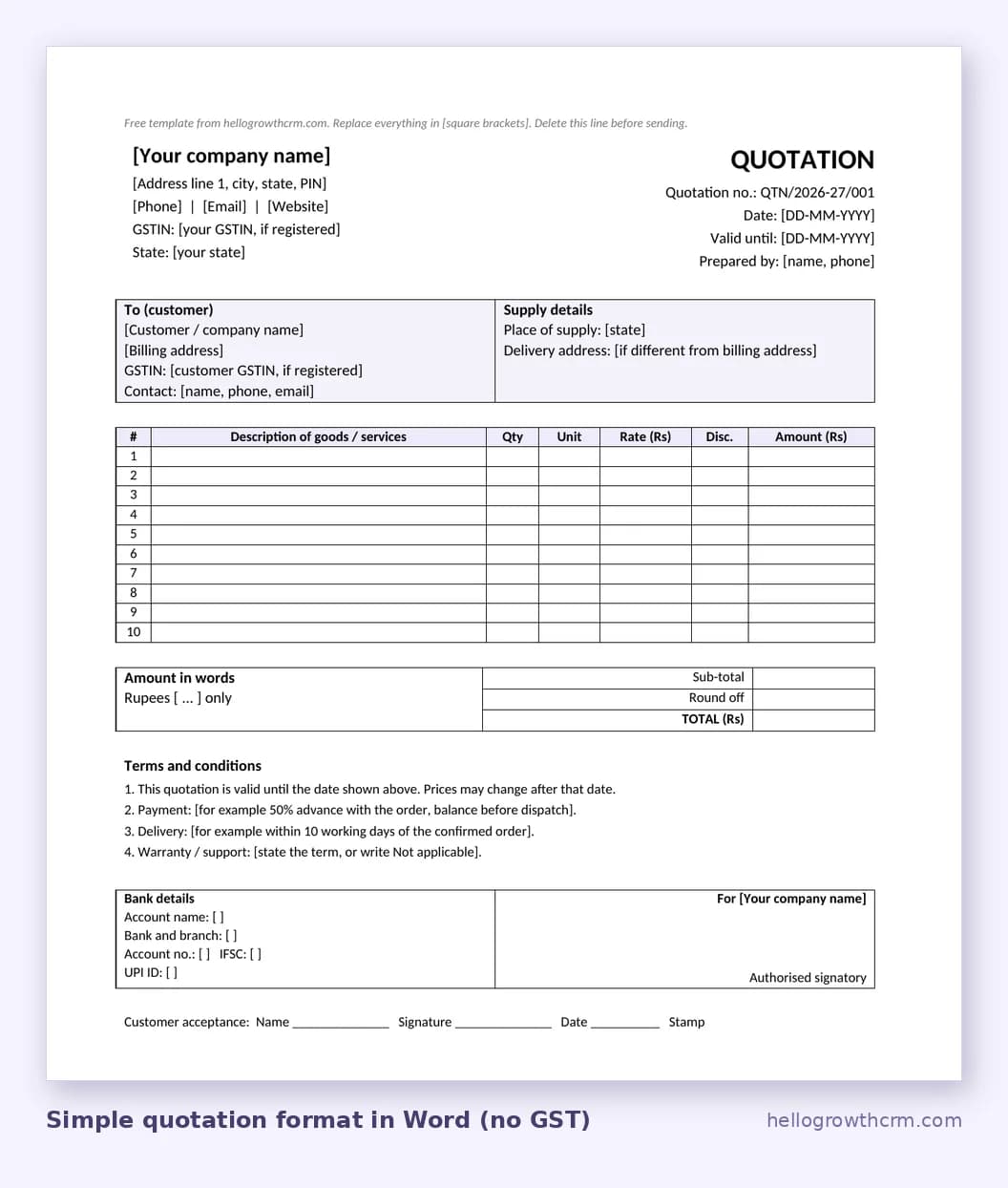
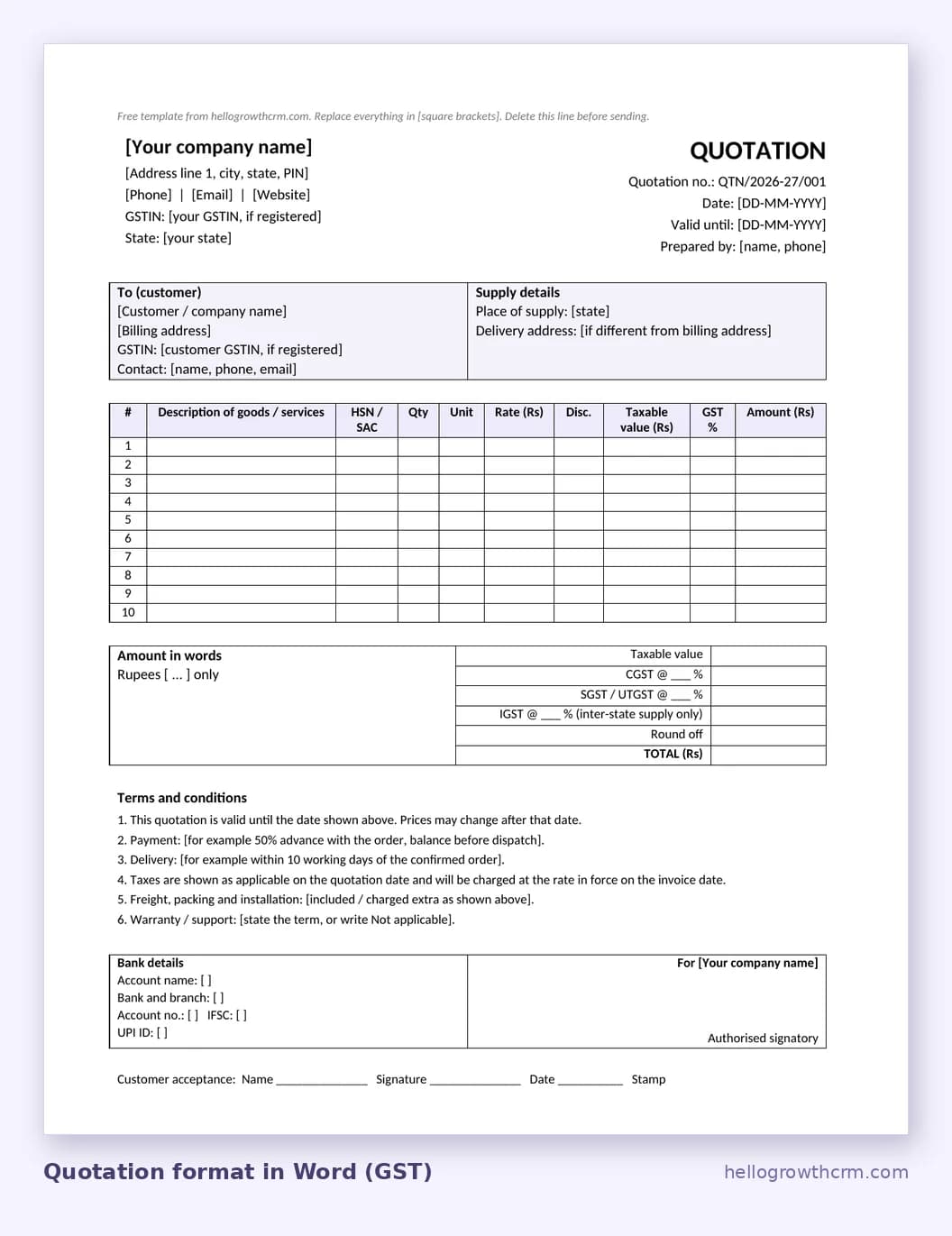
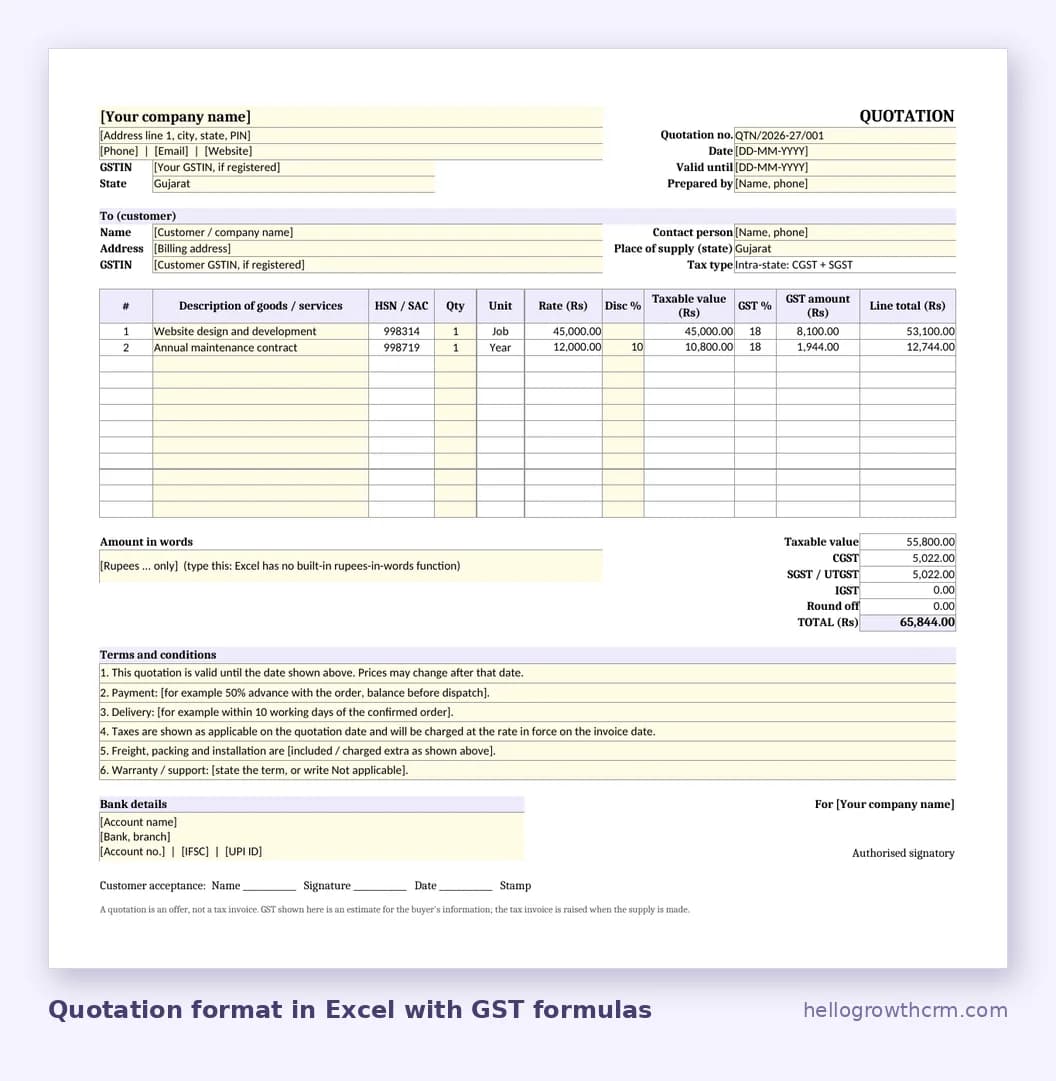
There is no law that fixes the layout of a quotation in India. There is, however, a set of fields that buyers, their accounts teams and your own future self will look for. Leave one out and the quotation comes back with a question, which costs you a day at the moment the buyer was ready to decide.
| Field | What to write | Why it is there |
|---|---|---|
| Your business name, address, phone, email | As it appears on your invoices | The buyer needs to know who is making the offer |
| Your GSTIN and state | Only if you are registered under GST | Tells the buyer whether tax will be charged and which type |
| Quotation number and date | One running series, for example QTN/2026-27/001 | Lets both sides refer to the same document later |
| Valid until | A date, not a number of days | Ends the price promise on a known day |
| Customer name, address, GSTIN | Billing address, and delivery address if different | Decides the place of supply and the tax type |
| Item description | Specific enough that nothing is assumed | Most quotation disputes are about what was included |
| HSN or SAC code | From your item master, not from an old file | Carries through to the tax invoice |
| Quantity, unit and rate | Unit written out: nos, kg, sq ft, hours | The basis of the amount |
| Discount | Per line, before tax | A discount shown on the document reduces the taxable value |
| Taxable value, tax and total | Tax shown separately, total in figures and words | The buyer sees the full price with nothing to add |
| Payment, delivery and warranty terms | Advance, balance, lead time, what is excluded | The commercial promise behind the number |
| Signature and acceptance line | Your signatory, and space for the customer to sign | Turns an accepted quotation into a record |
The seven formats below all use these fields. They differ in which ones lead: a shop quoting furniture needs quantities and rates, a web agency needs milestones, and an interior contractor needs room-wise measurements.