HelloGrowthCRM software
Built for real small-business sales teams
HelloGrowthCRM helps reps qualify faster, follow up on time, and close more deals—with practical automation in one place.
- AI lead scoring and pipeline visibility
- Built-in dialer, WhatsApp, and email automation
- Sales forecasting and RevOps-ready reporting
Sales performance measurement is the process of tracking and evaluating key sales activities and outcomes to understand how well your sales efforts are working. It involves monitoring metrics like deals closed, follow-up timing, and territory coverage to identify strengths and areas needing improvement. This article explains why measuring sales performance matters for small businesses, provides step-by-step instructions to do it, highlights common mistakes, and shows how HelloGrowthCRM supports this process.
Why this comes up / what goes wrong
Small business owners often struggle to keep a clear view of how their sales teams or efforts are performing. Without measurement, leads can be lost due to slow follow-up or forgotten deals. Sales activities may be scattered across text messages, emails, and spreadsheets, making it hard to see the full picture. Without clarity, owners can’t identify which sales reps or territories are performing well or where to focus coaching. This lack of insight leads to missed revenue opportunities and inefficient use of resources.
Step-by-step
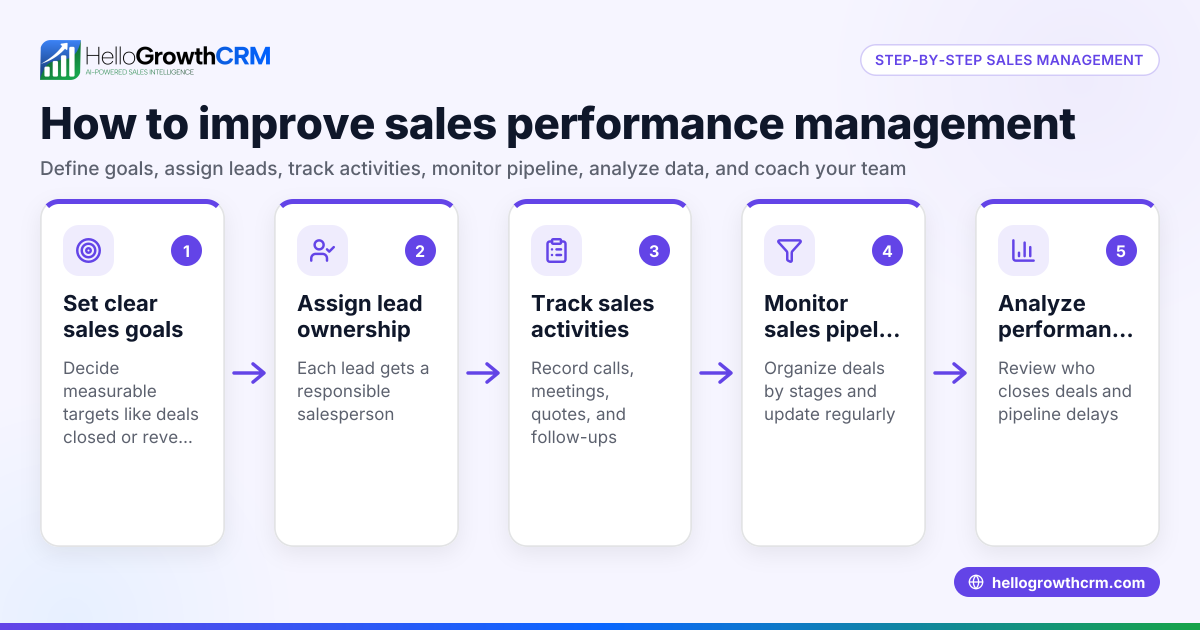
- Define your key sales metrics to measure. Common metrics include number of deals closed, total sales revenue, average deal size, sales cycle length, follow-up rate, and territory performance. Decide what matters most for your business goals.
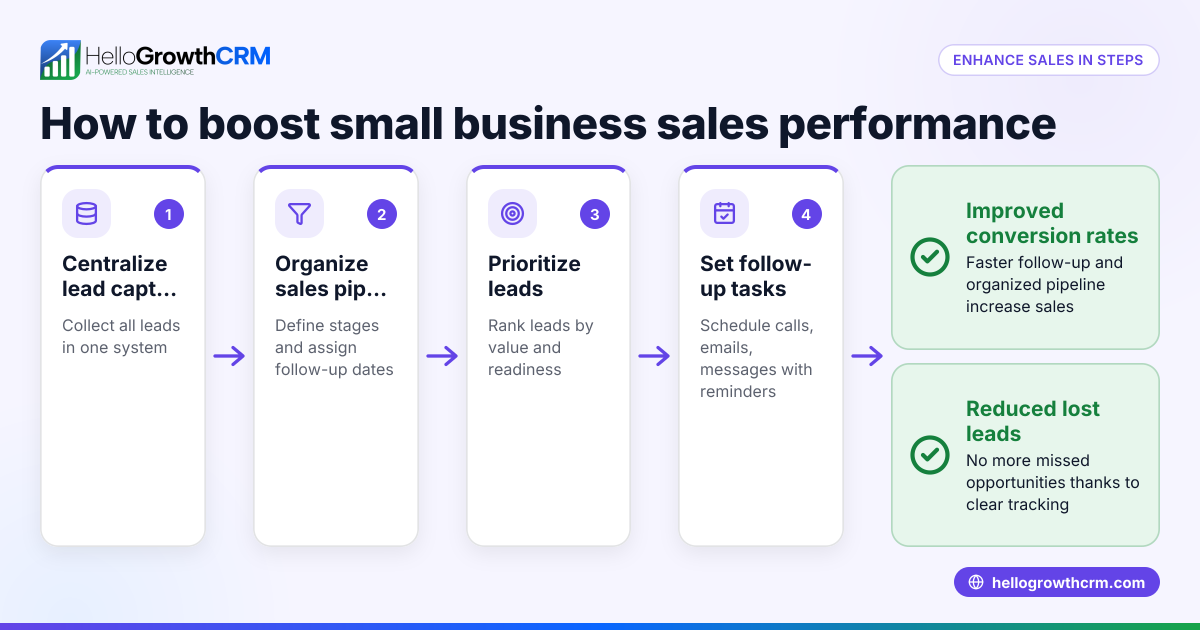
- Set up a system to track deals and activities. Use a CRM or organized spreadsheet to record each lead, deal stage, follow-up dates, and outcomes. Ensure the system is updated regularly to keep data accurate.
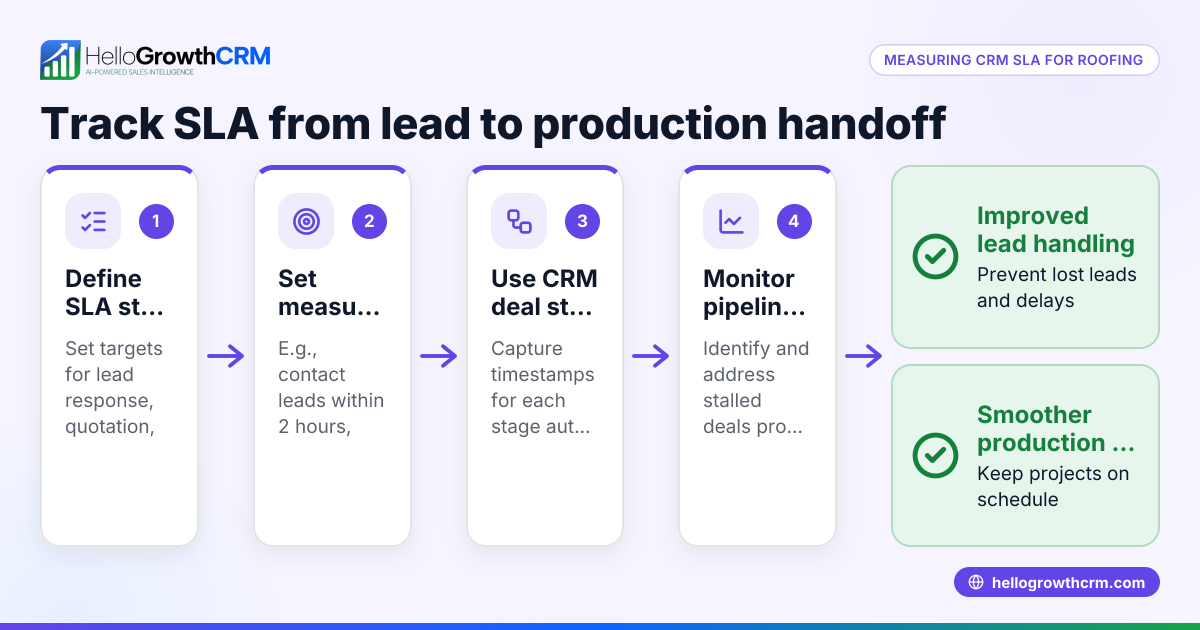
- Monitor deal pipeline stages. Track how many deals are at each stage (e.g., new lead, quote sent, negotiation, closed). This helps spot bottlenecks and forecast sales.
- Review sales activities and follow-ups. Check that follow-ups are timely and consistent, as slow responses often lose leads. Track calls, emails, and visits.
- Analyze territory and rep performance. Compare sales results by territory or sales rep to identify top performers and areas needing support.
- Use data to adjust sales strategies. Based on your analysis, focus efforts on high-value activities, improve follow-up processes, or provide coaching where needed.
- Regularly update and clean your sales data. Remove outdated leads and confirm deal statuses to maintain reliable reporting.
Example (fictional figures)
A residential real-estate team in Phoenix, Arizona, wants to measure their sales performance for Q1 2026.
- Total leads received: 150
- Deals closed: 30
- Average deal value: $350,000
- Deals in pipeline at quarter end: 20
Calculate total sales revenue:
$350,000 × 30 = $10,500,000
Calculate closing rate:
(30 ÷ 150) × 100 = 20%
If the team sent quotes to 40 leads and 30 of those deals closed, quote-to-close rate is:
(30 ÷ 40) × 100 = 75%
They notice follow-up delays on some leads. By setting follow-up reminders and tracking them, they aim to improve closing rates next quarter.
Common mistakes
- Not tracking follow-up dates: Leads get forgotten. Prevent this by setting follow-up reminders in your CRM pipeline stage, as with HelloGrowthCRM’s Deals (pipeline) feature.
- Using multiple unconnected tools: Scattered data causes confusion. Use a centralized system like HelloGrowthCRM to unify calls, messages, and deals.
- Ignoring territory performance: Without territory tracking, you miss underperforming areas. HelloGrowthCRM’s Territories and field operations tools help monitor visits and sales by location.
- Failing to clean data regularly: Old leads clutter reports. Schedule weekly pipeline cleanups or use Managed RevOps support to maintain hygiene.
- Overlooking the need for consistent sales follow-up: Sales slowdowns happen if no one manages follow-up queues. Managed RevOps can assign someone to this task weekly.
Doing this in HelloGrowthCRM
HelloGrowthCRM helps small and mid-sized businesses measure sales performance by:
- Deals (pipeline): Track open opportunities from first contact through close, with stage movement and follow-up dates to ensure no deal is forgotten. For example, a quotation sent last week appears at the 'quote sent' stage with a follow-up date.
- Territories, field operations and commissions: Field reps log visits via mobile, and managers see daily activity beats, helping monitor territory performance.
- Managed RevOps: For founders without a dedicated sales manager, a specialist handles follow-up queues weekly, cleans the pipeline, and provides KPI reports.
Learn more about how HelloGrowthCRM supports sales teams on the WhatsApp and SMS CRM and built-in CRM dialer pages.
Frequently asked questions
What is the best way to measure sales performance for a small business? Focus on a few key metrics like deal closing rate, average deal size, and follow-up speed. Use a simple system to track deals and activities regularly. This gives you actionable insights without overwhelming complexity.
How often should I review sales performance data? Weekly or monthly reviews work well. Weekly check-ins help catch issues early, while monthly reviews provide a broader view of trends and results.
Can I measure sales performance without a CRM? Yes, but it’s harder to keep data organized and timely. Spreadsheets and manual tracking can work initially, but a CRM like HelloGrowthCRM streamlines this by centralizing deals, follow-ups, and territory data.
What role does follow-up timing play in sales performance? Fast and consistent follow-up greatly increases the chance of closing deals. Tracking follow-up dates and automating reminders prevents leads from slipping through the cracks.
How can I use territory data to improve sales? By analyzing sales and visit logs per territory, you can identify underperforming areas and allocate resources or coaching more effectively. HelloGrowthCRM’s territory tools support this.
Key takeaways
- Measure sales performance by tracking key metrics like deals closed, follow-up timing, and territory results.
- Use a system to record deals, stages, and activities consistently.
- Regularly review and clean your sales data to keep reports accurate.
- Avoid scattered tools; a centralized CRM improves data visibility.
- Timely follow-up is critical to converting leads into sales.
- HelloGrowthCRM offers pipeline tracking, territory management, and Managed RevOps support to help small businesses stay on top of sales performance.
Start measuring your sales performance with a tool designed for small businesses. Start on the Free Forever plan (200 leads, no credit card) today.
Ready to put this into practice?
Set up your pipeline, WhatsApp follow-ups, and AI lead scoring in minutes — free, no credit card.
Try HelloGrowthCRM freeGet CRM tips in your inbox
Join thousands of sales professionals who get weekly insights on CRM strategy, AI automation, and pipeline optimization.

The HelloGrowthCRM team publishes guides on CRM strategy, AI sales tools, and revenue operations for small business sales teams.