HelloGrowthCRM software
Built for real small-business sales teams
HelloGrowthCRM helps reps qualify faster, follow up on time, and close more deals—with practical automation in one place.
- AI lead scoring and pipeline visibility
- Built-in dialer, WhatsApp, and email automation
- Sales forecasting and RevOps-ready reporting
Sales prospecting automation means using software to automatically identify leads, send outreach messages, and follow up until a response is received. This saves time for sales teams and ensures no lead is forgotten. This article covers why small businesses turn to automation, practical steps to implement it, common mistakes to avoid, an example with figures, and how HelloGrowthCRM supports this process.
Why this comes up / what goes wrong
Small businesses often struggle with slow or inconsistent follow-up on leads. Sales reps may rely on spreadsheets, text messages, or email threads, which are easy to lose track of or delay. This leads to lost opportunities and wasted marketing spend. Manual prospecting is time-consuming and repetitive, reducing time for closing deals. Automation helps by running outreach sequences on autopilot, scoring leads, and assigning tasks automatically. This keeps the pipeline moving and frees reps to focus on conversations that matter.
Step-by-step
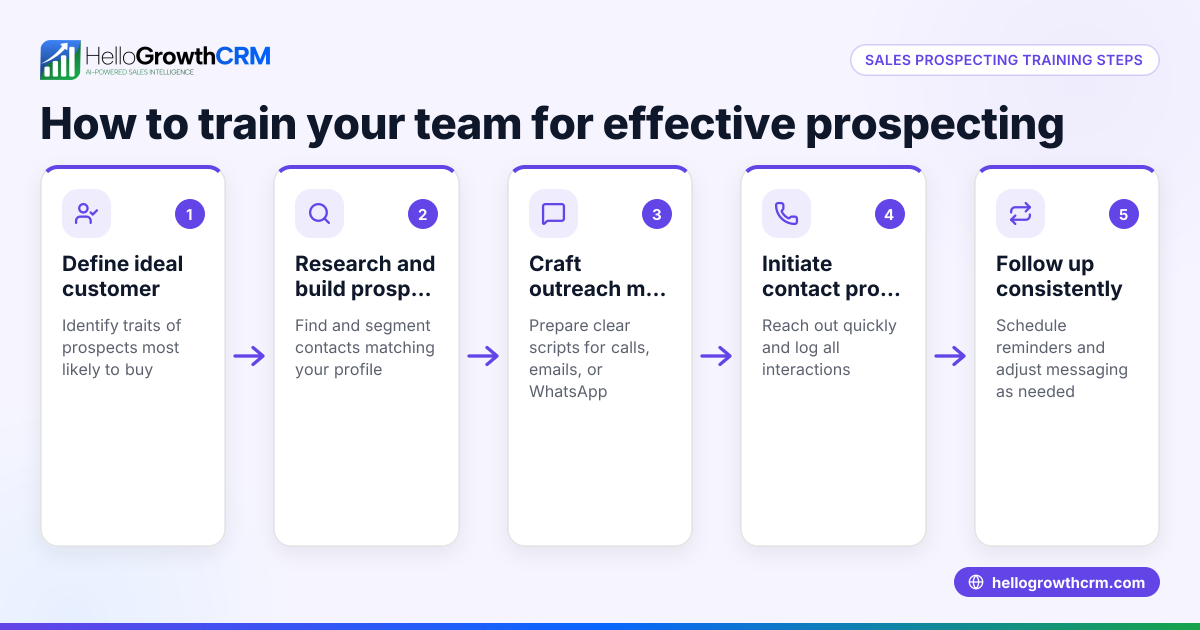
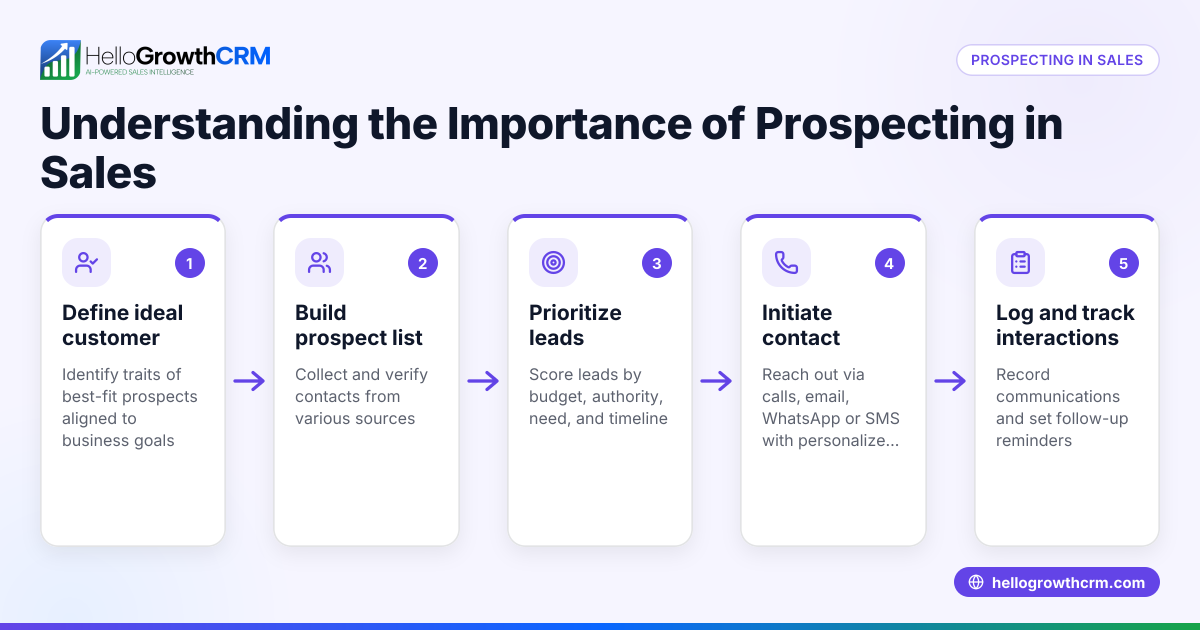
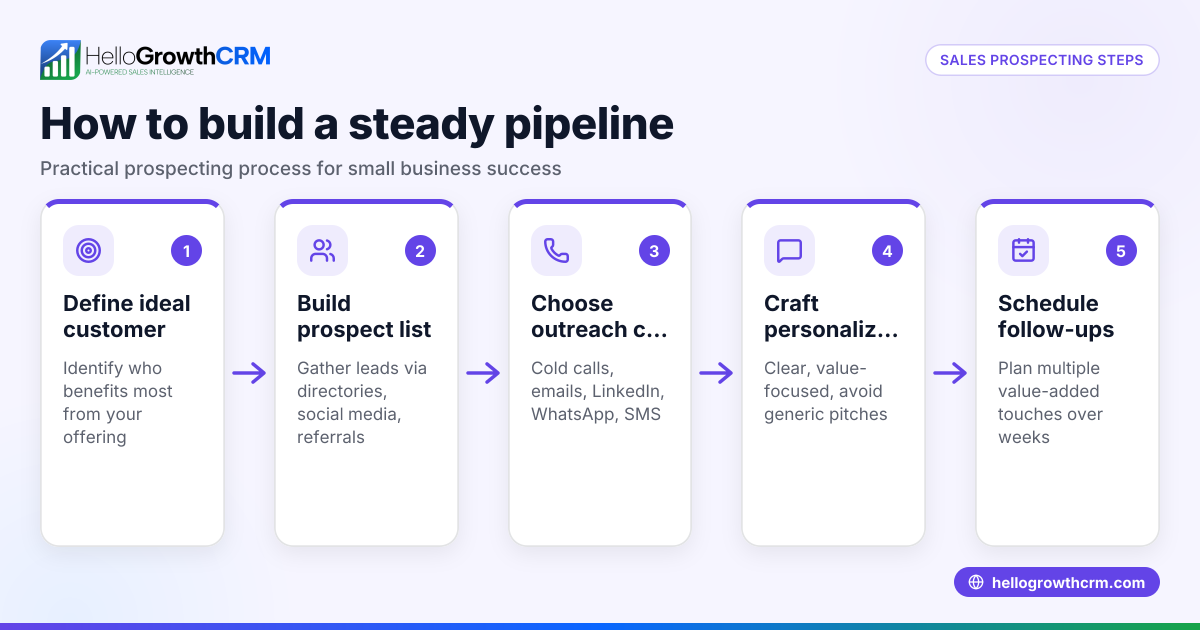
- Identify your target leads and sources. Decide which leads to prospect—these could come from web forms, purchased lists, or inbound inquiries. Check that your data is clean and includes contact info.
- Set up lead capture and routing. Use a CRM or integration to automatically capture leads from your sources. Assign leads to reps by territory, round-robin, or source to ensure timely follow-up.
- Create automated outreach sequences. Build multi-step follow-up workflows that send emails, SMS, or WhatsApp messages over days or weeks. Ensure each step ends if the prospect replies.
- Use AI or templates to draft follow-ups. Automate message drafting after calls or replies to reduce rep workload. Always review before sending.
- Track engagement and adjust. Monitor open rates, replies, and conversions. Test different messages or timing to improve results.
- Set reminders and tasks automatically. Automate task creation for first calls or follow-ups so reps never miss a step.
- Review and refine regularly. Continuously update your sequences, lead routing rules, and messaging based on performance data.
Example (fictional figures)
A B2B software reseller in Denver, Colorado, receives 100 new leads monthly from web forms. They want to automate follow-up over two weeks with five messages.
- Monthly leads: 100
- Conversion rate without automation: 10% (10 sales)
- Average sale value: $5,000
- Conversion rate with automation: 15% (15 sales) — assumed improvement
Calculation:
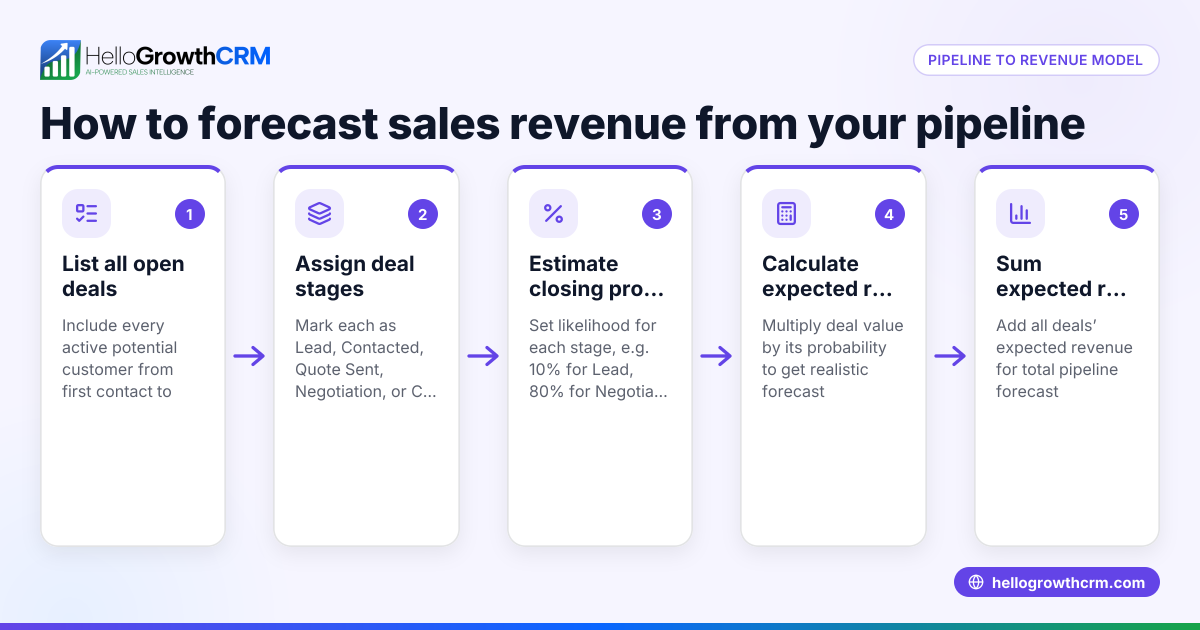
Without automation: 100 leads × 10% = 10 sales 10 sales × $5,000 = $50,000 revenue
With automation: 100 leads × 15% = 15 sales 15 sales × $5,000 = $75,000 revenue
Increase in revenue: $75,000 - $50,000 = $25,000
This shows how automating prospecting follow-up can increase sales and revenue by reaching more prospects consistently.
Common mistakes
- Not automating lead capture: Leads still get lost if they aren’t automatically entered into a CRM. Prevent this by integrating lead sources directly with your CRM.
- Overloading prospects with messages: Sending too many or poorly timed messages annoys prospects. Use sequences that stop immediately when a reply comes.
- Ignoring lead assignment: Without clear lead routing, reps delay follow-up. Automate assignment by territory or round-robin to keep response times fast.
- Skipping message review: Fully automated messages can feel impersonal or contain errors. Use AI agents to draft messages but always review before sending.
- Not tracking results: Without monitoring, you won’t know what works. Track open rates, replies, and sales to optimize your sequences.
- Relying on manual task management: Forgetting to follow up kills deals. Automate task creation for calls and next steps.
Following these tips ensures your sales prospecting automation runs smoothly and effectively.
Doing this in HelloGrowthCRM
HelloGrowthCRM supports sales prospecting automation with several features:
- Sequences and campaigns: Set up a five-step follow-up over two weeks that runs automatically and stops as soon as the prospect replies, ensuring timely and relevant outreach. Learn more at WhatsApp and SMS CRM.
- AI agents: After a call, an AI agent drafts the follow-up message so reps only need to review and send it, saving time and keeping communication consistent. See details at AI CRM.
- Workflows, lead routing, and validation rules: Automatically assign new leads round-robin and create first-call tasks without manual effort, ensuring no lead is missed. More info at HelloGrowthCRM for the United States.
These tools help small and mid-sized businesses automate their sales prospecting efficiently.
Frequently asked questions
What is sales prospecting automation? Sales prospecting automation uses software to automatically find, contact, and follow up with potential customers. It replaces manual outreach with scheduled messages and task automation to save time and improve consistency.
How does automation improve sales follow-up? Automation ensures every lead gets timely, repeated contact until they respond. It prevents leads from slipping through cracks due to human error or workload and frees sales reps to focus on closing deals.
Can small businesses use sales prospecting automation without technical skills? Yes. Many CRM tools offer easy-to-use automation features with templates and drag-and-drop workflows. Some include AI to draft messages, reducing manual work.
How do I avoid spamming prospects with automation? Design your sequences to stop immediately when a prospect replies. Space out messages appropriately and personalize content to keep it relevant and respectful.
What channels can I automate for prospecting? Common channels include email, SMS, and WhatsApp. Using multiple channels increases the chance of reaching prospects where they prefer to communicate.
How do AI agents help with sales prospecting? AI agents can draft follow-up messages after calls or replies, update CRM records, and execute workflow steps automatically. This reduces rep workload and speeds up communication.
Key takeaways
- Sales prospecting automation saves time by automating lead capture, outreach, and follow-up.
- Automated sequences stop as soon as a prospect replies, preventing over-contact.
- Lead routing and task automation ensure timely follow-up by the right rep.
- AI agents can draft follow-up messages to reduce manual work.
- Tracking and refining sequences improves conversion rates.
- HelloGrowthCRM offers sequences, AI agents, and workflows to automate prospecting.
Start automating your sales prospecting today to keep your pipeline full and your team focused on closing deals. You can Start on the Free Forever plan (200 leads, no credit card) to try these features risk-free.
Ready to put this into practice?
Set up your pipeline, WhatsApp follow-ups, and AI lead scoring in minutes — free, no credit card.
Try HelloGrowthCRM freeGet CRM tips in your inbox
Join thousands of sales professionals who get weekly insights on CRM strategy, AI automation, and pipeline optimization.

The HelloGrowthCRM team publishes guides on CRM strategy, AI sales tools, and revenue operations for small business sales teams.