HelloGrowthCRM software
Built for real small-business sales teams
HelloGrowthCRM helps reps qualify faster, follow up on time, and close more deals—with practical automation in one place.
- AI lead scoring and pipeline visibility
- Built-in dialer, WhatsApp, and email automation
- Sales forecasting and RevOps-ready reporting
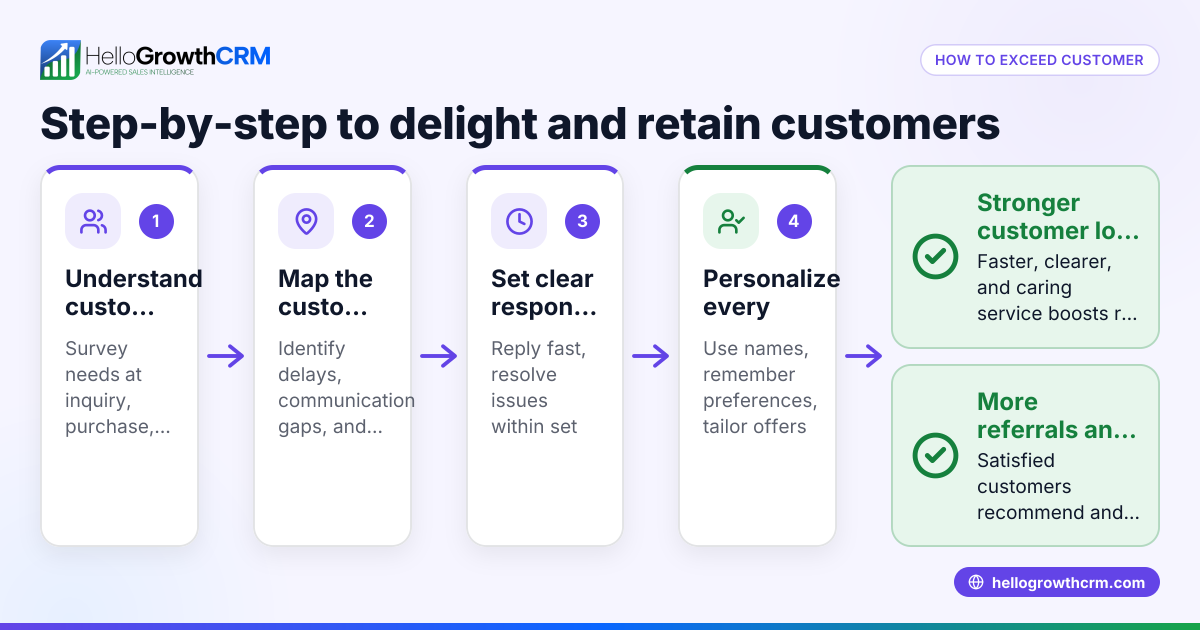
Setting customer expectations means clearly communicating what your customers can expect from your products, services, and interactions. This helps avoid misunderstandings, builds trust, and improves satisfaction. This article covers why setting expectations matters, step-by-step actions to do it well, a practical example, common mistakes to avoid, and how HelloGrowthCRM supports this process.
Why this comes up / what goes wrong
Small-business owners often face challenges when customers have unclear or unrealistic expectations. For example, a client might expect a delivery or service faster than your business can provide, or assume support is available 24/7 when it is not. These mismatches can lead to frustration, lost sales, negative reviews, and extra work resolving complaints. Many small businesses operate with limited staff and rely on informal communication channels like text messages or spreadsheets, which can cause inconsistent messaging. Without clear expectations, customers may feel ignored or misled, harming your reputation and repeat business.
Step-by-step
- Identify key customer touchpoints: List all moments when your customers interact with your business, such as inquiries, sales calls, delivery, and support. Check that each touchpoint has clear communication about what customers should expect.
- Define realistic promises: For each touchpoint, decide what you can reliably deliver. For example, "Orders ship within 3 business days" or "Support replies within 24 hours." Check these promises against your capacity and resources.
- Communicate clearly and consistently: Use simple language on your website, sales scripts, emails, and social media. Check that all team members use the same messaging to avoid confusion.
- Set boundaries and limitations: Clearly state what is not included or possible, such as "No returns after 30 days" or "Support available Monday to Friday, 9 am–5 pm." Check that customers acknowledge these terms during purchase or signup.
- Use confirmation and reminders: After a sale or service request, confirm the agreed expectations in writing. Check in with customers as needed to update them on progress or delays.
- Gather feedback and adjust: Ask customers if their expectations were met and where communication could improve. Check your processes regularly and update your messaging accordingly.
- Train your team: Make sure everyone understands the importance of setting expectations and knows the correct messaging. Check their communications periodically for consistency.
Example (fictional figures)
A B2B software reseller in Denver, Colorado, sells licenses and offers installation support. They set the following expectation:
- License delivery: within 2 business days of payment
- Installation support: scheduled within 5 business days
On 03/01/2026, a customer pays $15,000 for licenses.
Step 1: Confirm license delivery timeline. $15,000 order confirmed on 03/01/2026
Step 2: Licenses delivered on 03/03/2026 (2 business days later)
Step 3: Installation support scheduled for 03/08/2026 (5 business days later)
Step 4: Customer receives confirmation email with these dates.
Step 5: Follow-up call on 03/09/2026 to ensure satisfaction.
By clearly stating and confirming these timelines, the reseller prevents confusion and builds trust.
Common mistakes
- Overpromising: Saying you can deliver faster or better than reality. Prevent by checking your actual capacity before committing.
- Inconsistent messaging: Different team members give conflicting information. Prevent by documenting expectations and training your team.
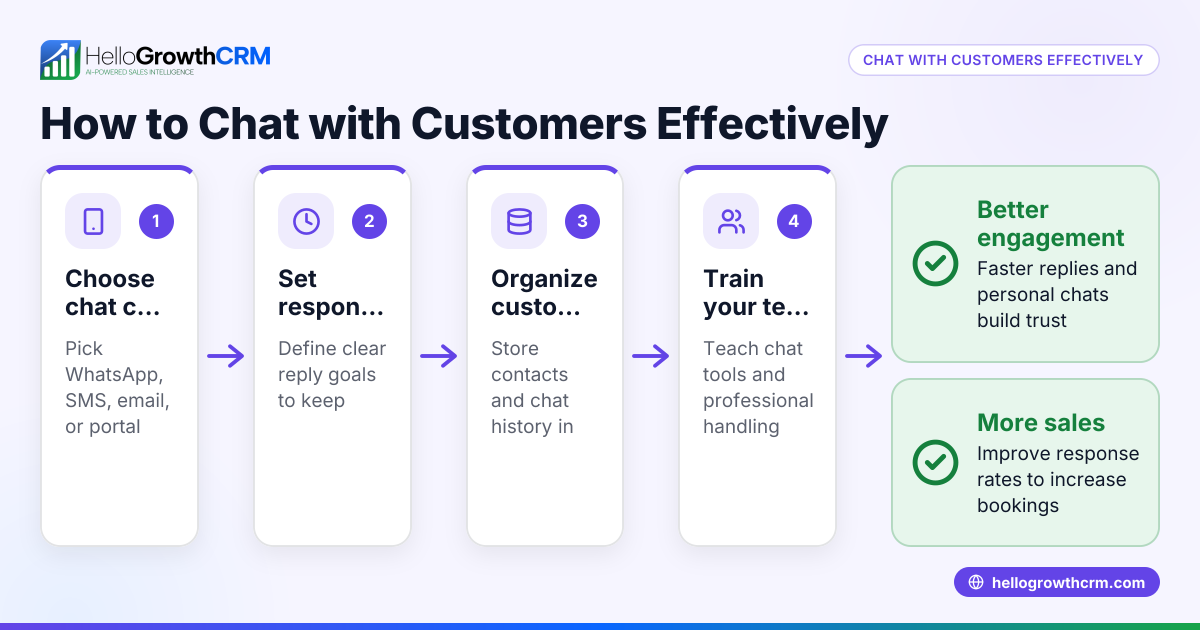
- Ignoring communication channels: Not updating customers about delays or changes. Prevent by setting reminders and using tools to track communications, like the WhatsApp and SMS CRM.
- Not confirming expectations in writing: Relying only on verbal agreements. Prevent by sending confirmation emails or messages.
- Failing to gather feedback: Missing chances to improve. Prevent by asking customers for feedback regularly.
- Neglecting after-sale service: Not linking service requests to the original sale. Prevent by using a system where tickets and support requests stay on the same customer record, like the customer portal and tickets in HelloGrowthCRM.
Doing this in HelloGrowthCRM
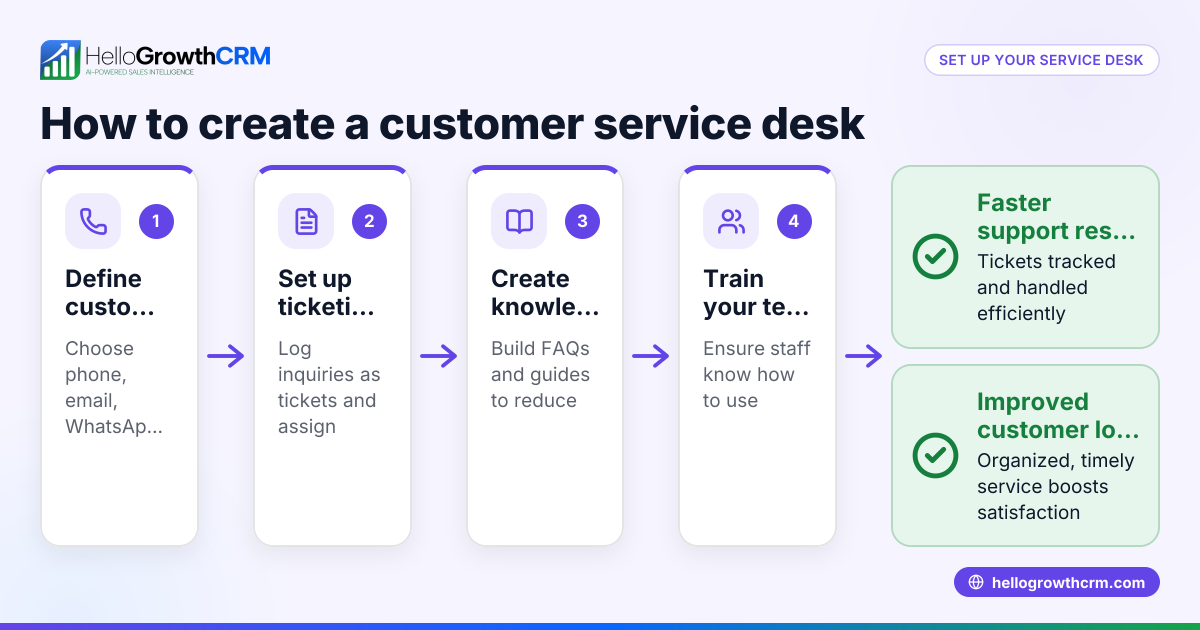
HelloGrowthCRM helps small businesses keep customer expectations clear after the sale. Its customer portal allows clients to access information and submit support tickets linked directly to their deals. The integrated referrals and knowledge base support consistent communication. Service requests stay on the same customer record as the deal, making it easier to track and respond promptly. Learn more about these features and how they support managing customer expectations at HelloGrowthCRM for the United States.
Frequently asked questions
What does setting customer expectations mean? It means clearly telling customers what they can expect from your products or services, including delivery times, support availability, and any limitations. This helps avoid misunderstandings and builds trust.
How do I communicate expectations effectively? Use simple, consistent language across all channels. Confirm key details in writing, such as emails or messages, and make sure your team uses the same messaging. Tools like WhatsApp and SMS CRM can help automate consistent communication.
Why do customers get upset about expectations? Usually because promises were unclear, unrealistic, or not met. Customers feel frustrated if they don’t know what to expect or if the service falls short without explanation.
How can I improve expectations after the sale? Use a system that keeps all service requests, referrals, and support tickets linked to the customer’s original purchase. HelloGrowthCRM’s customer portal and tickets feature helps manage this efficiently.
Can setting expectations increase sales? Yes. Clear expectations reduce confusion and build confidence, making customers more likely to buy and return.
Key takeaways
- Setting customer expectations means clearly defining and communicating what customers can expect.
- Use simple, consistent messaging and confirm details in writing.
- Avoid common mistakes like overpromising and inconsistent communication.
- Collect feedback and train your team to maintain clarity.
- HelloGrowthCRM supports this with a customer portal, tickets, and linked service requests.
Setting customer expectations is a practical step that improves customer satisfaction and reduces disputes. To get started managing your customer relationships more effectively, Start on the Free Forever plan (200 leads, no credit card).
Ready to put this into practice?
Set up your pipeline, WhatsApp follow-ups, and AI lead scoring in minutes — free, no credit card.
Try HelloGrowthCRM freeGet CRM tips in your inbox
Join thousands of sales professionals who get weekly insights on CRM strategy, AI automation, and pipeline optimization.

The HelloGrowthCRM team publishes guides on CRM strategy, AI sales tools, and revenue operations for small business sales teams.