HelloGrowthCRM software
Built for real small-business sales teams
HelloGrowthCRM helps reps qualify faster, follow up on time, and close more deals—with practical automation in one place.
- AI lead scoring and pipeline visibility
- Built-in dialer, WhatsApp, and email automation
- Sales forecasting and RevOps-ready reporting
Lead generation is the process of identifying and turning potential customers into actual buyers through a series of clear stages. These stages help small businesses organize sales efforts, prioritize leads, and increase conversions.
The main stages of lead generation are:
- Attract prospects
- Capture leads
- Qualify leads
- Nurture leads
- Convert leads
This article explains why understanding these stages is important, provides a step-by-step guide, a worked example with numbers, common mistakes to avoid, and how HelloGrowthCRM supports this process.
Why this comes up / what goes wrong
Small-business owners often face challenges managing leads because inquiries come from multiple sources like text messages, emails, phone calls, and web forms. Without a defined process, leads get lost or delayed, reducing sales opportunities. For example, a landscaping contractor might receive inquiries via WhatsApp, email, and phone, but if these leads are tracked in notebooks or spreadsheets, follow-up can be slow or inconsistent. This results in missed calls, forgotten leads, and lost revenue.
Having clear stages ensures every lead is captured, assessed, and followed up on promptly. It also helps prioritize the best leads to call first.
Step-by-step
- Attract prospects: Use marketing channels like social media ads, local SEO, referrals, and community events to draw attention. Check that your messaging clearly targets your ideal customers’ needs.
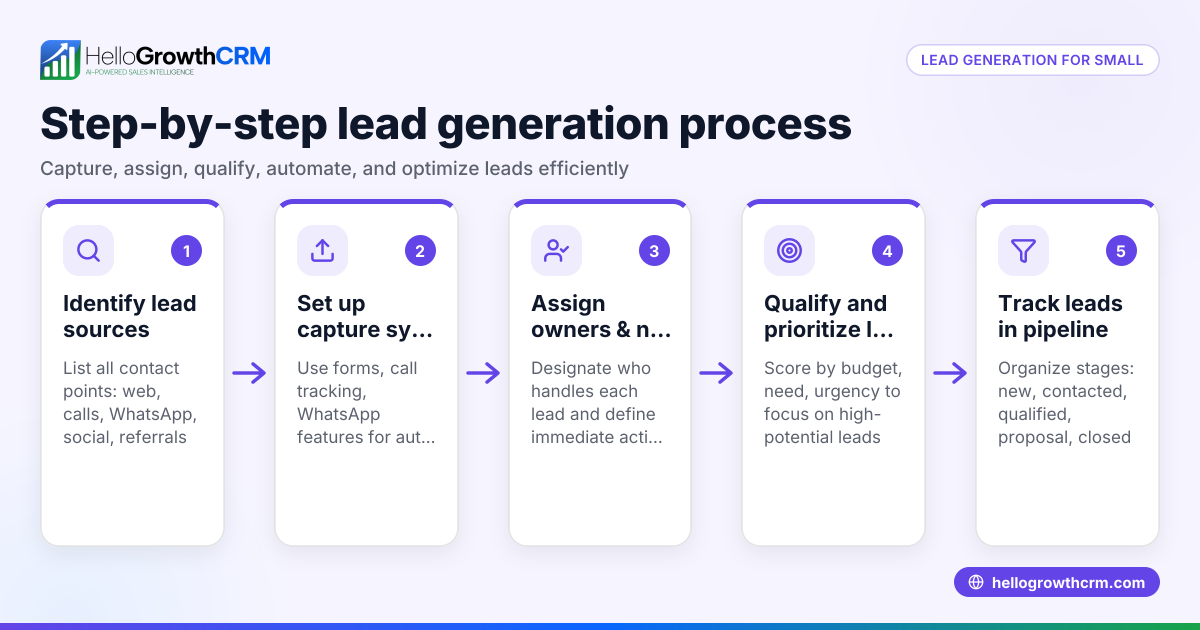
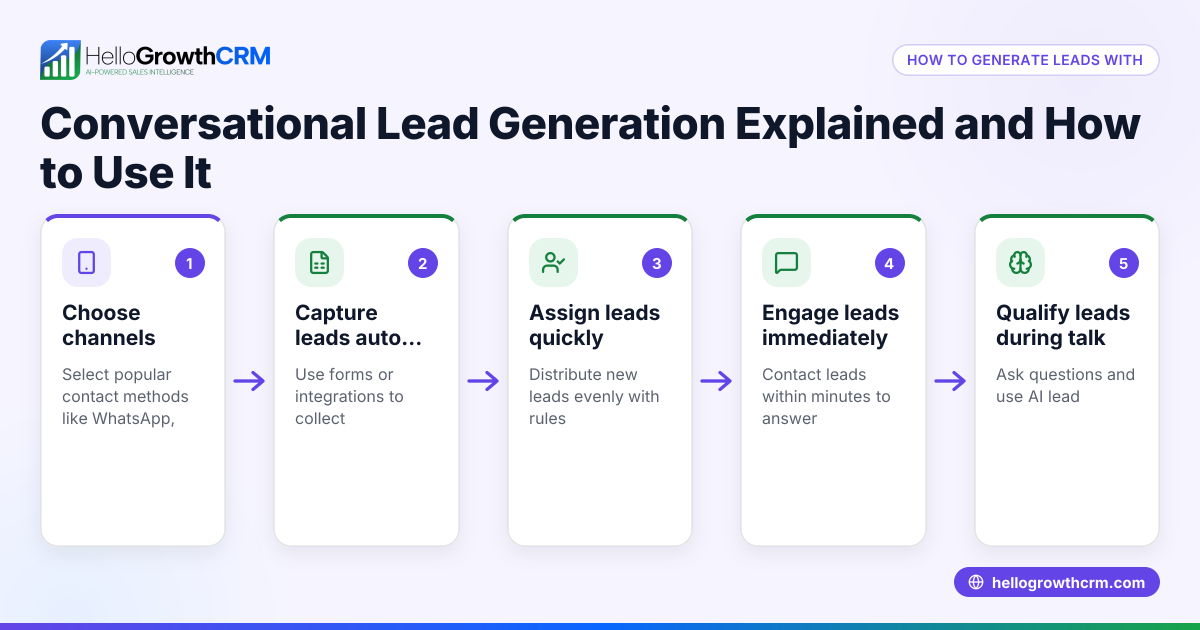
- Capture leads: Set up web forms, WhatsApp messages, or dedicated phone lines to collect names, emails, and phone numbers. Verify that all inquiries are recorded centrally, not just written in notebooks or scattered files.
- Qualify leads: Assess leads based on criteria such as interest level, budget, and purchase readiness. Use AI lead scoring to rank leads so sales teams call the highest-potential prospects first. Check for complete and accurate data.
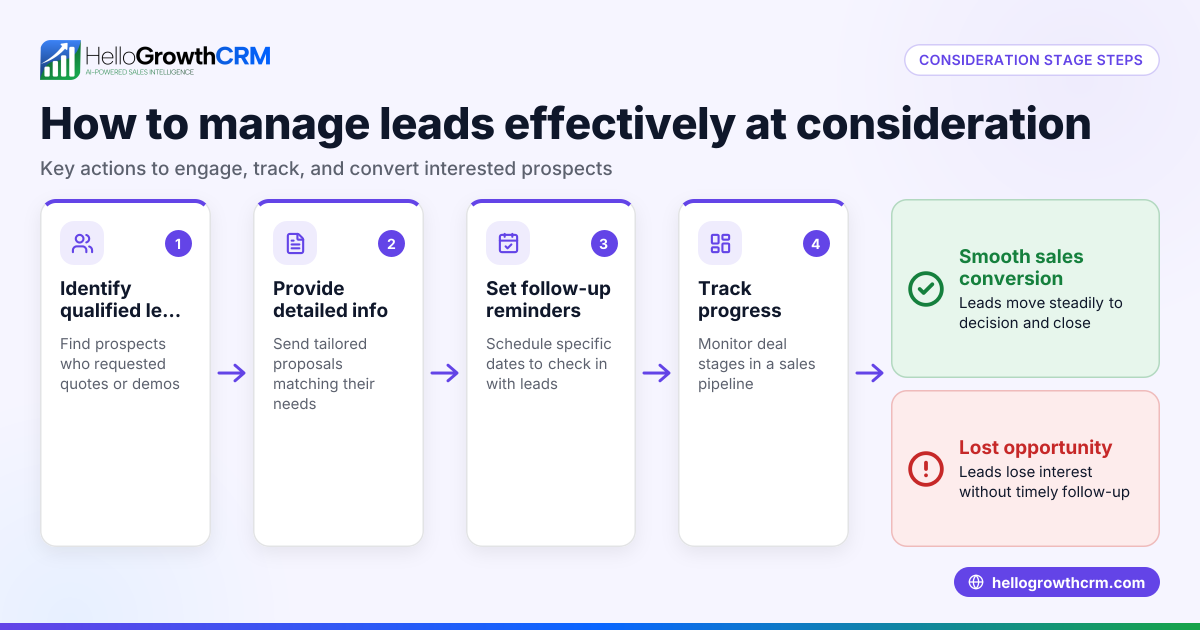
- Nurture leads: Maintain contact through email, WhatsApp, or SMS sequences to build trust and provide more information. Schedule timely calls or product demos. Monitor engagement and adjust messages accordingly.
- Convert leads: Close deals by addressing objections and finalizing terms. Track conversion rates and analyze lost deals to improve your approach.
Example (fictional figures)
A landscaping contractor in Charlotte, North Carolina, tracked lead generation for March 2026.
- 150 prospects attracted through ads and referrals.
- 120 leads captured via web forms and WhatsApp messages.
- 80 leads qualified based on interest and budget.
- 50 leads nurtured with follow-up calls and messages.
- 30 leads converted to customers.
Conversion rate calculation:
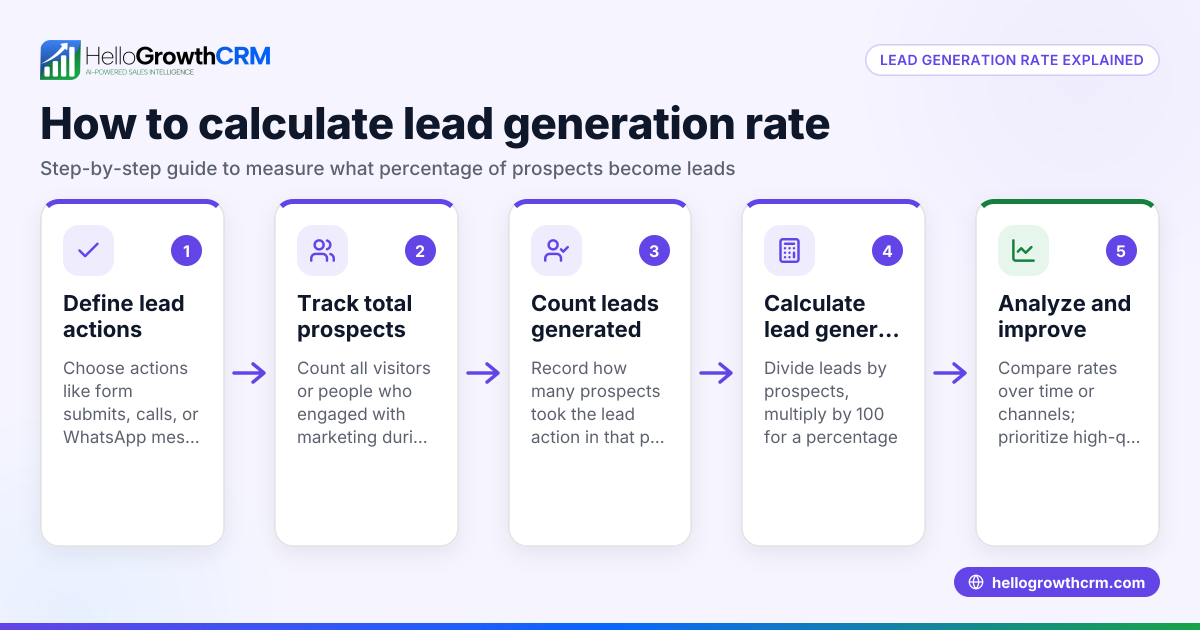
30 converted leads ÷ 150 total prospects = 0.20 or 20%
Revenue from conversions:
30 customers × $2,500 average contract = $75,000 total revenue
Lead capture rate:
120 leads captured ÷ 150 prospects attracted = 0.80 or 80%
Qualification rate:
80 leads qualified ÷ 120 leads captured = 0.67 or 67%
Nurturing rate:
50 leads nurtured ÷ 80 leads qualified = 0.625 or 62.5%
This example shows how each stage affects overall sales and the importance of tracking each step clearly.
Common mistakes
- Not capturing all leads centrally: Leads scattered across notes or apps get lost. Prevent this by using a CRM to automatically organize all inquiries.
- Skipping lead qualification: Calling every lead equally wastes time. Use AI lead scoring to focus on leads most likely to convert first.
- Delayed follow-up: Slow responses reduce chances of conversion. Set reminders and tasks to ensure timely contact.
- No nurturing strategy: Leads need ongoing engagement. Use automated WhatsApp and SMS sequences to maintain contact without extra manual work.
- Lack of tracking and reporting: Without tracking progress and results, you can’t identify bottlenecks or improve. Use CRM reports to monitor lead flow and conversion rates.
- Ignoring workflows and lead routing: Without automated assignment, leads may sit idle. Use workflows to assign leads round-robin and create first-call tasks automatically.
Doing this in HelloGrowthCRM
HelloGrowthCRM helps small businesses manage leads efficiently. Every enquiry from a form, call, or WhatsApp message lands as a lead with an owner and a next step, instead of being lost in notebooks. AI lead scoring lets reps prioritize calling leads most likely to convert first. Automated workflows and lead routing assign new enquiries round-robin and create first-call tasks automatically, ensuring no lead is missed. Learn more about AI lead scoring and how HelloGrowthCRM supports WhatsApp and SMS CRM for US businesses at HelloGrowthCRM for the United States.
Frequently asked questions
What are the main stages of lead generation? The main stages are attracting prospects, capturing leads, qualifying them, nurturing interest, and converting leads into customers. Each stage builds on the previous to move prospects closer to buying.
How can I capture all leads without losing any? Use a CRM that integrates with your web forms, calls, and WhatsApp messages so all inquiries are recorded centrally. This prevents leads from being missed or forgotten.
What is AI lead scoring and how does it help? AI lead scoring ranks leads based on their likelihood to convert. This helps sales teams focus on calling the best prospects first, saving time and increasing sales.
Why is nurturing leads important? Nurturing keeps prospects engaged by providing information and reminders. Automated sequences via WhatsApp or SMS help maintain contact without extra manual effort.
How do I know if my lead generation is working? Track metrics like the number of leads captured, qualification rates, nurturing engagement, and conversion rates. Use CRM reports to identify where leads drop off and improve your process.
Key takeaways
- Lead generation involves five stages: attract, capture, qualify, nurture, and convert.
- Centralized lead capture prevents losing leads.
- AI lead scoring helps prioritize high-potential leads.
- Timely follow-up and automated nurturing improve conversions.
- Tracking and workflows increase lead management efficiency.
- Using a CRM with workflows and lead routing ensures no lead is missed.
Start managing your leads better today. Start on the Free Forever plan (200 leads, no credit card) with HelloGrowthCRM.
Ready to put this into practice?
Set up your pipeline, WhatsApp follow-ups, and AI lead scoring in minutes — free, no credit card.
Try HelloGrowthCRM freeGet CRM tips in your inbox
Join thousands of sales professionals who get weekly insights on CRM strategy, AI automation, and pipeline optimization.

The HelloGrowthCRM team publishes guides on CRM strategy, AI sales tools, and revenue operations for small business sales teams.