HelloGrowthCRM software
Built for real small-business sales teams
HelloGrowthCRM helps reps qualify faster, follow up on time, and close more deals—with practical automation in one place.
- AI lead scoring and pipeline visibility
- Built-in dialer, WhatsApp, and email automation
- Sales forecasting and RevOps-ready reporting
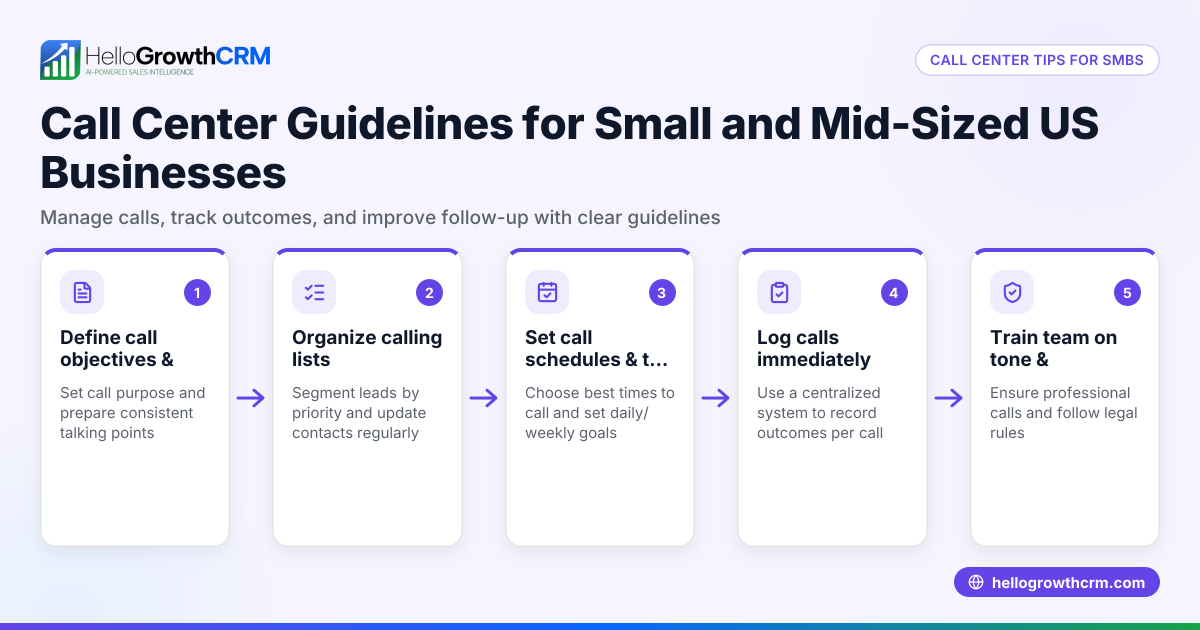
Successful call center strategies start with organizing your calling process to reduce lead loss and improve sales conversion. Key elements include routing leads efficiently, ensuring fast follow-up, tracking call outcomes, and using technology to keep everything logged and visible. This article explains why these strategies matter for small businesses, provides a step-by-step guide, a worked example, common pitfalls, and a brief overview of HelloGrowthCRM’s built-in dialer feature.
Why this comes up / what goes wrong
Small and mid-sized US businesses often lose leads because calls are slow, untracked, or poorly routed. Sales teams may rely on scattered tools like spreadsheets, text messages, or personal phones, leading to missed opportunities and inconsistent follow-up. Without a clear strategy, call center efforts become inefficient, frustrating agents and customers alike. This is especially true for businesses growing beyond a handful of employees, where manual tracking no longer scales and lead volume increases.
Many small businesses also struggle with uneven workload distribution, causing some agents to be overwhelmed while others are idle. This leads to poor customer experience and lost sales. Additionally, lack of call outcome tracking means managers cannot measure performance or identify where the process breaks down.
Step-by-step
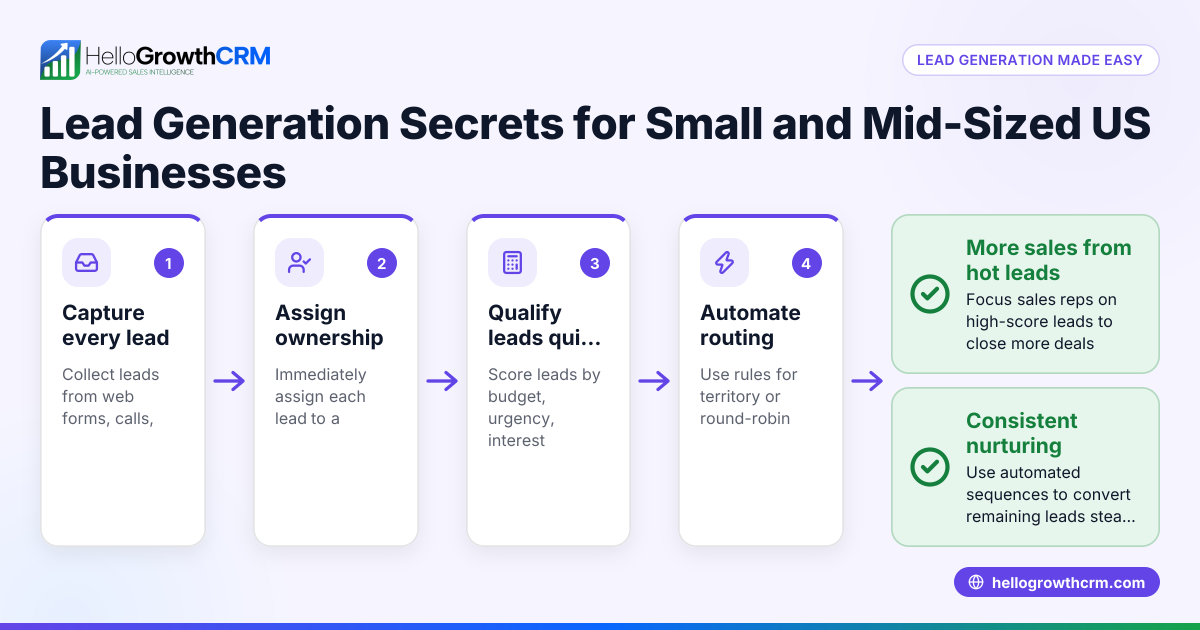
- Define clear lead routing rules: Assign leads based on geography, product interest, or agent expertise. Check that leads reach the right agent quickly and that no leads remain unassigned.
- Prioritize fast follow-up: Set a goal to contact new leads within minutes or hours. Measure average response times and adjust staffing or processes as needed to meet this goal.
- Use a call logging system: Record call outcomes immediately after each call to track progress, next steps, and avoid losing leads in the process.
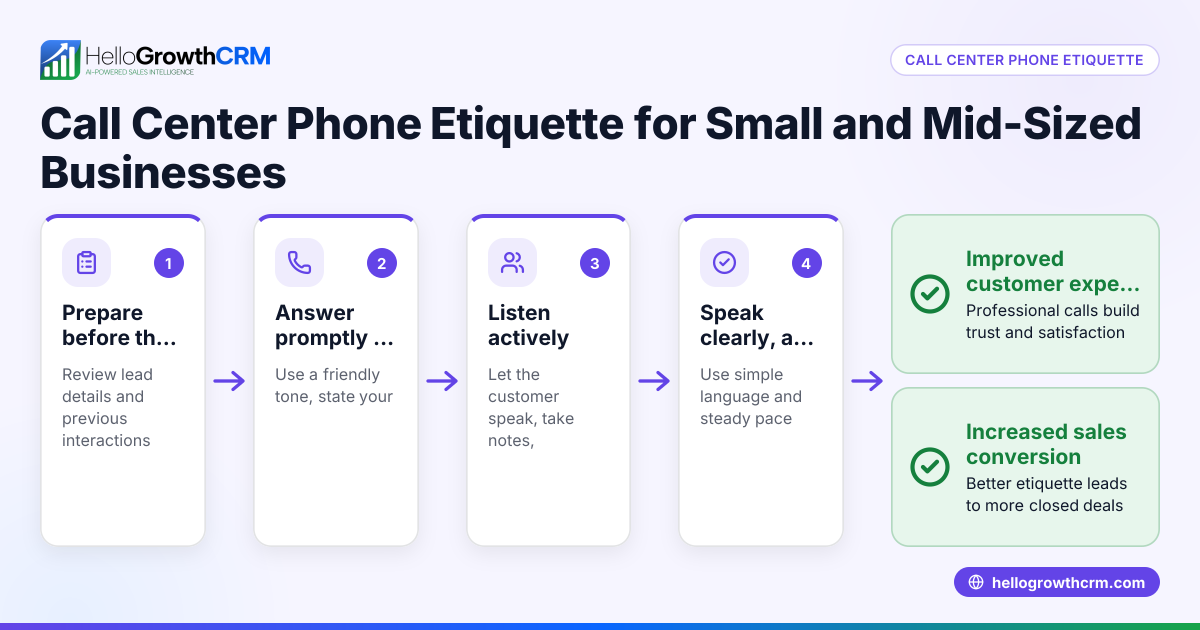
- Train agents on scripts and objection handling: Provide clear guidance on what to say and how to respond to common questions. Regularly update scripts based on feedback and results.
- Monitor call metrics regularly: Track calls made, connection rates, conversion rates, and average call duration. Use this data to identify bottlenecks or agents needing support.
- Optimize call schedules: Align calling times with when prospects are most likely available based on time zones and past call success.
- Leverage technology to streamline calling: Use a CRM with a built-in dialer to call directly from the system and log outcomes without switching apps. This reduces manual errors and saves time.
Example (fictional figures)
A B2B software reseller in Denver, Colorado, wants to improve their call center efficiency starting 07/01/2025.
- Current leads per month: 1,000
- Current contact rate: 30% (300 contacts)
- Current conversion rate from contact to sale: 10% (30 sales)
- Average sale value: $5,000
They set a goal to increase contact rate to 50% by improving routing and follow-up speed.
- New contacts = 1,000 × 50% = 500
- Assuming the same conversion rate (10%), new sales = 500 × 10% = 50
- Revenue increase = (50 - 30) sales × $5,000 = $100,000
By improving routing and follow-up, the company can increase monthly revenue by $100,000.
Common mistakes
- Ignoring lead routing: Leads go to the wrong agents or get delayed. Prevent by defining clear routing rules and reviewing them regularly.
- Slow follow-up: Leads lose interest if not contacted quickly. Prevent by setting response time goals and monitoring them daily.
- Not logging call outcomes: Leads fall through the cracks. Prevent by using a system where call results are recorded immediately after calls.
- Overloading agents: Too many leads per agent reduce call quality. Prevent by balancing workloads and monitoring agent capacity.
- Using multiple disconnected tools: Causes data loss and inefficiency. Prevent by consolidating calling and tracking in one platform, such as a CRM.
- Neglecting agent training: Agents without clear scripts or objection handling skills struggle. Prevent by providing regular training and updating materials.
Doing this in HelloGrowthCRM
HelloGrowthCRM offers a built-in dialer that lets reps work a list directly inside the CRM. Each call’s outcome is logged on the lead record automatically, keeping full call history tied to contacts and deals. This reduces manual work, keeps your team aligned, and improves follow-up speed. Learn more about the built-in CRM dialer and how HelloGrowthCRM supports US businesses with integrated calling and messaging in the WhatsApp and SMS CRM features.
Frequently asked questions
What are common call center routing strategies? Common strategies include round robin (distributing leads evenly), skill-based routing (assigning based on agent expertise), and geographic routing (assigning based on location). The best choice depends on your business model and team skills.
How can I reduce lead loss in my call center? Reduce lead loss by routing leads quickly to the right agent, following up within minutes or hours, and logging call outcomes to track progress. Using a CRM with a built-in dialer helps keep all information centralized and accessible.
What metrics should I track in a call center? Track contact rate, call volume, average call duration, conversion rate, and follow-up times. These metrics help identify bottlenecks and areas needing improvement.
How does technology improve call center success? Technology like HelloGrowthCRM’s built-in dialer streamlines calling, automates call logging, and integrates communication channels, reducing errors and improving agent productivity.
Can small businesses benefit from call center strategies? Yes, even small teams benefit from clear routing, fast follow-up, and call tracking. These strategies help scale sales efforts and improve customer experience.
What is the role of agent training in call center success? Agent training ensures consistent messaging, better objection handling, and improved customer interactions. Regular training updates keep agents prepared for new challenges.
Key takeaways
- Define and implement clear lead routing rules to assign leads efficiently and quickly.
- Prioritize fast follow-up to contact leads quickly and increase conversion rates.
- Log call outcomes immediately to track progress and avoid losing leads.
- Use technology like HelloGrowthCRM’s built-in dialer to streamline calling and data management.
- Monitor key call metrics regularly to optimize team performance and identify issues.
- Provide ongoing agent training to improve call quality and customer experience.
Start improving your call center strategy by trying HelloGrowthCRM’s built-in dialer. Start on the Free Forever plan (200 leads, no credit card) and see the difference.
Ready to put this into practice?
Set up your pipeline, WhatsApp follow-ups, and AI lead scoring in minutes — free, no credit card.
Try HelloGrowthCRM freeGet CRM tips in your inbox
Join thousands of sales professionals who get weekly insights on CRM strategy, AI automation, and pipeline optimization.

The HelloGrowthCRM team publishes guides on CRM strategy, AI sales tools, and revenue operations for small business sales teams.