HelloGrowthCRM software
Built for real small-business sales teams
HelloGrowthCRM helps reps qualify faster, follow up on time, and close more deals—with practical automation in one place.
- AI lead scoring and pipeline visibility
- Built-in dialer, WhatsApp, and email automation
- Sales forecasting and RevOps-ready reporting
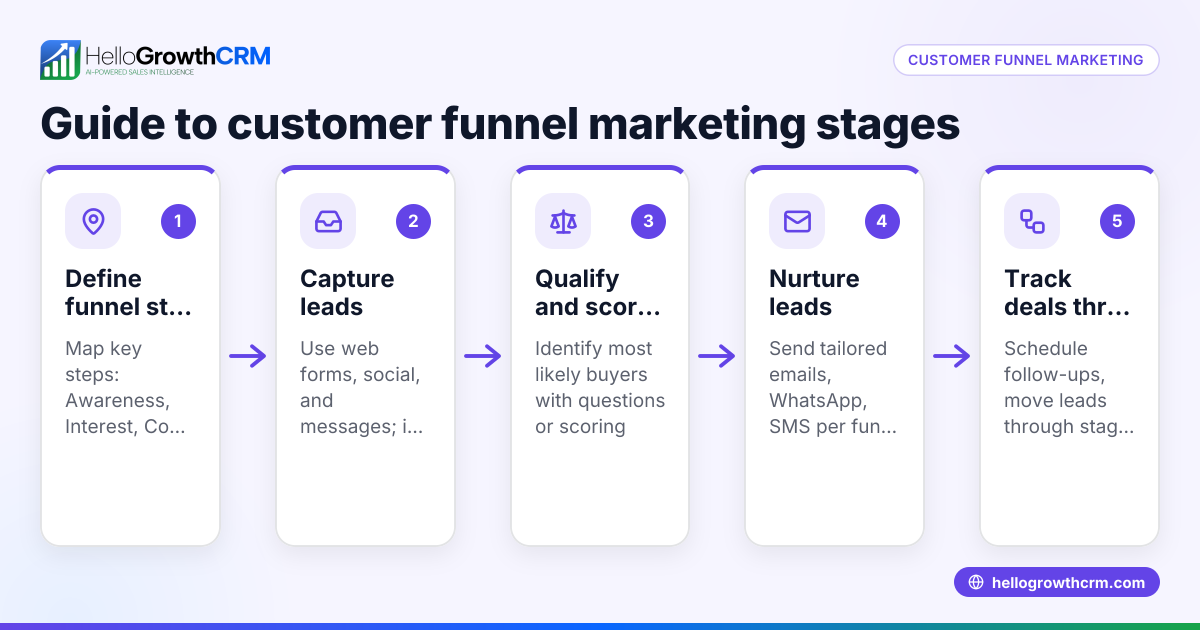
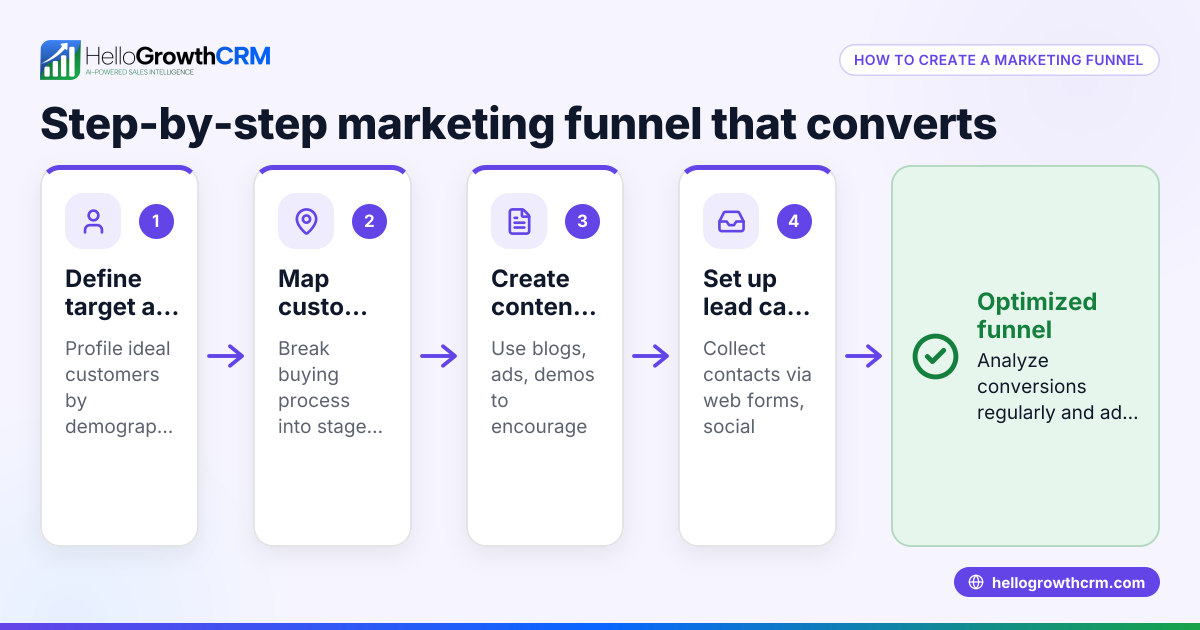
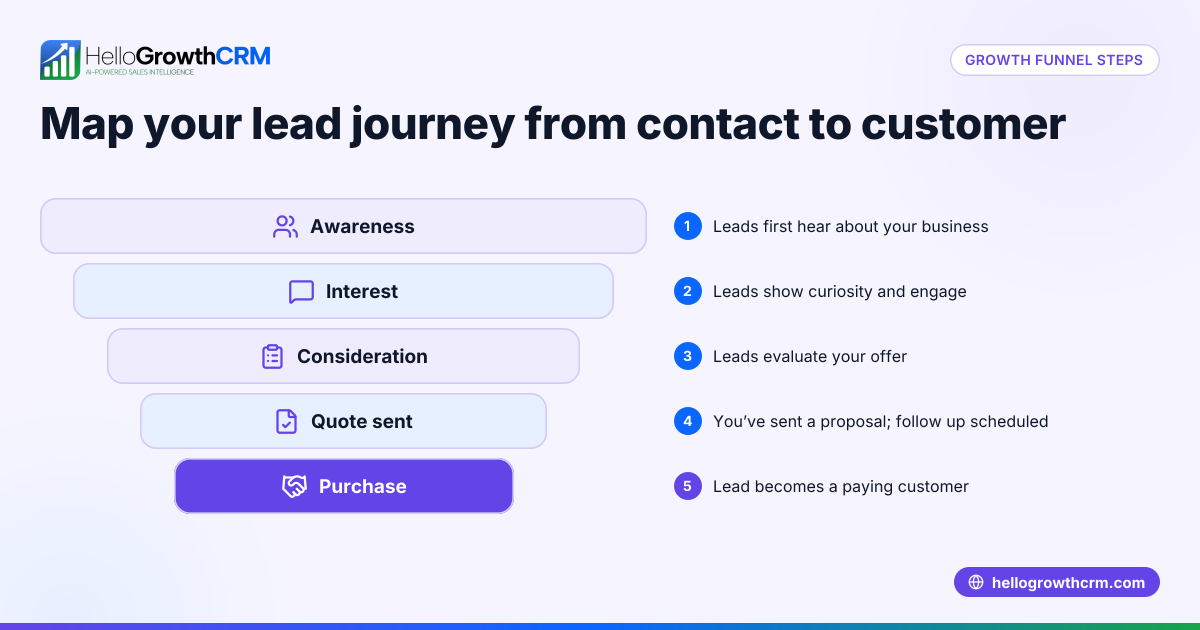
The traditional marketing funnel is a model that outlines the journey potential customers take from first learning about your business to becoming paying customers. It breaks down this journey into clear stages, helping small businesses organize marketing and sales efforts to convert leads efficiently.
Why this comes up / what goes wrong
Small business owners often face challenges because they lack a clear process to move prospects through the sales journey. Without understanding the traditional marketing funnel, you might spend marketing resources without knowing which stage your leads are in or what actions to take next. This can result in slow follow-up, missed sales opportunities, and disorganized tracking of leads. Many small businesses rely on spreadsheets, emails, or text messages to manage leads, which increases the risk of losing track of prospects and delays in communication.
Step-by-step
- Awareness: Get potential customers to notice your business through advertising, social media, word of mouth, or content marketing. Check that your message clearly reaches your target audience and grabs their attention.
- Interest: Engage prospects by providing useful information or offers that address their needs. Check if your marketing materials answer common questions and spark curiosity about your products or services.
- Consideration: Prospects compare your offerings with competitors. Provide detailed product information, testimonials, demos, or case studies. Check if you make it easy for prospects to evaluate your business.
- Intent: The prospect shows clear intent to buy, such as requesting a quote, scheduling a consultation, or adding items to a cart. Check that you capture their contact details and respond promptly to their inquiries.
- Conversion: The prospect completes a purchase or signs a contract. Check that the buying process is smooth, payment is processed, and the customer receives confirmation.
- Retention (optional): After purchase, engage customers for repeat business, upsells, or referrals.
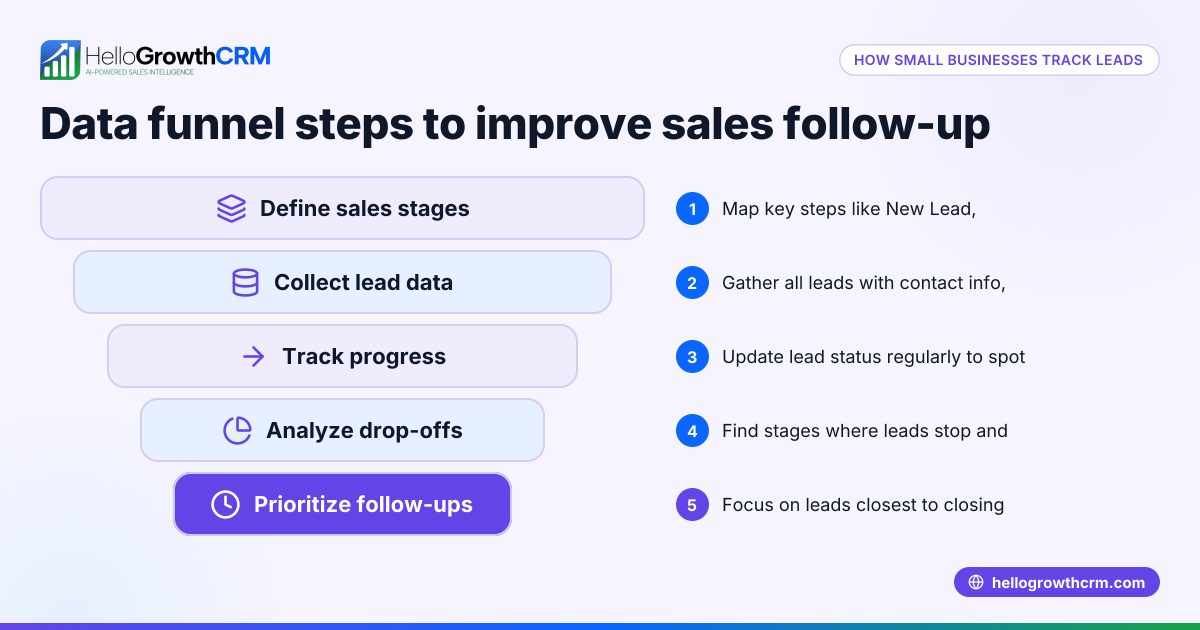
At each stage, track leads carefully to avoid losing them. Use tools that support pipeline management and timely follow-up reminders to keep prospects moving forward.
Example (fictional figures)
A landscaping contractor in Charlotte, North Carolina, launched a marketing campaign on 03/01/2026.
- Awareness: 1,000 people see ads.
- Interest: 200 people visit the website.
- Consideration: 50 request quotes.
- Intent: 30 schedule consultations.
- Conversion: 15 sign contracts.
Calculations:
Conversion rate from Awareness to Interest: 1,000 × 20% = 200
Conversion rate from Interest to Consideration: 200 × 25% = 50
Conversion rate from Consideration to Intent: 50 × 60% = 30
Conversion rate from Intent to Conversion: 30 × 50% = 15
If each contract averages $5,000:
Total revenue = 15 × $5,000 = $75,000
This example shows how leads narrow down through the funnel stages to actual sales and helps forecast expected revenue.
Common mistakes
- Ignoring lead follow-up: Leads at the quote or intent stage get forgotten. Prevent this by setting follow-up dates and reminders in a CRM.
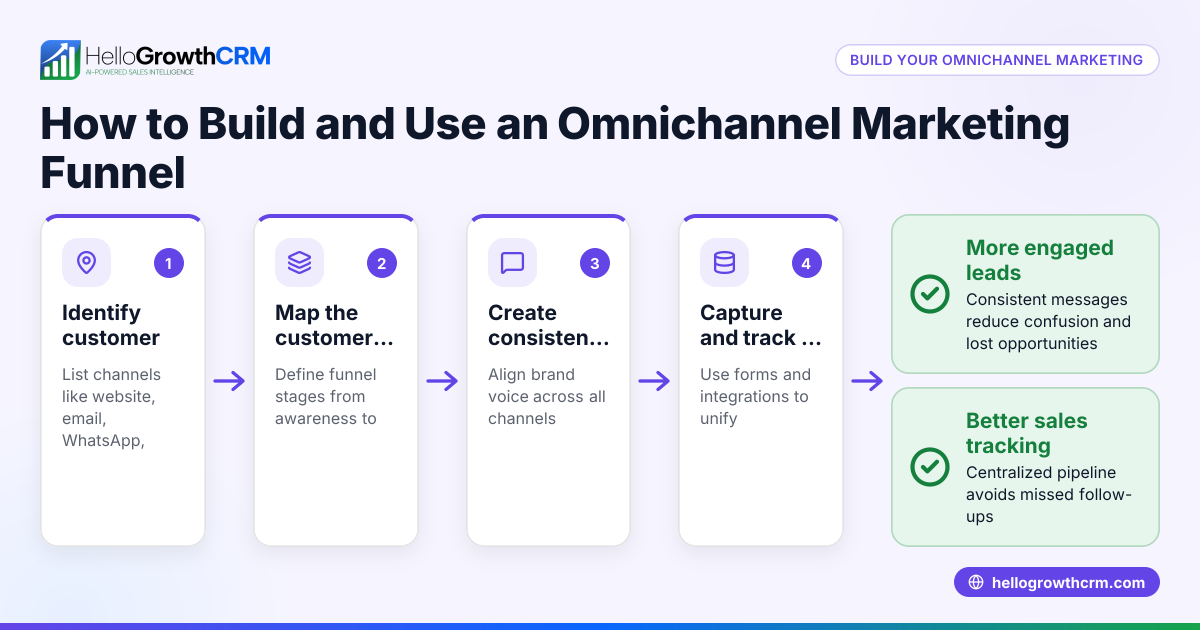
- Not tracking leads consistently: Using spreadsheets or emails makes it easy to lose track. Use a CRM with pipeline management to see each lead's status clearly.
- Skipping stages: Trying to push a lead directly to purchase without building interest or consideration lowers conversion rates. Nurture leads through each funnel stage.
- Poor messaging: If marketing messages don’t match the prospect’s needs at each stage, they lose interest. Tailor your communication to the funnel stage.
- No measurement of funnel performance: Without tracking conversion rates at each stage, you can’t identify bottlenecks or improve. Regularly review funnel data.
- Overcomplicating the funnel: Too many stages or confusing steps cause delays and lost leads. Keep the funnel simple and actionable.
Doing this in HelloGrowthCRM
HelloGrowthCRM helps small businesses manage their sales funnel with Deals (pipeline). For example, a quotation sent last week appears as a deal at the "quote sent" stage with a follow-up date, so it is not forgotten. This keeps your sales process organized and ensures timely follow-up. Learn more about how HelloGrowthCRM supports pipeline management and sales tracking at HelloGrowthCRM for the United States.
Frequently asked questions
What is the main purpose of a traditional marketing funnel? It organizes the customer journey into stages, helping businesses target marketing efforts and move leads toward purchase systematically.
How can I measure if my marketing funnel is working? Track how many leads move from one stage to the next and calculate conversion rates. Identify where leads drop off and adjust your strategy accordingly.
Can I use a CRM to manage my marketing funnel? Yes. A CRM like HelloGrowthCRM lets you track leads as deals through stages, set follow-up dates, and keep your sales process organized. See WhatsApp and SMS CRM and built-in CRM dialer for communication features.
Is the traditional marketing funnel still relevant with digital marketing? Yes. The funnel concept applies to both offline and online marketing, guiding how you nurture leads and close sales.
How do I avoid losing leads during the sales process? Use a CRM with pipeline management to track each lead’s stage and set reminders for follow-up. This prevents leads from being forgotten or delayed.
Key takeaways
- The traditional marketing funnel breaks down the customer journey into clear stages from awareness to conversion.
- Tracking leads at each stage prevents lost opportunities and improves sales follow-up.
- Avoid common mistakes like ignoring follow-ups and poor messaging by using consistent tracking tools.
- HelloGrowthCRM’s Deals (pipeline) feature helps keep your sales funnel organized and timely.
- Measuring conversion rates at each stage helps optimize your marketing efforts.
- Use a CRM to set follow-up reminders and keep leads moving through the funnel.
Start managing your leads and sales process effectively. Start on the Free Forever plan (200 leads, no credit card).
Ready to put this into practice?
Set up your pipeline, WhatsApp follow-ups, and AI lead scoring in minutes — free, no credit card.
Try HelloGrowthCRM freeGet CRM tips in your inbox
Join thousands of sales professionals who get weekly insights on CRM strategy, AI automation, and pipeline optimization.

The HelloGrowthCRM team publishes guides on CRM strategy, AI sales tools, and revenue operations for small business sales teams.