HelloGrowthCRM software
Built for real small-business sales teams
HelloGrowthCRM helps reps qualify faster, follow up on time, and close more deals—with practical automation in one place.
- AI lead scoring and pipeline visibility
- Built-in dialer, WhatsApp, and email automation
- Sales forecasting and RevOps-ready reporting
The CRM process is a structured method that helps small businesses manage customer relationships from the initial lead to closing the sale and beyond. It ensures leads are captured efficiently, prioritized correctly, and followed up promptly to increase sales success.
Why this comes up / what goes wrong
Small-business owners often face challenges like slow follow-up on leads, managing communications across text messages, emails, and spreadsheets, and lacking a clear view of their sales pipeline. These issues cause lost leads and missed revenue opportunities. Understanding the CRM process and its key stages helps owners evaluate software or services that can centralize communication, automate repetitive tasks, and improve team collaboration.
Step-by-step
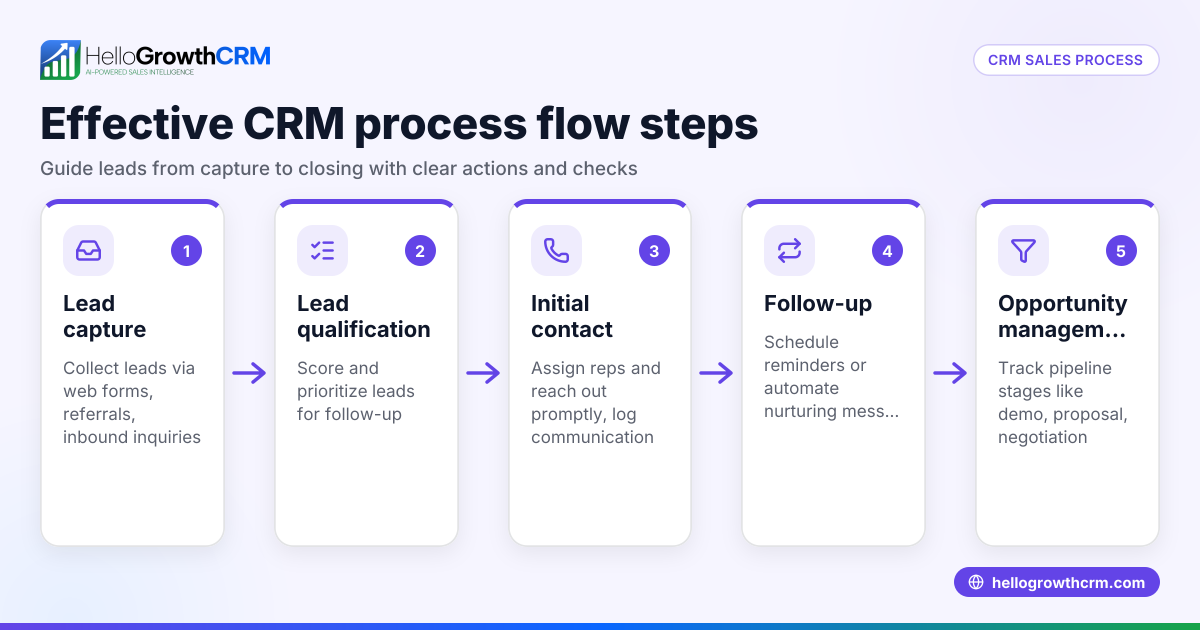
- Lead Capture: Collect leads from sources like web forms, social media, or referrals. Check that leads are automatically imported into your CRM to avoid losing or duplicating data.
- Lead Qualification: Evaluate leads based on factors such as budget, need, and timeline. Use lead scoring to prioritize the most promising prospects.
- Lead Nurturing: Engage qualified leads with personalized communication via email, WhatsApp, or SMS. Schedule follow-ups and monitor responses to maintain interest.
- Sales Pipeline Management: Move leads through stages like proposal, negotiation, and closing. Use task boards to visualize progress and assign responsibilities clearly.
- Closing the Deal: Finalize agreements and record the sale in the CRM. Ensure all communications and documents related to the deal are logged for future reference.
- Post-Sale Follow-up: Maintain relationships through support, upselling, or feedback requests to encourage repeat business.
At each step, confirm that tasks have due dates and that communication history is centralized for easy access and team visibility. Tools like task boards can help keep daily activities organized and visible. See activities and task boards for more.
Example (fictional figures)
A two-location dental practice in Columbus, Ohio, uses a CRM to manage new patient leads.
- On 03/01/2026, they capture 100 leads from their website.
- They qualify 40 leads as ready for consultation.
- They nurture these 40 leads with a five-step WhatsApp and SMS follow-up over two weeks.
- 15 leads book appointments and convert to paying patients.
Calculations:
100 leads × 40% qualified = 40 qualified leads 40 qualified leads × 37.5% conversion rate (15 ÷ 40) = 15 new patients 15 patients × $1,200 average revenue per patient = $18,000 total revenue from this lead batch
This example highlights how qualification and nurturing improve conversion rates and revenue.
Common mistakes
- Ignoring lead capture automation: Leads can be lost or duplicated when entered manually. Prevent this by using CRM integrations that auto-import leads.
- Delayed follow-up: Leads lose interest quickly if not contacted promptly. Use task boards to schedule and remind your team of follow-ups daily. See activities and task boards.
- Scattered communication: Managing messages across multiple apps without logging leads to lost context. Use a CRM that logs WhatsApp and SMS conversations on the lead record, like HelloGrowthCRM’s WhatsApp and SMS CRM.
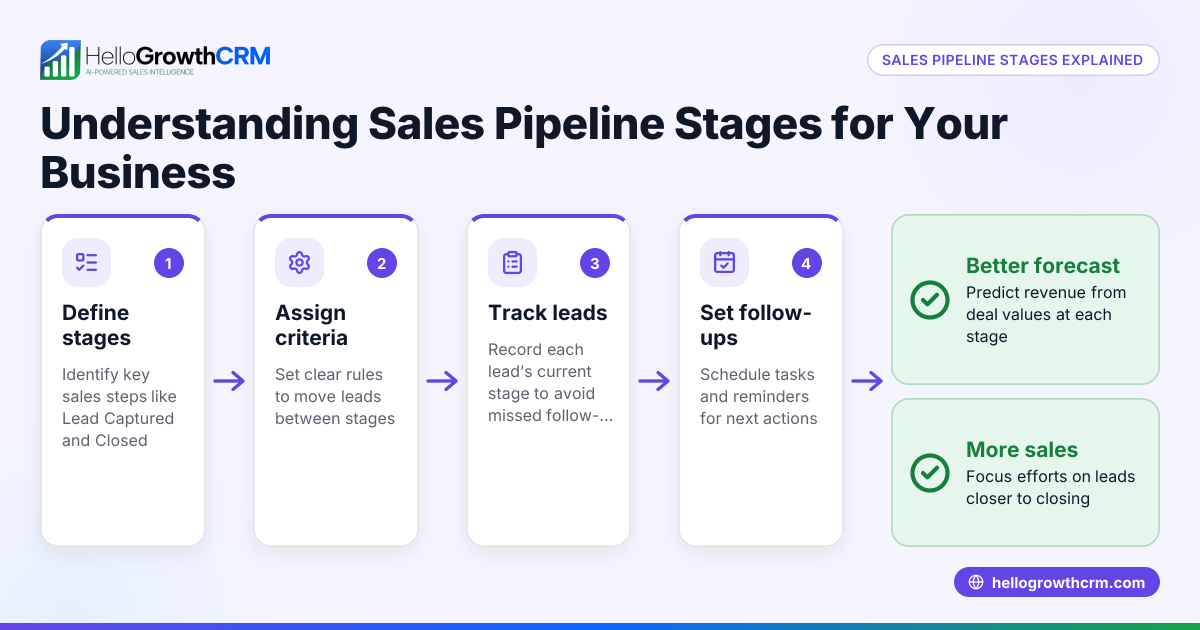
- Manual tracking of sales stages: Without clear visibility, leads stall in the pipeline. Use pipeline and task boards to track progress and assign tasks.
- No automation for repetitive outreach: Manually sending follow-ups wastes time. Use automated sequences that stop when a lead replies, as in HelloGrowthCRM’s sequences and campaigns.
Doing this in HelloGrowthCRM
HelloGrowthCRM helps manage the CRM process with WhatsApp and SMS messaging where conversations with leads are logged on the lead record and follow-ups can be sent directly as messages. Each follow-up becomes a task with a due date, so daily calls and actions appear as a clear list, not a memory test. Automated sequences run multi-step follow-ups over two weeks and stop immediately when a prospect replies. This supports small and mid-sized businesses in keeping leads engaged and sales moving efficiently.
Frequently asked questions
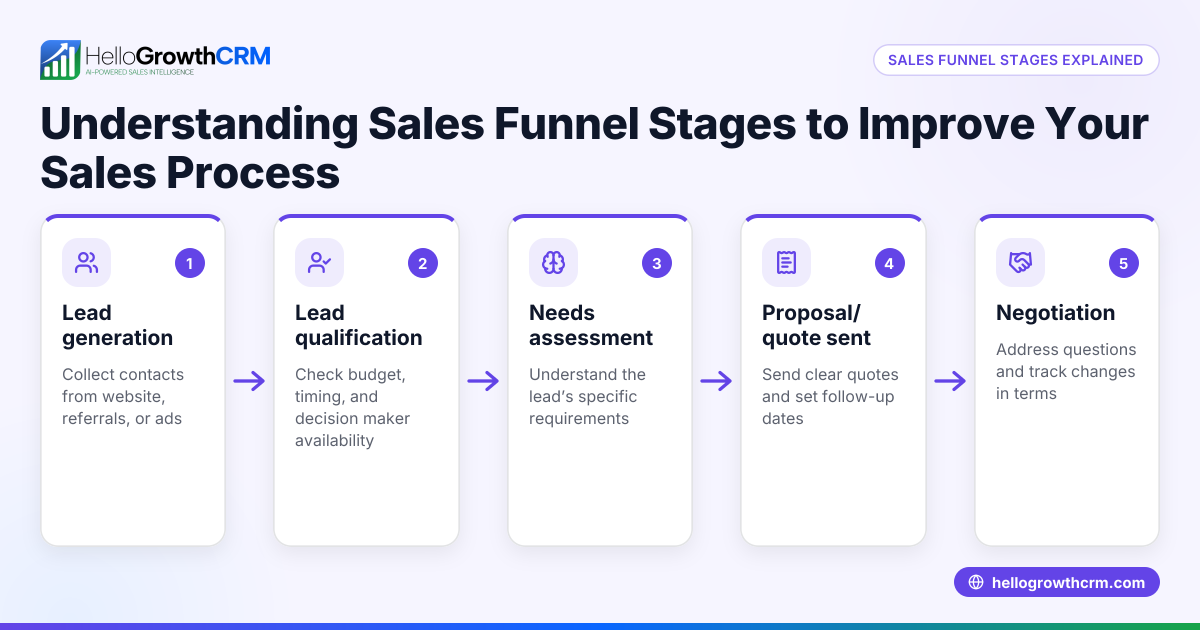
What are the main stages in a CRM process? The main stages are lead capture, lead qualification, nurturing, pipeline management, closing, and post-sale follow-up. Each stage includes specific tasks to keep the sales process organized and efficient.
How can I ensure my team follows up on leads promptly? Use a CRM with task boards and activity tracking that assign follow-ups with due dates. This turns reminders into visible tasks, reducing the chance of missed calls or messages. See activities and task boards.
Why is automating follow-up important? Automation ensures consistent outreach without manual effort and stops outreach immediately when a prospect responds. This saves time and improves lead engagement. HelloGrowthCRM offers automated sequences for this purpose. See sequences and campaigns.
How does logging WhatsApp conversations help the sales process? Logging WhatsApp messages on the lead record keeps all communication in one place, so any team member can see past interactions and respond appropriately. This avoids losing context and improves customer experience. Learn more about WhatsApp and SMS CRM.
Can a CRM help with sales forecasting? Yes, by tracking leads through pipeline stages and their likelihood to close, a CRM can provide sales forecasts. This helps plan resources and set realistic targets.
Key takeaways
- The CRM process includes lead capture, qualification, nurturing, pipeline management, closing, and post-sale follow-up.
- Automate lead capture and follow-up to prevent lost leads and delays.
- Use task boards to keep daily activities organized and visible.
- Centralize communication by logging WhatsApp and SMS messages on lead records.
- Automated sequences improve outreach efficiency and responsiveness.
- Choosing a CRM that supports these stages helps small businesses grow sales effectively.
Start improving your sales process with HelloGrowthCRM. You can start on the Free Forever plan (200 leads, no credit card) to see how these features help your team stay organized and responsive.
Ready to put this into practice?
Set up your pipeline, WhatsApp follow-ups, and AI lead scoring in minutes — free, no credit card.
Try HelloGrowthCRM freeGet CRM tips in your inbox
Join thousands of sales professionals who get weekly insights on CRM strategy, AI automation, and pipeline optimization.

The HelloGrowthCRM team publishes guides on CRM strategy, AI sales tools, and revenue operations for small business sales teams.