HelloGrowthCRM software
Built for real small-business sales teams
HelloGrowthCRM helps reps qualify faster, follow up on time, and close more deals—with practical automation in one place.
- AI lead scoring and pipeline visibility
- Built-in dialer, WhatsApp, and email automation
- Sales forecasting and RevOps-ready reporting
A voicemail script is a short, clear, and purposeful message that you leave when you call a prospect or customer and they don’t pick up. Instead of fumbling or leaving an unclear message, a script helps you stay focused, sound professional, and encourage the listener to take the next step. This article covers why voicemail scripts are important for small businesses, how to write and use them effectively, common pitfalls, and where to find free templates to get started.
Why this comes up / what goes wrong
Small-business owners often struggle with reaching leads or customers by phone. When calls go unanswered, many leave either no message or an unclear one that doesn’t prompt a response. This wastes valuable sales opportunities and slows down follow-up. Without a script, callers can sound unsure or rushed, reducing the chance the prospect will call back. For businesses juggling phone, email, text, and spreadsheets, voicemail can be overlooked or inconsistent.
Having a voicemail script helps salespeople and owners deliver a consistent message that builds interest and trust. It also saves time by removing hesitation and guesswork during calls. A good script balances professionalism with a friendly tone and includes a clear call to action.
Step-by-step
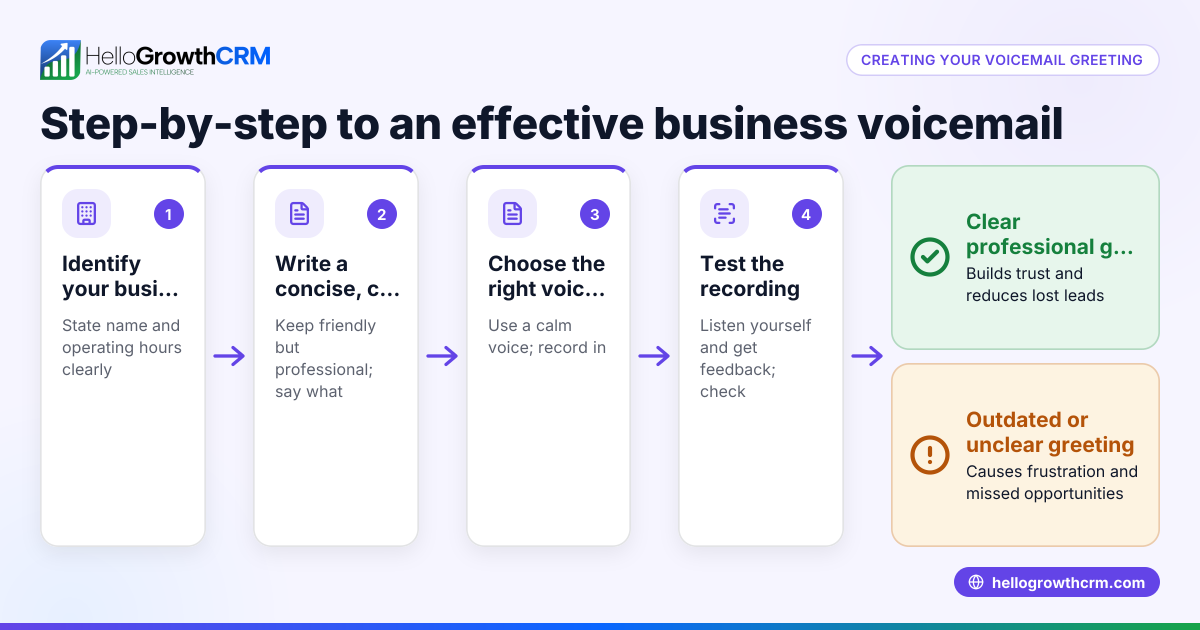
- Identify your goal for the call. Decide what you want the prospect to do next, such as call back, reply to an email, or visit your website.
- Start with a friendly introduction. State your name and your company clearly.
- Mention the reason for your call. Keep it brief but specific enough to spark interest.
- Include a call to action. Tell the listener exactly what you want them to do next and how to reach you.
- Keep it short and clear. Aim for 20-30 seconds; avoid rambling or too much detail.
- Practice your tone and pace. Sound natural and confident, not robotic or rushed.
- Check your script for clarity and simplicity. Avoid jargon or complicated language.
- Update your script regularly. Adjust based on what works and feedback from your team.
For example, a simple script might be: “Hi, this is Jane from GreenScape Landscaping. I’m calling to discuss how we can help with your spring cleanup. Please call me back at 555-123-4567. Thanks!”
Using templates can speed up this process and ensure your team stays consistent. You can find free sales templates and pipeline tools to help at sales templates.
Example (fictional figures)
A landscaping contractor in Charlotte, North Carolina, called GreenScape Landscaping, wants to increase callbacks from voicemail messages.
- Goal: Get prospects to call back for a spring cleanup quote.
- Script: “Hi, this is Jane from GreenScape Landscaping. I’m calling to discuss how we can help with your spring cleanup. Please call me back at 555-123-4567. Thanks!”
Jane calls 10 prospects and leaves this message each time.
If 3 out of 10 call back, and each callback leads to a $1,200 job, the revenue is:
3 callbacks × $1,200 per job = $3,600
If Jane improves the script to add urgency: “Please call me back by Friday to get on our spring schedule,” and callbacks increase to 5 out of 10:
5 callbacks × $1,200 per job = $6,000
This shows how a clear voicemail script can impact sales.
Common mistakes
- Too long or detailed. Keep messages brief to respect the listener’s time. Prevent by timing your script.
- No clear call to action. Always tell the prospect what to do next. Prevent by including a phone number and specific request.
- Sounding robotic or scripted. Practice to sound natural and friendly.
- Not leaving a message at all. Always leave a message; it’s a missed opportunity otherwise.
- Using jargon or unclear language. Use plain, simple words to avoid confusion.
- Failing to update the script. Regularly review and improve based on what works.
Use free sales tools and templates to avoid these errors. See the sales templates and email automation and sequences pages for more ideas on follow-up.
Doing this in HelloGrowthCRM
HelloGrowthCRM offers free sales tools, templates, and calculators that can help you create and improve your voicemail scripts and follow-up cadences. You can download a follow-up cadence or pipeline template without needing an account. These resources help small and mid-sized businesses organize outreach and improve lead follow-up effectively. Visit the free sales tools page to get started.
Frequently asked questions
What is the ideal length for a voicemail script? A voicemail script should be about 20-30 seconds long. This is enough time to introduce yourself, state your purpose, and include a call to action without losing the listener’s attention.
Should I mention a specific time to call back in the voicemail? Yes, adding a sense of urgency like “Please call me back by Friday” can increase the chances of a callback. It gives the prospect a clear timeframe to respond.
Can I use the same voicemail script for all prospects? It’s best to tailor your script slightly based on the prospect’s needs or stage in the sales process. However, a core script can be adapted easily for consistency.
How do I sound natural when using a script? Practice reading the script aloud several times until it feels comfortable. Use a friendly tone and vary your pace to avoid sounding robotic.
Are there free resources to help me create voicemail scripts? Yes, HelloGrowthCRM offers free sales templates and tools that can help you craft and optimize voicemail scripts and follow-up sequences. You can find them at sales templates.
How does voicemail fit into a broader sales follow-up plan? Voicemail is one part of multi-channel outreach including calls, emails, and texts. Combining these methods improves your chances of connecting. Learn more about multi-channel follow-up at email automation and sequences.
Key takeaways
- A voicemail script is a brief, clear message left when a call isn’t answered.
- It should include an introduction, reason for the call, and a clear call to action.
- Keep the message 20-30 seconds and use friendly, natural language.
- Avoid common mistakes like rambling, no call to action, or sounding robotic.
- Use free sales templates and tools to create and improve your scripts.
- Voicemail works best as part of a multi-channel follow-up strategy.
Start improving your outreach by creating your voicemail scripts and follow-up plans using free templates at sales templates. Ready to organize your leads and follow-up? Start on the Free Forever plan (200 leads, no credit card) at HelloGrowthCRM.
Ready to put this into practice?
Set up your pipeline, WhatsApp follow-ups, and AI lead scoring in minutes — free, no credit card.
Try HelloGrowthCRM freeGet CRM tips in your inbox
Join thousands of sales professionals who get weekly insights on CRM strategy, AI automation, and pipeline optimization.

The HelloGrowthCRM team publishes guides on CRM strategy, AI sales tools, and revenue operations for small business sales teams.