HelloGrowthCRM software
Built for real small-business sales teams
HelloGrowthCRM helps reps qualify faster, follow up on time, and close more deals—with practical automation in one place.
- AI lead scoring and pipeline visibility
- Built-in dialer, WhatsApp, and email automation
- Sales forecasting and RevOps-ready reporting
A cold call is a sales call made to a potential customer who has not expressed prior interest or contact with your business. It is typically an unsolicited phone call aimed at introducing your product or service and trying to start a sales conversation. This article covers why small businesses rely on cold calls, how to do them effectively step-by-step, common pitfalls to avoid, and how HelloGrowthCRM’s built-in dialer can help manage cold calling efficiently.
Why this comes up / what goes wrong
Small business owners often turn to cold calling when they want to grow sales but lack enough inbound leads or referrals. They may have a list of prospects but no system to manage outreach or track results. Cold calling can feel daunting because it involves reaching out to strangers who might be uninterested or annoyed. Without a clear process, calls can be inconsistent, and follow-up may be missed, causing lost opportunities. Many small teams rely on spreadsheets, texting, or personal phones, which makes it hard to keep organized and measure success.
Step-by-step
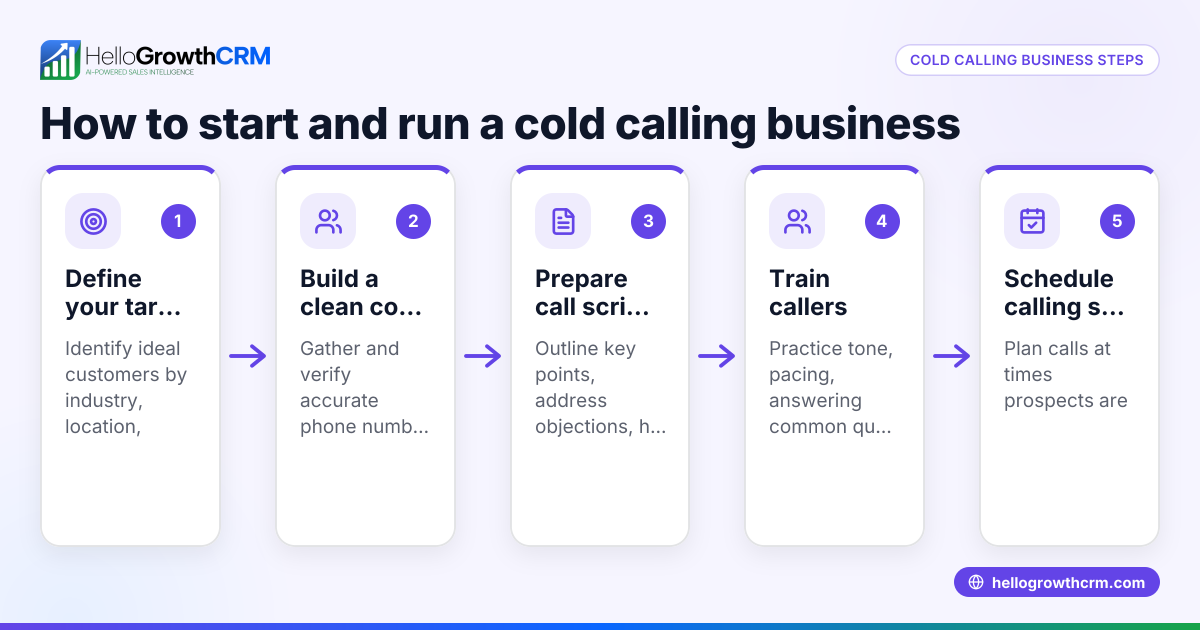
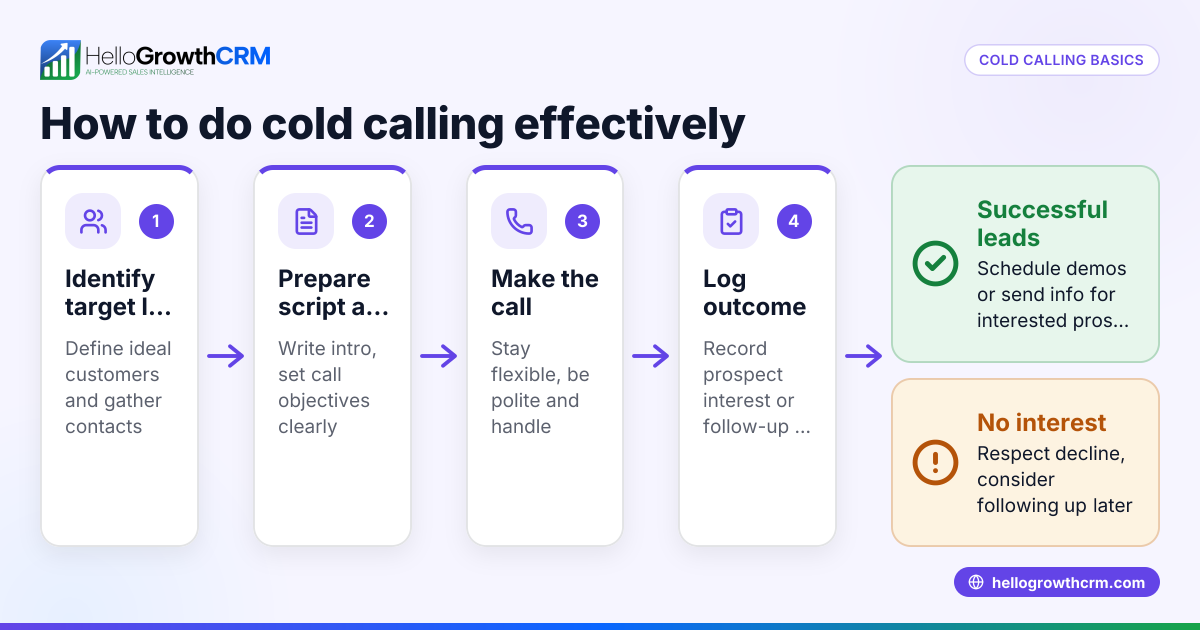
- Prepare your prospect list: Gather a list of potential customers with contact details. Check that the list is relevant to your product or service and complies with any telemarketing laws. Clean data improves your chances.
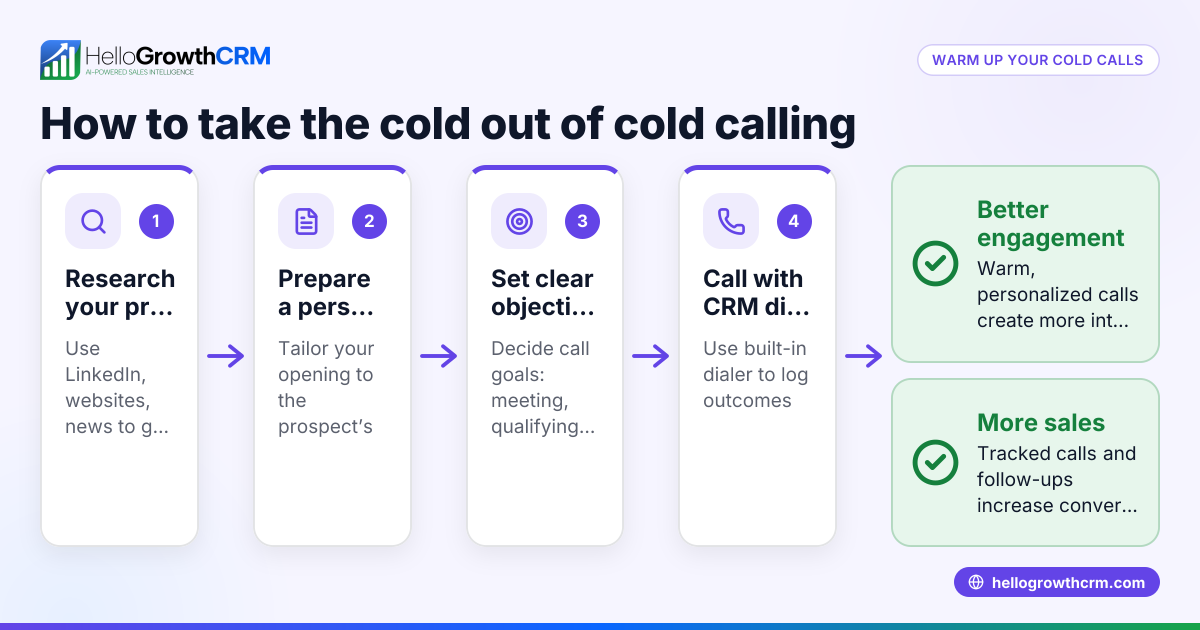
- Research each prospect briefly: Before calling, learn basic information about the prospect’s business or needs. This helps you tailor your pitch and shows respect.
- Write a clear script outline: Plan what you will say, including a brief introduction, the reason for the call, and a question to engage the prospect. Avoid sounding robotic; keep it conversational.
- Make the call from a professional line: Use a dedicated business phone or a CRM with a dialer to call prospects. Identify yourself and your company clearly.
- Listen and respond: Pay attention to the prospect’s tone and answers. Be ready to answer questions or handle objections politely.
- Set a clear next step: Whether it’s scheduling a demo, sending an email, or agreeing to call back, confirm the next action before ending the call.
- Log the call outcome immediately: Record details like whether the call was answered, interest level, and agreed follow-up. This helps track progress and plan future outreach.
- Follow up promptly: Send any promised information or calls as agreed. Persistence with respect can convert more leads.
Using a system to manage these steps reduces errors and saves time. For example, HelloGrowthCRM’s built-in dialer lets you call from inside the CRM and logs each call outcome automatically, keeping your sales pipeline organized. Learn more about the built-in CRM dialer.
Example (fictional figures)
A residential real-estate team in Phoenix, Arizona, wants to generate new buyer leads by cold calling homeowners who might be interested in selling.
- They prepare a list of 500 homeowners with phone numbers.
- They plan to call 50 prospects per day over 10 days.
- Each successful call that leads to a meeting has a 10% chance of resulting in a sale.
Calculations:
Calls per day = 50
Total calls = 50 × 10 = 500
Assuming 20% answer rate:
Answered calls = 500 × 20% = 100
Meetings booked from answered calls (30% conversion):
Meetings = 100 × 30% = 30
Sales from meetings (10% conversion):
Sales = 30 × 10% = 3
Average sale value = $350,000
Total revenue from sales = 3 × $350,000 = $1,050,000
This example shows how a structured cold call campaign can lead to significant revenue.
Common mistakes
- Not preparing a script or outline: Leads to rambling or missing key points. Prevent by writing and practicing a clear call outline.
- Ignoring call logging and follow-up: Causes lost leads and wasted effort. Prevent by logging calls immediately and scheduling follow-ups.
- Calling at inappropriate times: Can annoy prospects and reduce success. Prevent by calling during business hours and avoiding early mornings or late evenings.
- Using personal phones without tracking: Makes it hard to keep records or collaborate. Prevent by using a business CRM with a dialer.
- Not researching prospects: Results in irrelevant pitches that turn prospects off. Prevent by spending a few minutes researching each prospect.
- Talking too much and not listening: Misses cues and objections. Prevent by asking questions and listening actively.
See how WhatsApp and SMS CRM can also help with follow-up messaging.
Doing this in HelloGrowthCRM
HelloGrowthCRM includes a built-in dialer that lets your rep work through a list of leads directly inside the CRM. Each call’s outcome is logged automatically on the lead’s record, keeping your sales pipeline up to date without manual entry. This reduces errors and helps your team stay organized and efficient. For details, visit built-in CRM dialer.
Frequently asked questions
What is the difference between a cold call and a warm call? A cold call is made to someone who has had no prior contact with your business, while a warm call targets prospects who have shown some interest or engagement before. Warm calls generally have higher success rates.
How long should a cold call last? Cold calls usually last between 1 to 5 minutes. The goal is to quickly introduce yourself, gauge interest, and set up a next step rather than deliver a full sales pitch.
Is cold calling still effective in 2026? Cold calling remains a viable sales tactic for many industries, especially when combined with research and a clear process. However, success depends on respecting prospects’ time and following US legal regulations such as obtaining consent and honoring opt-outs.
Can I use text messages instead of cold calls? Text messages can complement cold calls, especially for follow-ups or initial contact. However, cold calls allow for immediate interaction and handling objections, which texts cannot provide.
How do I handle rejection during a cold call? Stay polite and professional. Thank the prospect for their time and ask if you can follow up later or send information by email. Learning from rejection helps improve your approach.
Key takeaways
- A cold call is an unsolicited sales call to a prospect with no prior contact.
- Preparing a script, researching prospects, and logging calls improve success.
- Avoid common mistakes like poor timing, no follow-up, and lack of tracking.
- Using a CRM with a built-in dialer streamlines calling and record-keeping.
- Cold calls can lead to significant sales when done consistently and respectfully.
Start your cold calling with a system that helps you stay organized and efficient. Start on the Free Forever plan (200 leads, no credit card) with HelloGrowthCRM.
Ready to put this into practice?
Set up your pipeline, WhatsApp follow-ups, and AI lead scoring in minutes — free, no credit card.
Try HelloGrowthCRM freeGet CRM tips in your inbox
Join thousands of sales professionals who get weekly insights on CRM strategy, AI automation, and pipeline optimization.

The HelloGrowthCRM team publishes guides on CRM strategy, AI sales tools, and revenue operations for small business sales teams.