What is different about hospitality & food in India
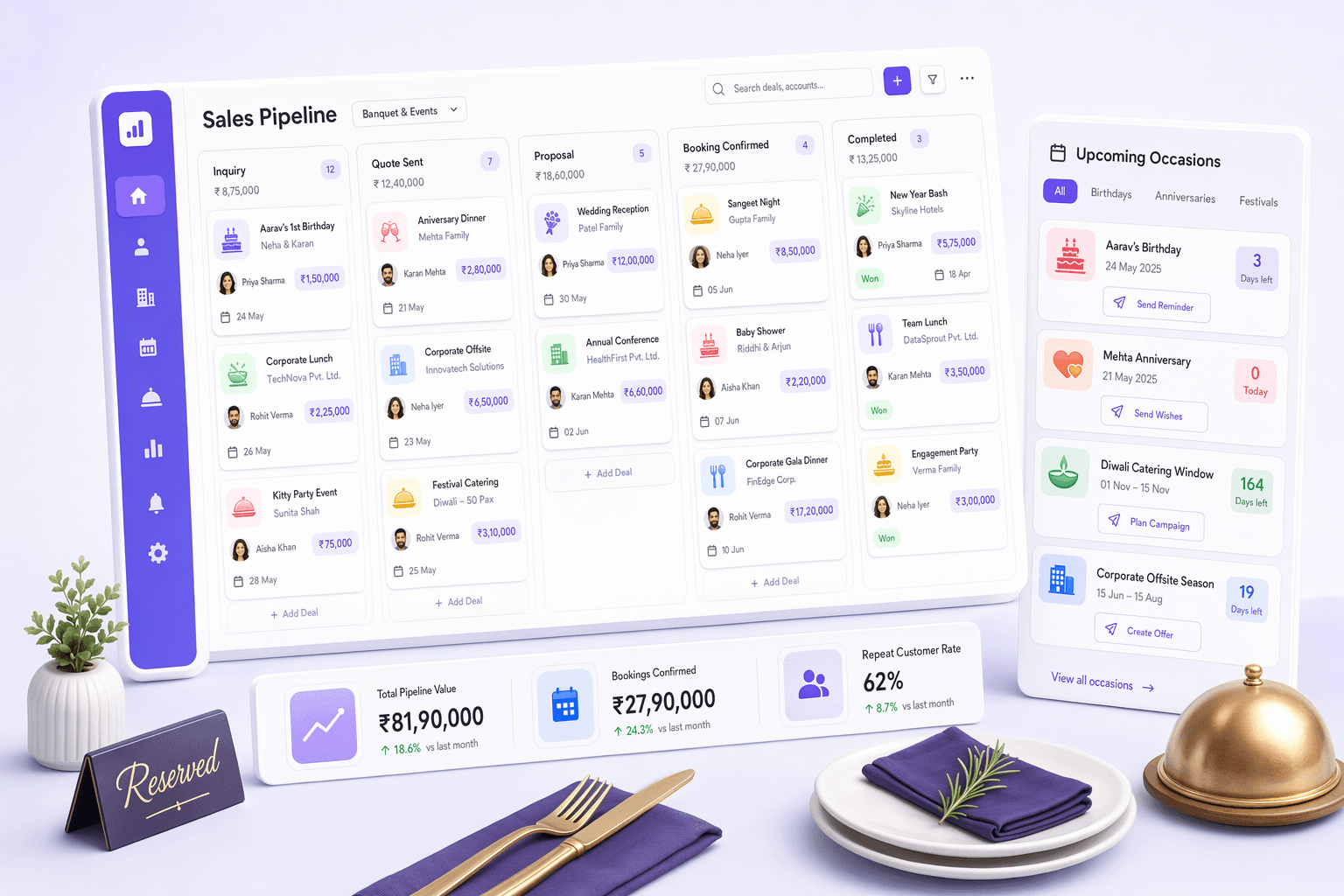
Hotels, cafes and catering businesses get bookings through aggregator platforms like MakeMyTrip and Zomato, direct WhatsApp enquiries, and wedding or corporate-event referrals, so a CRM needs to tag which channel a lead came from to see which platform commission is actually worth paying for. Catering and banquet enquiries especially concentrate around the wedding season from October to February, requiring advance booking pipelines rather than same-day conversion.
Food and beverage billing carries GST, with restaurant and outdoor-catering services often taxed differently, so invoice templates should separate the two. FSSAI licence numbers should sit on every food-business account, since customers and corporate clients increasingly ask for it. Guest phone numbers and dietary details collected for bookings fall under the DPDP Act 2023. Enquiry volume spikes before the Diwali and wedding season and again around New Year, so staffing should scale up ahead of those dates.
Set up your CRM for India hospitality & food teams
- Store the FSSAI licence number on every food-business account so it is ready when corporate clients ask for it.
- Create a wedding-season booking pipeline stage for October–February enquiries, since these need advance confirmation, not same-day close.
- Tag each booking by source platform (aggregator, WhatsApp, referral) to compare real conversion against commission cost.