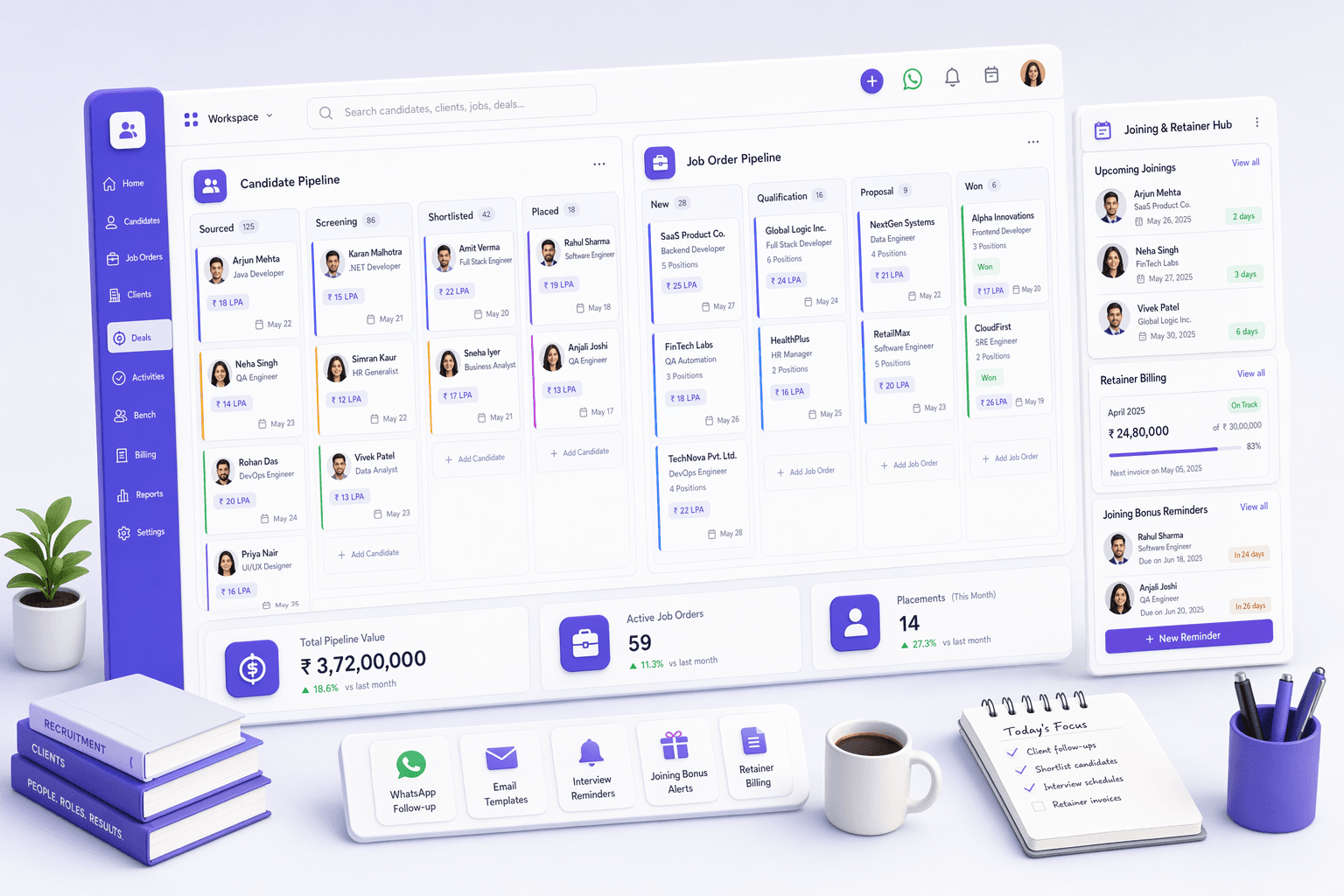
What is different about hr & staffing in India
Indian staffing and recruitment firms get mandates through LinkedIn, referrals from HR heads, and empanelment with corporate vendor panels rather than inbound web forms, so a CRM needs a separate pipeline for client mandates versus candidate pipeline. Placement agencies sending workers overseas need to track Protector of Emigrants clearance status per candidate, while domestic staffing firms track EPFO and ESIC compliance for the workers they deploy on client sites.
Payroll and staffing firms invoice clients monthly with GST charged on the service fee, and many corporate clients demand a signed GST-compliant tax invoice before releasing payment through their AP portal. Candidate resumes and salary history are personal data under the DPDP Act 2023, so consent language belongs on every intake form. Hiring activity slows in the run-up to Diwali and picks up sharply in the new financial year from April, when most appraisal-linked hiring budgets open.
Set up your CRM for India hr & staffing teams
- Split the pipeline into client mandates and candidate placements, since one deal can involve several candidates closing at different times.
- Capture EPFO and ESIC compliance status per deployed worker for staffing clients who audit this before renewing contracts.
- Add a consent checkbox on candidate intake forms to record DPDP Act 2023 consent for storing resumes and salary data.