Notion is where many sales and account teams manage their deal rooms, project documentation, and proposal content. HelloGrowthCRM's Notion integration bridges the gap between CRM pipeline data and Notion workspace — so reps don't have to manually copy deal information between systems.
Deal-to-Notion sync creates or updates a Notion page for each HelloGrowthCRM deal. The page includes deal name, contact details, stage, value, close date, and a summary of recent CRM activity. Teams building deal rooms in Notion for enterprise accounts can use the synced page as the auto-populated base, then add their own documentation on top.
Meeting notes and call summaries can be pushed from HelloGrowthCRM to a designated Notion database. After each call, the AI summary from HelloGrowthCRM's post-call agent appears as a new entry in the connected Notion database — timestamped, tagged with the deal name, and linked back to the CRM record.
Notion documents linked to deals surface inside the CRM deal record. Reps viewing a deal in HelloGrowthCRM can access connected Notion pages — proposal drafts, account plans, competitive analysis docs — without leaving the CRM interface. Context from both systems is available in one view.
For CS and account management teams using Notion for customer success plans, the integration syncs customer health score changes and milestone completions from HelloGrowthCRM to the relevant Notion account page. Customer-facing documentation stays current with CRM data without manual updates.
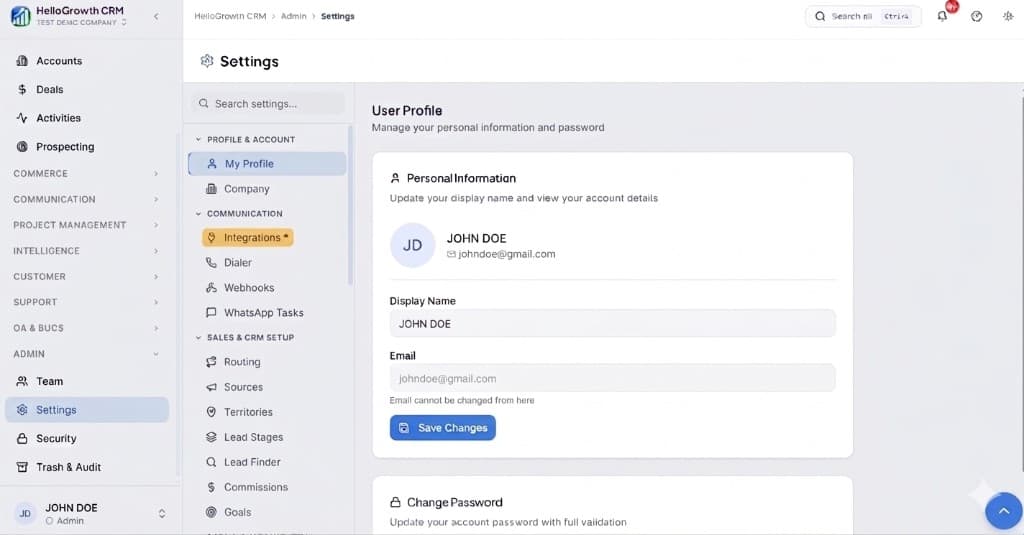
Setup requires a Notion API token and connection to the target workspace. Field mapping and database selection are configured in HelloGrowthCRM's integration settings. Most teams are live within an hour of connecting the two platforms.