Overview
For Microsoft-first teams, Outlook Calendar is where selling time actually lives — demos, site visits, review calls, renewal check-ins. The integration syncs Outlook Calendar with HelloGrowthCRM two-way: CRM activities appear in Outlook so reps plan from one calendar, and Outlook events with known contacts log to the right deal so the CRM timeline reflects reality without data entry.
The scheduling loop matters as much as the logging. Booking links driven by real Outlook availability remove the back-and-forth from demo scheduling, and meeting outcomes (held, no-show) feed activity reporting. For managers, the payoff is an honest answer to the oldest pipeline question: is anyone actually meeting this account, or does the deal just look alive?
What data is involved
- Two-way sync between Outlook Calendar and CRM activities via Microsoft Graph.
- Outlook events with known contacts logged to the matching contact and deal.
- CRM tasks and scheduled calls visible in Outlook so reps run one calendar.
- Booking-link scheduling driven by live Outlook availability.
- Meeting status (upcoming, held, no-show) reflected in CRM activity reporting.
- Timezone-safe scheduling for distributed teams and international prospects.
Step-by-step setup
Setup at a glance (3-5 bullets)
- Settings → Integrations → Outlook → Authorize your Microsoft account.
Sign in or sign up at HelloGrowthCRM. Open the login page, enter your credentials (or use Google), or choose Sign up if you need a new account. You must be signed in before you can open Settings and connect this integration.
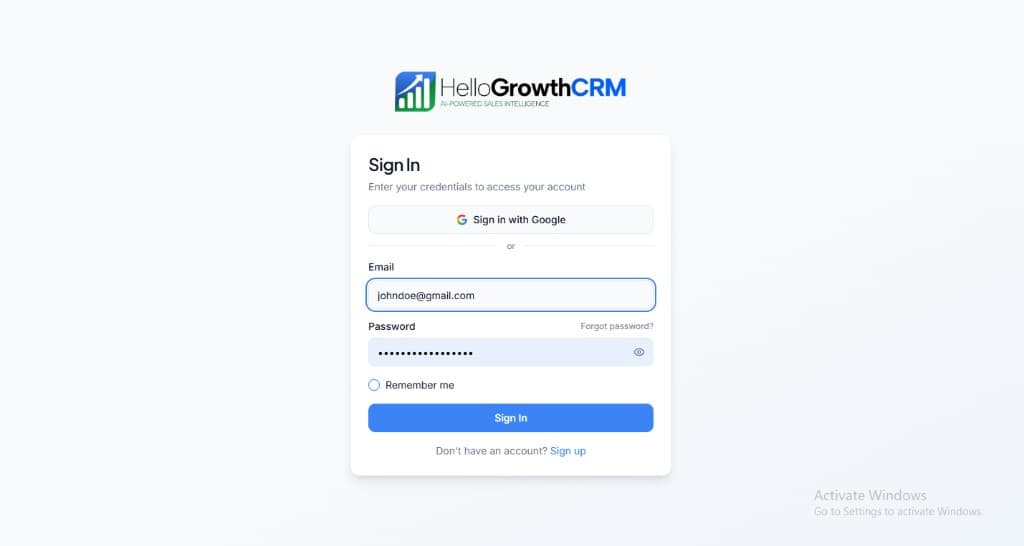
Open login page(opens in a new tab)app.hellogrowthcrm.com/login
Open Settings. In the left sidebar, under Admin, click Settings (you will land on the Settings area; the URL is app.hellogrowthcrm.com/settings).
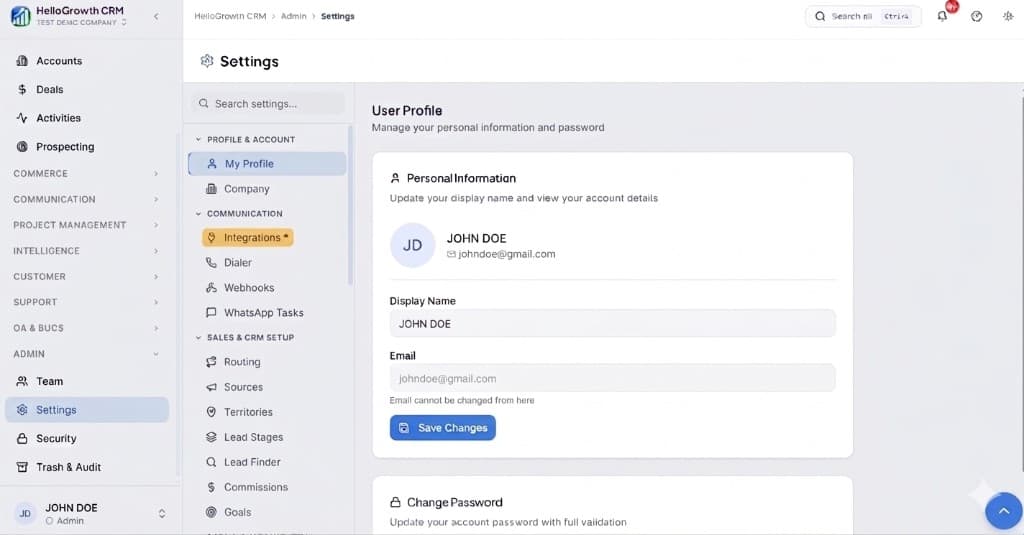
Open Settings(opens in a new tab)app.hellogrowthcrm.com/settings
Go to Integrations. On the Settings screen, use the middle settings menu. Under COMMUNICATION, click Integrations (star icon). Then find and configure this connector—the connector-specific steps below pick up from here.
Open Settings (Integrations)(opens in a new tab)app.hellogrowthcrm.com/settings
- Settings → Integrations → Outlook → Authorize your Microsoft account.
Best practices
- Connect every rep's calendar — activity reporting is only as honest as its least-connected member.
- Use booking links for first meetings; the fastest lead response is a link the prospect can act on immediately.
- Keep the deal association on meetings with multi-deal accounts so reviews read cleanly.
- Exclude personal calendars from sync scope; the CRM needs customer-facing events only.
- Log no-shows honestly and automate the reschedule nudge — recovered no-shows are found revenue.
Best for & common use cases
Organizations on Microsoft 365.
- Enterprise sales teams living in Outlook.
Expected outcomes
- Faster lead handoff between tools and CRM owners
- Cleaner activity history for follow-up and reporting
- Lower manual copy-paste errors in the pipeline
Troubleshooting
- Events not logging: invitee email doesn't match the CRM contact — add the alternate address to the record.
- Sync stopped: OAuth token invalidated by a password reset or admin policy change — reconnect the calendar.
- Duplicate events: the same meeting synced from two connected accounts (organiser and attendee both internal) — scope logging to the organiser's calendar for internal-hosted meetings.
FAQ
Governance
Treat API keys and webhooks as production secrets. Align field mapping with your privacy policy and regional regulations (GDPR, marketing consent, telemarketing rules). Your admin controls which roles can install or edit integrations.
Related integrations in this category
Ingests bookings as CRM activities and leads via webhook.
Same pattern as Calendly — bookings ingested with deduplication rules.
Video meeting scheduling: generate and sync conference links with CRM activities (Zoom and Google Meet).
Two-way sync of events; can auto-generate Google Meet links for meetings.
Offline conversions and performance data: upload CRM milestones (qualified lead, won deal) to Google Ads using GCLID.
Server-side events to Meta with hashed user data for attribution.
GA4 Measurement Protocol: send CRM lifecycle events (e.g. lead_qualified, deal_won) into Google Analytics.
Auto-ingest leads from Meta Lead Ads (Facebook and Instagram) with campaign and form attribution.