What monthly strategy call does
The Monthly Strategy Call is a recurring working session on the RevOps Partner plan between your leadership and your named specialist. It reviews the month's pipeline health, follow-up execution, and revenue movement, then makes decisions for the next cycle: what to prioritise, what to fix, which experiments to run, and what the managed team should build or change in the CRM before the next call.
Without a fixed decision forum, managed services drift into ticket-taking — work happens, reports arrive, but nobody converts observations into direction. Meanwhile leadership's picture of the business and the ops team's picture slowly diverge. The monthly call is where the weekly reports become choices, priorities get re-ranked against actual results, and both sides leave with the same short list of what matters next.
How it works in HelloGrowthCRM
Your specialist prepares an agenda from live HelloGrowthCRM data — the month's KPI trends, pipeline movement, stalled areas, and progress on last month's actions. The call walks through wins, gaps, and decisions needed, and closes with an agreed action list that has owners and dates. Actions land as tracked work: automation requests, cleanup priorities, campaign adjustments.
It sits between the Weekly KPI Report, which supplies the evidence, and the Quarterly Funnel Review, which handles structural questions — the monthly call is the operating tempo where course corrections actually get decided.
See it in action
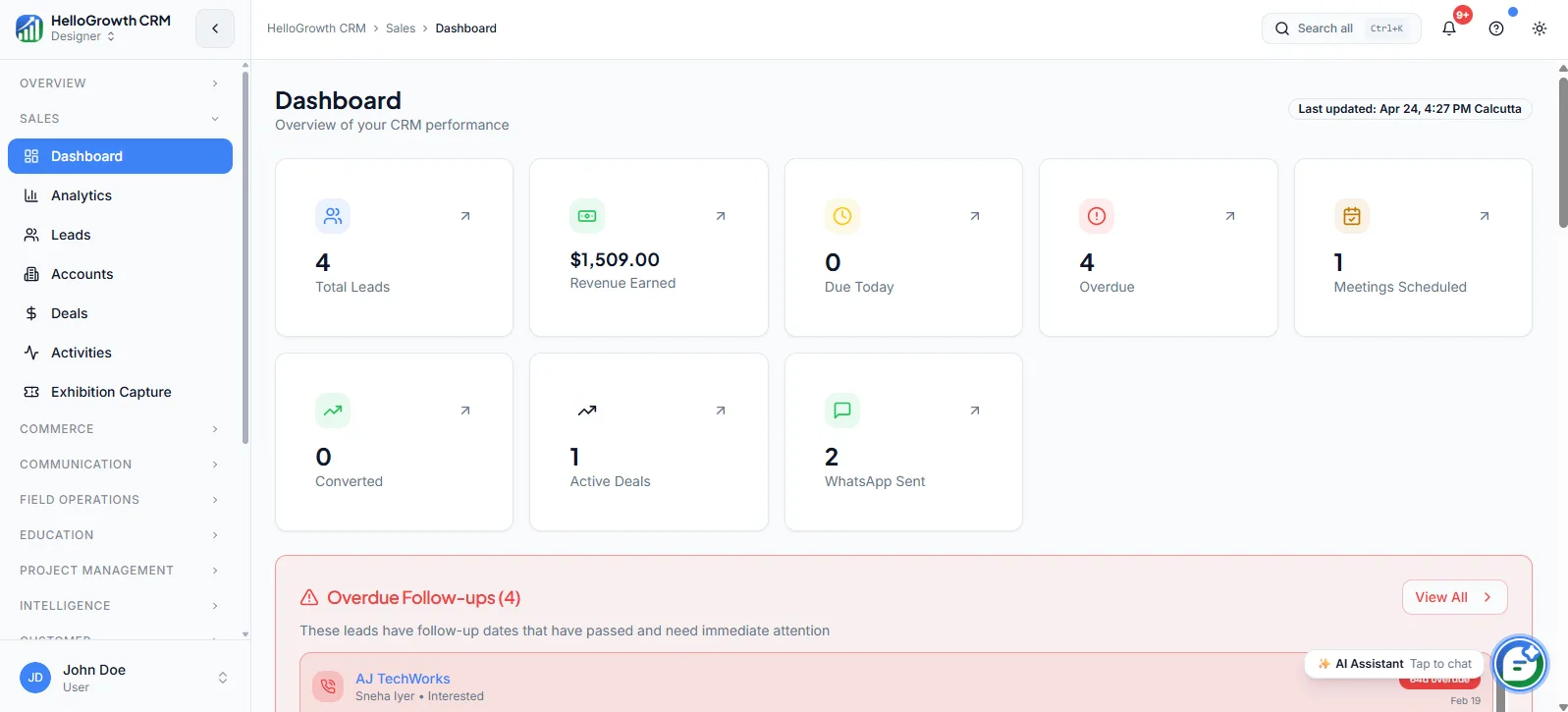
How this capability is packaged by plan
| Plan | Availability |
|---|---|
| Free Forever | |
| Software Only | |
| Growth Engine | |
| RevOps Partner |
Setting it up — step by step
- 1
Fix the recurring slot
Book a standing monthly time with the decision-makers who can commit to changes, not just observers.
- 2
Agree the standing agenda
Define the recurring structure with your specialist — results, gaps, decisions, actions — so calls stay decisive rather than rambling.
- 3
Name the decision owner
Nominate who on your side has final say when priorities conflict, so calls end with choices made.
- 4
Connect the inputs
Ensure the weekly KPI reports and open action list feed the agenda, so the call starts from evidence.
- 5
Set the follow-up loop
Agree how actions are logged and how progress is checked at the start of the next call.
Who uses monthly strategy call
Founder/owner
Uses the hour to steer the engagement — reviewing what the retainer delivered, redirecting effort toward what the business needs next, and making the calls that reps and specialists cannot make for them.
Sales manager
Brings floor-level reality to the numbers — why a stage is jamming, which leads are weak — and leaves with agreed process changes instead of carrying every frustration alone for another month.
RevOps lead
Treats the call as backlog grooming for the revenue system: last month's actions verified, new priorities ranked, and specialist capacity pointed at the highest-leverage fixes for the coming cycle.
Monthly Strategy Call in practice — industry examples
Small business
A small business owner with no sales manager uses the monthly call as their de facto revenue meeting: the specialist walks through what the funnel did, they decide together whether next month's push is reactivating quiet quotes or feeding the top of funnel.
Staffing agencies
A staffing agency reviews both sides of its marketplace on the call — client job orders and candidate pipelines. When the data shows orders outpacing available candidates, the month's priority shifts to sourcing automation and candidate reactivation sequences before new client outreach resumes.
Hotels
A hotel group's corporate and events sales team uses the call to prep seasonal pushes: reviewing conversion on last month's wedding inquiries, deciding whether to tighten the events qualification bar, and directing the specialist to build follow-up cadences before peak booking season.
Common mistakes to avoid
Sending attendees without decision authority, so every priority question gets deferred and the call becomes an expensive status reading.
Skipping the call during busy months — precisely when direction matters most — and letting the engagement drift into autopilot.
Rehashing the weekly numbers line by line instead of deciding things, duplicating the KPI report while the decision list goes untouched.
Leaving actions unowned and undated, so next month opens with the same list and diminishing faith in the process.
What teams usually care about here
Useful for aligning leadership expectations with what the CRM and ops team are actually driving
Turns reporting into action by discussing next-step decisions, not just past numbers
Most valuable when paired with a managed operating cadence and named specialist support
How this fits the buying decision
Buyers usually do not evaluate monthly strategy call in isolation. They want to know whether it improves execution, reporting, handoffs, and accountability inside the broader CRM workflow. That is why this capability matters most when it is connected to records, ownership, activity history, and manager review rather than living in a separate point tool.
The real decision is often less about whether a box is checked and more about how much depth the team needs. Lower tiers may be enough when the workflow is simple or the volume is small. Higher tiers become more valuable when teams need governance, faster response expectations, specialist execution, or a repeatable operating cadence around the process.
If this capability is important to your rollout, compare it in the context of the whole plan. That includes related workflows, support level, reporting expectations, and whether your team will manage the motion itself or rely on managed RevOps help to keep it consistent.
Frequently asked questions
Which plans include the Monthly Strategy Call?
RevOps Partner only. Growth Engine includes the weekly KPI report and managed execution, but the recurring leadership strategy session with your named specialist is part of the full-service RevOps Partner engagement at the top tier.
How is the call set up initially?
During onboarding you fix a standing monthly slot, agree the recurring agenda structure, and name the decision owner on your side. Your specialist connects the weekly reports and action list into the agenda so the first call already runs on real data.
Who should attend from our side?
Whoever can commit to decisions — typically the founder or revenue leader, plus the sales manager. Keeping it small and senior matters more than broad attendance; observers can read the summary, but the call exists so choices get made in the room.
How is this different from the Quarterly Funnel Review?
The monthly call is operational steering: reviewing the month, re-ranking priorities, and directing the managed team's next cycle. The quarterly review is structural analysis of the funnel itself — stage design, leakage, source strategy. Monthly decides the next move; quarterly questions the board.
What happens to decisions made on the call?
They become tracked actions with owners and dates — automation builds go to your specialist, cleanup priorities into the weekly cadence, campaign changes to your team. Progress is checked at the top of the next call, so decisions carry forward instead of evaporating.
Related Pricing Capabilities
Commissions
Commission tracking inside the CRM that links deal outcomes to rep incentive calculations without exporting to spreadsheets.
Field Operations
Tools for managing field sales teams — check-ins, visit logs, route planning, and on-site activity capture from mobile.
Named Revenue Specialist
A dedicated operator who manages follow-up, pipeline discipline, and day-to-day revenue workflow reliability inside your CRM.
Managed RevOps
Done-for-you revenue operations support that turns HelloGrowthCRM from software into an execution system run with specialist help.
Weekly Follow-up Execution
A managed operating cadence where follow-up tasks, outreach queues, and next steps are actively worked every week.
Same-Business-Day Lead SLA
A service commitment around inbound lead handling so new opportunities are worked quickly instead of aging in queues.