What weekly follow-up execution does
Weekly Follow-up Execution is a managed cadence where a specialist actively works your follow-up load every week: outreach queues get processed, due tasks get actioned or escalated, stalled deals get a next step, and quiet leads get re-touched. It is the difference between a follow-up system that exists and one that runs.
Every team believes in follow-up; few sustain it. The moment a week gets busy, tasks roll over, sequences go unreviewed, and warm leads age past the point of interest. That leakage is silent — no dashboard alarm fires when a prospect is simply never contacted again — which is why it persists even in disciplined teams.
How it works in HelloGrowthCRM
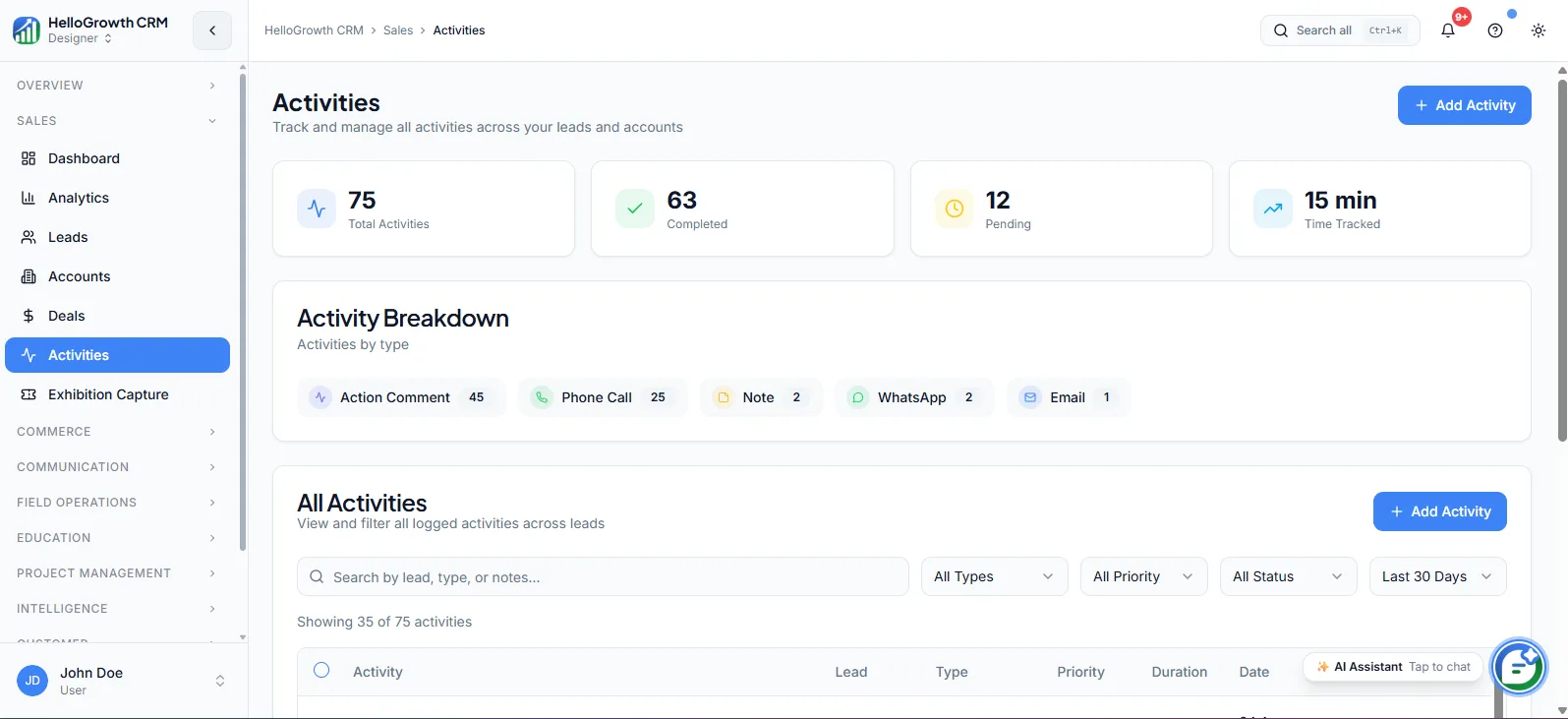
Each week, the specialist works through the CRM's follow-up surfaces: task queues, overdue activities, leads with no recent touch, and deals without a next step. Items are actioned, escalated to the owning rep with context, or scheduled forward deliberately. The customer sees completed activities on records, a current queue, and a weekly summary of what was worked.
The cadence leans on task boards, sequences, and activity data — the specialist executes where automation cannot judge, and escalates where a rep's relationship is needed.
See it in action
How this capability is packaged by plan
| Plan | Availability |
|---|---|
| Free Forever | |
| Software Only | |
| Growth Engine | |
| RevOps Partner |
Setting it up — step by step
- 1
Define follow-up standards
Agree maximum quiet time per lead status and deal stage so the queue has objective rules.
- 2
Build the working views
Set up the overdue, no-next-step, and no-recent-touch views the weekly pass will run on.
- 3
Agree escalation boundaries
Decide which touches the specialist executes directly and which go to reps with prepared context.
- 4
Fix the weekly schedule
Set which day the pass runs and when the summary of worked items reaches you.
- 5
Calibrate after two cycles
Review the first fortnight's escalations and outcomes, then tighten standards and boundaries.
Who uses weekly follow-up execution
Founder/owner
Stops being the person who notices, three weeks late, that nobody called the promising lead back — the weekly pass catches it in days, and the summary shows exactly what was rescued.
Sales manager
Gets escalations with context — this deal has been quiet eleven days, here is the history, it needs your rep today — instead of discovering silence during quarter-end pipeline archaeology.
Sales rep
Receives a short, prioritised list of relationship-critical touches prepared by the specialist, while routine re-touches and scheduling are executed for them — so their follow-up time goes to conversations that need a human who knows the account.
Weekly Follow-up Execution in practice — industry examples
Coaching institutes
An institute's counsellors focus on this week's admission inquiries and forget last month's undecided parents. The weekly pass re-touches every quiet inquiry before it ages out, escalates families who re-engaged, and the director's summary shows how many enrolments came from revived, not fresh, inquiries.
Dental clinics
A clinic quotes treatment plans that patients take home to consider — and then nobody follows up. The weekly execution pass works the pending-plan queue on schedule, books reconsideration calls, and flags high-value plans going quiet, so accepted treatments stop depending on the patient calling back unprompted.
Event planners
An events company sends proposals in bursts around inquiry season, then goes heads-down delivering. The specialist keeps every open proposal on its follow-up schedule through delivery crunches, escalating warm responses immediately — so next season's pipeline is built while this season's events are being run.
Common mistakes to avoid
Setting no quiet-time standards, so the weekly pass has no objective rule for what counts as overdue.
Ignoring escalations, so the specialist rescues leads that then die anyway waiting on a rep who never acts.
Piling every rescued lead back onto reps instead of letting the specialist execute routine touches directly.
Judging the service on one week's revenue instead of leak reduction — the value compounds across the quarter.
What teams usually care about here
Useful for teams where good intentions are not turning into consistent outbound or nurture execution
Helps prevent silent lead leakage across inbound, outbound, and stalled opportunities
Often one of the fastest ways to improve pipeline responsiveness without new headcount
How this fits the buying decision
Buyers usually do not evaluate weekly follow-up execution in isolation. They want to know whether it improves execution, reporting, handoffs, and accountability inside the broader CRM workflow. That is why this capability matters most when it is connected to records, ownership, activity history, and manager review rather than living in a separate point tool.
The real decision is often less about whether a box is checked and more about how much depth the team needs. Lower tiers may be enough when the workflow is simple or the volume is small. Higher tiers become more valuable when teams need governance, faster response expectations, specialist execution, or a repeatable operating cadence around the process.
If this capability is important to your rollout, compare it in the context of the whole plan. That includes related workflows, support level, reporting expectations, and whether your team will manage the motion itself or rely on managed RevOps help to keep it consistent.
Frequently asked questions
Which plans include Weekly Follow-up Execution?
It is included in the Growth Engine and RevOps Partner managed-service plans. Free Forever and Software Only include the software's task and sequence features, but the weekly human execution cadence is a managed service on the higher tiers.
What does setup involve?
Onboarding defines your follow-up standards — how long any lead or deal may sit quiet — builds the working views, and sets escalation boundaries between the specialist and your reps. The first pass typically runs within the opening weeks, with calibration after two cycles.
Who actually sends the follow-ups — us or the specialist?
Both, by agreement. The specialist directly executes routine touches — re-engagement messages, scheduling nudges, queue processing — while relationship-critical conversations are escalated to the owning rep with full context prepared. The boundary is set at onboarding and adjusted as trust builds.
Does it use WhatsApp, email sequences, and the dialer?
Yes. The weekly pass works across whatever channels your standards specify: sequences are reviewed and enrolled, WhatsApp and SMS templates are used for re-touches where appropriate, and call tasks are queued for the dialer. Every touch logs to the record like any other activity.
How do we know the work is happening?
Every actioned item appears as a completed activity on the relevant record, and a weekly summary lists what was worked, rescued, and escalated. The most visible sign is structural: overdue queues stay near zero instead of growing between your own cleanup bursts.
Related Pricing Capabilities
Monthly Strategy Call
A recurring planning and review session focused on pipeline health, priorities, and revenue-operations decisions for the next cycle.
Support
Plan-based support coverage that ranges from community help to priority queues and a dedicated managed-service contact with strategic guidance — matched to how central the CRM is to your revenue.
API & Integrations
Connectivity tooling for syncing data, triggering workflows, and fitting the CRM into the rest of the operating stack.
Lead Routing
Automated lead assignment rules that distribute new inquiries to the right rep based on territory, source, score, or round-robin logic.
Validation Rules
Field-level data validation rules that enforce required inputs and data quality standards before records can be saved or moved.
Workflows
Automated workflow builder for triggering actions — task creation, field updates, notifications, stage moves — based on CRM events.