HelloGrowthCRM software
Built for real small-business sales teams
HelloGrowthCRM helps reps qualify faster, follow up on time, and close more deals—with practical automation in one place.
- AI lead scoring and pipeline visibility
- Built-in dialer, WhatsApp, and email automation
- Sales forecasting and RevOps-ready reporting
AI lead scoring in Singapore is the use of AI to rank B2B leads by fit, intent, and buying readiness using local consent rules, Do Not Call checks, and workflow automation so sales teams can prioritise the right accounts faster while staying aligned with PDPA, PDPC guidance, and finance handoff needs.
Key Takeaways
- AI lead scoring helps Singapore B2B teams rank leads faster by combining firmographic fit, buying signals, and rep activity in one system.
- A PDPA-safe workflow starts with clear consent capture, purpose limitation, data minimisation, and auditable field-level rules.
- DNC checks should sit inside the routing workflow before any call or SMS task is created, especially for outbound teams.
- The best setup links scoring to action, including AI Lead Scoring, Email Automation, task creation, and SDR assignment.
- PEPPOL-ready handoffs matter when qualified leads become customers and finance needs clean company data, billing contacts, and UEN details.
- HelloGrowthCRM works best when sales, RevOps, and finance agree on score thresholds, SLA timing, and handoff fields before launch.
What is ai lead scoring singapore, and why does it matter for B2B teams?
AI lead scoring in Singapore means using machine learning and workflow rules to rank inbound and outbound leads based on conversion likelihood, then routing the best-fit accounts to the right rep while applying local compliance checks such as consent tracking, PDPA-safe processing, and DNC gating before outreach starts.
For most B2B teams, the real benefit is not the score itself. The benefit is what happens next.
A score should trigger action:
- Assign the lead to the right territory
- Create follow-up tasks
- Start an email sequence
- Hold back phone or SMS outreach until DNC checks pass
- Push clean account data to finance once an opportunity is accepted
That matters in Singapore because many teams sell across dense commercial zones like the CBD, Jurong East, and Tampines, where response speed is a clear advantage. If your reps wait hours to review forms by hand, higher-intent leads go cold.
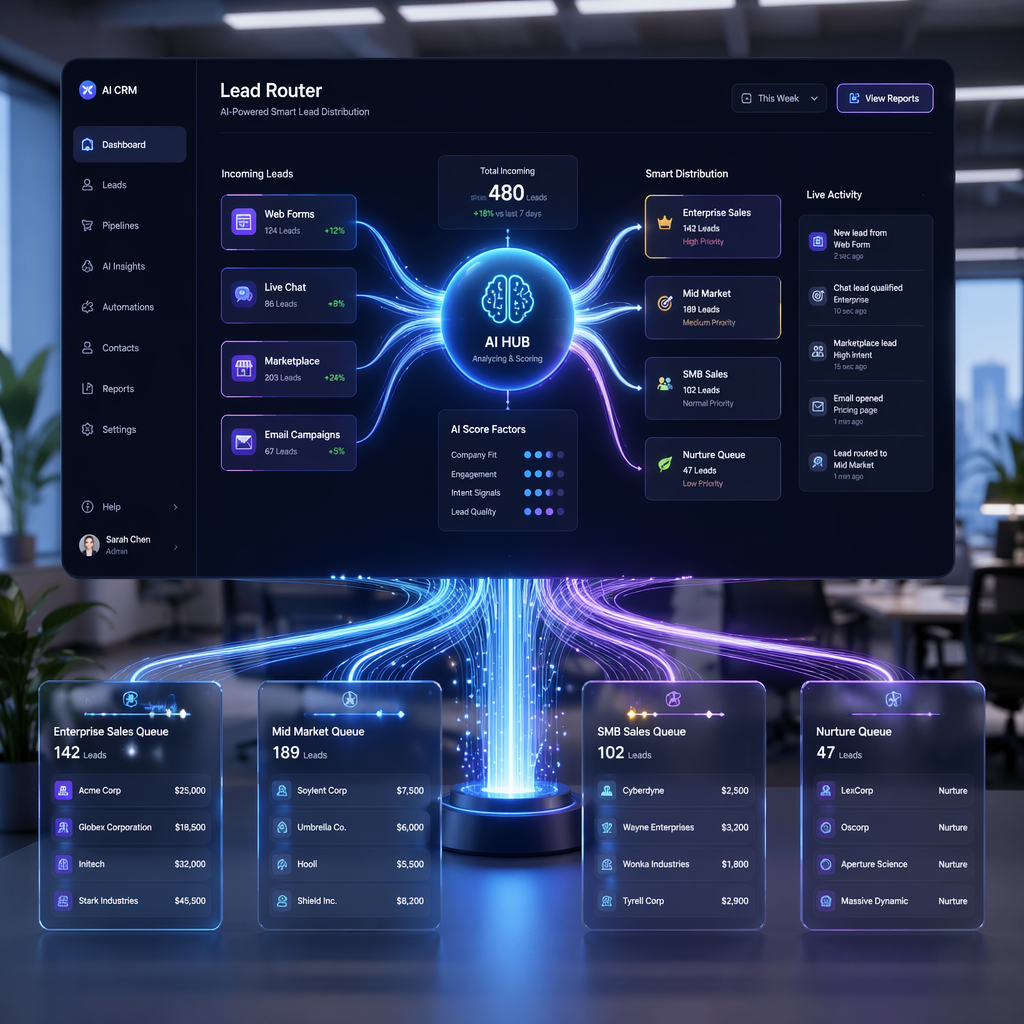
In HelloGrowthCRM, AI Lead Scoring works best when paired with AI Pipeline Management and Sales Task Boards. That gives your team one operating view from first enquiry to qualified pipeline.
In one rollout we did with a 12-person sales team serving SMEs in the Singapore CBD, the biggest win was not model accuracy. It was removing the queue of “maybe good” leads sitting untouched in inboxes. Once we linked score bands to SLA-based tasks, first response time dropped sharply and manager escalations became easier to spot.
What signals should Singapore teams score?
Start with simple, explainable inputs before adding more complexity:
- Company size
- Industry
- Job title and seniority
- Source channel
- Website visit depth
- Form intent
- Email engagement
- Meeting booked
- Existing account status
- Territory match
- Product interest
Keep the model readable. If reps cannot explain why a lead is hot, they will not trust the score.
How do PDPA, PDPC guidance, and DNC checks affect AI lead scoring workflows?
PDPA, PDPC guidance, and DNC checks affect AI lead scoring workflows by shaping what data you collect, why you process it, how long you keep it, and which outreach actions are allowed, especially for phone and SMS. The safest design is to build compliance gates directly into your automation logic.
Singapore’s Personal Data Protection Act obligations are not just legal footnotes. They should shape your CRM design.
A practical workflow should account for:
- Consent and notification: make sure forms state what follow-up the lead should expect
- Purpose limitation: only collect data needed for qualification and follow-up
- Accuracy: sync company and contact records cleanly across forms and enrichment tools
- Protection: restrict who can edit sensitive fields
- Retention: archive stale records on a schedule
For outbound, the Do Not Call Registry is critical before creating call or SMS tasks. If your workflow blindly pushes every high-score lead into a dial list, you create avoidable risk.
A safe workflow pattern for phone and WhatsApp outreach
A practical sequence looks like this:
- Lead enters CRM
- Consent source is recorded
- AI score is calculated
- DNC status is checked if phone or SMS is planned
- If restricted, route to email-only or manual review
- If allowed, create outreach tasks in CRM Dialer or WhatsApp & SMS CRM
When I have audited pipelines like this, the most common issue is not bad intent. It is poor field design. Teams often store consent in free-text notes, which makes automation brittle. Use structured fields instead.
What PDPA-safe data minimisation looks like
Keep only what helps sales or service teams act:
- Work email
- Business phone if needed
- Company name
- Role
- Use case
- Source channel
- Consent status
- Communication preference
Avoid collecting personal data “just in case.” That adds risk without improving conversion.
Which workflow design works best inside HelloGrowthCRM?
The best workflow design inside HelloGrowthCRM uses score bands, compliance gates, and role-based actions so every lead follows a clear path from capture to qualification, outreach, meeting, and finance handoff. This approach reduces manual triage and makes pipeline visibility easier for sales leaders and RevOps teams.
A simple three-band model works for most Singapore B2B teams under 50 reps:
| Score Band | Meaning | Workflow Action | Owner | Compliance Check |
|---|---|---|---|---|
| 80-100 | High intent and strong fit | Instant assignment, fast follow-up, meeting prompt | SDR/AE | DNC gate before call/SMS |
| 50-79 | Moderate fit or early intent | Nurture sequence, retest on engagement | SDR/Marketing | Email preference and consent check |
| 0-49 | Low fit or weak signal | Archive, recycle, or light nurture | Marketing/RevOps | Retention policy applies |
This is where AI CRM matters more than a standalone scoring widget. The score should connect to execution.
For example, HelloGrowthCRM can tie score thresholds to:
- Email Automation for follow-up
- Meeting Scheduler for high-intent leads
- Smart Inbox for shared response management
- AI Sales Copilot for rep guidance
- Territory Management for CBD, west, or east routing
Suggested service-level targets in Singapore
Use simple internal SLAs:
- High-score inbound lead: first response in 5 to 15 minutes
- Demo request: same-business-hour response
- Marketing-qualified lead: action within 4 business hours
- Recycled lead: recheck within 30 days
The IMDA continues to promote digital capability building for businesses through its programmes and resources, which supports the broader case for workflow-led automation in Singapore teams.
How to set up ai lead scoring singapore in HelloGrowthCRM: Step-by-Step
Setting up ai lead scoring singapore in HelloGrowthCRM means defining score inputs, building PDPA-safe fields, adding DNC checkpoints, routing leads by score and territory, and connecting accepted opportunities to finance-ready company records so sales and finance work from one clean, auditable process.
- Define your ideal customer profile
- Create structured compliance fields
- Map score inputs in AI Lead Scoring
- Set score thresholds and routing rules
- Add DNC gates before outreach tasks
- Trigger follow-up automation
- Equip reps with context
- Create the finance handoff
- Measure stage conversion and response time
What to automate first
If you are starting from spreadsheets or a basic CRM, automate in this order:
- Lead capture and enrichment
- Score calculation
- Assignment and task creation
- DNC gating
- Email follow-up
- Meeting booking
- Opportunity acceptance
- Finance handoff
This works especially well for Singapore teams in fast-moving B2B segments such as IT services, logistics, industrial supply, and professional services.
How should sales and finance teams handle PEPPOL-ready handoffs?
Sales and finance teams should handle PEPPOL-ready handoffs by collecting billing and entity data at opportunity acceptance, not after the verbal close, so invoicing, procurement checks, and e-invoicing requirements do not delay revenue recognition or customer onboarding.
In practice, this is where many revenue workflows break.
Sales captures enough data to run the deal. Finance then has to chase for:
- Registered company name
- UEN
- Billing contact
- Purchase order rules
- E-invoicing format needs
- Payment terms
Singapore businesses using InvoiceNow rely on the national PEPPOL framework for e-invoicing. IMDA explains InvoiceNow and the PEPPOL network here: InvoiceNow. If your handoff is messy, even a well-scored lead creates friction later.
The minimum PEPPOL-ready handoff checklist
Before an opportunity becomes closed-won, require:
- Legal company name
- UEN
- Billing email
- Accounts payable contact
- Payment terms
- Service start date
- Product or service SKU
- PO requirement
- Invoice delivery method
HelloGrowthCRM can support this through stage-based field requirements, Revenue Attribution, and workflow triggers connected to finance systems through All Integrations or tools like Zapier.
What results can Singapore teams expect, and where are the limits?
Singapore teams can expect faster response times, better rep focus, cleaner qualification, and more reliable pipeline visibility from AI lead scoring, but results depend on data quality, clear score rules, and disciplined handoffs. AI scoring improves prioritisation first; it does not fix weak messaging or poor product-market fit.
That limitation matters.
If your form quality is poor, your score will be poor. If your reps ignore alerts, the score will not help. If finance handoff fields are optional, revenue ops will still clean data by hand.
A widely cited benchmark from Harvard Business Review notes that companies that contact potential customers within an hour are nearly seven times as likely to qualify the lead as those that wait even one more hour according to the article’s analysis. Speed still matters.
In one Jurong East rollout for a technical services team, we found that score accuracy was only half the story. The bigger lift came from routing hot leads to the rep already covering that account cluster and auto-creating the first three tasks. That cut manager chasing and improved follow-up consistency.
Practical KPIs to watch
Use a small scorecard:
- Lead-to-meeting rate
- MQL-to-SQL conversion
- SQL acceptance rate
- First-response time
- Opportunity creation rate
- Win rate by score band
- Average sales cycle in days
- Revenue by source in SGD
If you want a baseline before making changes, use the Lead Scoring Calculator and CRM ROI Calculator.
For larger teams, or if your process spans marketing, SDRs, AEs, and finance, Managed RevOps can help standardise fields, routing logic, and reporting.
For Singaporean teams that want faster qualification, safer automation, and cleaner finance handoffs, HelloGrowthCRM brings scoring, workflow automation, AI follow-up, and revenue visibility into one platform. Explore the Features, review Pricing, or start a Free Trial to see how your team in the CBD, Jurong East, or Tampines can run AI lead scoring with less manual work.
About the author
Aaron Lim is a Revenue Operations Lead at HelloGrowthCRM with 9 years of experience in B2B SaaS sales systems, lifecycle automation, and CRM design. He has led CRM and workflow rollouts for growth teams across Singapore, including a 12-person sales organisation that needed PDPA-safe lead routing and faster quote-to-cash handoffs. This article draws on that hands-on work with lead scoring models, SDR SLAs, and finance-ready pipeline processes.
Frequently Asked Questions
Q: What is ai lead scoring singapore in simple terms?
A: AI lead scoring singapore is the use of AI to rank business leads in Singapore by likelihood to convert while applying local compliance checks like consent tracking and DNC gating. It helps reps focus on the best accounts first and reduces manual review work.
Q: Is AI lead scoring allowed under Singapore PDPA?
A: Yes, AI lead scoring is allowed under Singapore PDPA when you collect, use, and protect personal data for clear purposes and apply proper governance. The key is lawful handling, data minimisation, access control, and transparent workflow design.
Q: Do I need to check the DNC registry before every sales call?
A: Yes, you should check the DNC registry before sales calls or SMS outreach when those channels are used for marketing contact in Singapore. The safest approach is to place the check inside your CRM workflow before creating call or message tasks.
Q: How accurate should an AI lead scoring model be before launch?
A: An AI lead scoring model should be useful before it is perfect, which means it should clearly improve prioritisation and response speed at launch. Start with simple inputs, review score-band conversion weekly, and refine after you collect enough outcome data.
Q: What data should sales collect for a PEPPOL-ready handoff?
A: Sales should collect legal entity and billing data for a PEPPOL-ready handoff before the deal closes, not after. At minimum, capture company name, UEN, billing contact, payment terms, PO requirements, and invoice delivery details.
Q: Can HelloGrowthCRM automate follow-up after a lead is scored?
A: Yes, HelloGrowthCRM can automate follow-up after a lead is scored by triggering assignment, email sequences, meeting booking, and rep tasks from score thresholds. It can also route leads differently based on consent status, territory, and communication channel rules.
Q: What is a good first-response SLA for high-score inbound leads in Singapore?
A: A good first-response SLA for high-score inbound leads in Singapore is usually 5 to 15 minutes during business hours. Fast response matters because intent fades quickly, especially for buyers comparing multiple vendors at once.
Q: Is this workflow suitable for larger enterprise teams too?
A: This workflow is suitable for larger enterprise teams, but the setup gets more complex above 50 reps or across multiple business units. At that size, expect stricter role permissions, deeper integration work, and more formal model governance.
Frequently Asked Questions
Ready to put this into practice?
Set up your pipeline, WhatsApp follow-ups, and AI lead scoring in minutes — free, no credit card.
Try HelloGrowthCRM freeGet CRM tips in your inbox
Join thousands of sales professionals who get weekly insights on CRM strategy, AI automation, and pipeline optimization.

The HelloGrowthCRM team publishes guides on CRM strategy, AI sales tools, and revenue operations for small business sales teams.