HelloGrowthCRM software
Built for real small-business sales teams
HelloGrowthCRM helps reps qualify faster, follow up on time, and close more deals—with practical automation in one place.
- AI lead scoring and pipeline visibility
- Built-in dialer, WhatsApp, and email automation
- Sales forecasting and RevOps-ready reporting
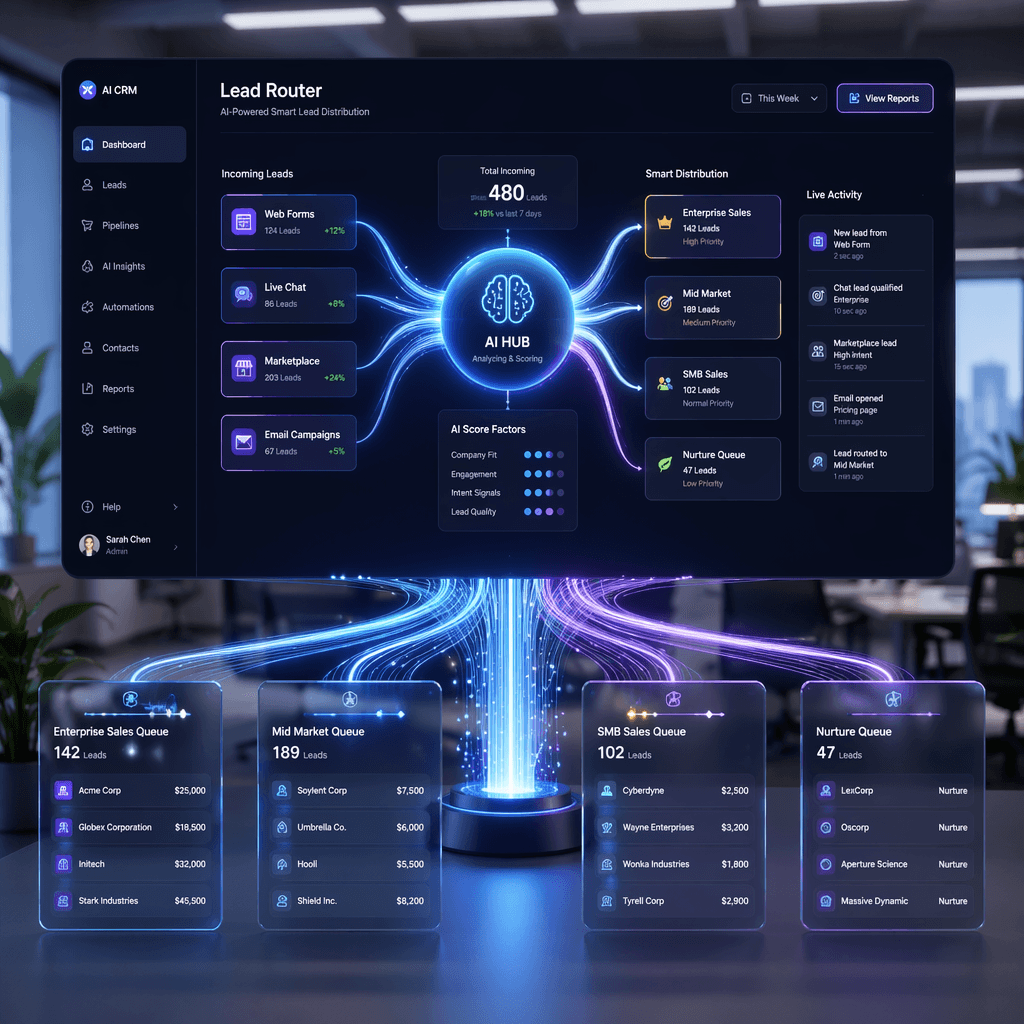
AI lead triage for inbound B2B leads is the process of automatically analyzing, qualifying, and routing incoming prospects using artificial intelligence. Instead of manually reviewing website forms, WhatsApp inquiries, or marketplace submissions, AI evaluates intent signals, enriches lead data, scores opportunity quality, and instantly routes the lead to the right salesperson. The goal is simple: respond faster to high‑value prospects and remove manual triage work from sales teams.
Key Takeaways
- AI lead triage automatically analyzes inbound leads from websites, WhatsApp, and marketplaces to detect buying intent.
- AI scoring models prioritize the highest‑value opportunities and route them to the right sales rep instantly.
- Automated follow‑ups ensure no inbound lead goes unanswered during critical response windows.
- AI enrichment adds firmographic and behavioral data to improve qualification accuracy.
- Tools like HelloGrowthCRM combine automation, scoring, and routing inside one AI-driven CRM workflow.
Why Manual Lead Triage Fails for Inbound B2B Leads
Inbound demand has increased across channels. Prospects now contact companies through:
- Website forms
- WhatsApp or SMS messages
- B2B marketplaces
- Live chat or email
- LinkedIn inquiries
Most companies still route these leads through manual processes. Someone from sales ops reviews each submission, assigns it to a rep, and schedules follow‑ups.
This approach breaks down quickly.
Three common problems appear:
- Slow response times
- Poor lead prioritization
- Lost opportunities from unassigned leads
According to research from Gartner’s CRM insights, companies that respond to leads quickly are significantly more likely to convert them into pipeline. Speed to lead is often the biggest predictor of conversion success.
In one rollout we did with a 12‑person SaaS sales team, inbound leads sat in a spreadsheet queue for up to six hours before assignment. When we implemented automated scoring and routing, response time dropped below five minutes. Demo conversion increased by 38% within two months.
Manual triage simply cannot scale with modern inbound volume.
What Is AI Lead Triage?
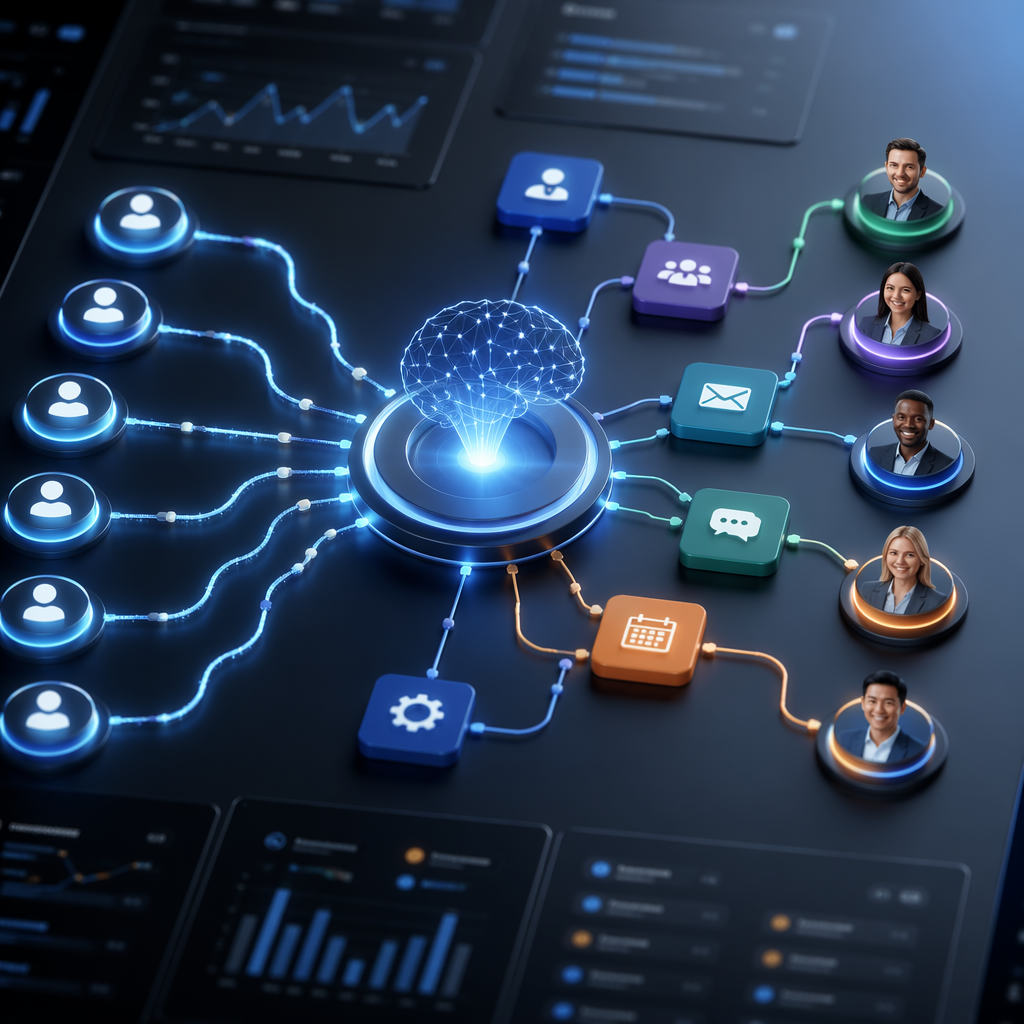
AI lead triage uses machine learning models and automation rules to process inbound leads immediately after they enter your CRM.
The system analyzes multiple signals at once:
- Lead source
- Company size
- Industry
- Message content
- Website behavior
- Engagement history
These signals feed into an AI scoring model that determines the lead’s priority.
In an AI-first system like AI CRM, the platform performs several actions automatically:
- Enrich lead data
- Calculate intent score
- Assign the lead to a rep
- Trigger follow‑up automation
This removes the need for sales ops teams to manually sort leads every day.
Signals AI Uses to Score Lead Intent
AI models look at both explicit and behavioral signals.
Common scoring inputs include:
Firmographic data
- Company size
- Revenue
- Industry
- Location
Intent signals
- Keywords used in the message
- Product pages visited
- Marketplace inquiry details
- Response urgency
Behavior signals
- Email engagement
- Demo requests
- Previous conversations
Tools like AI Lead Scoring combine these signals into a dynamic score that updates automatically.
For example, a message saying “Need pricing for 50 seats ASAP” from a mid‑market company receives a higher priority score than a generic “Tell me more” message.
AI Enrichment Improves Qualification
Many inbound leads arrive with incomplete information.
A typical form submission might include:
- Name
- Company name
- Short message
That is not enough for accurate qualification.
AI enrichment tools automatically add missing data such as:
- Company size
- Industry classification
- Estimated revenue
- Technology stack
- LinkedIn profile data
When I audit inbound pipelines, enrichment alone often improves qualification accuracy by 30–40%. Sales reps gain context before their first interaction.
HelloGrowthCRM integrates enrichment directly with pipeline automation, which means every new lead becomes actionable immediately.
Multi-Channel Inbound Lead Capture
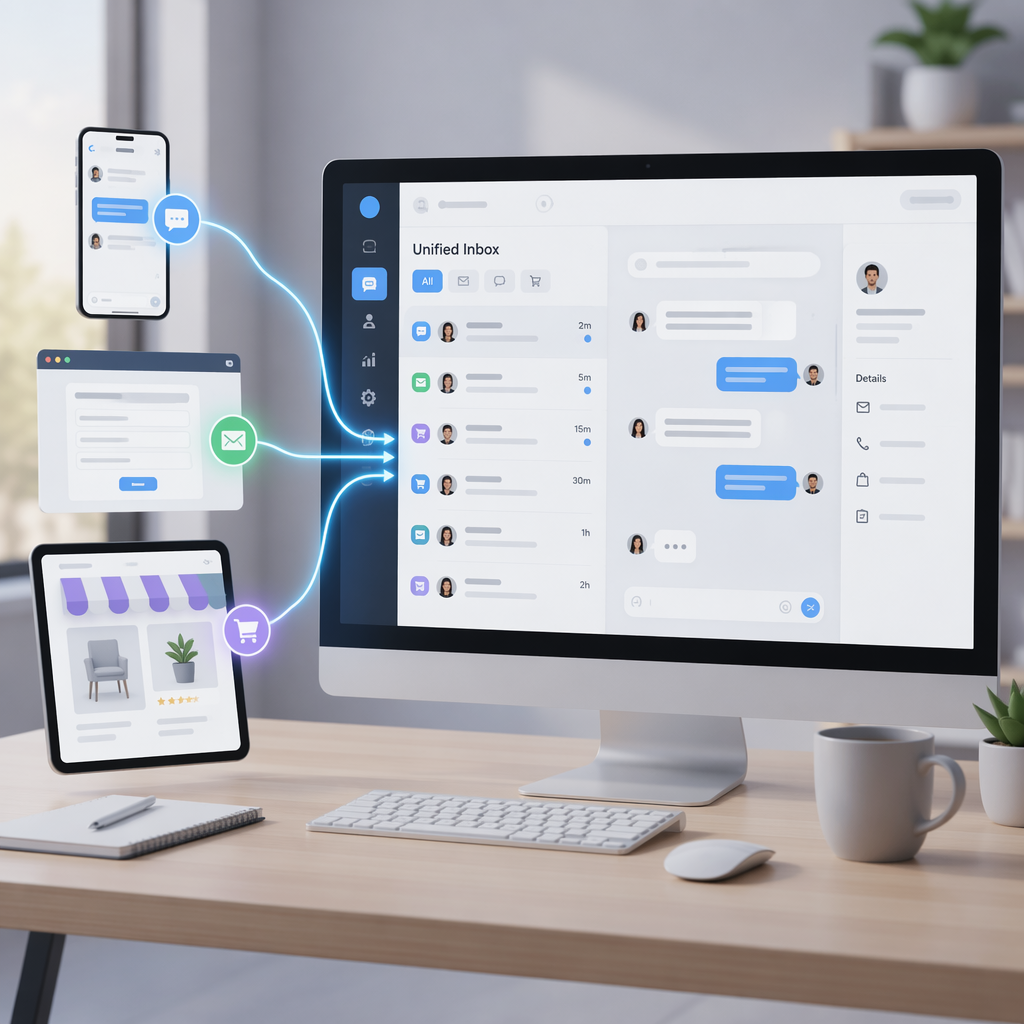
Modern inbound sales rarely come from just one source. AI triage works best when all channels feed into a single system.
Website Leads
Website forms remain the primary inbound source for many B2B companies.
AI systems analyze:
- Form responses
- Page visit history
- Downloaded content
- Demo requests
Once the lead submits the form, the CRM automatically scores and routes the opportunity.
Using a built‑in Meeting Scheduler also reduces friction by allowing qualified leads to book meetings instantly.
WhatsApp and Messaging Leads
Messaging apps have become a major inbound channel globally.
When integrated through a tool like WhatsApp & SMS CRM, incoming messages can be analyzed by AI for intent signals.
The system evaluates the conversation content and decides:
- Which rep should respond
- Whether the lead qualifies for sales
- Whether automation should send the first reply
AI systems can also route conversations into a centralized Smart Inbox so sales teams never miss messages.
B2B Marketplace Leads
Marketplaces like industry directories and vendor platforms generate high‑intent leads.
However, these leads often arrive through email or external integrations.
By connecting those channels through tools like All Integrations, inbound marketplace leads can automatically enter the CRM workflow.
The AI system then:
- Parses the message
- Extracts key data
- Assigns the lead
- Triggers follow‑ups
Automated Lead Routing Based on Sales Territories
Once a lead is qualified, the next step is routing it to the correct sales rep.
Routing logic usually includes:
- Geography
- Industry specialization
- Account ownership
- Deal size thresholds
In large sales teams, this logic becomes complex quickly.
A structured approach uses territory rules combined with AI prioritization. Tools like Territory Management help assign leads correctly while maintaining balanced workloads.
In one RevOps project I worked on, the company used three routing rules:
- Enterprise leads → senior reps
- Mid‑market leads → account executives
- SMB leads → inside sales
Once we layered AI scoring on top of this model, the highest intent leads were automatically prioritized inside each segment.
AI Follow‑Ups Prevent Lost Opportunities
Inbound leads expect immediate responses. If they do not receive one, they often move to another vendor.
Research published by Harvard Business Review highlights how fast response times strongly affect lead conversion rates in B2B sales environments (HBR sales insights).
AI follow‑up systems solve this problem.
Automation can:
- Send an instant acknowledgment email
- Trigger WhatsApp replies
- Schedule follow‑up reminders
- Assign sales tasks
Using tools like Email Automation and Sales Task Boards, teams can ensure every inbound lead receives consistent follow‑ups.
Some companies also use AI conversation analysis tools such as the Post-Call Agent to capture insights after discovery calls.
The result is a closed feedback loop where lead data improves over time.
How to Implement AI Lead Triage: Step-by-Step
1. Centralize All Inbound Lead Sources
Connect your website forms, messaging channels, and marketplace integrations to a single CRM platform so every lead enters the same workflow.
2. Enrich Incoming Lead Data
Use automated enrichment to append firmographic and behavioral data. This ensures AI models have enough information to score leads accurately.
3. Configure AI Lead Scoring
Define scoring signals such as company size, buying intent keywords, and engagement history. AI systems like AI Lead Scoring continuously refine these scores.
4. Set Up Automated Routing Rules
Build routing logic based on territory, segment, or deal value. Platforms with built‑in AI Pipeline Management help maintain balanced pipelines across sales teams.
5. Trigger Automated First Responses
Configure automated email or messaging replies using tools like Email Automation. Immediate responses improve engagement and qualification rates.
6. Monitor Pipeline Quality
Track metrics such as stage velocity, qualification rate, and response time. Tools like the Pipeline Health Score help identify workflow issues.
Metrics That Show AI Lead Triage Is Working
You should measure the impact of AI lead triage across the entire funnel.
Important metrics include:
- Speed-to-lead (minutes from inquiry to first response)
- Qualification rate
- Meeting booking rate
- Pipeline conversion
- Revenue attribution
AI-driven systems often produce improvements in two areas first: response time and meeting conversion.
However, there are limits. AI scoring works best for companies with steady inbound traffic and structured CRM data. Very small teams with fewer than 20 inbound leads per month may see limited benefit from advanced scoring models.
Why HelloGrowthCRM Is Built for AI Lead Triage
HelloGrowthCRM combines inbound capture, AI scoring, routing, and follow‑ups in one platform.
Instead of stitching together multiple tools, the system connects:
- AI lead scoring
- messaging channels
- automated workflows
- pipeline insights
Sales teams can capture leads from websites, messaging platforms, and marketplaces, then automatically qualify them using AI Lead Scoring. Routing rules and AI Pipeline Management ensure opportunities reach the right rep immediately.
Because HelloGrowthCRM also includes tools like the Smart Inbox and AI Sales Copilot, sales teams can respond faster and maintain consistent follow‑ups.
If you want to see how automated lead triage works in practice, explore the platform’s Features or start a Free Trial to test AI-driven lead routing with your own inbound pipeline.
About the author
Daniel Reyes is a Sales Operations Lead and B2B SaaS RevOps consultant with 11 years of experience building revenue systems. He works with growth-stage companies to design AI-driven CRM workflows and pipeline automation. Daniel previously led a CRM transformation project that consolidated inbound lead capture across website forms, WhatsApp, and partner marketplaces for a 40-person sales team. He now contributes operational insights to the HelloGrowthCRM product team.
Frequently Asked Questions
Q: What is AI lead triage for inbound B2B leads?
A: AI lead triage is the automated process of analyzing and prioritizing inbound leads using machine learning. The system evaluates intent signals, enriches lead data, and assigns the lead to the right salesperson. This helps sales teams respond faster and focus on the highest‑value opportunities.
Q: How does AI determine whether a lead is high intent?
A: AI models evaluate multiple signals including message content, company data, website behavior, and engagement history. Keywords such as pricing requests or demo inquiries often increase intent scores. These signals feed into automated scoring systems like AI Lead Scoring.
Q: Can AI triage leads from messaging platforms like WhatsApp?
A: Yes. When messaging platforms are integrated into the CRM, AI can analyze incoming conversations to detect intent and urgency. Platforms like HelloGrowthCRM support this through WhatsApp & SMS CRM, allowing automated qualification and routing.
Q: How quickly should companies respond to inbound leads?
A: Most B2B teams aim to respond within five minutes whenever possible. Faster response times significantly improve meeting booking and qualification rates. AI automation helps achieve this by sending instant replies and routing leads immediately.
Q: Does AI lead scoring replace human qualification?
A: No. AI scoring prioritizes leads and provides context, but sales reps still perform deeper discovery and qualification. AI simply removes the manual sorting work so reps spend more time in conversations.
Q: What companies benefit most from AI lead triage?
A: Companies with multiple inbound channels and consistent lead volume see the most benefit. SaaS, agencies, marketplaces, and technology vendors often adopt AI triage to handle growing inbound demand.
Q: How can I start using AI lead triage?
A: The first step is centralizing inbound lead capture inside a CRM platform with automation and scoring capabilities. Platforms like HelloGrowthCRM allow teams to connect forms, messaging channels, and integrations, then automate lead qualification and routing.
Frequently Asked Questions
Ready to put this into practice?
Set up your pipeline, WhatsApp follow-ups, and AI lead scoring in minutes — free, no credit card.
Try HelloGrowthCRM freeGet CRM tips in your inbox
Join thousands of sales professionals who get weekly insights on CRM strategy, AI automation, and pipeline optimization.

The HelloGrowthCRM team publishes guides on CRM strategy, AI sales tools, and revenue operations for small business sales teams.