HelloGrowthCRM software
Built for real small-business sales teams
HelloGrowthCRM helps reps qualify faster, follow up on time, and close more deals—with practical automation in one place.
- AI lead scoring and pipeline visibility
- Built-in dialer, WhatsApp, and email automation
- Sales forecasting and RevOps-ready reporting
Analytics for ecommerce means collecting and analysing data on your online sales, customer behaviour, and marketing to improve your business decisions. This article covers why ecommerce analytics matter, step-by-step actions to set up useful analytics, a UK-specific example, common mistakes to avoid, and how HelloGrowthCRM supports ecommerce analytics with pipeline forecasting and managed revenue operations.
Why this comes up / what goes wrong
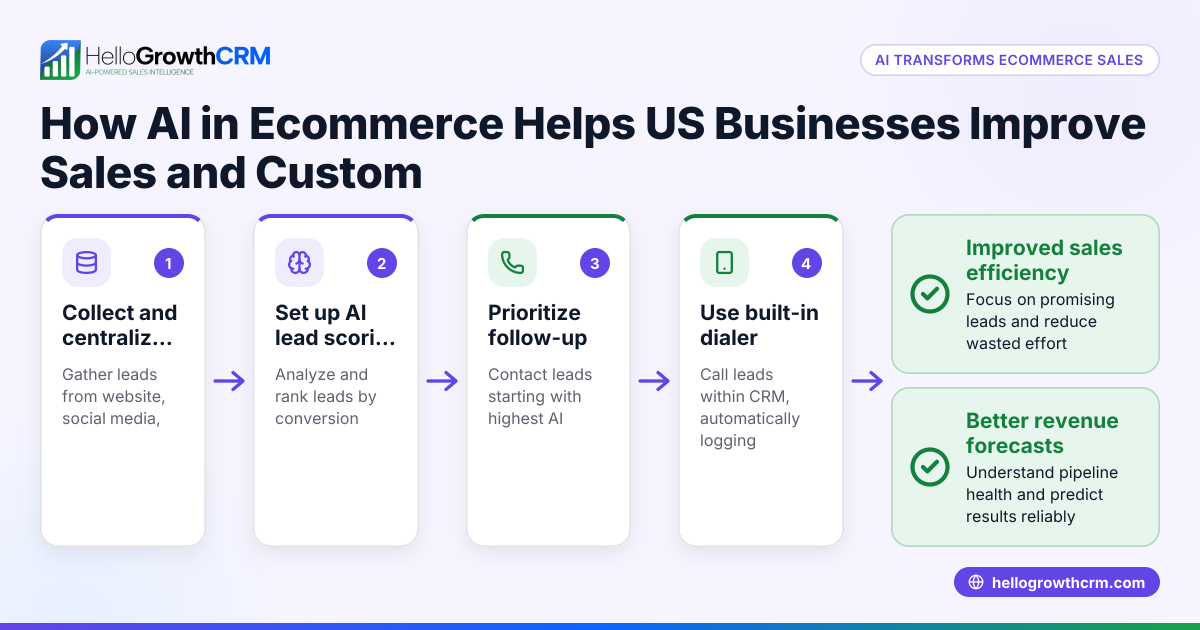
Ecommerce business owners and accountants in the UK often struggle with slow or incomplete insight into how their online sales perform. Without clear analytics, it is difficult to know which products sell best, how customers find the site, or where sales drop off. Many run sales through multiple channels like WhatsApp, email, and spreadsheets, which fragment data and delay follow-up. This leads to lost leads, missed sales opportunities, and poor forecasting. Ecommerce analytics help by centralising data, tracking lead sources, monitoring conversion rates, and forecasting revenue accurately. Good analytics also allow a business to allocate marketing spend efficiently and improve customer retention.
Step-by-step
- Define your key ecommerce metrics: Decide what matters most to your business—total sales, average order value, conversion rate, cart abandonment rate, customer acquisition cost, or repeat purchase rate. These metrics will guide your analysis.
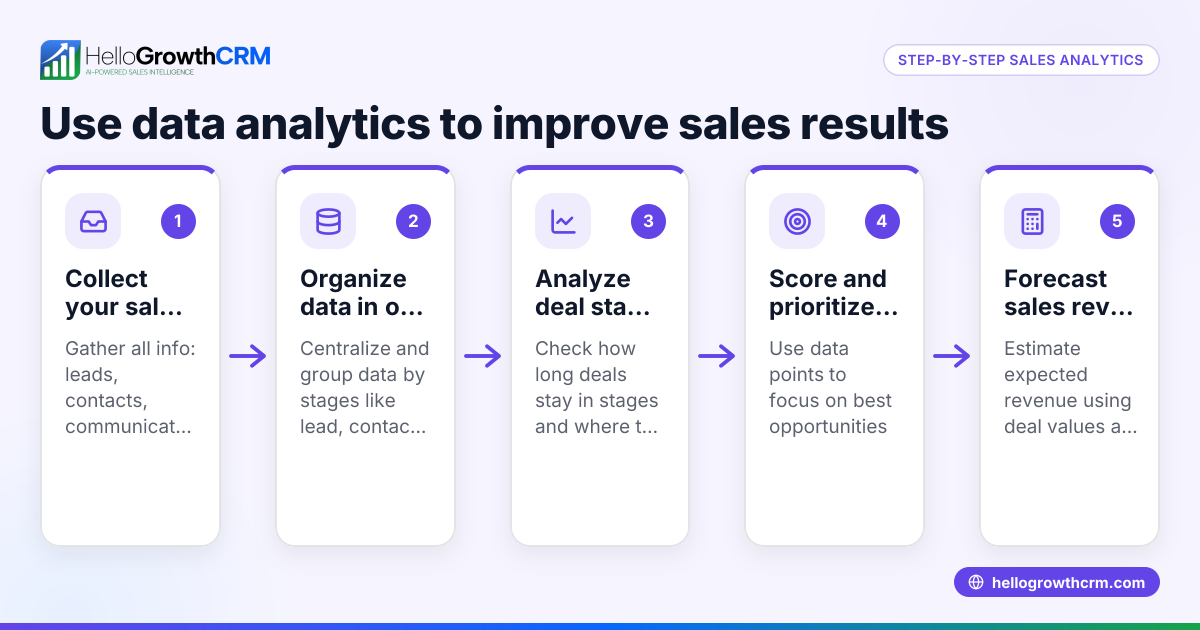
- Set up data collection tools: Use web analytics tools such as Google Analytics to track website traffic and customer behaviour. Integrate your sales channels, including WhatsApp and email, to capture all customer interactions in one place.
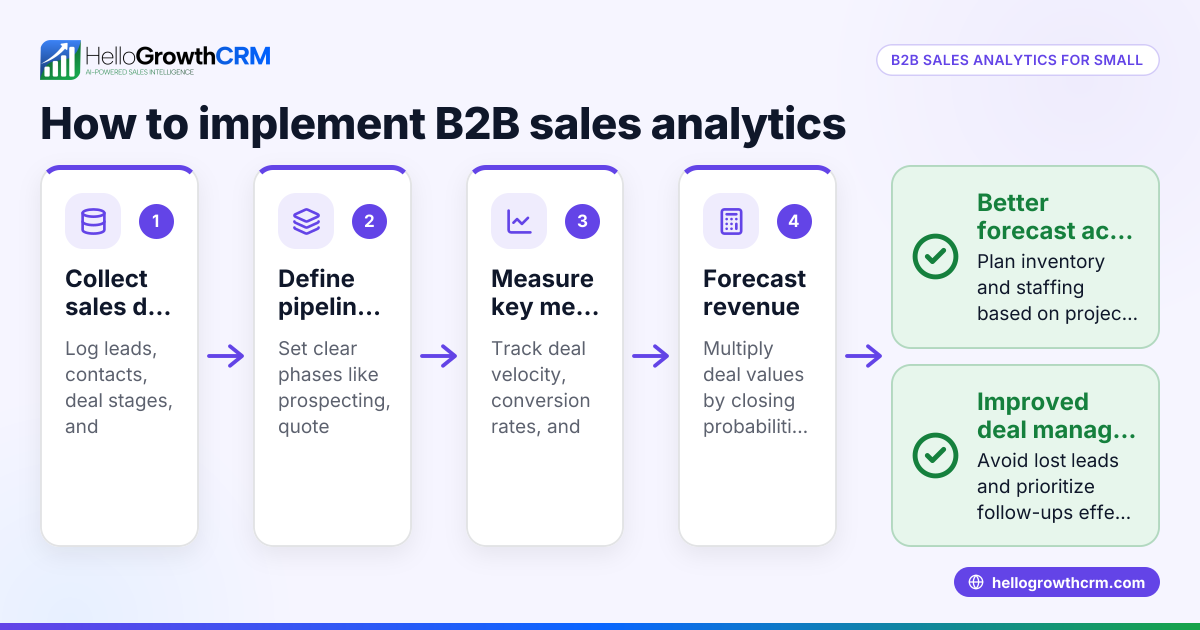
- Consolidate sales and lead data: Avoid scattered spreadsheets by centralising data in one system that tracks leads, communications, and sales progress. This reduces errors and makes it easier to analyse.
- Analyse the sales pipeline: Break down your sales stages (for example, lead captured, contacted, interested, quote sent, closed) and measure conversion rates and average time spent at each stage. This identifies bottlenecks.
- Forecast revenue: Use historical data combined with current pipeline status to predict expected sales and cash flow. This helps with stock management and financial planning.
- Review and refine regularly: Schedule weekly or monthly reviews of your analytics to spot trends, identify opportunities, and adjust your sales or marketing strategies accordingly.
- Ask the right questions before choosing tools: Check if the tool integrates WhatsApp and email, offers AI insights, and fits small UK teams. For example, discover features at HelloGrowthCRM for the United Kingdom.
Example (fictional figures)
A Birmingham-based ecommerce business sells kitchen gadgets online. In March 2026, they want to forecast revenue based on their sales pipeline.
- Total leads in pipeline: 150
- Average deal size: £120
- Conversion rates by stage:
- Contacted to Interested: 40%
- Interested to Quote Sent: 50%
- Quote Sent to Closed: 30%
Calculate expected closed deals step-by-step:
150 leads × 40% = 60 interested leads
60 interested leads × 50% = 30 quotes sent
30 quotes sent × 30% = 9 expected closed deals
Forecasted revenue:
9 deals × £120 = £1,080
This simple pipeline analysis shows the business can expect £1,080 in sales from current leads, helping plan stock and marketing spend.
Common mistakes
- Ignoring multi-channel data: Only tracking website sales misses leads from WhatsApp or email. Prevent this by consolidating all channels into one CRM.
- Using spreadsheets for pipeline tracking: Spreadsheets get outdated and cause errors. Use a CRM with pipeline boards to keep data accurate and accessible.
- Not reviewing analytics regularly: Data is useless if not acted on. Schedule weekly or monthly reviews to identify issues early.
- Overlooking lead follow-up: Leads stall without prompt contact. Managed RevOps can ensure weekly follow-up queues are cleared, preventing lost opportunities.
- Choosing tools without UK-specific features: Some CRMs lack WhatsApp or SMS integration important for UK ecommerce. Check WhatsApp and SMS CRM for options.
- Failing to define clear metrics: Without agreed key performance indicators, it is hard to measure success. Define and focus on relevant ecommerce metrics.
Doing this in HelloGrowthCRM
HelloGrowthCRM offers AI-assisted pipeline forecasting and insights, showing where deals stall without building spreadsheets. This helps ecommerce owners spot bottlenecks early and focus efforts effectively. Managed RevOps support means a revenue specialist works the follow-up queue weekly, ensuring no lead is forgotten even if there is no dedicated sales manager. Learn more about these features at HelloGrowthCRM for the United Kingdom.
Frequently asked questions
What analytics should an ecommerce business track? Track total sales, conversion rates at each sales stage, average order value, customer acquisition costs, and lead response times. These metrics highlight strengths and weaknesses in your sales process.
How can I consolidate sales data from WhatsApp and email? Use a CRM that integrates WhatsApp and email communications with your sales pipeline. This centralises lead data and communication history, preventing lost leads.
How often should I review ecommerce analytics? Weekly reviews are ideal for spotting issues early and adjusting marketing or sales tactics. Monthly reviews help with strategic planning.
Can AI help with ecommerce sales forecasting? Yes, AI can analyse historical patterns and current pipeline data to provide revenue forecasts and highlight where deals are stalling.
What are the benefits of Managed RevOps for a small ecommerce business? Managed RevOps provides weekly follow-up execution and pipeline hygiene, which is valuable for founders without a sales manager to keep leads moving through the funnel.
Why is it important to choose analytics tools with UK-specific features? UK ecommerce businesses often use WhatsApp and SMS for sales communication. Choosing tools with these integrations ensures all leads and conversations are tracked effectively, improving follow-up and sales conversion.
Key takeaways
- Ecommerce analytics track sales, customer behaviour, and marketing effectiveness.
- Consolidate multi-channel data (website, WhatsApp, email) to avoid lost leads.
- Use a clear sales pipeline to monitor conversion rates and forecast revenue.
- Regularly review analytics and act on insights to improve sales.
- Avoid spreadsheets and fragmented data by using a CRM with pipeline and communication integration.
- HelloGrowthCRM offers AI pipeline forecasting and Managed RevOps to support ecommerce analytics.
Start improving your ecommerce analytics today with HelloGrowthCRM. Start on the Free Forever plan (200 leads, no credit card).
For more on ecommerce sales tools, see E-commerce and online sellers.
Ready to put this into practice?
Set up your pipeline, WhatsApp follow-ups, and AI lead scoring in minutes — free, no credit card.
Try HelloGrowthCRM freeGet CRM tips in your inbox
Join thousands of sales professionals who get weekly insights on CRM strategy, AI automation, and pipeline optimization.

The HelloGrowthCRM team publishes guides on CRM strategy, AI sales tools, and revenue operations for small business sales teams.