HelloGrowthCRM software
Built for real small-business sales teams
HelloGrowthCRM helps reps qualify faster, follow up on time, and close more deals—with practical automation in one place.
- AI lead scoring and pipeline visibility
- Built-in dialer, WhatsApp, and email automation
- Sales forecasting and RevOps-ready reporting
B2B sales analytics means collecting and analyzing data from your business-to-business sales process to improve decisions and increase revenue. It tracks deal stages, sales speed, and conversion rates to identify opportunities and challenges in your sales pipeline. This article explains why B2B sales analytics matters, provides step-by-step guidance on how to implement it, offers a practical example with fictional figures, highlights common mistakes to avoid, and shows how HelloGrowthCRM supports these efforts.
Why this comes up / what goes wrong
Small business owners running B2B sales often juggle multiple leads and deals across different communication channels like email, text messages, and spreadsheets. This scattered approach makes it hard to track where each deal stands or if any leads slip through the cracks. Without clear sales analytics, owners can’t easily see which deals are likely to close, where the sales process stalls, or how to prioritize follow-ups. This results in lost revenue, missed targets, and inefficient use of sales time. A lack of reliable data also makes forecasting revenue and planning resources difficult.
Step-by-step
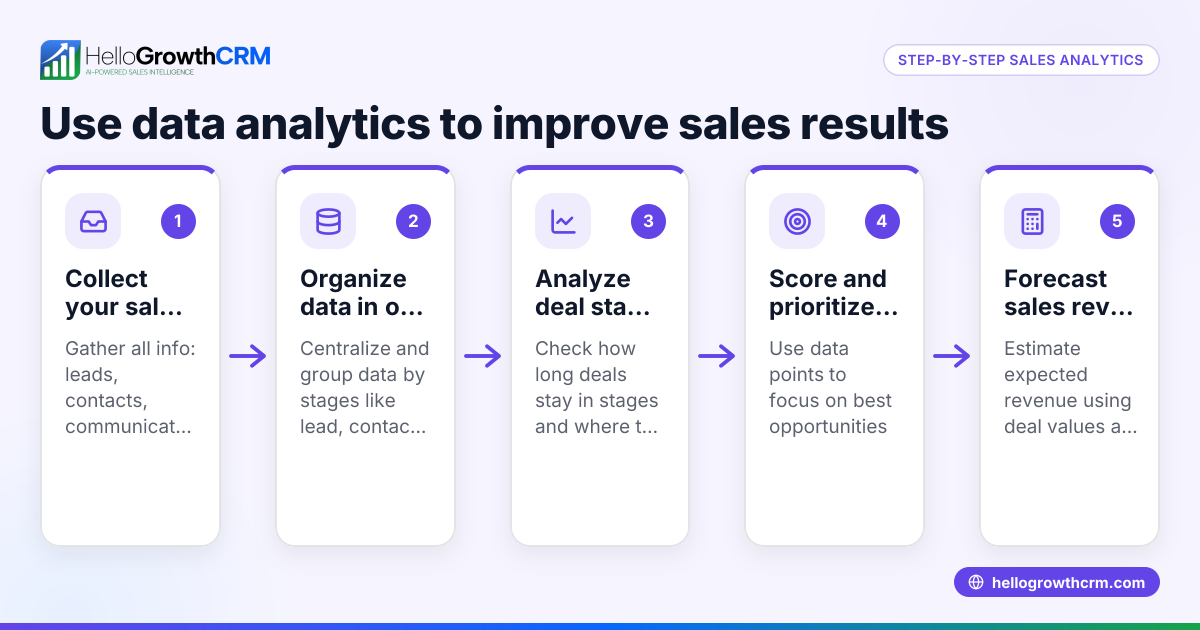
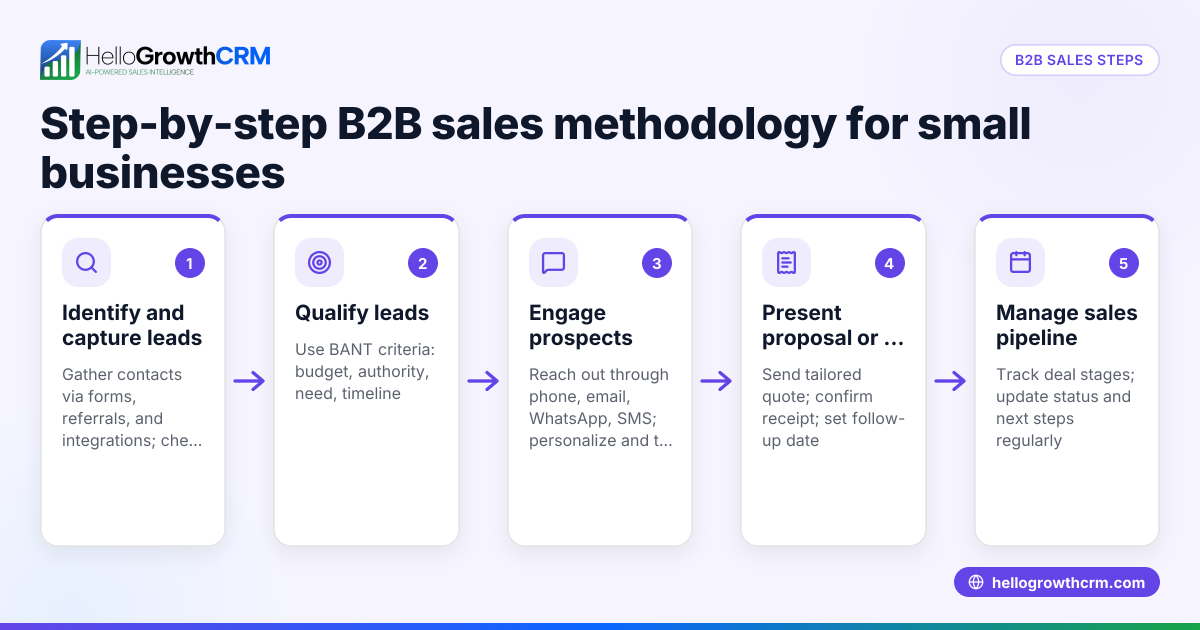
- Collect Sales Data Consistently: Use a single system to log every lead, contact, and deal stage. Record dates, communication history, deal values, and next steps to build a reliable dataset.
- Define Your Sales Pipeline Stages: Establish clear stages such as prospecting, qualification, quote sent, negotiation, and close. Assign each deal to a stage to track its progress accurately.
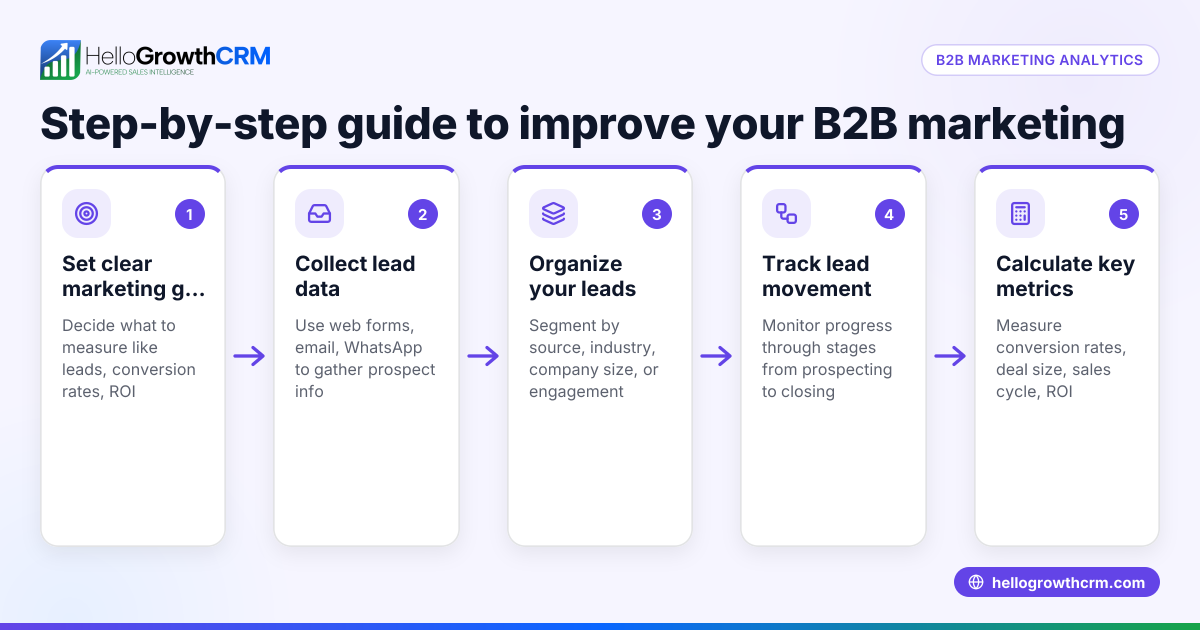
- Measure Key Metrics: Track how long deals spend in each stage (deal velocity), conversion rates between stages, and average deal size. These metrics reveal bottlenecks and performance gaps.
- Use Sales Forecasting: Calculate expected revenue by multiplying deal values by the probability of closing at each stage. This helps estimate future income.
- Identify Bottlenecks and Opportunities: Look for deals stuck too long or dropping unexpectedly. Adjust sales tactics or provide training based on these insights.
- Review and Update Regularly: Incorporate sales analytics into routine sales meetings to keep your team aligned and accountable.
Example (fictional figures)
A two-location dental equipment supplier in Columbus, Ohio, tracks its B2B sales pipeline monthly:
- Total deals in pipeline: $1,200,000
- Deals at 'quote sent' stage: $400,000
- Probability to close at 'quote sent' stage: 40%
- Deals at 'proposal' stage: $300,000
- Probability to close at 'proposal' stage: 70%
- Deals at 'negotiation' stage: $500,000
- Probability to close at 'negotiation' stage: 90%
Forecasted revenue calculation:
$400,000 × 40% = $160,000
$300,000 × 70% = $210,000
$500,000 × 90% = $450,000
Total forecasted revenue = $160,000 + $210,000 + $450,000 = $820,000
This forecast helps the owner plan inventory and staffing for the coming quarter.
Common mistakes
- Not tracking all deals consistently: Prevent this by logging every lead and deal stage in a CRM or centralized system to avoid lost opportunities.
- Ignoring stalled deals: Prevent by setting follow-up reminders and regularly reviewing pipeline health to re-engage or remove stagnant deals.
- Relying on gut feeling instead of data: Prevent by using sales analytics tools that provide objective insights based on actual sales data.
- Overcomplicating the process with too many metrics: Prevent by focusing on key metrics like deal velocity and conversion rates to keep analysis actionable.
- Failing to update data promptly: Prevent by making data entry part of the daily sales routine to keep information current.
Doing this in HelloGrowthCRM
HelloGrowthCRM offers pipeline forecast and AI insights that project expected close amounts based on current pipeline stage, velocity, and historical conversion patterns. This helps you see which stage deals are stalling in without building spreadsheets. Its deals (pipeline) feature tracks open opportunities from first contact through close, showing quotations at the 'quote sent' stage with follow-up dates so no deal is forgotten. For businesses with field reps, territories, field operations, and commissions tools allow logging visits from the phone and managers to monitor daily activity beats. Learn more about these features at WhatsApp and SMS CRM, built-in CRM dialer, and HelloGrowthCRM for the United States.
Frequently asked questions
What is the difference between B2B sales analytics and general sales analytics? B2B sales analytics focuses specifically on business-to-business transactions, which often involve longer sales cycles, multiple decision-makers, and higher deal values. General sales analytics may cover both B2B and B2C sales but might not address the complexities unique to B2B.
How often should I review my sales analytics? Reviewing sales analytics weekly or monthly is ideal to catch issues early and adjust strategies. Regular reviews keep your sales pipeline healthy and help forecast revenue accurately.
Can small businesses benefit from AI in sales analytics? Yes, AI can analyze patterns in your sales data to forecast revenue and identify stalled deals, saving time and improving accuracy. HelloGrowthCRM includes AI insights to help small businesses without requiring complex setups.
What key metrics should I focus on in B2B sales analytics? Focus on deal velocity (time spent in each stage), conversion rates between stages, average deal size, and pipeline value weighted by closing probability. These metrics provide actionable insights without overwhelming data.
How can I avoid losing leads during follow-up? Use a CRM like HelloGrowthCRM to track deals at each stage with follow-up dates. Automated reminders and pipeline views help ensure no lead is forgotten.
Key takeaways
- B2B sales analytics tracks and analyzes your sales pipeline to improve decision-making and increase revenue.
- Consistent data collection and defined pipeline stages are essential for accurate analytics.
- Forecasting revenue using deal stages and probabilities supports better business planning.
- Avoid common mistakes like inconsistent tracking, ignoring stalled deals, and overcomplicating metrics.
- HelloGrowthCRM provides pipeline forecasting, deal tracking, and field operations tools to support B2B sales analytics.
Start improving your B2B sales insights today. Start on the Free Forever plan (200 leads, no credit card).
Ready to put this into practice?
Set up your pipeline, WhatsApp follow-ups, and AI lead scoring in minutes — free, no credit card.
Try HelloGrowthCRM freeGet CRM tips in your inbox
Join thousands of sales professionals who get weekly insights on CRM strategy, AI automation, and pipeline optimization.

The HelloGrowthCRM team publishes guides on CRM strategy, AI sales tools, and revenue operations for small business sales teams.