HelloGrowthCRM software
Built for real small-business sales teams
HelloGrowthCRM helps reps qualify faster, follow up on time, and close more deals—with practical automation in one place.
- AI lead scoring and pipeline visibility
- Built-in dialer, WhatsApp, and email automation
- Sales forecasting and RevOps-ready reporting
Australian email marketing is a direct way to reach your customers and prospects by sending targeted emails that promote your business, share updates, or nurture leads. It is important to understand local expectations and legal requirements, such as complying with the Australian Spam Act, to make your campaigns effective and lawful. This article explains why Australian small businesses look to email marketing, how to set up your campaigns step-by-step, a practical example, common pitfalls, and how HelloGrowthCRM can simplify managing your email marketing.
Why this comes up / what goes wrong
Many Australian small business owners want to grow sales but struggle with slow follow-up and disorganised communication. They often rely on spreadsheets, manual email sends, or text messages, which leads to missed opportunities and inconsistent messaging. Email marketing offers a scalable way to reach leads and customers but can be confusing because of compliance rules and the need for good timing and personalisation. Without clear steps, businesses waste time or annoy recipients, reducing their chances of success.
Step-by-step
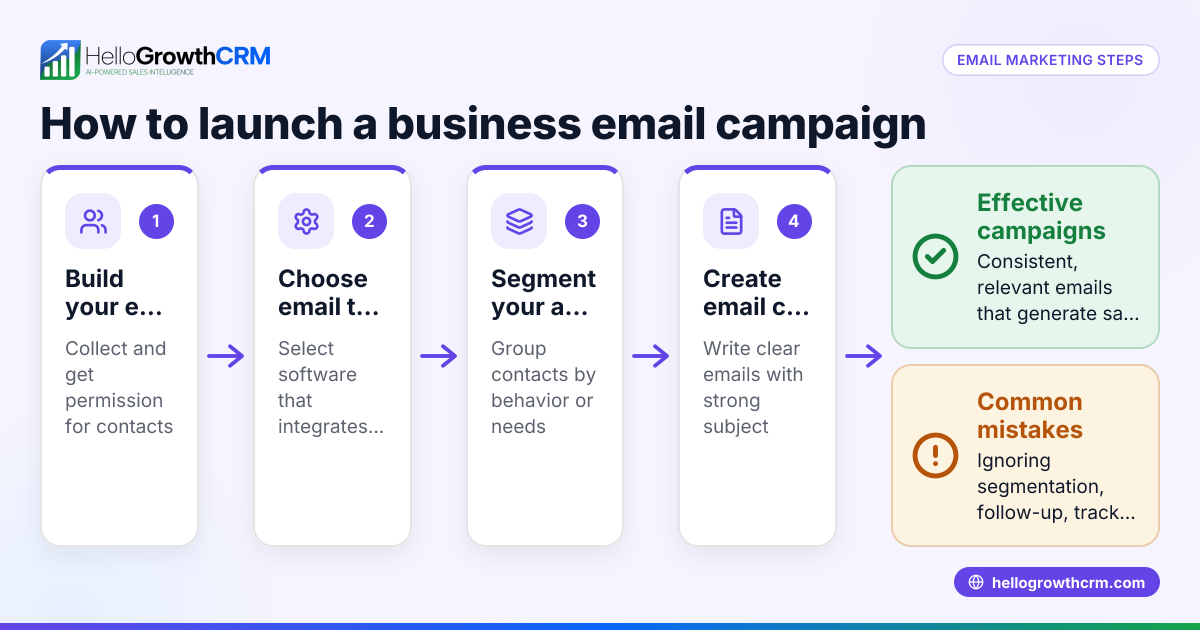
- Build a compliant email list: Collect email addresses through your website, events, or in-person sign-ups. Always get explicit permission and keep records to comply with the Australian Spam Act. Check your list regularly to remove invalid or unsubscribed contacts.
- Choose an email marketing tool: Use software that can automate sends, track opens and clicks, and manage unsubscribes. HelloGrowthCRM offers email sequences and a shared inbox to streamline outreach and replies. Learn more about email automation and sequences.
- Segment your audience: Divide your list by customer type, purchase history, or engagement level. This helps you send relevant messages that increase response rates.
- Create your email content: Write clear, concise emails with a strong call to action. Use a professional design that works well on mobile devices.
- Set up sequences or campaigns: Plan a series of emails that nurture leads over time. For example, a five-step follow-up over two weeks can keep prospects engaged and stop automatically when they reply.
- Test and send: Preview your emails, test links, and send to a small group first. Adjust based on feedback or results.
- Monitor performance and follow up: Track open rates, clicks, and replies. Use a shared inbox to ensure your team sees replies and can respond promptly.
- Stay compliant: Always include an unsubscribe link and your business contact details in every email.
Example (fictional figures)
An Adelaide-based registered training organisation wants to promote a new course via email marketing.
- They collect 1,000 email addresses from their website sign-ups.
- They plan a five-step email sequence over two weeks.
- Their average course fee is A$1,200, and they aim to convert 5% of the list.
Calculations:
1,000 contacts × 5% conversion = 50 new students
50 students × A$1,200 fee = A$60,000 revenue
If their email sequence costs A$500 to run (software and design), their net revenue is:
A$60,000 − A$500 = A$59,500
This example shows how a structured email marketing sequence can generate significant revenue with modest investment.
Common mistakes
- Not getting permission before emailing: Prevent by always asking for consent and explaining what subscribers will receive.
- Sending generic emails to everyone: Prevent by segmenting your list and tailoring content.
- Ignoring replies or slow follow-up: Prevent by using a shared inbox so the whole team can see and respond quickly.
- Overloading recipients with too many emails: Prevent by spacing emails appropriately and monitoring unsubscribe rates.
- Not testing emails before sending: Prevent by sending test emails to yourself and your team to check formatting and links.
Learn more about managing replies with HelloGrowthCRM’s WhatsApp and SMS CRM.
Doing this in HelloGrowthCRM
HelloGrowthCRM offers a HelloMail shared inbox where replies to quotation emails or campaigns are visible to your entire team on the deal, ensuring no lead is missed. It also supports sequences and campaigns, allowing you to set up automated five-step follow-ups over two weeks that stop as soon as the prospect replies. These features help small and mid-sized Australian businesses run consistent and efficient email marketing without switching between multiple tools.
Frequently asked questions
What is the Australian Spam Act and how does it affect email marketing? The Australian Spam Act includes rules aimed at preventing unsolicited commercial emails; it's important to obtain consent from recipients, include your identity and contact details, and provide a clear unsubscribe option. Following these rules helps you avoid penalties and build trust.
How often should I send marketing emails to my Australian customers? There’s no fixed rule, but generally sending 1-2 emails per week is acceptable. Monitor your unsubscribe rates and engagement to adjust frequency. Too many emails can annoy recipients and increase unsubscribes.
Can I use WhatsApp or SMS alongside email marketing? Yes, combining channels like WhatsApp, SMS, and email can improve engagement. HelloGrowthCRM supports this multi-channel approach, helping you automate sequences across these platforms for better reach.
How do I measure the success of my email marketing campaigns? Track metrics like open rates, click-through rates, reply rates, and conversion to sales. These insights help you refine your content and timing for better results.
Is it better to send emails manually or automate them? Automation saves time and ensures timely follow-up, especially for sequences. Manual sends can work for one-off messages but are less efficient for nurturing leads. HelloGrowthCRM’s automated sequences help maintain consistent outreach.
Key takeaways
- Always get explicit permission to email your Australian contacts to comply with the Spam Act.
- Use segmentation and tailored content to increase engagement.
- Automate follow-up sequences to save time and improve lead conversion.
- Use a shared inbox so your team can manage replies promptly.
- Test emails before sending and monitor performance to optimise campaigns.
- Combining email with SMS and WhatsApp can boost your marketing effectiveness.
Start your Australian email marketing journey with HelloGrowthCRM and manage your leads efficiently. Start on the Free Forever plan (200 leads, no credit card).
Ready to put this into practice?
Set up your pipeline, WhatsApp follow-ups, and AI lead scoring in minutes — free, no credit card.
Try HelloGrowthCRM freeGet CRM tips in your inbox
Join thousands of sales professionals who get weekly insights on CRM strategy, AI automation, and pipeline optimization.

The HelloGrowthCRM team publishes guides on CRM strategy, AI sales tools, and revenue operations for small business sales teams.