HelloGrowthCRM software
Built for real small-business sales teams
HelloGrowthCRM helps reps qualify faster, follow up on time, and close more deals—with practical automation in one place.
- AI lead scoring and pipeline visibility
- Built-in dialer, WhatsApp, and email automation
- Sales forecasting and RevOps-ready reporting
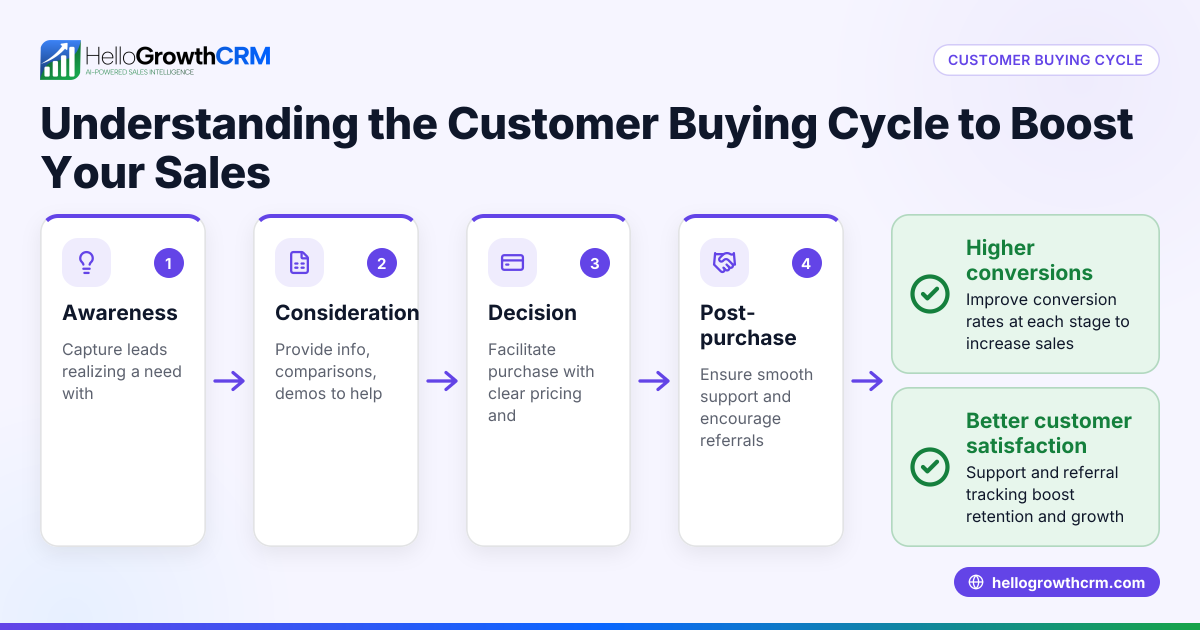
The B2B buying cycle is the process businesses go through when buying products or services from other businesses. It typically involves several stages: recognizing a need, researching possible solutions, evaluating different vendors, making a purchase decision, and reviewing the outcome after purchase. Understanding this cycle helps small business owners manage sales processes better, engage buyers effectively, and close deals more efficiently.
Why this comes up / what goes wrong
Small business owners often face challenges because they don’t fully understand how their customers make buying decisions. B2B sales usually involve multiple decision-makers, longer timelines, and complex needs compared to consumer purchases. Without a clear grasp of the buying cycle, sales teams may follow up too late, miss key decision points, or fail to address all stakeholders’ concerns. This leads to lost leads, wasted effort, and slower revenue growth.
Many small businesses also struggle to communicate effectively with prospects during each stage, resulting in missed opportunities. Knowing the buying cycle stages helps plan timely, relevant communication and sales activities.
Step-by-step
- Identify the Need: The buyer realizes a problem or opportunity that requires a solution. Check if the prospect has a clear pain point or goal to solve.
- Research Solutions: The buyer gathers information about products or services that might meet their need. Provide helpful content like case studies, demos, or FAQs to support this research.
- Evaluate Vendors: The buyer compares options based on price, features, support, reputation, and fit. Highlight your unique advantages and be ready to answer detailed questions.
- Purchase Decision: The buyer selects a vendor and negotiates terms. Ensure your proposal is clear, competitive, and responsive to the buyer’s concerns.
- Implementation and Review: After purchase, the buyer assesses whether the solution meets expectations. Follow up to offer support and gather feedback for future improvements.
At each step, confirm you understand the buyer’s timeline, budget, and the decision-makers involved. This structured approach prevents missed opportunities and speeds up closing.
Example (fictional figures)
A residential real-estate team in Phoenix, Arizona, wants a CRM to manage leads more effectively. Here’s their buying cycle timeline and cost impact:
- Identify the Need (01/15/2026): They realize leads are lost due to slow follow-up and unorganized contacts.
- Research Solutions (01/16/2026 to 01/25/2026): They investigate CRM options online, attend demos, and compare features.
- Evaluate Vendors (01/26/2026 to 02/05/2026): They compare pricing, integration capabilities, and communication tools like WhatsApp and SMS.
- Purchase Decision (02/06/2026): They select a CRM with WhatsApp and SMS integration to match their sales communication style.
- Implementation and Review (02/07/2026 to 03/07/2026): They onboard their team and track improvements in lead response time and closed deals.
Cost and revenue impact calculation:
- Monthly CRM subscription: $300
- Expected monthly increase in closed deals: 3 deals
- Average deal value: $15,000
- Monthly revenue increase = 3 × $15,000 = $45,000
- ROI = $45,000 - $300 = $44,700
This example shows how understanding the buying cycle can lead to a strategic purchase that boosts revenue and efficiency.
Common mistakes
- Ignoring the buyer’s timeline: Following up too early or too late can lose interest. Prevent this by asking prospects about their decision schedule and respecting it.
- Not identifying all decision-makers: Missing key stakeholders can stall or lose deals. Prevent this by mapping the buyer’s organization and confirming who is involved.
- Focusing only on features, not benefits: Buyers want solutions to their problems, not just product specs. Prevent this by tailoring your pitch to address specific pain points and outcomes.
- Failing to provide helpful content during research: Buyers stall without good information. Prevent this by offering case studies, demos, FAQs, and clear answers.
- Skipping post-purchase follow-up: Missing chances for upsells or referrals. Prevent this by scheduling check-ins and support to ensure satisfaction.
Using tools like WhatsApp and SMS CRM and a built-in CRM dialer can help keep communication timely and organized throughout the buying cycle.
Frequently asked questions
What stages make up the B2B buying cycle? The main stages are need recognition, solution research, vendor evaluation, purchase decision, and post-purchase review. Each stage requires different buyer activities and tailored sales approaches.
How long does a typical B2B buying cycle take? It varies widely by industry and purchase size but often spans weeks to months due to multiple decision-makers and budget approvals. Understanding your customer’s timeline is essential for timely follow-up.
Why is the B2B buying cycle different from consumer buying? B2B purchases usually involve more stakeholders, complex needs, and higher costs, requiring more research and negotiation. Consumer buying decisions tend to be quicker and more individual.
How can small businesses improve their sales process using the B2B buying cycle? By mapping their sales activities to each buying stage, they can provide timely information, address concerns, and follow up effectively. Tools like HelloGrowthCRM for the United States help organize this process.
What role does communication play in the B2B buying cycle? Consistent, clear communication builds trust and keeps prospects engaged. Using integrated communication tools like WhatsApp, SMS, and calls ensures no lead is lost during follow-up.
Key takeaways
- The B2B buying cycle includes need recognition, research, evaluation, purchase, and review.
- Understanding this cycle helps tailor sales efforts to buyer needs and timelines.
- Common mistakes include ignoring timelines, missing decision-makers, and poor follow-up.
- Providing relevant content and clear communication at each stage improves chances of closing.
- Using CRM tools with integrated messaging and calling supports managing the cycle efficiently.
To start improving your sales process with lead management tools designed for small businesses, Start on the Free Forever plan (200 leads, no credit card).
Ready to put this into practice?
Set up your pipeline, WhatsApp follow-ups, and AI lead scoring in minutes — free, no credit card.
Try HelloGrowthCRM freeGet CRM tips in your inbox
Join thousands of sales professionals who get weekly insights on CRM strategy, AI automation, and pipeline optimization.

The HelloGrowthCRM team publishes guides on CRM strategy, AI sales tools, and revenue operations for small business sales teams.