HelloGrowthCRM software
Built for real small-business sales teams
HelloGrowthCRM helps reps qualify faster, follow up on time, and close more deals—with practical automation in one place.
- AI lead scoring and pipeline visibility
- Built-in dialer, WhatsApp, and email automation
- Sales forecasting and RevOps-ready reporting
A B2B company search is the process of identifying and evaluating other businesses as potential partners, suppliers, or clients. It involves gathering information to assess their credibility, compatibility, and value to your business. This article explains why B2B company searches matter, provides a step-by-step approach to conducting one, highlights common mistakes, and answers frequent questions.
Why this comes up / what goes wrong
Small-business owners often need to find reliable B2B partners for supplies, services, or sales channels. Without a clear search process, they risk partnering with companies that are unreliable, financially unstable, or unsuitable for their needs. This can lead to lost time, money, and damage to reputation. Owners may also struggle to find companies that fit their specific industry, size, or location requirements. A methodical B2B company search helps avoid these pitfalls by ensuring informed decisions.
Owners running sales teams or inside-sales operations often lose leads or potential partners because they rely on scattered information from text messages, emails, or spreadsheets. This disorganization can cause slow follow-up or missed opportunities. Using a structured search and evaluation method can improve efficiency and results.
Step-by-step
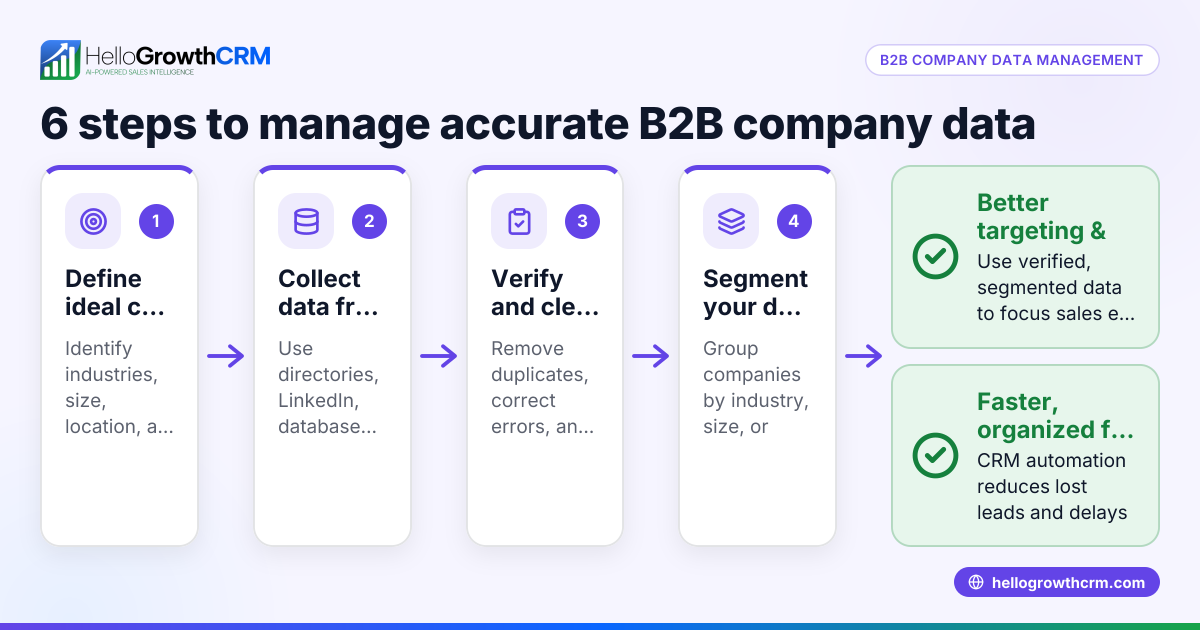
- Define your search criteria: Identify what you need from the B2B company—industry, size, location, reputation, and service or product type. Write down these criteria to stay focused. For example, you might want a supplier within 100 miles, with at least five years in business, and positive customer reviews.
- Use reliable sources: Start with business directories, trade associations, LinkedIn, and industry-specific databases. Check local chambers of commerce websites and business expos. Verify company legitimacy by checking their website, business registration, and reviews.
- Gather detailed information: Collect data on company history, financial health, client base, and product or service offerings. Request brochures, case studies, or references when possible. Look for certifications or compliance with industry standards.
- Evaluate compatibility: Assess if their values, business practices, and goals align with yours. Consider communication style and responsiveness. A company that responds quickly and clearly is more likely to be a reliable partner.
- Check for red flags: Look out for poor reviews, unresolved complaints, or lack of transparency. Confirm they comply with relevant regulations and certifications. Be cautious if the company avoids providing references or detailed information.
- Contact shortlisted companies: Reach out to discuss your needs, ask questions, and gauge their interest and professionalism. Keep records of all communications for comparison.
- Make a decision based on evidence: Compare all gathered information objectively before selecting a partner. Balance cost, quality, and reliability rather than choosing solely on price.
- Document your findings: Keep records of your research and communications for future reference. This can help with follow-ups or resolving disputes later.
Example (fictional figures)
A two-location dental practice in Columbus, Ohio, wants to find a B2B company supplying dental equipment.
- They define criteria: dental industry focus, US-based, good reputation, competitive pricing.
- They find three companies online and request quotes and references.
- Company A offers a 5-year warranty and has 20 years in business.
- Company B is cheaper but has mixed reviews.
- Company C is local but has limited product range.
They calculate total costs over 5 years:
Company A price: $50,000 Company B price: $40,000 Company C price: $45,000
Warranty value estimated at $5,000 for Company A.
Adjusted cost for Company A: $50,000 - $5,000 = $45,000
Comparing adjusted costs and reputations, they choose Company A for reliability despite the higher sticker price.
Common mistakes
- Ignoring company verification: Always confirm business registration and legitimacy to avoid scams. Prevent this by checking official state business registries.
- Relying on price alone: Low cost can hide poor quality or service; balance price with value. Request references and samples.
- Skipping references and reviews: They provide real-world insights into company reliability. Always ask for and contact references.
- Not defining clear criteria upfront: Leads to unfocused searches and wasted effort. Write down your needs before starting.
- Failing to document findings: Makes it hard to compare options or revisit decisions later. Use spreadsheets or CRM tools to track information.
- Neglecting to check communication quality: Poor responsiveness may indicate future problems. Test communication before committing.
Frequently asked questions
What is a B2B company search? A B2B company search is the process of finding and evaluating other businesses to partner with, supply from, or sell to. It involves research to ensure the company fits your needs and is trustworthy.
Where can I find B2B companies to search? Start with online business directories, trade associations, LinkedIn, and industry-specific databases. Local chambers of commerce and business expos can also help. These sources provide verified lists and networking opportunities.
How do I verify a B2B company's legitimacy? Check their business registration status, website quality, customer reviews, and ask for references. Confirm they comply with any industry regulations. You can also check state government databases for business licenses.
What criteria should I use to evaluate B2B companies? Consider industry relevance, financial stability, reputation, product or service quality, pricing, location, and communication responsiveness. Align these with your business goals and values.
Can I use a CRM to manage my B2B company search? Yes, a CRM that supports lead capture, communication, and task tracking can help you organize and follow up with potential companies efficiently. See HelloGrowthCRM for the United States and its WhatsApp and SMS CRM features for managing contacts and messages.
How do I avoid losing leads during follow-up? Use a system with reminders and a built-in dialer to keep track of follow-ups and conversations. The built-in CRM dialer can help streamline calls and reduce missed opportunities.
Key takeaways
- Define clear criteria before starting your B2B company search.
- Use multiple reliable sources to gather information.
- Verify legitimacy and check references carefully.
- Evaluate companies based on value, not just price.
- Document your findings and communications.
- Use tools like CRM systems to organize and follow up effectively.
Conducting a thorough B2B company search protects your business from unreliable partners and helps build beneficial relationships. Start your search with clear criteria and reliable sources, then verify and evaluate carefully.
Start on the Free Forever plan (200 leads, no credit card) at HelloGrowthCRM to organize your B2B company search and communications efficiently.
Ready to put this into practice?
Set up your pipeline, WhatsApp follow-ups, and AI lead scoring in minutes — free, no credit card.
Try HelloGrowthCRM freeGet CRM tips in your inbox
Join thousands of sales professionals who get weekly insights on CRM strategy, AI automation, and pipeline optimization.

The HelloGrowthCRM team publishes guides on CRM strategy, AI sales tools, and revenue operations for small business sales teams.