HelloGrowthCRM software
Built for real small-business sales teams
HelloGrowthCRM helps reps qualify faster, follow up on time, and close more deals—with practical automation in one place.
- AI lead scoring and pipeline visibility
- Built-in dialer, WhatsApp, and email automation
- Sales forecasting and RevOps-ready reporting
A sales conversation example is a practical dialogue that guides how to engage a potential customer, uncover their needs, present your solution, handle objections, and close the deal. This article covers why understanding sales conversations is important for small business owners, step-by-step instructions, a detailed example, common mistakes to avoid, and how HelloGrowthCRM supports managing these conversations efficiently.
Why this comes up / what goes wrong
Small business owners often face challenges in converting leads because their sales conversations lack structure or follow-up. They might rely on text messages, emails, or spreadsheets to track prospects, which can lead to missed opportunities or slow responses. Without a clear example or framework for sales conversations, salespeople can struggle to identify customer needs, respond effectively to objections, or move deals forward. This results in lost sales and wasted time.
Step-by-step
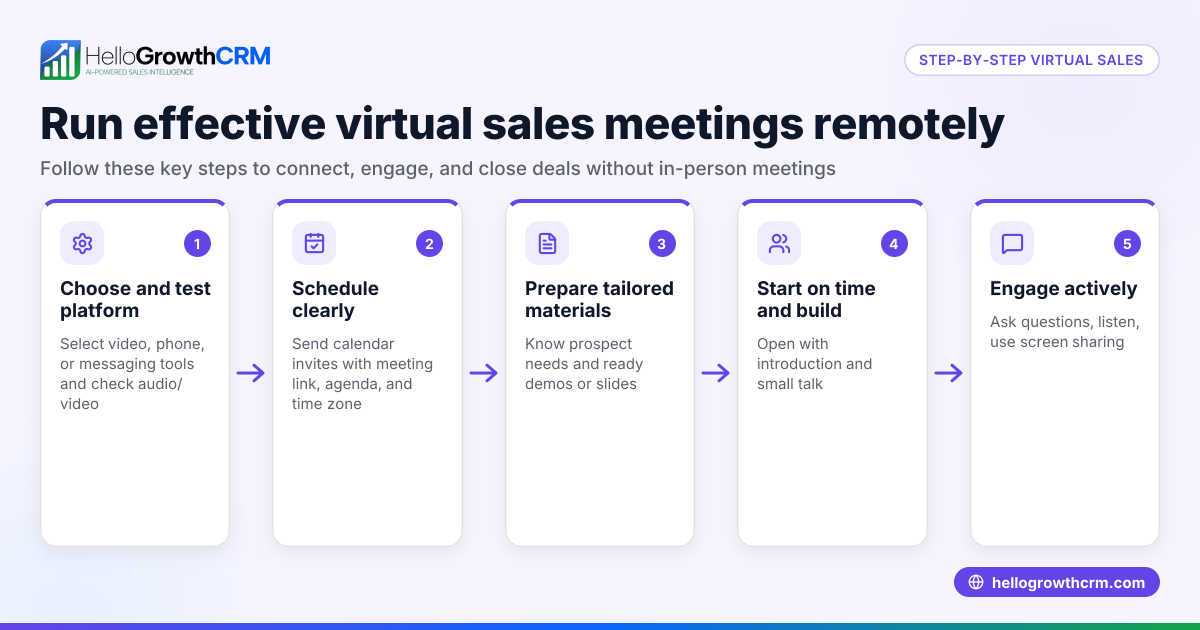
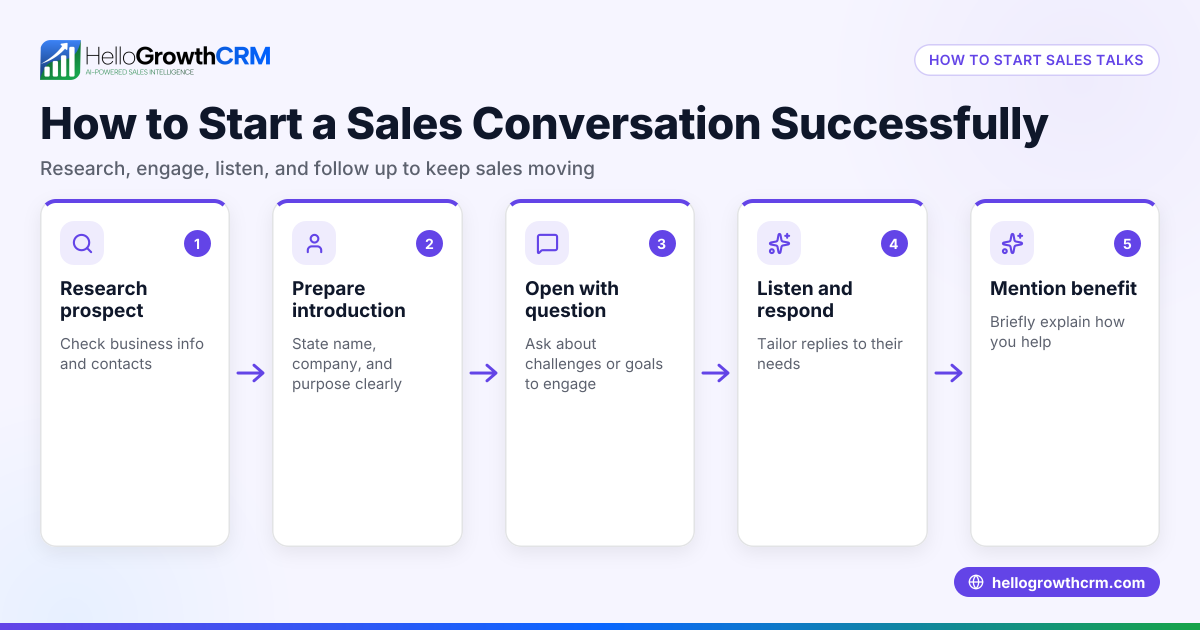
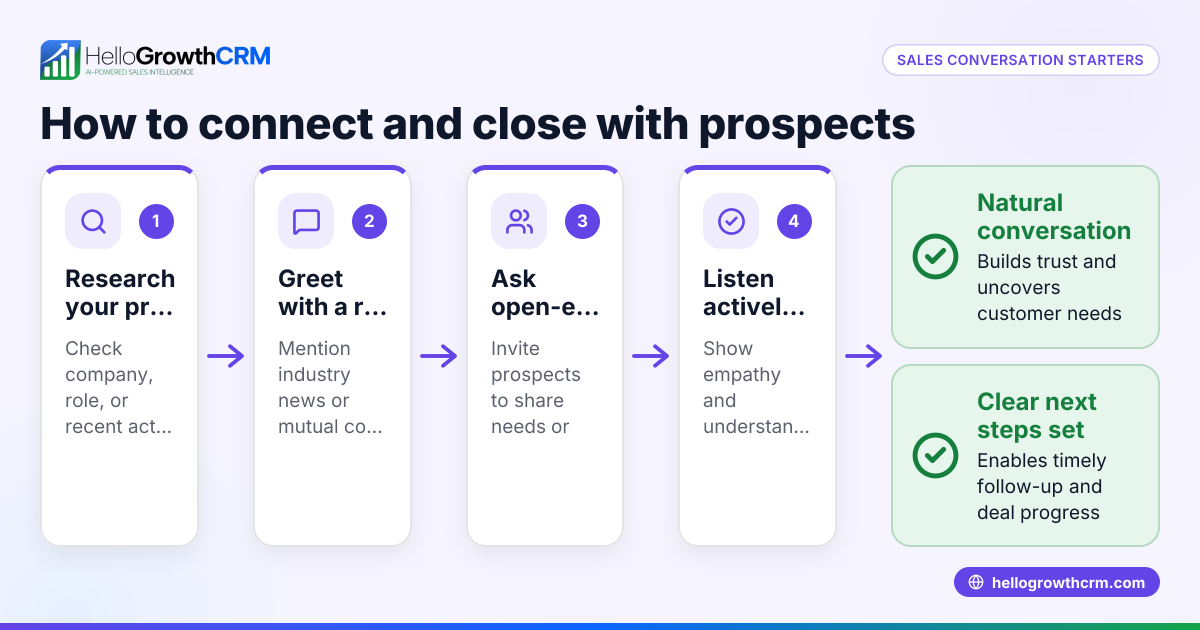
- Start with a warm introduction: Greet the prospect by name, introduce yourself and your company, and state the purpose of the call or meeting. Check if it’s a good time to talk.
- Build rapport and ask open-ended questions: Engage the prospect with questions about their business challenges or goals to understand their needs.
- Listen actively and confirm understanding: Repeat or paraphrase what the prospect says to ensure clarity and show you are listening.
- Present your solution: Explain how your product or service addresses the prospect’s specific needs, focusing on benefits rather than features.
- Handle objections: Listen to concerns, acknowledge them, and respond with clear, relevant information or examples.
- Ask for the sale or next step: Propose a trial, a meeting, or a quote, and agree on follow-up actions.
- Confirm follow-up details: Schedule the next contact or send a proposal, and make sure the prospect knows what to expect.
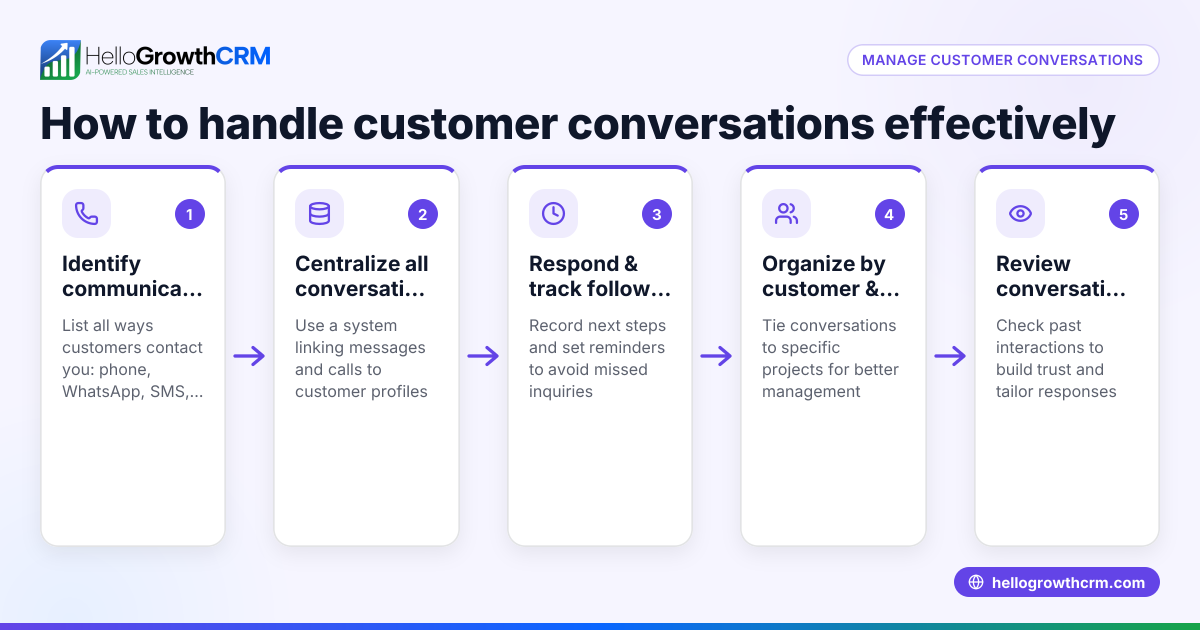
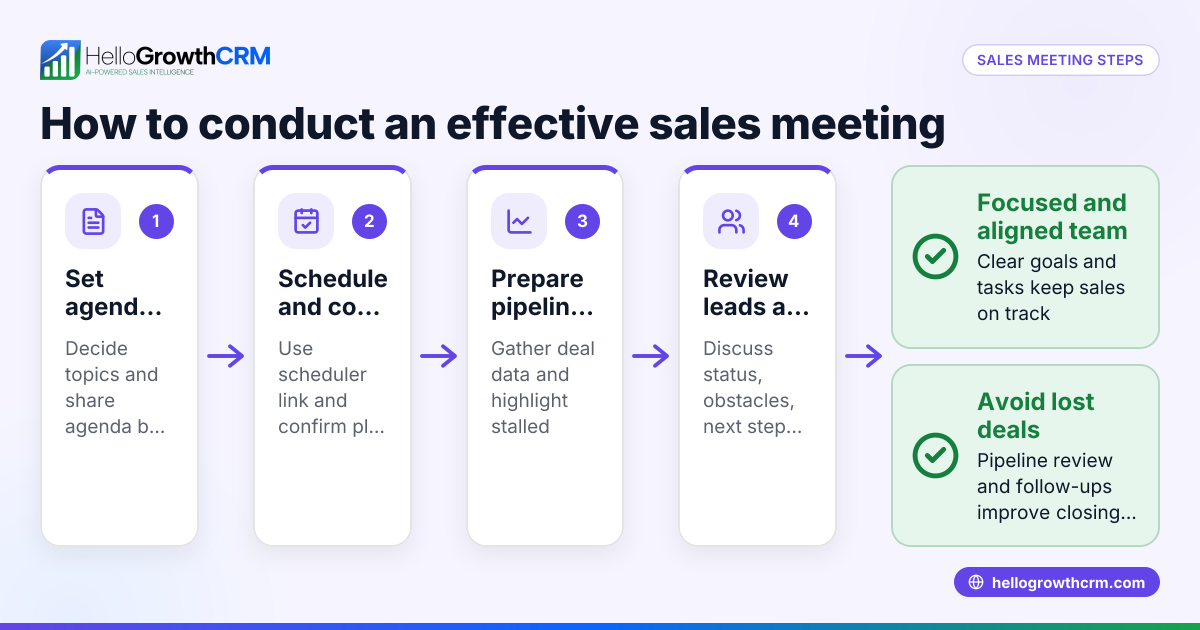
- Record the conversation and update your pipeline: Track the deal stage and set reminders for follow-up to avoid forgetting important tasks.
Check that each step is completed before moving on, and adjust based on the prospect’s responses.
Example (fictional figures)
Imagine a B2B software reseller in Denver, Colorado, named "Rocky Mountain Tech Solutions." On 06/10/2026, the sales rep calls a prospect who manages IT at a mid-sized manufacturing company.
- Introduction:
"Hi Sarah, this is Mike from Rocky Mountain Tech Solutions. I wanted to check if you have a few minutes to talk about improving your current software setup?"
- Sarah agrees. Mike asks:
"Can you tell me about the biggest challenges you’re facing with your current IT systems?"
- Sarah says they have frequent downtime causing delays.
- Mike replies:
"Our software includes real-time monitoring and quick support to reduce downtime and keep your operations running smoothly."
- Sarah asks about integration with existing tools.
- Mike responds:
"Yes, our solution integrates seamlessly with most major platforms. I can send you a detailed quote and set up a demo."
- Sarah agrees to a demo next week.
- Mike updates the CRM pipeline:
- Deal value estimated at $48,000
- Stage: Quote sent
- Follow-up date: 06/17/2026
This example shows how a structured conversation uncovers needs and advances the sale.
Common mistakes
- Not preparing before the call: Prevent by researching the prospect and their business beforehand.
- Talking too much and not listening: Prevent by asking open questions and letting the prospect speak.
- Ignoring objections or rushing responses: Prevent by acknowledging concerns and providing clear answers.
- Failing to confirm next steps: Prevent by scheduling follow-ups and summarizing agreed actions.
- Losing track of conversations and deadlines: Prevent by using a CRM to log calls, deals, and reminders. See how HelloGrowthCRM helps with pipeline tracking and follow-ups.
- Using inconsistent communication channels without integration: Prevent by centralizing communication in one CRM platform that supports WhatsApp and SMS sequences.
Doing this in HelloGrowthCRM
HelloGrowthCRM supports managing sales conversations with its Deals (pipeline) feature. For example, a quotation sent last week appears as a deal at the 'quote sent' stage with a follow-up date, ensuring no lead is forgotten. Field reps can log visits directly from their phones, and managers can track daily activities with Territories and field operations tools. For founders without a dedicated sales manager, Managed RevOps provides weekly follow-up execution and pipeline hygiene, keeping sales conversations progressing. Learn more about HelloGrowthCRM for the United States, its WhatsApp and SMS CRM, and the built-in CRM dialer.
Frequently asked questions
What is a sales conversation example? A sales conversation example is a scripted or guided dialogue that helps salespeople engage prospects effectively, uncover needs, present solutions, handle objections, and close deals.
How can I improve my sales conversations? Prepare by researching your prospect, ask open-ended questions, listen carefully, address objections honestly, and always confirm next steps. Using a CRM can help you track these conversations and follow-ups.
Why is follow-up important in sales conversations? Follow-up ensures that you maintain contact with prospects, answer additional questions, and move the deal forward. Without timely follow-up, leads can go cold or be lost to competitors.
Can HelloGrowthCRM help manage sales conversations? Yes, HelloGrowthCRM tracks deals through pipeline stages, sets follow-up reminders, supports communication via WhatsApp and SMS, and offers field operations tools to log visits and activities.
What common mistakes should I avoid in sales conversations? Avoid talking too much without listening, skipping preparation, ignoring objections, failing to confirm next steps, and losing track of leads by not using a CRM.
Key takeaways
- Use a structured approach: introduction, needs discovery, solution presentation, objection handling, and closing.
- Prepare before each conversation by researching the prospect.
- Listen actively and address objections clearly.
- Confirm follow-up actions and schedule next steps.
- Track conversations and deals in a CRM to avoid missed opportunities.
- HelloGrowthCRM offers tools to manage pipelines, field operations, and follow-up execution.
Start improving your sales conversations today. Start on the Free Forever plan (200 leads, no credit card).
Ready to put this into practice?
Set up your pipeline, WhatsApp follow-ups, and AI lead scoring in minutes — free, no credit card.
Try HelloGrowthCRM freeGet CRM tips in your inbox
Join thousands of sales professionals who get weekly insights on CRM strategy, AI automation, and pipeline optimization.

The HelloGrowthCRM team publishes guides on CRM strategy, AI sales tools, and revenue operations for small business sales teams.