HelloGrowthCRM software
Built for real small-business sales teams
HelloGrowthCRM helps reps qualify faster, follow up on time, and close more deals—with practical automation in one place.
- AI lead scoring and pipeline visibility
- Built-in dialer, WhatsApp, and email automation
- Sales forecasting and RevOps-ready reporting
B2B ecommerce means businesses selling products or services online to other businesses instead of individual consumers. This business-to-business model involves higher order volumes, negotiated pricing, customized terms, and often longer sales cycles compared to consumer ecommerce. For US ecommerce business owners and accountants, B2B ecommerce brings specific challenges such as handling tiered pricing, purchase orders, credit terms, and integrating sales with accounting and inventory systems.
Why this comes up / what goes wrong
Many US ecommerce businesses want to expand by adding B2B sales but find that consumer-focused ecommerce platforms lack essential B2B features. Business owners and accountants often face these problems:
- Managing different pricing levels and discounts tailored to various business buyers.
- Processing bulk orders and enforcing minimum order quantities.
- Integrating sales data with existing accounting and inventory software.
- Handling longer sales cycles that require relationship management and follow-up.
- Tracking orders, payments, and credit terms accurately to avoid delays.
Without clear processes and the right tools, these challenges can cause lost sales, slow order fulfillment, and unhappy customers, making it difficult to grow B2B revenue.
Step-by-step
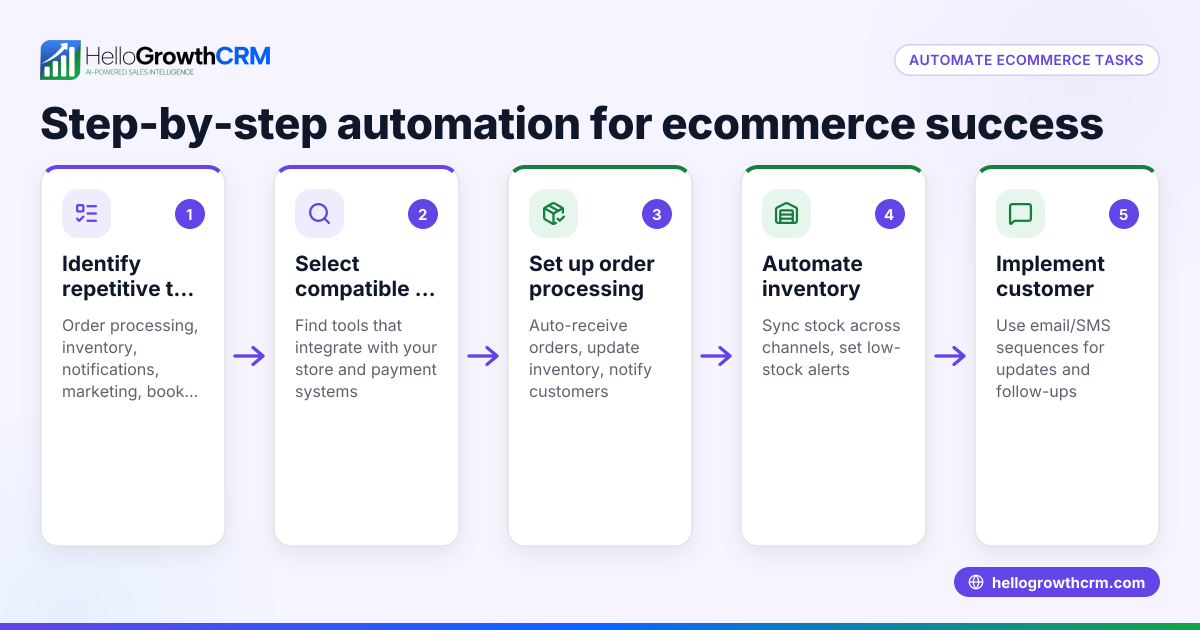
- Identify your B2B customers' needs: Survey your buyers to determine if they require bulk ordering, custom pricing, credit terms, or integration with their purchasing systems. Understanding these needs helps tailor your ecommerce setup.
- Choose a B2B ecommerce platform or solution: Select platforms that support tiered pricing, purchase order processing, account management, and integration with your current accounting and inventory systems. This ensures smooth operations.
- Set up product catalogs with pricing tiers: Create product listings with clear pricing structures for different customer groups. Confirm minimum order quantities and applicable discounts are accurately reflected.
- Implement payment and order workflows: Ensure your system supports B2B payment methods like invoicing, credit accounts, and can handle longer payment terms such as net 30 or net 60 days.
- Train your sales and accounting teams: Educate staff on new processes, including order approvals, invoicing, credit management, and customer communication to handle longer sales cycles effectively.
- Monitor and optimize your processes regularly: Use sales data, order fulfillment times, and customer feedback to identify bottlenecks and improve efficiency continuously.
For more on ecommerce business operations, see E-commerce and online sellers.
Example (fictional figures)
A US-based industrial tool supplier in Phoenix, Arizona, plans to start B2B ecommerce on 07/01/2026. They expect $1,000,000 in annual B2B sales with an average order size of $5,000.
- They offer a 10% discount on orders over $10,000.
- They estimate 40 orders will qualify for this discount.
Calculations:
Annual orders = $1,000,000 ÷ $5,000 = 200 orders
Discount amount per qualifying order = $5,000 × 10% = $500
Total discount given = 40 × $500 = $20,000
Net sales after discount = $1,000,000 - $20,000 = $980,000
This example illustrates how discount policies affect revenue and why clear pricing rules are important for B2B ecommerce.
Common mistakes
- Ignoring customer-specific pricing needs: Prevent this by surveying buyers to understand their pricing expectations before setting up your catalog.
- Using consumer ecommerce platforms without B2B features: Avoid this by selecting software designed for B2B or with strong B2B modules to handle bulk orders and complex pricing.
- Not integrating ecommerce with accounting systems: Reduce errors and manual work by linking order and payment data directly to your accounting software.
- Underestimating the length of the sales cycle: Train your sales team to manage longer B2B relationships and follow-up processes to close deals effectively.
- Failing to provide adequate training: Ensure all staff involved in sales and accounting understand new workflows and tools.
- Neglecting ongoing process review: Schedule regular audits of order processing and customer satisfaction to catch issues early and improve continuously.
Learn more about CRM tools that support US businesses at HelloGrowthCRM for the United States.
Frequently asked questions
What is CPQ for B2B ecommerce? CPQ stands for Configure, Price, Quote. It is software that helps B2B sellers quickly create accurate quotes for complex products or services with multiple options, pricing tiers, and discounts. CPQ tools streamline sales by automating pricing and proposal generation.
How is B2B ecommerce different from B2C ecommerce? B2B ecommerce involves transactions between businesses, usually with higher volumes, negotiated pricing, and longer sales cycles. B2C ecommerce sells directly to consumers with fixed prices and simpler checkout processes.
What payment methods are common in B2B ecommerce? Besides credit cards, B2B buyers often use invoicing, purchase orders, wire transfers, or credit accounts. Payment terms may range from immediate to net 30 or net 60 days.
How can I integrate B2B ecommerce with my accounting? Look for ecommerce platforms or middleware that sync orders, payments, and customer data with your accounting software to reduce manual entry and errors.
What should I consider when choosing a B2B ecommerce platform? Check for support of tiered pricing, bulk ordering, payment terms, integration options, and ease of use for your team and customers.
For more on communication and sales tools, see WhatsApp and SMS CRM.
Key takeaways
- B2B ecommerce requires specialized features like tiered pricing, bulk orders, and credit terms.
- Choose platforms that integrate well with your accounting and sales processes.
- Train your teams on longer sales cycles and complex order workflows.
- Regularly review and optimize your B2B ecommerce setup to avoid errors and delays.
- Understand your customers’ needs to tailor pricing and ordering options effectively.
Start your B2B ecommerce journey with confidence. Start on the Free Forever plan (200 leads, no credit card).
Ready to put this into practice?
Set up your pipeline, WhatsApp follow-ups, and AI lead scoring in minutes — free, no credit card.
Try HelloGrowthCRM freeGet CRM tips in your inbox
Join thousands of sales professionals who get weekly insights on CRM strategy, AI automation, and pipeline optimization.

The HelloGrowthCRM team publishes guides on CRM strategy, AI sales tools, and revenue operations for small business sales teams.