HelloGrowthCRM software
Built for real small-business sales teams
HelloGrowthCRM helps reps qualify faster, follow up on time, and close more deals—with practical automation in one place.
- AI lead scoring and pipeline visibility
- Built-in dialer, WhatsApp, and email automation
- Sales forecasting and RevOps-ready reporting
B2B marketing lists are organized collections of business contacts used to target potential customers in business-to-business sales and marketing. These lists include details like company names, contact persons, phone numbers, emails, and industry information. This article explains why B2B marketing lists matter, how to create and use them step-by-step, common mistakes to avoid, and practical examples for US small businesses.
Why this comes up / what goes wrong
Small-business owners often search for B2B marketing lists because they want to grow sales by reaching the right companies efficiently. Many lose leads or waste time contacting unqualified prospects because they lack a clear, organized list of potential clients. Without a proper B2B marketing list, sales efforts may be unfocused, slow, or inconsistent, especially when relying on scattered contacts in spreadsheets, email inboxes, or text messages.
A typical situation is a small business owner who has some leads from web forms or networking but no system to keep track of who to contact next or which companies fit their ideal customer profile. This leads to slow follow-up and lost sales opportunities.
Step-by-step
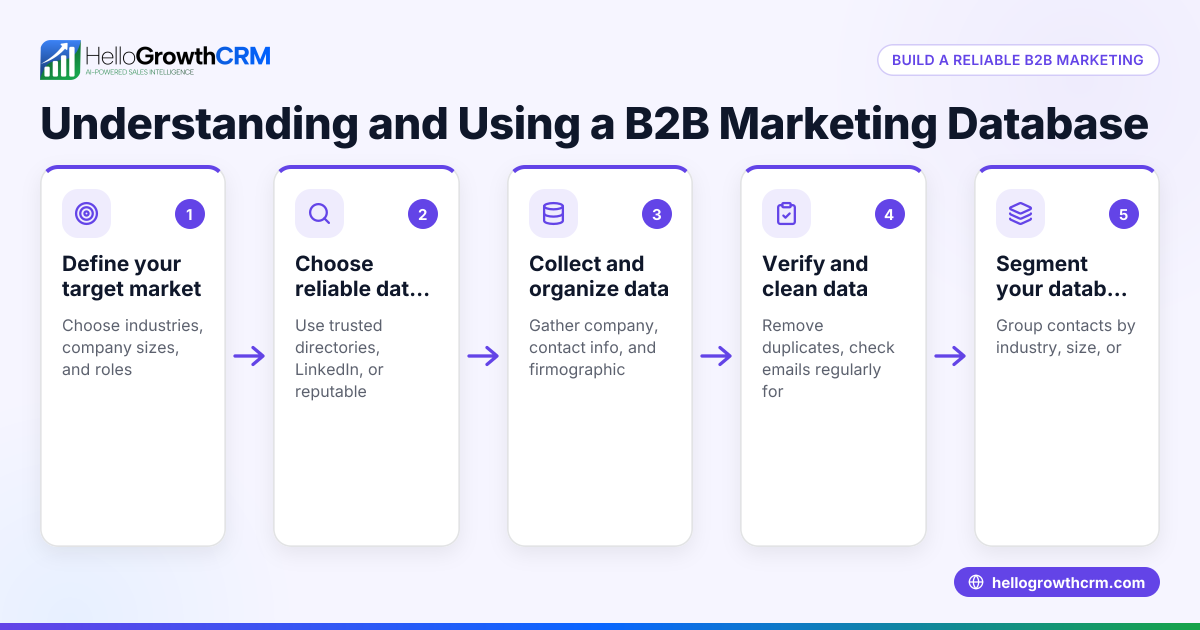
- Define your target market: Decide which types of companies you want to reach based on industry, size, location, or other criteria. Check that these criteria match your product or service’s best customers.
- Choose data sources: Identify where to get contact information. Options include your website’s lead forms, business directories, LinkedIn, trade associations, or purchased lists from reputable vendors. Verify data accuracy and relevance.
- Collect and organize data: Gather company names, contact names, phone numbers, emails, and other relevant details. Use a spreadsheet or CRM to keep data organized and searchable.
- Segment your list: Divide contacts into groups based on factors like industry, company size, or buying stage. This helps tailor your marketing messages.
- Verify and clean your list regularly: Remove duplicates, update outdated contacts, and confirm email and phone validity to maintain list quality.
- Plan outreach sequences: Decide how and when to contact leads—via phone calls, emails, WhatsApp, or SMS. Track responses and follow-up tasks.
- Measure and adjust: Monitor which segments and outreach methods yield the best results. Refine your list and approach accordingly.
Using a CRM with features like a built-in dialer or WhatsApp and SMS integration can streamline these steps and improve follow-up speed and consistency. For example, see WhatsApp and SMS CRM and built-in CRM dialer.
Example (fictional figures)
A plumbing company in Austin, Texas wants to grow its commercial client base. They define their target market as businesses with 10-50 employees in the construction and property management industries within Texas.
- They purchase a B2B list from a vendor with 500 companies fitting these criteria for $2,000.
- They add 200 leads from their website’s contact form.
- Total leads collected = 500 + 200 = 700
- Cleaning duplicates and invalid contacts removes 50 leads.
- Final list size = 700 - 50 = 650
- They segment the list into two groups: construction (400 leads) and property management (250 leads).
- They plan an outreach sequence: initial email, follow-up WhatsApp message, then phone call.
- Tracking shows a 10% positive response rate from construction and 15% from property management.
- They focus more effort on property management, expecting higher conversion.
This example shows how defining, collecting, cleaning, segmenting, and using a B2B marketing list can guide effective sales outreach.
Common mistakes
- Using outdated or incorrect contact data: Prevent by verifying and regularly updating your list.
- Targeting too broad or irrelevant audiences: Prevent by clearly defining your ideal customer profile before building the list.
- Relying on manual tracking with spreadsheets: Prevent by using a CRM or organized system to avoid lost leads and slow follow-up.
- Ignoring follow-up sequences and timing: Prevent by planning structured outreach and reminders.
- Not segmenting the list: Prevent by grouping contacts to tailor messages and improve relevance.
- Buying low-quality or unverified lists: Prevent by choosing reputable sources and testing samples before purchase.
Using a CRM that supports lead capture from web forms and integrates communication channels like WhatsApp can help avoid these mistakes. See HelloGrowthCRM for the United States for context.
Frequently asked questions
What information should a B2B marketing list include? A good B2B marketing list often includes details such as company name, contact person’s name and title, phone number, email address, industry, company size, and location. Additional info like recent purchases or pain points is helpful if available.
How can I build a B2B marketing list without buying one? You can build your own list by capturing leads from your website forms, networking events, LinkedIn connections, and referrals. Organize the data carefully and verify contacts before outreach.
Are purchased B2B marketing lists reliable? Purchased lists vary in quality. Choose vendors with good reputations, ask for samples, and verify data before investing. Regular cleaning and updating are essential to maintain reliability.
How often should I update my B2B marketing list? Update your list at least quarterly to remove invalid contacts, add new leads, and keep information current. Regular updates improve outreach success.
What tools can help manage B2B marketing lists? Customer Relationship Management (CRM) software helps organize contacts, track interactions, schedule follow-ups, and integrate communication channels like email, SMS, or WhatsApp. This improves efficiency and lead conversion.
Key takeaways
- B2B marketing lists are essential for targeting business customers effectively.
- Define your target market clearly before building your list.
- Collect data from multiple reliable sources and keep it organized.
- Regularly clean and segment your list to improve outreach success.
- Use planned outreach sequences and track results.
- Avoid common mistakes like outdated data and unsegmented lists by using organized systems.
Start organizing your B2B marketing efforts today. Start on the Free Forever plan (200 leads, no credit card) to manage your leads efficiently and improve follow-up speed.
Ready to put this into practice?
Set up your pipeline, WhatsApp follow-ups, and AI lead scoring in minutes — free, no credit card.
Try HelloGrowthCRM freeGet CRM tips in your inbox
Join thousands of sales professionals who get weekly insights on CRM strategy, AI automation, and pipeline optimization.

The HelloGrowthCRM team publishes guides on CRM strategy, AI sales tools, and revenue operations for small business sales teams.