HelloGrowthCRM software
Built for real small-business sales teams
HelloGrowthCRM helps reps qualify faster, follow up on time, and close more deals—with practical automation in one place.
- AI lead scoring and pipeline visibility
- Built-in dialer, WhatsApp, and email automation
- Sales forecasting and RevOps-ready reporting
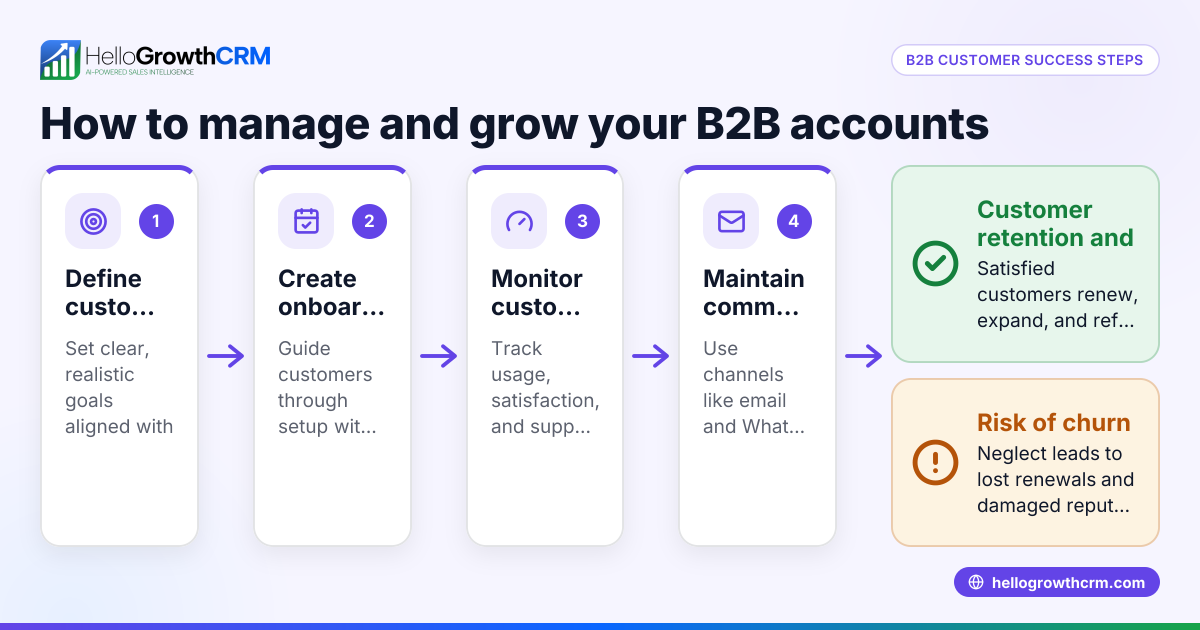
B2B relations are interactions between two businesses where one sells goods or services to the other. Unlike selling directly to consumers, B2B deals often involve longer sales cycles, multiple decision-makers, and negotiated contracts. Managing these relationships well is essential for steady revenue and business growth.
Why this comes up / what goes wrong
Small business owners search for "b2b relations" because they want to expand beyond selling to individual customers or improve how they work with other companies. B2B sales can be complex: leads may respond slowly, deals can stall, and communication may be inconsistent. Without a clear process, businesses risk losing leads or harming partnerships due to slow follow-up or poor organization.
For example, a small manufacturing company selling parts to distributors might struggle to track active leads or know when to follow up. They could be using emails, text messages, and spreadsheets that don’t update in real time, causing missed opportunities and confusion.
Step-by-step
- Identify your target business customers: Define the types of companies that benefit most from your product or service. Check their size, industry, and buying needs.
- Generate and capture leads systematically: Use web forms or partner referrals to collect business leads. Verify contact details and company information.
- Qualify leads by checking fit and interest: Assess if the lead has the budget, authority, need, and timeline to buy. Prioritize leads with the highest potential.
- Engage with clear, consistent communication: Follow up using email, phone calls, or WhatsApp messages. Make sure messages are timely and relevant.
- Negotiate terms and build trust: Discuss pricing, delivery, and service terms openly. Use clear, written contracts.
- Track the sales pipeline and tasks: Monitor each lead’s stage and schedule follow-ups. Ensure no lead is forgotten.
- Provide ongoing support and maintain the relationship: After closing, keep in touch to answer questions and offer new products or services.
- Review and improve your process regularly: Analyze what works and what doesn’t. Adjust your approach to improve conversion and retention.
For tools that help manage sales and communication, see HelloGrowthCRM for the United States and explore the WhatsApp and SMS CRM and the built-in CRM dialer.
Example (fictional figures)
A landscaping contractor in Charlotte, North Carolina, wants to grow by selling maintenance contracts to commercial property managers.
- They identify 50 target businesses.
- They capture 20 leads from website inquiries and referrals.
- They qualify 12 leads as ready to negotiate.
- They engage each with personalized WhatsApp messages and phone calls.
- They close 5 contracts at $3,000 each per year.
Calculations:
5 contracts × $3,000 = $15,000 annual revenue
They follow up monthly to maintain these relationships and upsell additional services.
Common mistakes
- Ignoring lead follow-up timing: Delays cause lost interest. Prevent this by scheduling immediate follow-ups and reminders.
- Using scattered communication channels: Managing leads over email, texts, and spreadsheets leads to confusion. Use consolidated tools like a WhatsApp and SMS CRM to keep everything in one place (/product/whatsapp-sms-crm).
- Failing to qualify leads properly: Spending time on unqualified leads wastes resources. Always check budget and decision authority early.
- Lack of clear negotiation and documentation: Verbal agreements can cause disputes. Use written contracts and confirm terms.
- Not tracking the sales pipeline: Leads can fall through the cracks without visibility. Use pipeline boards and task management to stay organized (/product/crm-dialer).
- Ignoring relationship maintenance after sale: Neglecting customers reduces repeat business. Set reminders for check-ins and new offers.
How to Tell If Your B2B Approach Is Working
You want to know if your efforts are paying off. Watch for these signs:
- Leads respond promptly and engage in conversations.
- Your sales pipeline moves steadily, with deals progressing through stages.
- Repeat business or referrals from existing partners increase.
- Communication feels clear and timely, with fewer misunderstandings.
- You meet your sales goals or see steady revenue growth from B2B customers.
If you notice stalled deals, slow responses, or inconsistent follow-up, it’s time to review your process. Regularly check your pipeline and ask yourself if you’re prioritizing qualified leads and maintaining relationships. Adjust your methods based on what’s working and where you see gaps. This ongoing review helps you build stronger, more profitable B2B relationships over time.
Frequently asked questions
What is the difference between B2B and B2C relations? B2B relations involve transactions between businesses, often with longer sales cycles and multiple decision-makers. B2C relations are direct sales to individual consumers, typically with quicker decisions.
How can small businesses improve B2B communication? Use consistent channels like email or WhatsApp, respond promptly, and personalize messages. Tools that combine messaging and lead tracking help keep communication organized (/product/whatsapp-sms-crm).
Why is lead qualification important in B2B sales? It ensures you focus efforts on prospects who have the budget, authority, and need to buy, increasing sales efficiency and closing rates.
How do I maintain B2B relationships after closing a deal? Schedule regular check-ins, provide excellent support, and offer relevant upsells or updates to keep the partnership active.
What tools can help manage B2B sales processes? CRMs with integrated communication and pipeline management features help track leads, schedule follow-ups, and forecast sales (/product/crm-dialer).
Key takeaways
- B2B relations are business partnerships requiring clear communication and trust.
- Systematically capture, qualify, and follow up on business leads.
- Use organized communication channels and track your sales pipeline.
- Avoid common mistakes like slow follow-up and scattered data.
- Maintain relationships after sales to encourage repeat business.
Start improving your B2B relations today by organizing your leads and communication. Start on the Free Forever plan (200 leads, no credit card).
For more about managing sales and communication, see HelloGrowthCRM for the United States and explore tools like the WhatsApp and SMS CRM and the built-in CRM dialer.
Ready to put this into practice?
Set up your pipeline, WhatsApp follow-ups, and AI lead scoring in minutes — free, no credit card.
Try HelloGrowthCRM freeGet CRM tips in your inbox
Join thousands of sales professionals who get weekly insights on CRM strategy, AI automation, and pipeline optimization.

The HelloGrowthCRM team publishes guides on CRM strategy, AI sales tools, and revenue operations for small business sales teams.