HelloGrowthCRM software
Built for real small-business sales teams
HelloGrowthCRM helps reps qualify faster, follow up on time, and close more deals—with practical automation in one place.
- AI lead scoring and pipeline visibility
- Built-in dialer, WhatsApp, and email automation
- Sales forecasting and RevOps-ready reporting
B2B sales negotiation is the process where two businesses discuss terms to reach a mutually beneficial agreement on products or services. It requires understanding the buyer’s needs, presenting your value clearly, handling objections, agreeing on price and terms, and confirming next steps. This article explains why B2B sales negotiation matters, provides a step-by-step approach, a worked example, common pitfalls to avoid, and how HelloGrowthCRM supports managing your sales deals efficiently.
Why this comes up / what goes wrong
Small-business owners selling to other businesses often juggle many roles, including sales, operations, and customer service. Without a structured negotiation process, they risk losing leads due to slow follow-up or unclear next steps. Many rely on texts, emails, and spreadsheets, which can cause deals to slip through the cracks or stall. Without clear negotiation strategies, businesses may accept unfavorable terms or fail to close deals, impacting revenue and growth.
Step-by-step
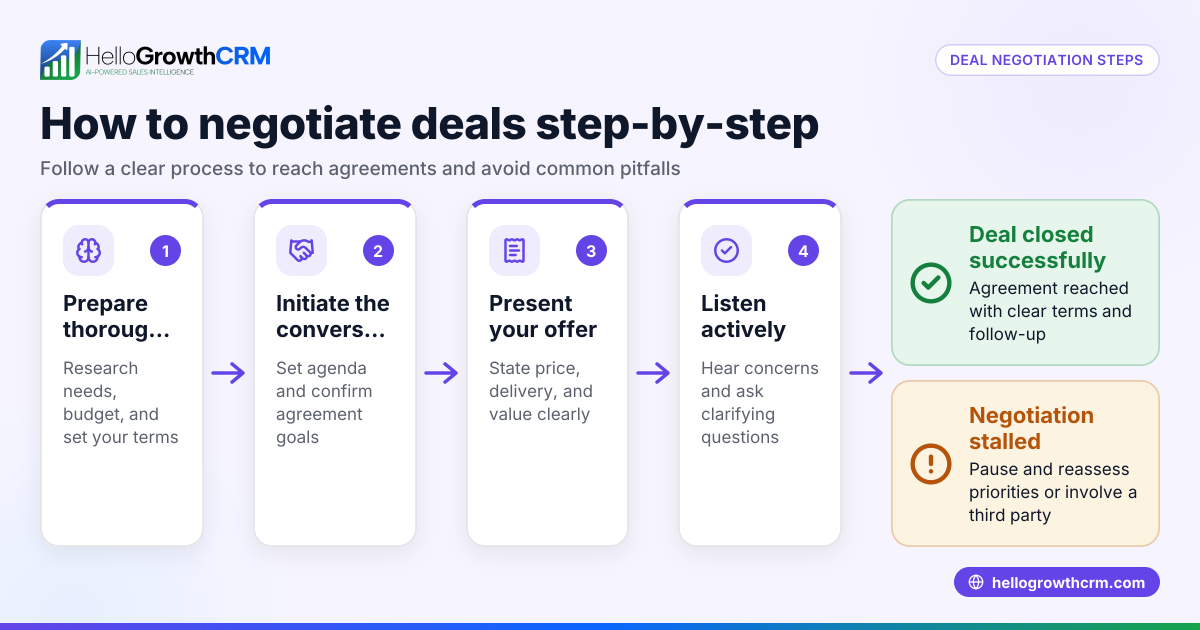
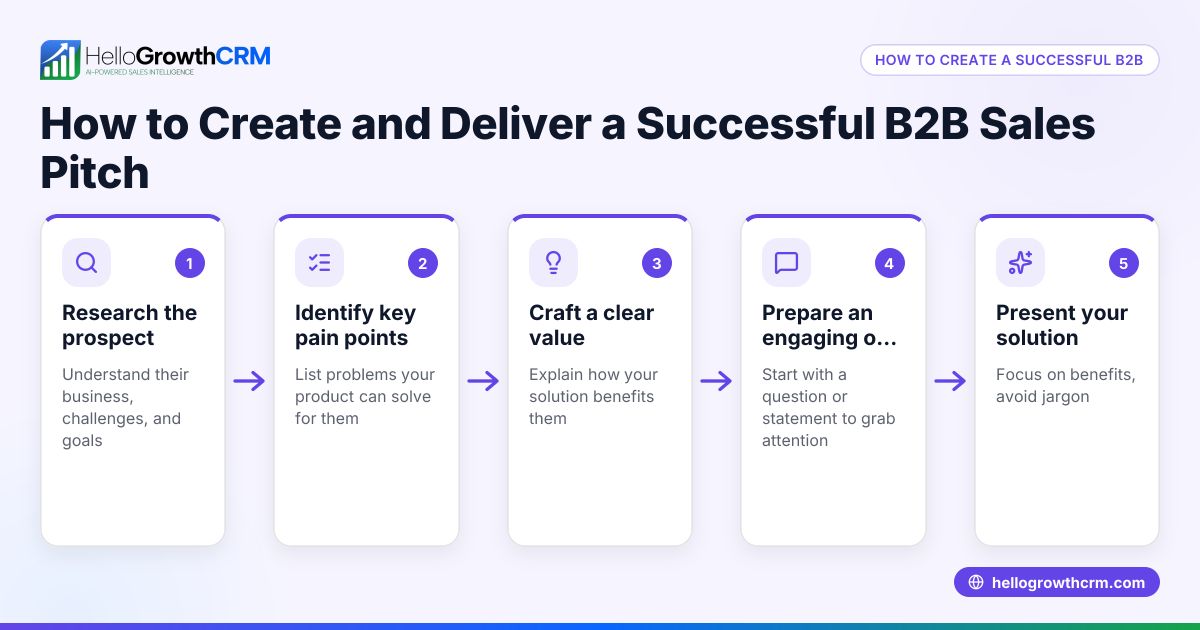
- Prepare thoroughly: Research the prospect’s business, needs, decision makers, and budget. Know your product’s value and pricing limits. Check your internal resources and flexibility on terms.
- Establish rapport and clarify needs: Start by building trust and asking questions to understand the buyer’s challenges and goals. Confirm who makes the decisions and their timeline.
- Present your solution and value: Tailor your pitch to show how your product or service solves their problems and delivers a return on investment. Use clear, concrete examples.
- Listen and handle objections: Pay close attention to concerns or hesitations. Respond with facts, testimonials, or alternate options. Ensure all objections are addressed before moving forward.
- Discuss price and terms: Present pricing clearly and be ready to negotiate on volume, payment terms, or service levels. Confirm you stay within approved limits.
- Seek agreement and confirm next steps: Once terms are acceptable, summarize the agreement and outline next actions, such as sending a formal quote or contract.
- Follow up promptly: Keep the deal moving by scheduling follow-ups and reminders. Confirm receipt of documents and answer any final questions.
Using a CRM with pipeline management helps track each step and automate follow-up reminders. For example, HelloGrowthCRM shows deals at the “quote sent” stage with a follow-up date so nothing is forgotten. See HelloGrowthCRM for the United States for details.
Example (fictional figures)
A landscaping contractor in Charlotte, North Carolina, negotiates a maintenance contract with a commercial property owner.
- Initial proposal: $48,000 annual contract
- Buyer requests a 10% discount for a multi-year deal
- Contractor offers a 5% discount with a 2-year commitment
Calculations:
$48,000 × 10% = $4,800 (requested discount)
$48,000 × 5% = $2,400 (offered discount)
Final price if accepted: $48,000 - $2,400 = $45,600 per year
The contractor confirms the 2-year term and payment schedule, sends the quote, and sets a follow-up date in the CRM to ensure timely closure.
Common mistakes
- Ignoring preparation: Prevent by researching the buyer and your own limits before negotiation.
- Failing to listen: Prevent by actively engaging and addressing objections fully.
- Not documenting agreements: Prevent by summarizing terms in writing and using a CRM pipeline to track progress.
- Delaying follow-ups: Prevent by scheduling reminders and using tools like the built-in CRM dialer to keep contact timely.
- Over-discounting too early: Prevent by understanding your minimum acceptable terms and exploring value-based concessions.
Doing this in HelloGrowthCRM
HelloGrowthCRM helps you manage B2B sales negotiation with features like Deals (pipeline), where a quotation sent last week appears at the "quote sent" stage with a follow-up date, so it’s not forgotten. For businesses with field sales, Territories, field operations and commissions let reps log visits from their phones while managers track daily activity. Founders without sales managers can use Managed RevOps to have a specialist work the follow-up queue weekly, ensuring no leads slip through. Learn more about these features at WhatsApp and SMS CRM.
Frequently asked questions
What is the key to successful B2B sales negotiation? The key is understanding the buyer’s needs, clear communication, and a structured process that includes preparation, listening, and timely follow-up. Being flexible but knowing your limits helps reach a fair agreement.
How long does a typical B2B sales negotiation take? Negotiation length varies by deal size and complexity. Small contracts may close in days, while larger deals can take weeks or months. Consistent follow-up and pipeline tracking shorten this time.
Can technology improve B2B sales negotiation? Yes, CRM tools like HelloGrowthCRM organize deal stages, automate reminders, and provide communication channels like WhatsApp and SMS, helping salespeople stay on top of negotiations.
How do I handle price objections effectively? Listen carefully to the reasons behind price objections. Offer value demonstrations, alternative packages, or payment terms instead of immediate discounts. Use data and examples to justify pricing.
What if I don’t have a dedicated sales manager? You can use Managed RevOps services, where a revenue specialist supports your follow-up and pipeline hygiene weekly, helping you keep deals on track without hiring a full-time sales manager.
Key takeaways
- B2B sales negotiation is a structured discussion to agree on terms that satisfy both businesses.
- Preparation, listening, clear value presentation, and timely follow-up are essential steps.
- Use documented agreements and track deals in a CRM pipeline to avoid lost opportunities.
- Avoid common mistakes like poor preparation, ignoring objections, and delayed follow-up.
- HelloGrowthCRM supports negotiation with pipeline management, field sales tools, and Managed RevOps support.
Start managing your B2B sales negotiation more effectively with HelloGrowthCRM. Start on the Free Forever plan (200 leads, no credit card) today.
Ready to put this into practice?
Set up your pipeline, WhatsApp follow-ups, and AI lead scoring in minutes — free, no credit card.
Try HelloGrowthCRM freeGet CRM tips in your inbox
Join thousands of sales professionals who get weekly insights on CRM strategy, AI automation, and pipeline optimization.

The HelloGrowthCRM team publishes guides on CRM strategy, AI sales tools, and revenue operations for small business sales teams.