HelloGrowthCRM software
Built for real small-business sales teams
HelloGrowthCRM helps reps qualify faster, follow up on time, and close more deals—with practical automation in one place.
- AI lead scoring and pipeline visibility
- Built-in dialer, WhatsApp, and email automation
- Sales forecasting and RevOps-ready reporting
Deal negotiation is the process where two or more parties discuss terms to reach an agreement on a business deal, such as price, delivery, or contract details. This article explains why negotiation matters for small businesses, outlines clear steps to follow, provides a practical example, highlights common pitfalls, and shows how you can track deals effectively using HelloGrowthCRM.
Why this comes up / what goes wrong
Small-business owners regularly encounter deal negotiation when selling products or services. For example, a local marketing agency negotiating a contract with a new client or a retail store discussing pricing terms with a supplier. Negotiations come up because both sides want favorable terms but have different priorities. Problems arise when negotiations stall, offers are forgotten, or follow-ups are missed. This can lead to lost revenue, damaged client relationships, or accepting unfavorable terms. Without a clear process, small businesses may lose deals to competitors who negotiate more effectively or fail to secure profitable agreements.
Step-by-step
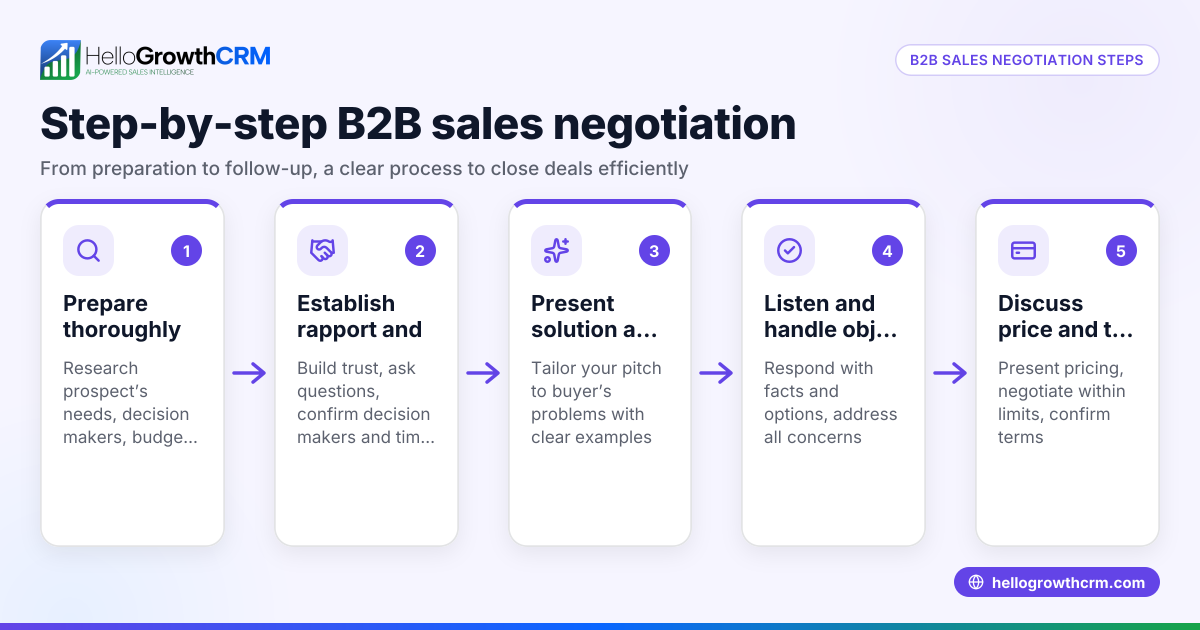
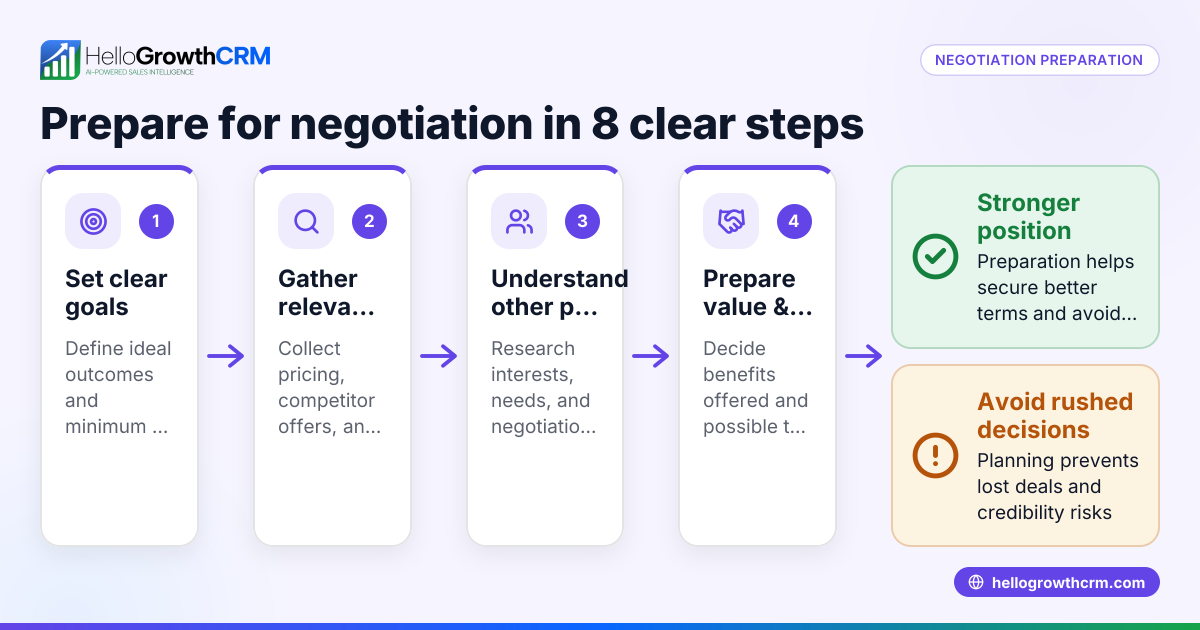
- Prepare thoroughly: Research the other party’s needs, budget, alternatives, and constraints. Know your minimum acceptable terms and your ideal outcomes. Prepare facts and figures to support your position.
- Initiate the conversation: Start with a clear agenda and establish rapport. Confirm both parties want to reach an agreement.
- Present your offer: Clearly state your proposal including price, delivery schedule, payment terms, and any other conditions. Explain the value your offer provides.
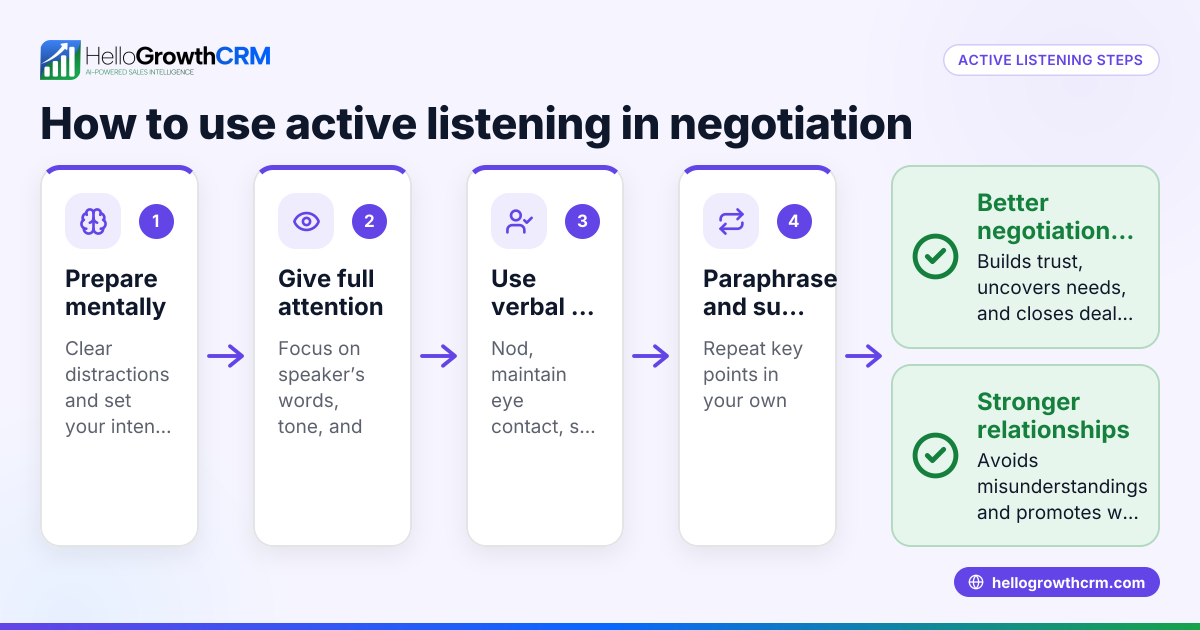
- Listen actively: Pay close attention to the other party’s concerns and objections. Ask clarifying questions to understand their priorities.
- Make concessions strategically: Offer compromises that cost you less but matter to the other party. Always ask for something in return to maintain balance.
- Summarize agreements: Recap all points agreed upon to ensure both sides have the same understanding.
- Set follow-up actions: Agree on next steps, deadlines, or meetings to keep the negotiation moving forward.
- Document the deal: Use written quotes or contracts to confirm the final terms and avoid misunderstandings.
At each step, check that communication is clear and both parties feel heard. Avoid rushing or ignoring warning signs like hesitation or unclear responses.
Example (fictional figures)
A two-location dental practice in Columbus, Ohio, is negotiating with a supplier for dental equipment. They want to purchase $50,000 worth of equipment but aim to get a 10% discount.
- Initial price: $50,000
- Desired discount: 10%
- Supplier offers 5% discount initially
- Practice counters with 8%
- Supplier agrees to 7.5% discount
Calculations: $50,000 × 7.5% = $3,750 (discount amount) $50,000 - $3,750 = $46,250 (final price)
They agree to pay $46,250 with delivery in 30 days. Follow-up is scheduled for 05/15/2026 to confirm shipment.
Common mistakes
- Not preparing enough: Prevent this by researching the other party’s needs, alternatives, and your limits before negotiating.
- Accepting the first offer too quickly: Avoid this by exploring options, making counteroffers, and understanding the value you provide.
- Failing to document agreements: Always confirm terms in writing immediately to prevent misunderstandings.
- Ignoring follow-up: Schedule follow-ups and reminders to maintain momentum and close the deal.
- Conceding too much without return: Ask for concessions in exchange to keep negotiations balanced.
Following a structured approach reduces these risks and increases your chances of success.
Doing this in HelloGrowthCRM
HelloGrowthCRM helps you track deals through a pipeline with stages like 'quote sent'. When you send a quotation, it appears as a deal with a follow-up date so it’s not forgotten. This ensures you never miss a chance to negotiate or close a deal. Learn more about the AI CRM features and how it supports deal management for US businesses on HelloGrowthCRM for the United States. If you negotiate deals via messaging, HelloGrowthCRM’s WhatsApp and SMS CRM capabilities help keep your communications organized.
Frequently asked questions
What is the main goal of deal negotiation? The main goal is to reach a mutually acceptable agreement that benefits both parties, balancing price, terms, and delivery. It aims to create value and build a lasting business relationship.
How long does deal negotiation usually take? The duration varies widely depending on deal complexity, parties involved, and urgency. It can range from a quick phone call to weeks of back-and-forth discussions.
What should I do if negotiations stall? Pause and reassess your priorities and theirs. Consider involving a neutral third party or proposing alternative solutions. Sometimes taking a break helps.
Can I negotiate every deal? Not always. Some deals have fixed prices or strict terms. But most B2B deals have room for negotiation, especially on price, delivery, or payment terms.
How does HelloGrowthCRM help with deal negotiation? It tracks deals in a pipeline with stages and follow-up dates, so you never forget to continue negotiations. It also integrates communication channels to keep all messages in one place.
Key takeaways
- Deal negotiation is a structured discussion to reach agreement on business terms.
- Preparation and clear communication are essential for success.
- Follow-up and documentation prevent lost or misunderstood deals.
- Avoid common mistakes like rushing or conceding without return.
- HelloGrowthCRM’s deals pipeline helps track quotations and follow-ups.
- Using CRM tools can improve negotiation efficiency and closing rates.
Start managing your deals better today. Start on the Free Forever plan (200 leads, no credit card) to keep track of your negotiations and never miss a follow-up.
Ready to put this into practice?
Set up your pipeline, WhatsApp follow-ups, and AI lead scoring in minutes — free, no credit card.
Try HelloGrowthCRM freeGet CRM tips in your inbox
Join thousands of sales professionals who get weekly insights on CRM strategy, AI automation, and pipeline optimization.

The HelloGrowthCRM team publishes guides on CRM strategy, AI sales tools, and revenue operations for small business sales teams.