HelloGrowthCRM software
Built for real small-business sales teams
HelloGrowthCRM helps reps qualify faster, follow up on time, and close more deals—with practical automation in one place.
- AI lead scoring and pipeline visibility
- Built-in dialer, WhatsApp, and email automation
- Sales forecasting and RevOps-ready reporting
B2C demand generation is the process of creating interest and desire for a product or service among individual consumers to drive sales. It involves marketing strategies designed to attract potential buyers, engage them, and convert them into customers. This article covers why B2C demand generation matters for small businesses, practical step-by-step actions to build it, a detailed example, common mistakes to avoid, and frequently asked questions.
Why this comes up / what goes wrong
Many small business owners struggle with inconsistent sales because they lack a clear plan to generate demand from their target audience. They often rely on sporadic advertising, word-of-mouth, or manual tracking methods like spreadsheets, text messages, and emails. Without a structured process to attract and nurture leads, potential customers are easily lost due to slow follow-up or scattered efforts. This results in unpredictable lead flow, missed revenue opportunities, and difficulty scaling sales.
Step-by-step
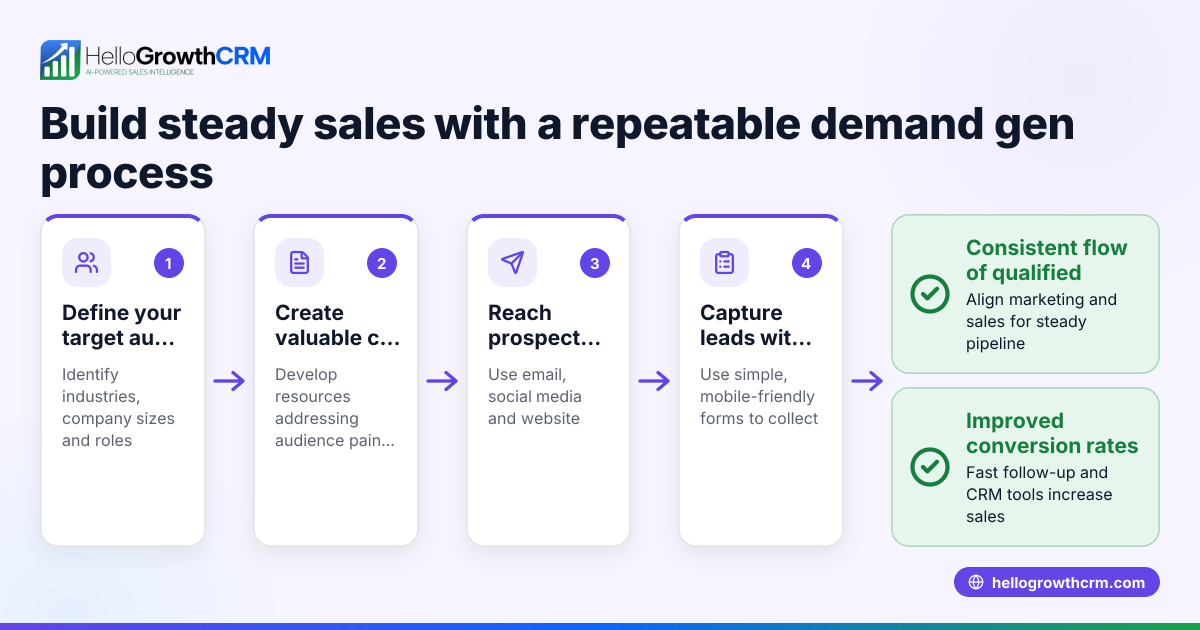
- Identify your target audience: Define your ideal customers by demographics, interests, and buying behaviors. Check that your messaging clearly addresses their needs and pain points.
- Create compelling offers: Develop promotions, discounts, free trials, or valuable content that motivates consumers to engage. Confirm your offers solve a real problem or add clear value.
- Select effective marketing channels: Use channels where your audience spends time, such as social media platforms, email, SMS, or WhatsApp. Track engagement metrics to verify channel effectiveness.
- Capture leads efficiently: Use web forms or integrations to collect contact information quickly. Ensure your lead capture process is simple, mobile-friendly, and minimizes friction.
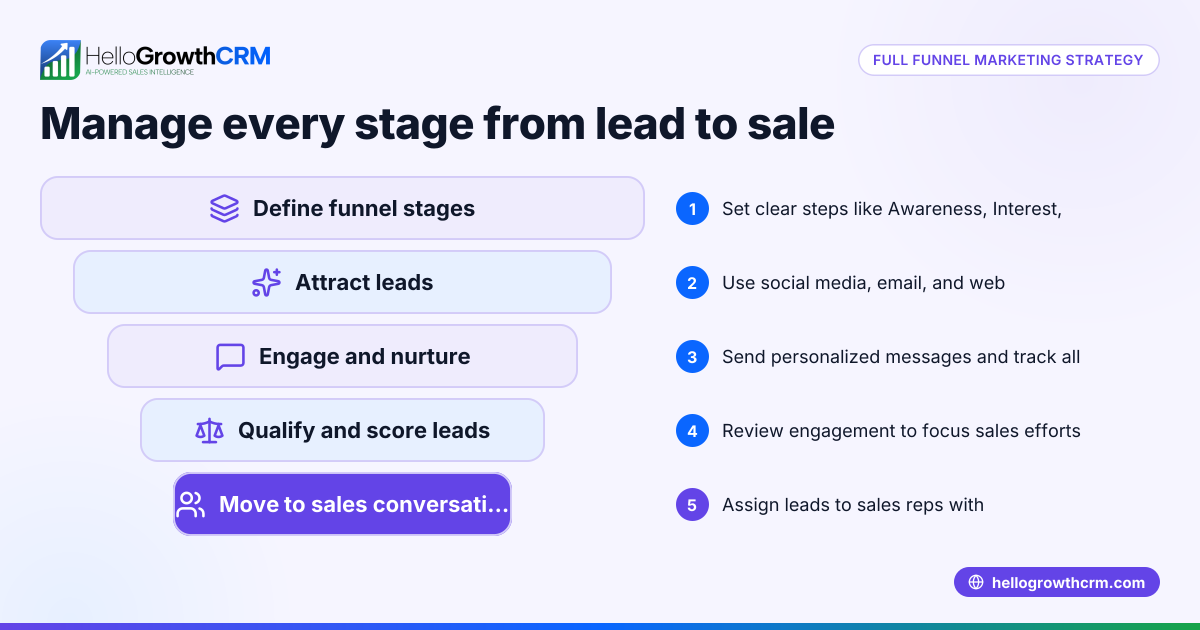
- Nurture leads with automated sequences: Send email, SMS, or WhatsApp message sequences to educate, remind, and build interest. Monitor open and response rates to adjust your messaging.
- Qualify and score leads: Prioritize leads based on engagement and likelihood to buy. Regularly review lead scores to focus sales efforts on the most promising prospects.
- Follow up promptly: Contact leads quickly using calls or messages to convert interest into sales. Measure follow-up speed and success rates to improve.
- Analyze and forecast sales: Review your sales pipeline and data to predict revenue and refine strategies. Confirm your forecasts align with actual results.
Example (fictional figures)
A Denver-based B2C software reseller launches a new productivity app targeting small business owners aged 30-50 in Colorado.
- Created a free 14-day trial offer.
- Ran social media ads and collected 1,000 leads via a web form by 05/15/2026.
- Sent a 5-step WhatsApp and email nurture sequence, achieving a 25% trial activation rate.
Calculations:
1,000 leads × 25% activation rate = 250 activated trials
Of those, 40% convert to paid customers:
250 × 40% = 100 paying customers
Average subscription price: $50/month
Monthly revenue from new customers:
100 × $50 = $5,000
This example shows how clear targeting, compelling offers, and prompt follow-up can create measurable demand and revenue.
Common mistakes
- Ignoring lead follow-up speed: Slow responses cause lost sales. Prevent this by setting automated reminders and sequences.
- Using too many marketing channels without focus: Spreading efforts thin reduces impact. Prevent by choosing 1-2 effective channels like WhatsApp and SMS CRM (/product/whatsapp-sms-crm).
- Not qualifying leads: Wasting time on uninterested prospects. Prevent by implementing lead scoring to prioritize.
- Neglecting sales forecasting: Leads to poor planning and missed targets. Prevent by regularly reviewing pipeline data.
- Relying solely on spreadsheets and manual tracking: This causes lost leads and errors. Prevent by adopting tools with built-in CRM dialers (/product/crm-dialer) and lead capture.
Frequently asked questions
What is the difference between B2C demand generation and B2B demand generation? B2C demand generation targets individual consumers and often uses emotional appeals, social media, and quick conversions. B2B demand generation focuses on business clients, involving longer sales cycles and relationship-building. Both require clear targeting and lead nurturing but differ in approach and channels.
How can I measure if my B2C demand generation is working? Track metrics like lead volume, conversion rates, engagement with marketing sequences, and sales revenue. Regularly analyze these to see if your efforts attract and convert more customers.
Which marketing channels work best for B2C demand generation? Channels such as social media, WhatsApp, SMS, and email are effective for reaching consumers directly. Selecting channels depends on your audience’s preferences. Using a WhatsApp and SMS CRM (/product/whatsapp-sms-crm) can help manage communications efficiently.
How do I avoid losing leads during follow-up? Use automated sequences and reminders to ensure timely contact. Tools with built-in CRM dialers (/product/crm-dialer) help sales teams follow up quickly and track interactions.
Can small businesses manage B2C demand generation without complex software? Yes, small businesses can start with simple web forms and email sequences. However, adopting CRM tools that integrate WhatsApp, SMS, and calls can improve lead tracking and follow-up efficiency.
Key takeaways
- B2C demand generation involves creating interest and converting individual consumers into customers.
- Clearly define your target audience and craft offers that meet their needs.
- Use focused marketing channels and capture leads efficiently.
- Nurture leads with automated sequences and score them to prioritize sales efforts.
- Follow up promptly and analyze sales data to improve results.
- Avoid common mistakes like slow follow-up, unfocused channels, and manual tracking.
Explore how HelloGrowthCRM for the United States (/usa) can help manage your leads and sales pipeline efficiently.
Start on the Free Forever plan (200 leads, no credit card) at Start on the Free Forever plan (200 leads, no credit card).
Ready to put this into practice?
Set up your pipeline, WhatsApp follow-ups, and AI lead scoring in minutes — free, no credit card.
Try HelloGrowthCRM freeGet CRM tips in your inbox
Join thousands of sales professionals who get weekly insights on CRM strategy, AI automation, and pipeline optimization.

The HelloGrowthCRM team publishes guides on CRM strategy, AI sales tools, and revenue operations for small business sales teams.