HelloGrowthCRM software
Built for real small-business sales teams
HelloGrowthCRM helps reps qualify faster, follow up on time, and close more deals—with practical automation in one place.
- AI lead scoring and pipeline visibility
- Built-in dialer, WhatsApp, and email automation
- Sales forecasting and RevOps-ready reporting
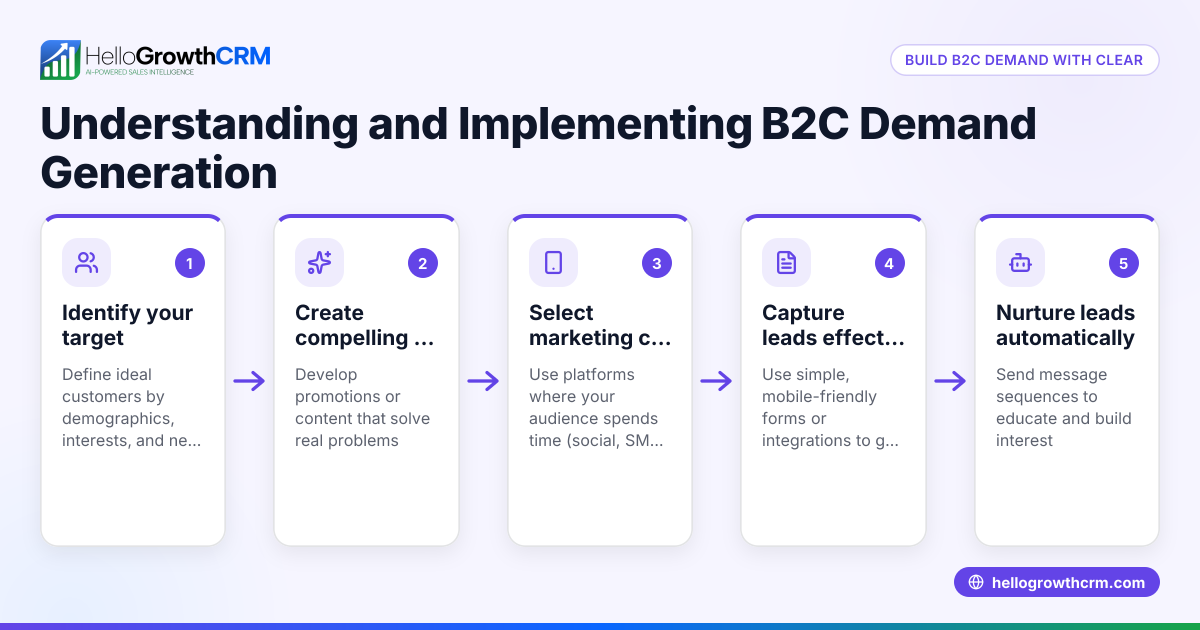
B2B demand generation is about attracting and nurturing interest from other businesses to buy your products or services. Unlike direct sales, demand gen focuses on building awareness and engagement to create a steady flow of qualified leads for your sales team.
Why this comes up / what goes wrong
Small-business owners often struggle with inconsistent sales pipelines because they rely on random referrals, cold calls, or scattered marketing efforts. Without a structured demand gen approach, leads may dry up or be low quality. This leads to wasted time chasing unqualified prospects or losing deals because follow-up is slow or disorganized. Business owners need a clear, repeatable process that aligns marketing and sales to generate demand continuously.
Step-by-step
- Define your target business audience: Identify the industries, company sizes, and roles within companies that benefit most from your product or service. Check that your target list is realistic and reachable.
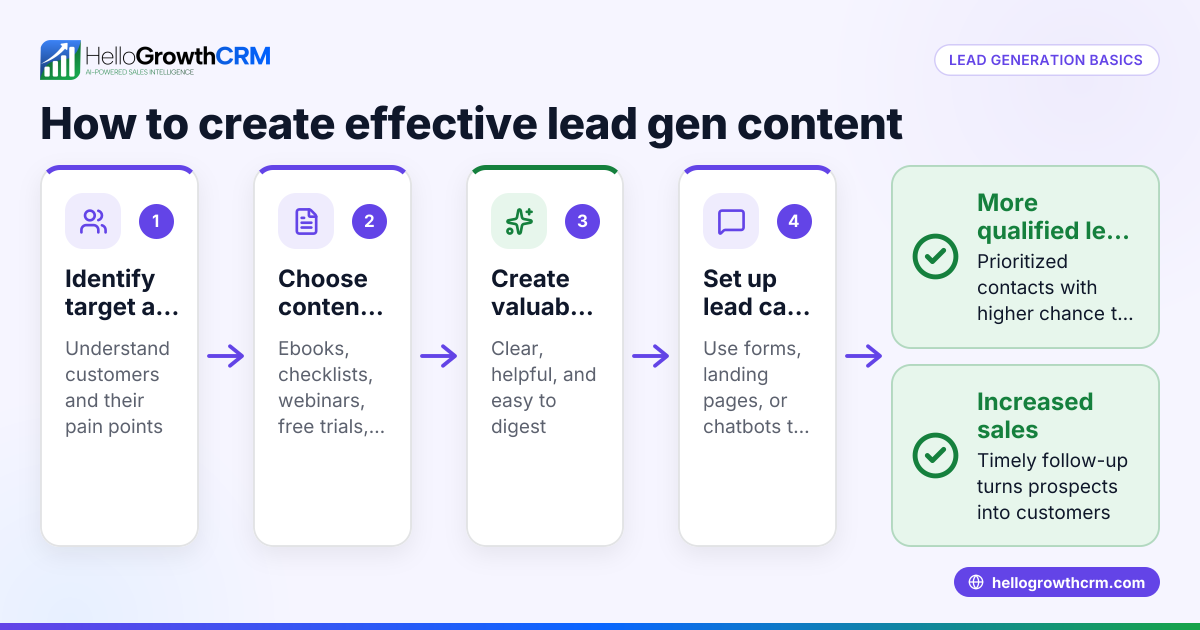
- Create valuable content and offers: Develop resources like whitepapers, webinars, or case studies that address your audience’s pain points. Confirm these offers provide clear benefits and solve problems.
- Use multiple channels to reach prospects: Promote your content via email campaigns, social media, and your website. Track which channels bring the most engagement.
- Capture leads with forms and calls-to-action: Use web forms or sign-up pages to collect contact information. Ensure forms are simple and mobile-friendly.
- Qualify and score leads: Review incoming leads to prioritize those most likely to buy based on criteria like company size or engagement level. Check that your scoring system aligns with sales feedback.
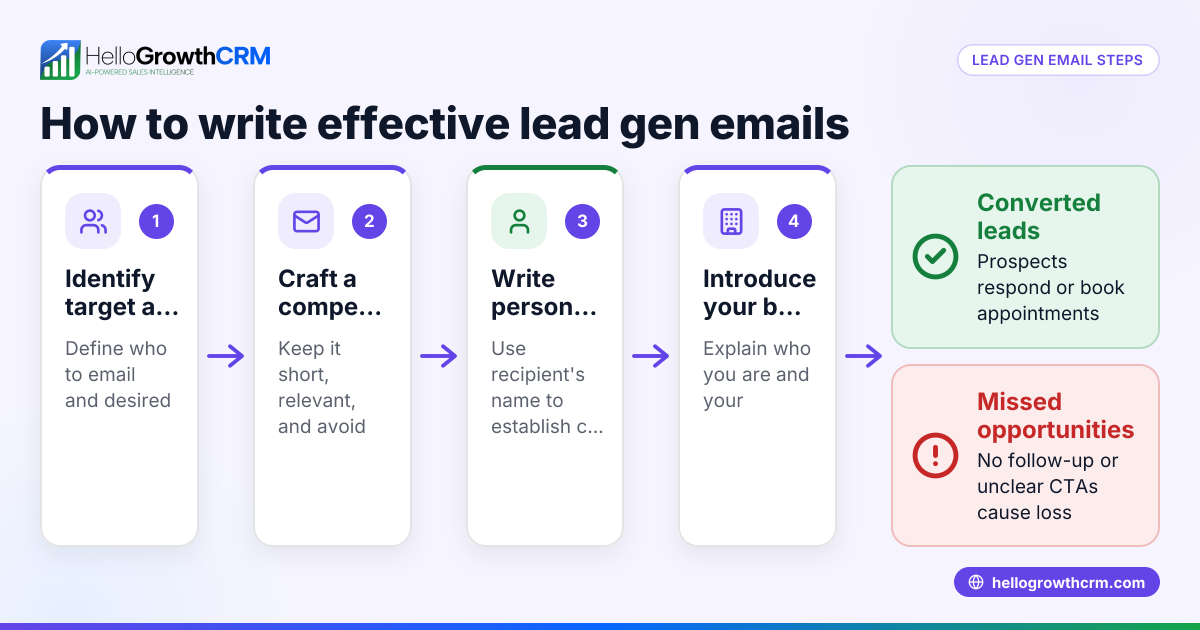
- Nurture leads with timely follow-up: Send personalized emails or make calls to educate and build trust. Verify your follow-up speed is fast enough to keep leads interested.
- Measure and optimize: Analyze conversion rates, channel performance, and lead quality regularly. Adjust your tactics based on data.
Each step requires coordination between marketing and sales teams to avoid losing leads in handoffs. Using tools like a WhatsApp and SMS CRM or a built-in CRM dialer can help streamline communications and follow-ups efficiently. For example, HelloGrowthCRM supports sales teams with these features to keep leads engaged and organized. Learn more about WhatsApp and SMS CRM and the built-in CRM dialer.
Example (fictional figures)
A plumbing company in Austin, Texas, wants to generate more leads from commercial building managers.
- They define their target audience as building managers of properties with 50+ units.
- They create a free guide: "How to Avoid Costly Plumbing Emergencies."
- They promote the guide via LinkedIn ads and email newsletters.
- 500 people download the guide in the first month.
- They collect contact info with a simple form.
- They score leads based on company size and engagement.
- 100 leads are high priority.
- They follow up with personalized WhatsApp messages and calls.
- 20 leads convert to paying customers, each averaging $5,000 in revenue.
Calculations:
100 high-priority leads × 20% conversion rate = 20 customers
20 customers × $5,000 average revenue = $100,000 total revenue
This example shows how targeted content and follow-up can turn interest into real sales.
Common mistakes
- Not defining the target audience clearly: Leads become too broad or irrelevant. Prevent by researching and narrowing your ideal customer profile.
- Weak or unclear offers: Content that doesn’t solve problems won’t attract leads. Prevent by testing offers and asking for feedback.
- Ignoring lead follow-up speed: Delays cause leads to lose interest. Prevent by setting follow-up time goals and using CRM tools like the built-in CRM dialer.
- Overreliance on one channel: If one channel fails, lead flow stops. Prevent by diversifying outreach with email, social media, and web.
- Failing to measure results: Without data, you can’t improve. Prevent by tracking key metrics regularly.
- Not aligning marketing and sales: Leads get lost between teams. Prevent by using integrated communication tools such as WhatsApp and SMS CRM.
Frequently asked questions
What is the difference between demand generation and lead generation? Demand generation builds overall awareness and interest in your brand, while lead generation focuses specifically on capturing contact information from interested prospects. Demand gen is broader and includes nurturing leads over time.
How long does it take to see results from B2B demand gen? Results vary, but typically it takes 3-6 months to build momentum as you create content, attract leads, and nurture relationships. Consistency is key.
Which channels work best for B2B demand gen? Email, LinkedIn, your website, and webinars are commonly effective. Using a CRM with integrated communication tools like WhatsApp and SMS can improve engagement.
How can small businesses manage demand gen without a big marketing budget? Focus on targeted content for your ideal customers, leverage free or low-cost channels like LinkedIn and email, and use affordable CRM tools to automate follow-ups.
What role does CRM software play in demand gen? CRM software organizes leads, tracks interactions, scores prospects, and helps sales teams follow up promptly. Features like built-in dialers and messaging integrations streamline communication and improve conversion rates.
Key takeaways
- B2B demand gen creates interest and qualified leads by targeting the right businesses with valuable offers.
- A clear, step-by-step process helps small businesses avoid wasted effort and lost leads.
- Using multiple channels and fast follow-up improves lead quality and conversion.
- Measuring performance and coordinating marketing with sales are essential for success.
- CRM tools with communication features like WhatsApp and SMS improve lead management and sales efficiency.
Start building your demand generation system today. Start on the Free Forever plan (200 leads, no credit card) to organize your leads and follow-ups without upfront costs.
For more about how sales teams can use integrated communication, see HelloGrowthCRM for the United States.
Ready to put this into practice?
Set up your pipeline, WhatsApp follow-ups, and AI lead scoring in minutes — free, no credit card.
Try HelloGrowthCRM freeGet CRM tips in your inbox
Join thousands of sales professionals who get weekly insights on CRM strategy, AI automation, and pipeline optimization.

The HelloGrowthCRM team publishes guides on CRM strategy, AI sales tools, and revenue operations for small business sales teams.