HelloGrowthCRM software
Built for real small-business sales teams
HelloGrowthCRM helps reps qualify faster, follow up on time, and close more deals—with practical automation in one place.
- AI lead scoring and pipeline visibility
- Built-in dialer, WhatsApp, and email automation
- Sales forecasting and RevOps-ready reporting
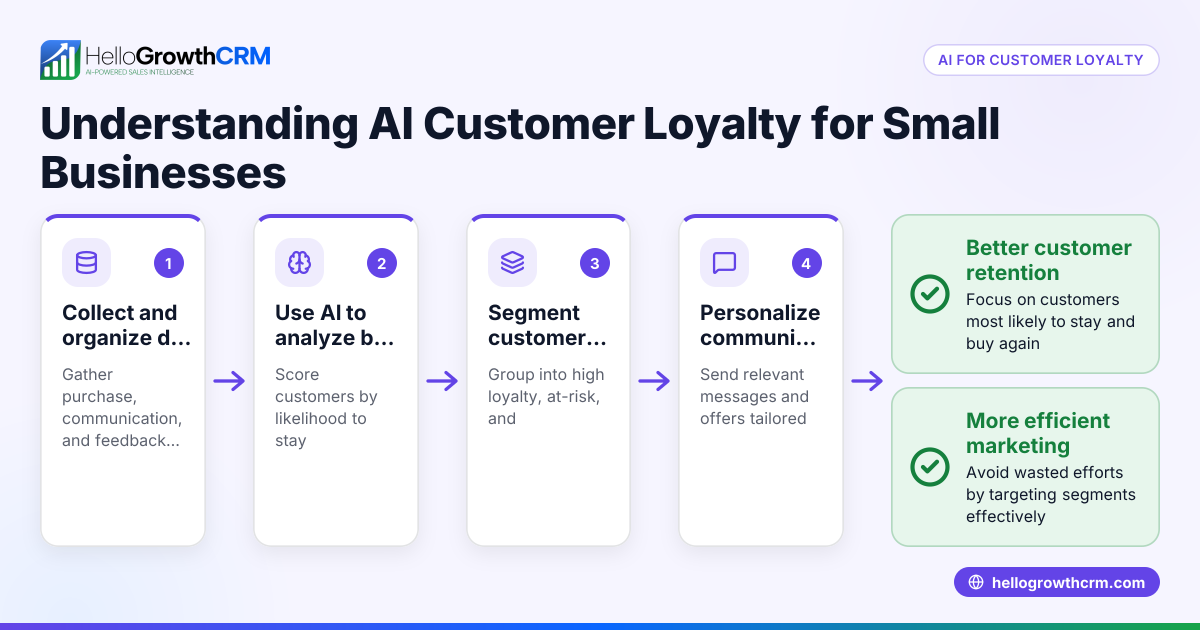
Customer loyalty programs help small businesses increase repeat sales, improve customer retention, and boost revenue by rewarding customers for their ongoing business. This article explains why loyalty programs matter, provides a step-by-step guide to creating one, shares a practical example, highlights common mistakes to avoid, and shows how HelloGrowthCRM supports managing customers and service after the sale.
Why this comes up / what goes wrong
Small-business owners often struggle with unpredictable revenue and low customer retention. Without a loyalty program, customers may shop around or switch to competitors who offer rewards or perks. Managing customer rewards and communications through spreadsheets, email, or text messages can cause errors, delays, and lost sales opportunities. These challenges make it difficult to build lasting customer relationships that stabilize income and improve cash flow.
Many small businesses rely heavily on new customer acquisition, which is often more expensive than retaining existing customers. A loyalty program can encourage repeat purchases and referrals, reducing marketing costs and increasing lifetime customer value. However, without a clear plan and proper management, loyalty programs can become confusing or ineffective.
Step-by-step
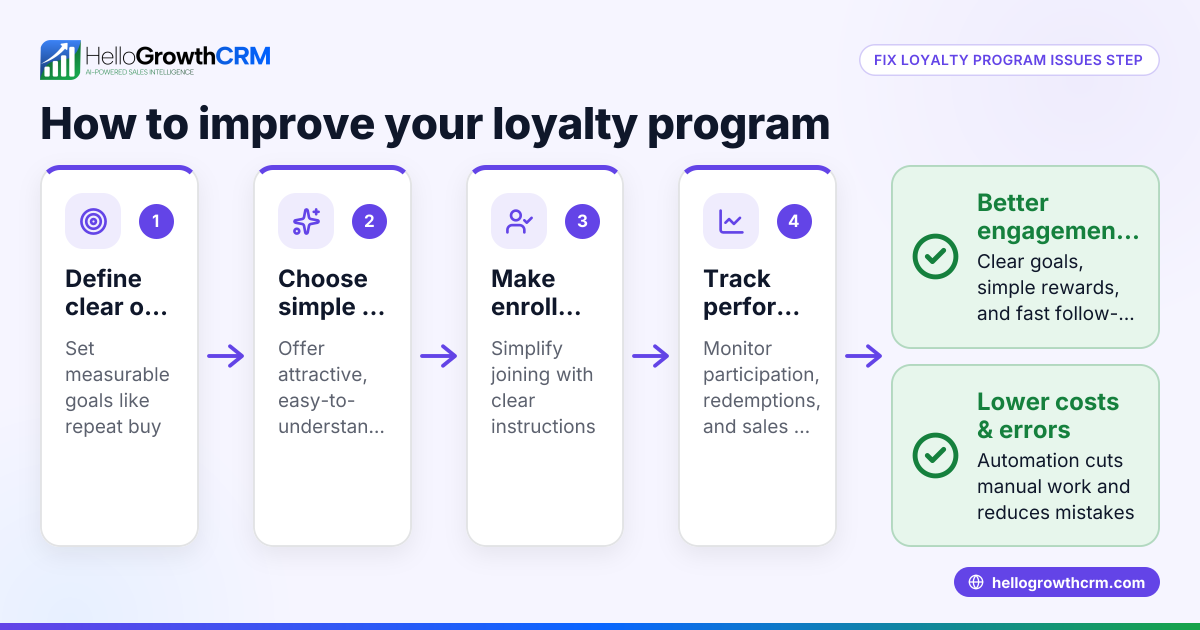
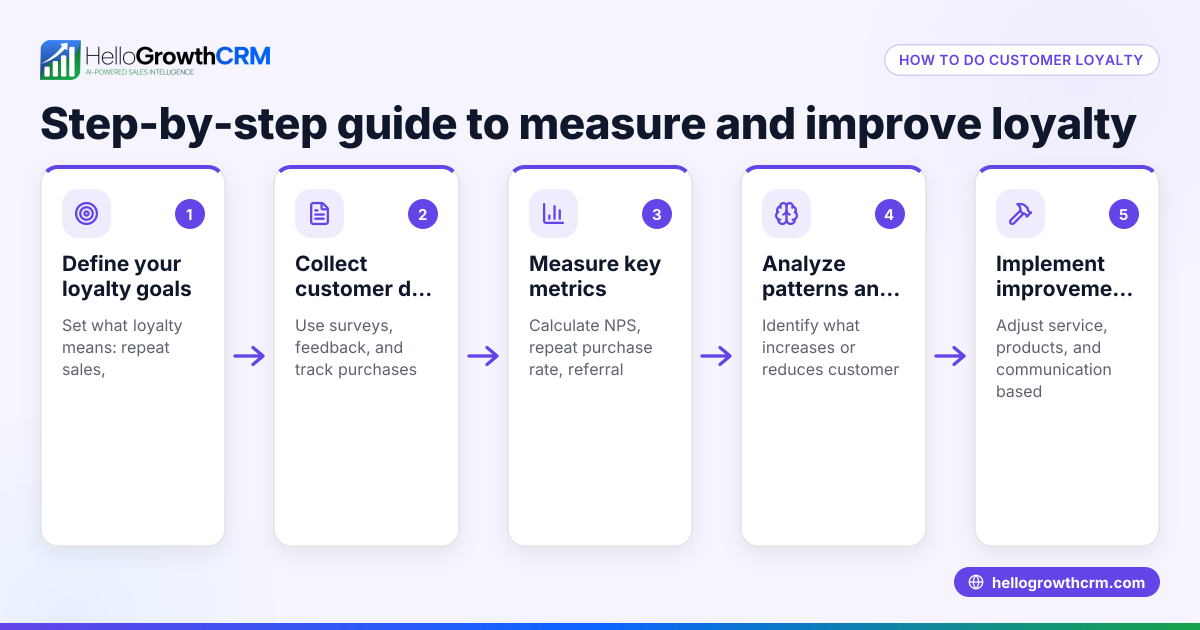
- Define your goals. Decide what you want your loyalty program to achieve. Common goals include increasing repeat purchases, raising average order value, or generating more customer referrals. Clear goals help you design rewards that motivate the right behaviors.
- Choose reward types. Select rewards that fit your business and appeal to your customers. Popular options include points earned per purchase, discounts, exclusive offers, or referral bonuses. For example, a coffee shop might offer a free drink after 10 purchases, while a service business might give discounts on future appointments.
- Set simple rules and tiers. Keep earning and redeeming rewards straightforward to encourage participation. Consider tiered rewards to reward higher spending or longer loyalty. For example, customers who spend $500 annually might get a bigger discount or exclusive perks.
- Collect customer data efficiently. Use web forms, point-of-sale systems, or software integrations to capture customer contact details and purchase history accurately. Avoid manual entry to reduce errors and speed up follow-up.
- Promote your program clearly. Use multiple channels like email, WhatsApp, SMS, in-store signage, or social media to explain how customers can join and benefit. Clear communication increases awareness and participation.
- Track engagement and redemptions. Regularly review how customers use rewards, how often they return, and which rewards are most popular. Adjust your program based on this data to keep it effective.
- Manage loyalty and service in one place. Use a CRM to centralize customer information, track referrals, and manage service requests. This helps speed follow-up, improve service quality, and maintain strong customer relationships.
Example (fictional figures)
A residential real-estate team in Phoenix, Arizona, launches a loyalty program on 04/01/2026 to encourage repeat referrals and sales.
- They offer a $100 referral bonus for each new client who closes a deal.
- In the first quarter, 20 referrals close deals.
- Referral bonuses paid = 20 × $100 = $2,000
- Total revenue from referred deals = $3,000,000
- Average commission rate on sales = 3%
- Commission earned from referred deals = $3,000,000 × 3% = $90,000
- Net gain after referral bonuses = $90,000 - $2,000 = $88,000
This example shows the program increases revenue despite the cost of bonuses, demonstrating a positive return on investment.
Common mistakes
- Making the program too complex. Avoid complicated rules or too many reward tiers. Keep it simple so customers understand how to earn and redeem rewards easily.
- Not promoting enough. Use multiple communication channels including WhatsApp and SMS sequences to reach customers effectively. Tools like HelloGrowthCRM’s messaging features help automate outreach (WhatsApp and SMS CRM).
- Failing to track engagement. Without monitoring customer activity and reward redemptions, you can’t know if your program works. Use CRM reports to measure success and adjust your program.
- Separating customer service from sales data. When customer service requests aren’t linked to sales records, follow-up can be slow or inconsistent. Keep service tickets connected to customer records for better support.
- Ignoring referrals. Referrals are a powerful growth source. Include referral tracking and rewards to motivate customers to bring in new business.
- Neglecting customer data accuracy. Inaccurate data leads to errors in rewards and poor customer experience. Use automated tools to capture and update customer information reliably.
Doing this in HelloGrowthCRM
HelloGrowthCRM supports customer loyalty by keeping all interactions—including referrals and service requests—on the same customer record. Its branded customer portal lets customers view their rewards and service tickets easily. Referral program tracking helps monitor and reward customers who bring in new business. After the sale, service requests stay linked to the deal, improving customer service and satisfaction. Learn more about these features in the customer health score section.
Frequently asked questions
What types of rewards work best in loyalty programs? Points-based rewards, discounts, exclusive offers, and referral bonuses are common. The best choice depends on your customers’ preferences and what motivates them to return.
How do I track loyalty program success? Track repeat purchase rates, referral numbers, and revenue from loyal customers. A CRM can automate tracking and provide clear reports to help you adjust your program.
Can small businesses afford loyalty programs? Yes. Start with simple referral bonuses or small discounts. The increase in repeat business and referrals often offsets the costs involved.
How can I promote my loyalty program effectively? Use email, WhatsApp, SMS sequences, and in-person reminders. Communication tools in a CRM help automate outreach and keep customers engaged (WhatsApp and SMS CRM).
How does customer service fit into loyalty programs? Good service reinforces loyalty. Keeping service tickets linked to customer records ensures timely help and stronger relationships.
What is the role of referrals in loyalty programs? Referrals bring new customers and increase revenue. Tracking referrals and rewarding customers encourages them to promote your business.
Key takeaways
- Customer loyalty programs increase repeat sales and improve customer retention.
- Simple, clear reward rules encourage customer participation.
- Promote your program consistently using multiple channels.
- Track engagement, referrals, and redemption rates to optimize results.
- Use a CRM like HelloGrowthCRM to manage customers, referrals, and service in one place.
Start your loyalty program today and manage it efficiently with HelloGrowthCRM. Start on the Free Forever plan (200 leads, no credit card) to see how it fits your business needs.
Ready to put this into practice?
Set up your pipeline, WhatsApp follow-ups, and AI lead scoring in minutes — free, no credit card.
Try HelloGrowthCRM freeGet CRM tips in your inbox
Join thousands of sales professionals who get weekly insights on CRM strategy, AI automation, and pipeline optimization.

The HelloGrowthCRM team publishes guides on CRM strategy, AI sales tools, and revenue operations for small business sales teams.