HelloGrowthCRM software
Built for real small-business sales teams
HelloGrowthCRM helps reps qualify faster, follow up on time, and close more deals—with practical automation in one place.
- AI lead scoring and pipeline visibility
- Built-in dialer, WhatsApp, and email automation
- Sales forecasting and RevOps-ready reporting
Customer loyalty research is essential for small businesses that want to retain customers, increase repeat sales, and grow through referrals. It involves collecting feedback and behavioral data to assess how satisfied customers are, how often they return, and how likely they are to promote your business. This article covers why small business owners seek customer loyalty research, how to conduct it in practical steps, an example with realistic figures, common pitfalls to avoid, and how HelloGrowthCRM can help manage customer loyalty efficiently.
Why this comes up / what goes wrong
Small business owners often realize they lose customers without knowing why or how loyal their customers really are. They may depend on occasional repeat sales or word of mouth but lack clear data to confirm if customers are truly satisfied or likely to return. Without customer loyalty research, businesses risk focusing on acquiring new leads rather than nurturing existing customers, which can be more costly and less effective. Additionally, tracking loyalty manually across text messages, emails, and spreadsheets can cause slow follow-up and missed opportunities, leading to lost revenue.
Step-by-step
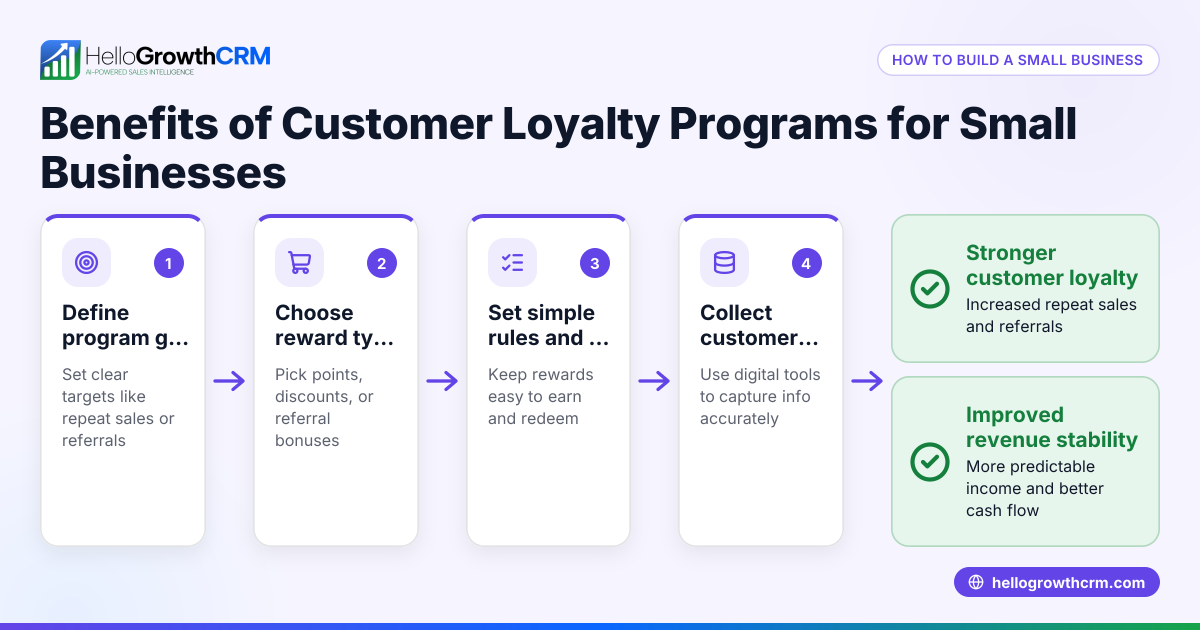
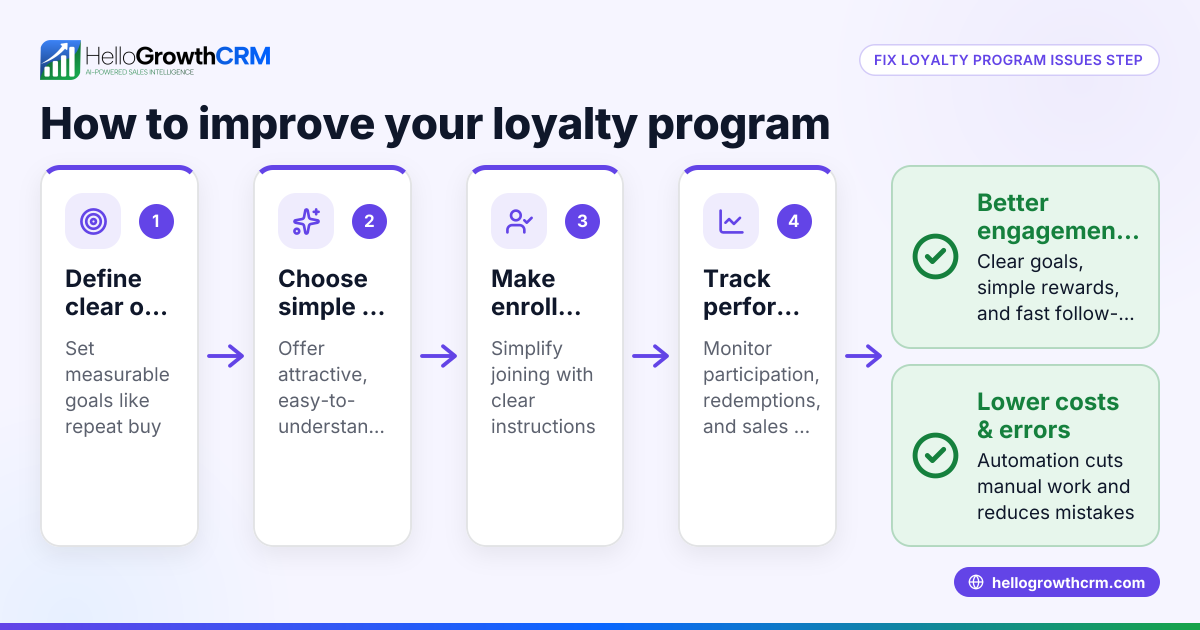
- Define Your Loyalty Goals: Decide what loyalty means for your business—repeat purchases, referral rates, or customer satisfaction scores. Check that these goals align with your sales and marketing strategies.
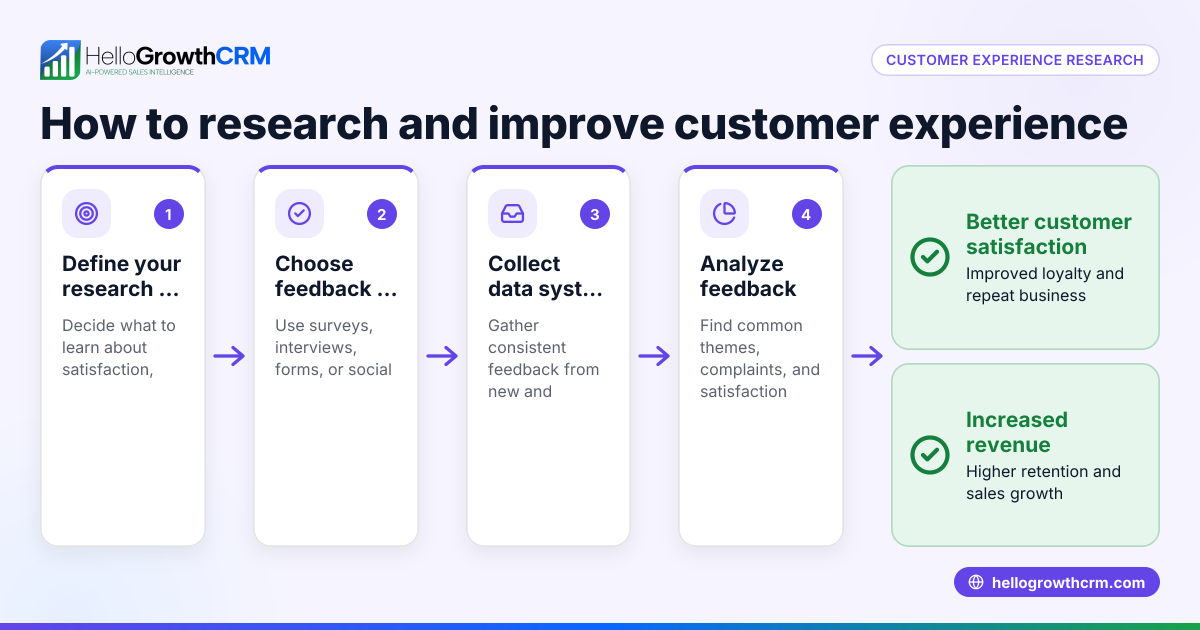
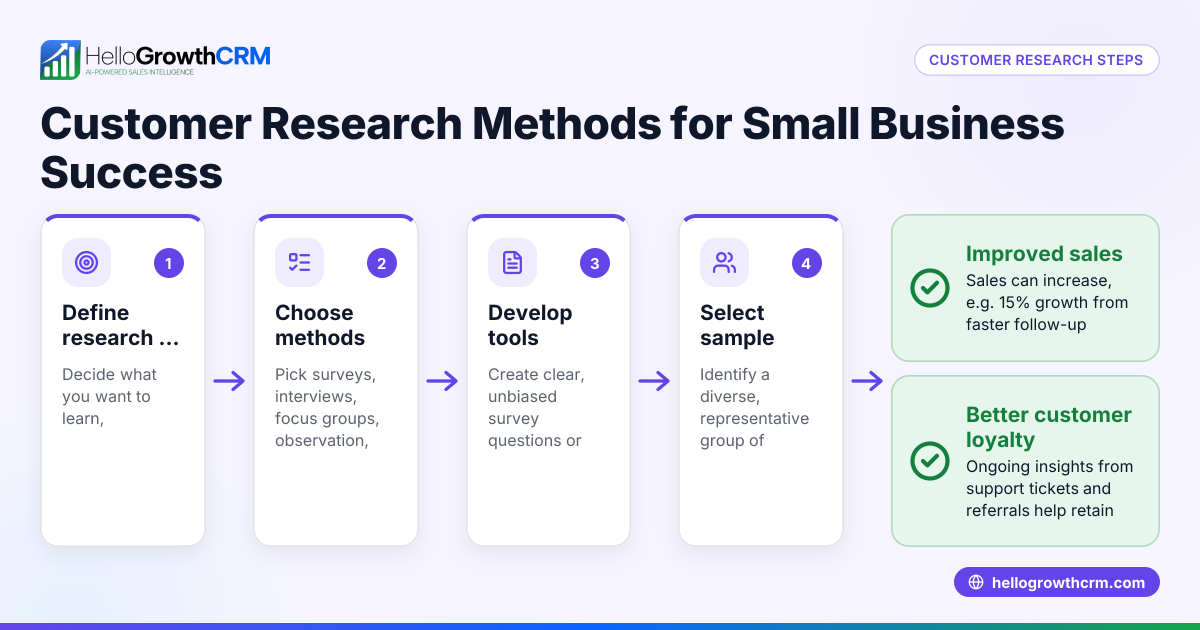
- Collect Customer Data: Use surveys, feedback forms, or direct interviews to gather customer opinions on your products or services. Also, track purchase frequency and referral activity. Check that your data collection methods respect customer privacy and are easy to complete.
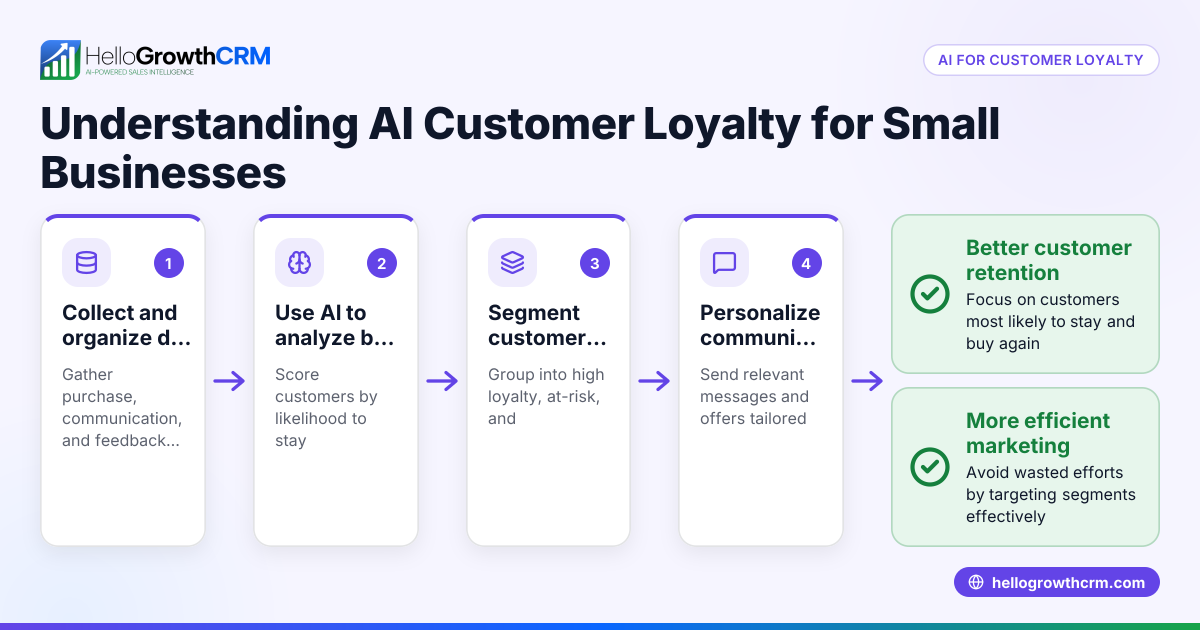
- Measure Key Metrics: Calculate metrics like Net Promoter Score (NPS), repeat purchase rate, and referral counts. Check that these metrics reflect your loyalty goals and are updated regularly.
- Analyze Patterns and Drivers: Look for trends in the data to understand what satisfies customers or causes dissatisfaction. Check if certain products, services, or interactions correlate with higher loyalty.
- Implement Improvements: Based on insights, adjust your customer service, product offerings, or communication strategies. Check that changes are communicated clearly to customers.
- Monitor and Repeat: Continuously track loyalty metrics over time to see if improvements work. Check that your measurement tools remain relevant and accurate.
- Use Technology to Support Loyalty: Consider CRM tools that integrate customer data, track referrals, and manage service requests efficiently. See the product section below for how HelloGrowthCRM helps.
Example (fictional figures)
A plumbing company in Austin, Texas wants to measure customer loyalty to increase repeat business and referrals. They start on 01/01/2026.
- Total customers at start: 500
- Customers who made repeat purchases within 6 months: 150
- Customers who referred at least one new customer: 50
Calculate repeat purchase rate:
150 ÷ 500 = 0.30 (30%)
Calculate referral rate:
50 ÷ 500 = 0.10 (10%)
If the average customer value is $1,200 per job, the company estimates revenue from repeat customers:
150 × $1,200 = $180,000
And revenue from referrals, assuming each referral brings one new customer with the same average value:
50 × $1,200 = $60,000
Total revenue influenced by loyalty:
$180,000 + $60,000 = $240,000
This shows the financial impact of improving loyalty metrics by even a few percentage points.
Common mistakes
- Ignoring customer feedback: Prevent by regularly collecting and acting on customer opinions.
- Using inconsistent data sources: Prevent by centralizing customer info in one system to avoid errors.
- Focusing only on new leads: Prevent by allocating resources to retain and reward existing customers.
- Not measuring loyalty regularly: Prevent by scheduling periodic reviews of loyalty metrics.
- Overcomplicating surveys or processes: Prevent by keeping feedback tools simple and quick to complete.
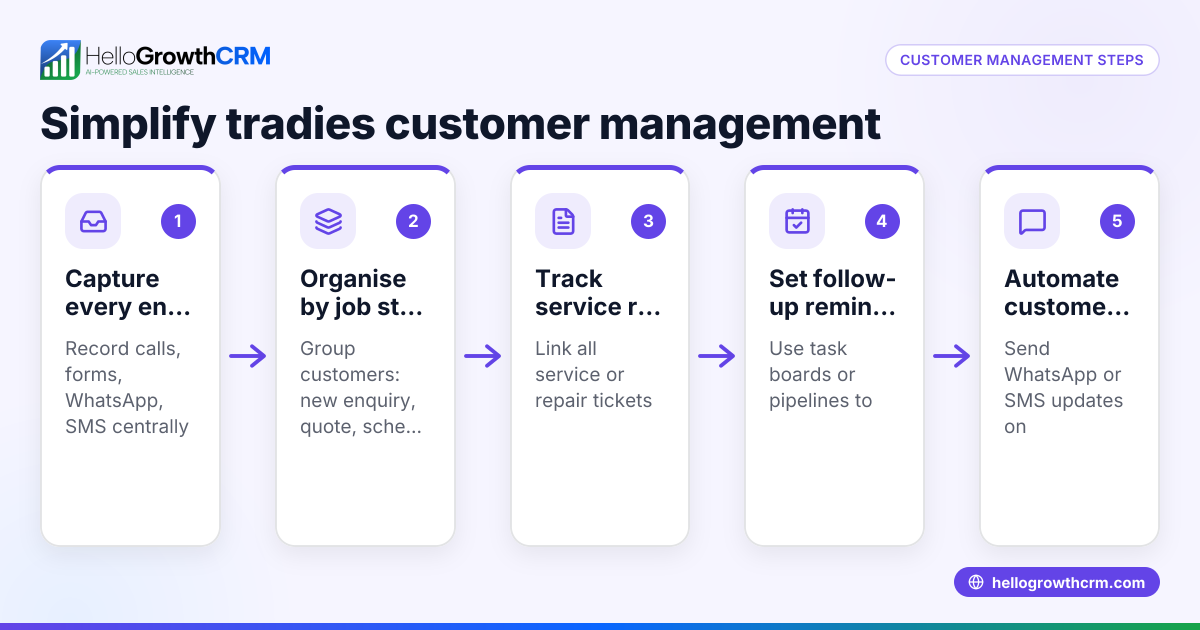
- Failing to connect service requests to customer records: Prevent by using CRM features that keep service history linked to each customer.
Doing this in HelloGrowthCRM
HelloGrowthCRM helps small businesses manage customer loyalty by keeping service requests, referrals, and support tickets all on the same customer record as the deal. Its branded self-service customer portal lets customers submit requests and access a knowledge base easily. Referral program tracking is built in to reward loyal customers who bring in new business. This centralized approach saves time and ensures no customer follow-up falls through the cracks. Learn more about these features at customer health score and how HelloGrowthCRM supports US businesses at HelloGrowthCRM for the United States.
Frequently asked questions
What is customer loyalty research? Customer loyalty research involves gathering data on how satisfied customers are, how often they return, and how likely they are to recommend your business. It helps identify strengths and weaknesses in customer experience.
How can I measure customer loyalty effectively? Use metrics like Net Promoter Score (NPS), repeat purchase rate, and referral counts. Combine survey feedback with actual purchase and referral data for a full picture.
Why is customer loyalty important for small businesses? Loyal customers are more likely to buy repeatedly and refer others, reducing marketing costs and increasing stable revenue. Retaining customers is often cheaper than acquiring new ones.
How do I avoid losing leads due to slow follow-up? Use a CRM that integrates communication channels like WhatsApp and SMS to track leads and follow-ups promptly. See WhatsApp and SMS CRM for how this can help.
What role do referrals play in loyalty research? Referrals are a strong indicator of loyalty since customers willing to recommend your business show high satisfaction and trust. Tracking referrals helps measure this aspect of loyalty.
Key takeaways
- Customer loyalty research measures satisfaction, repeat business, and referrals.
- Collect data regularly using surveys and purchase tracking.
- Use clear metrics like repeat purchase rate and referral counts.
- Avoid common mistakes by centralizing data and acting on feedback.
- HelloGrowthCRM keeps service requests and referrals linked to customer records for better loyalty management.
Start improving your customer loyalty today. Start on the Free Forever plan (200 leads, no credit card) and see how HelloGrowthCRM can help you keep customers happy and returning.
Ready to put this into practice?
Set up your pipeline, WhatsApp follow-ups, and AI lead scoring in minutes — free, no credit card.
Try HelloGrowthCRM freeGet CRM tips in your inbox
Join thousands of sales professionals who get weekly insights on CRM strategy, AI automation, and pipeline optimization.

The HelloGrowthCRM team publishes guides on CRM strategy, AI sales tools, and revenue operations for small business sales teams.