HelloGrowthCRM software
Built for real small-business sales teams
HelloGrowthCRM helps reps qualify faster, follow up on time, and close more deals—with practical automation in one place.
- AI lead scoring and pipeline visibility
- Built-in dialer, WhatsApp, and email automation
- Sales forecasting and RevOps-ready reporting
The best automated follow-up CRM in Singapore is one that fits your small or mid-sized business needs, automates lead engagement reliably, and integrates well with your communication channels like WhatsApp. This article covers why automated follow-up matters, step-by-step how to evaluate CRMs, a worked example, common pitfalls to avoid, and how HelloGrowthCRM supports automated follow-up.
Why this comes up / what goes wrong
Small and mid-sized business owners in Singapore often lose leads because follow-ups are slow, inconsistent, or forgotten. Many still rely on WhatsApp chats, emails, and spreadsheets to track leads, which causes delays and missed opportunities. Without automation, sales teams struggle to keep up with timely follow-ups, especially as the number of leads grows. Business owners searching for the best automated follow-up CRM want a system that helps their team stay organised, sends follow-ups automatically, and logs all communications in one place.
Step-by-step
- Identify your follow-up needs: Check how your team currently manages leads and follow-ups. Do you want automated reminders, message sequences, or AI drafting? List must-have features.
- Check communication channels supported: Ensure the CRM supports WhatsApp, SMS, and email follow-ups, as these are common in Singapore. Integration with WhatsApp is crucial if your sales run heavily on this channel.
- Evaluate task and activity management: A good CRM turns follow-ups into tasks with due dates and provides boards to manage daily calls and tasks. This reduces reliance on memory and scattered notes.
- Consider AI assistance: Some CRMs offer AI agents that draft follow-up messages after calls, saving time. Check if this feature is available and whether it fits your team's workflow.
- Look at reporting and pipeline views: Automated follow-up is more effective when you can track pipeline stages and forecast sales. Ensure the CRM provides clear visualisations.
- Try the user experience: The CRM should be easy for your inside-sales team to use daily, especially on mobile for WhatsApp and SMS.
- Compare pricing and plans: Automated follow-up features may be limited on free plans. Review pricing details carefully to avoid surprises.
- Request demos or trials: Test how automated follow-ups work in practice and whether the CRM integrates with your existing tools.
- Review security and compliance: Ensure the CRM complies with Singapore data protection laws and secures your customer information.
- Check support and onboarding services: Good vendor support helps your team adopt the CRM and resolve issues quickly.
For more on pricing and plan comparisons, see CRM pricing in Singapore and compare CRMs.
Example (fictional figures)
A property agency in Novena receives 200 leads monthly and wants to automate follow-ups to avoid losing prospects. They estimate each lost lead costs S$500 in commission.
- Leads per month = 200
- Lost leads due to slow follow-up = 10% × 200 = 20 leads
- Cost per lost lead = S$500
- Monthly loss = 20 × S$500 = S$10,000
By implementing an automated follow-up CRM, they reduce lost leads to 2%.
- New lost leads = 2% × 200 = 4 leads
- New monthly loss = 4 × S$500 = S$2,000
Monthly savings = S$10,000 − S$2,000 = S$8,000
Annual savings = S$8,000 × 12 = S$96,000
This example shows how investing in automation can significantly improve revenue retention.
Common mistakes
- Choosing a CRM without WhatsApp support: Since many Singapore businesses use WhatsApp, lacking this channel can limit follow-up effectiveness. Prevent by verifying WhatsApp and SMS capabilities.
- Ignoring task management features: Without clear task boards, reps may forget follow-ups. Choose CRMs with activity and task boards.
- Overlooking AI drafting tools: Not leveraging AI to draft messages wastes time. Check if AI agents are available to assist.
- Not testing user experience: A complicated CRM leads to poor adoption. Run trials with your sales team before committing.
- Underestimating pricing tiers: Some automation features are only on paid plans. Review pricing carefully to match your budget.
- Skipping integration checks: If the CRM doesn’t integrate with your web forms or existing tools, you lose automation benefits. Confirm integration options.
Learn more about managing follow-ups with automation in email automation and sequences.
Doing this in HelloGrowthCRM
HelloGrowthCRM offers activities and task boards where each follow-up becomes a task with a due date, helping your team keep track without relying on memory. WhatsApp and SMS conversations with leads are logged directly on the lead record, and follow-ups can be sent as messages on these channels. Additionally, AI agents (currently in Beta on Growth plans) draft follow-up messages after calls for your reps to review and send, saving time and ensuring consistency. See more about HelloGrowthCRM for Singapore here.
Frequently asked questions
What is the typical pricing for automated follow-up CRMs in Singapore? Pricing varies widely depending on features and user count. Many CRMs offer free tiers with limited automation, while paid plans add WhatsApp support, AI agents, and unlimited tasks. Review detailed pricing on CRM pricing in Singapore to find a plan that fits your budget.
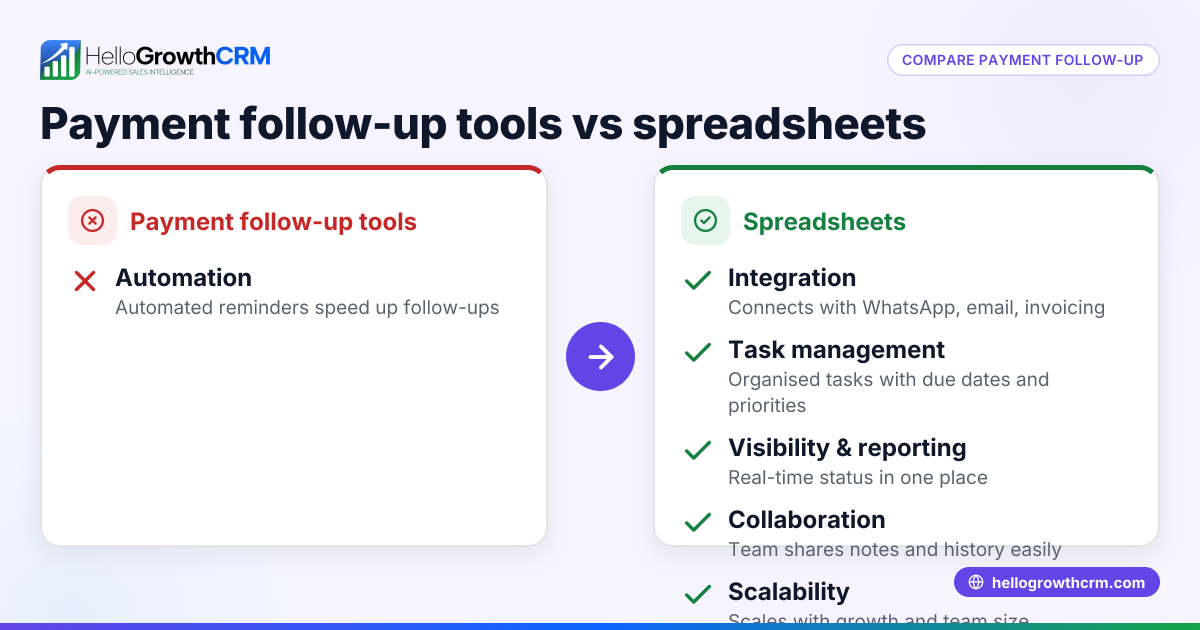
Are there alternatives to automated follow-up CRMs in Singapore? Yes, alternatives include manual tracking with spreadsheets or email tools, but these often lead to lost leads and inefficiency. Some CRMs focus on email automation only, lacking WhatsApp or SMS integration. Compare options on compare CRMs to see which suits your sales process.
How does WhatsApp integration improve follow-up automation? WhatsApp is widely used in Singapore for business communication. Integration allows follow-ups to be sent and logged automatically within the CRM, keeping conversations organised and timely. This avoids switching between apps and losing context.
Can AI agents fully replace sales reps in follow-ups? AI agents currently assist by drafting messages and updating records but do not replace the human touch. Reps review and personalise AI drafts before sending to maintain relationship quality.
How do task boards help improve follow-up rates? Task boards organise follow-ups as tasks with deadlines, making it easier for reps to prioritise daily calls and messages. This reduces missed follow-ups and improves lead engagement.
Key takeaways
- Automated follow-up CRMs save time and reduce lost leads by managing reminders and messages.
- Support for WhatsApp and SMS is essential for Singapore businesses relying on these channels.
- Task boards and activity logs help sales teams track follow-ups without relying on memory.
- AI agents can draft follow-up messages to speed up workflows but still need rep review.
- Always compare pricing and test user experience before choosing a CRM.
- Integration with existing tools and compliance with local laws are important.
Choosing the right automated follow-up CRM can boost your sales efficiency and prevent lead loss. To explore pricing options and plans tailored for Singapore businesses, see Singapore pricing.
Ready to put this into practice?
Set up your pipeline, WhatsApp follow-ups, and AI lead scoring in minutes — free, no credit card.
Try HelloGrowthCRM freeGet CRM tips in your inbox
Join thousands of sales professionals who get weekly insights on CRM strategy, AI automation, and pipeline optimization.

The HelloGrowthCRM team publishes guides on CRM strategy, AI sales tools, and revenue operations for small business sales teams.