HelloGrowthCRM software
Built for real small-business sales teams
HelloGrowthCRM helps reps qualify faster, follow up on time, and close more deals—with practical automation in one place.
- AI lead scoring and pipeline visibility
- Built-in dialer, WhatsApp, and email automation
- Sales forecasting and RevOps-ready reporting
For small businesses in Singapore, payment follow-up using dedicated tools is generally more efficient and reliable than relying on spreadsheets alone. While spreadsheets can track payments, they lack automation, reminders, and integration features that improve follow-up speed and accuracy. This article compares payment follow-up methods and spreadsheets on key criteria to help you decide which fits your business.
Why this comes up / what goes wrong
Many small business owners in Singapore start managing payment follow-ups using spreadsheets because they are familiar and free. However, as the customer base grows, manual tracking becomes error-prone. Missed or late payment reminders lead to cash flow issues and lost revenue. Businesses running sales on WhatsApp, email, and spreadsheets often lose leads and payments due to slow follow-up or lack of visibility. Owners and sales teams struggle to remember who to contact and when, leading to inefficient use of time and strained customer relationships.
Step-by-step
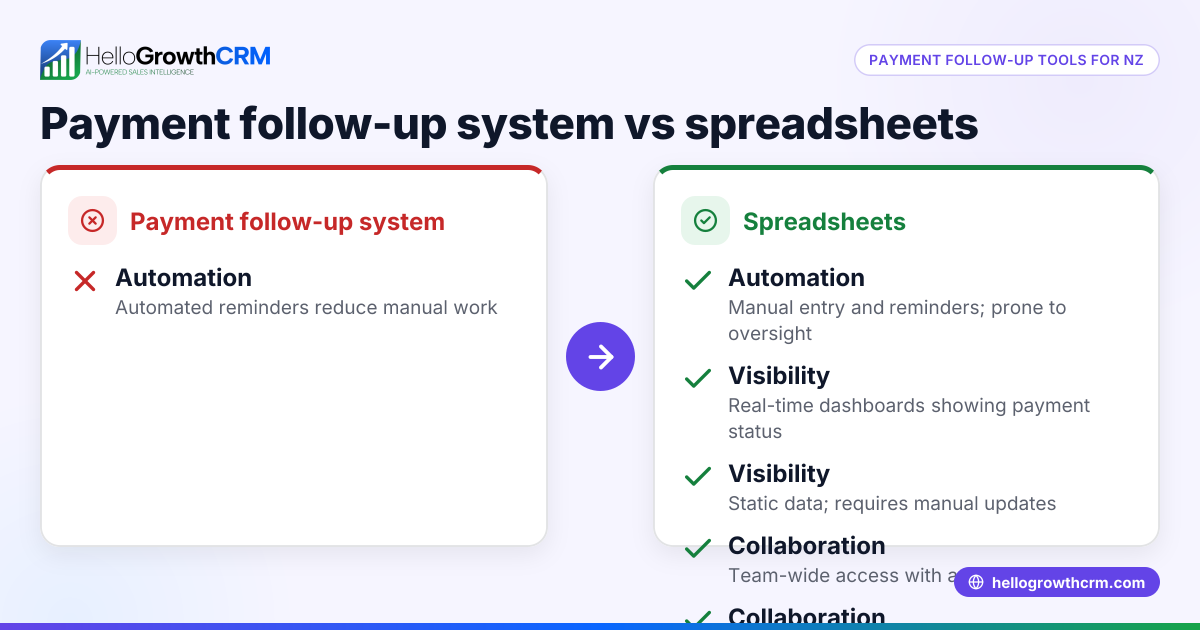
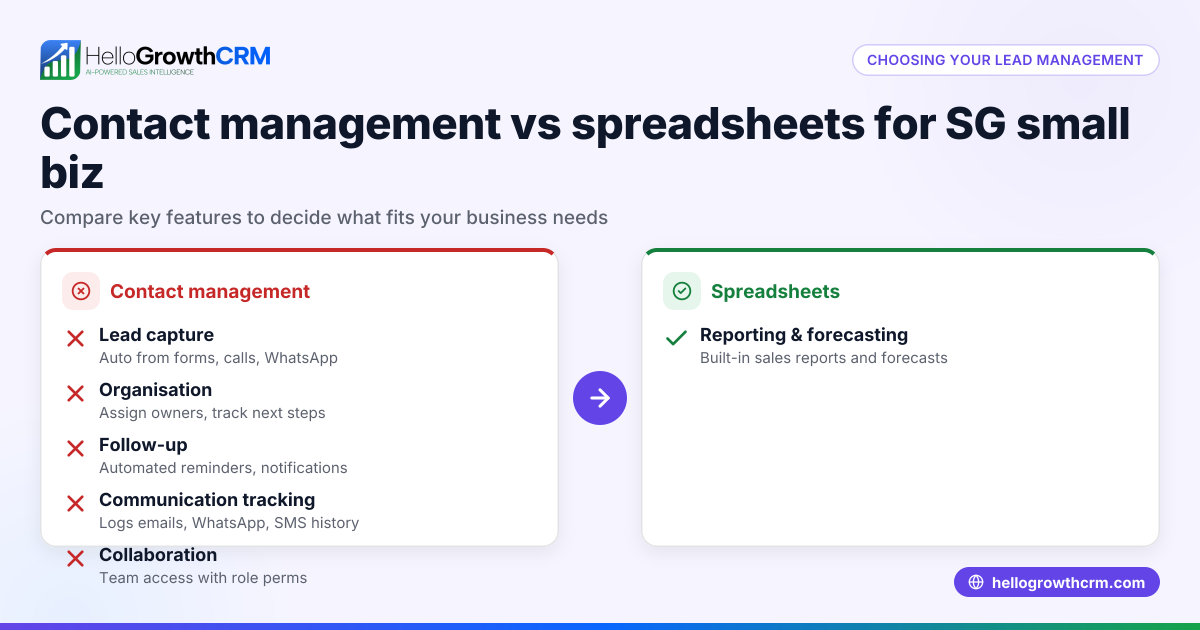
| Criteria | Payment Follow-Up Tools | Spreadsheets |
|---|---|---|
| Automation | Automated reminders and sequences reduce manual work and speed up follow-ups. | Manual entry and reminders require constant attention and risk human error. |
| Integration | Connects with sales channels like WhatsApp, email, and invoicing systems. | No direct integration; data must be manually updated from other tools. |
| Task Management | Tasks and calls are organised with due dates and priorities on boards. | No task management; follow-ups depend on memory or separate to-do lists. |
| Visibility & Reporting | Real-time status of payments, quotes, and follow-ups in one place. | Limited visibility; requires manual compilation for reports. |
| Collaboration | Team members can share notes, tasks, and customer history easily. | Collaboration is clunky; version control issues and data silos common. |
| Scalability | Scales with business growth and sales team size. | Becomes unwieldy and error-prone as data volume grows. |
| Cost | Usually subscription-based; cost justified by time saved and fewer errors. | Free or low cost but hidden costs in inefficiency and errors. |
Who should pick which?
- Payment Follow-Up Tools: Best for growing Singapore SMEs with multiple leads, salespeople, and customers who want reliable, timely payment reminders, task management, and integration with sales channels.
- Spreadsheets: Suitable for very small businesses with few customers and simple payment tracking needs, where cost is a major concern and automation is less critical.
Example (fictional figures)
A renovation contractor in Jurong has 30 active customers with outstanding payments averaging S$2,000 each. They want to follow up on payments monthly.
Using spreadsheets:
- Total payments to follow up: 30 × S$2,000 = S$60,000
- Manual follow-up takes 2 hours per week at S$20/hour = 2 × 4 weeks × S$20 = S$160/month
- Missed follow-ups cause 10% late payments = 10% × S$60,000 = S$6,000 delayed cash flow
Using payment follow-up tools:
- Automation reduces manual time by 75% = S$160 × 25% = S$40/month
- Timely reminders reduce late payments to 3% = 3% × S$60,000 = S$1,800 delayed cash flow
Savings from switching:
- Time saved: S$160 - S$40 = S$120/month
- Reduced late payments: S$6,000 - S$1,800 = S$4,200 improved cash flow
This shows that investing in follow-up tools can save time and improve cash flow significantly.
Common mistakes
- Relying solely on memory for follow-ups
- Prevent by using task boards or reminders to schedule follow-ups.
- Not updating spreadsheets promptly
- Prevent by setting a daily update routine or switching to integrated tools.
- Ignoring customer communication history
- Prevent by logging calls and messages in one place to avoid repeated follow-ups.
- Using spreadsheets without backups or version control
- Prevent by regularly backing up data or adopting cloud-based CRM solutions.
- Failing to prioritise high-value overdue payments
- Prevent by using lead or payment scoring features to focus on important accounts.
Doing this in HelloGrowthCRM
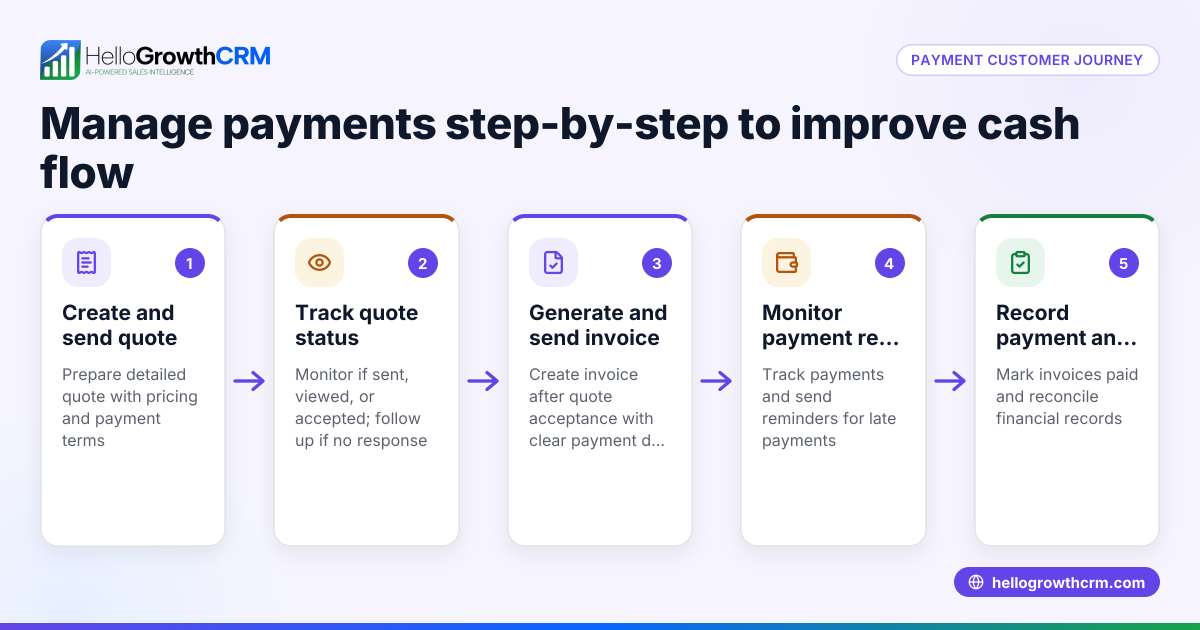
HelloGrowthCRM offers activities and task boards where each payment follow-up becomes a task with a due date, making the day's calls a clear list rather than a memory test. It also provides quotes, proposals, invoices, and payment tracking tied directly to deals, so you can see the status of quotations (sent, viewed, accepted) alongside follow-up tasks on the same screen. This helps Singapore small businesses manage payment follow-ups efficiently and avoid missed payments. Learn more about activities and task boards and quotes, proposals, invoices and payments.
Frequently asked questions
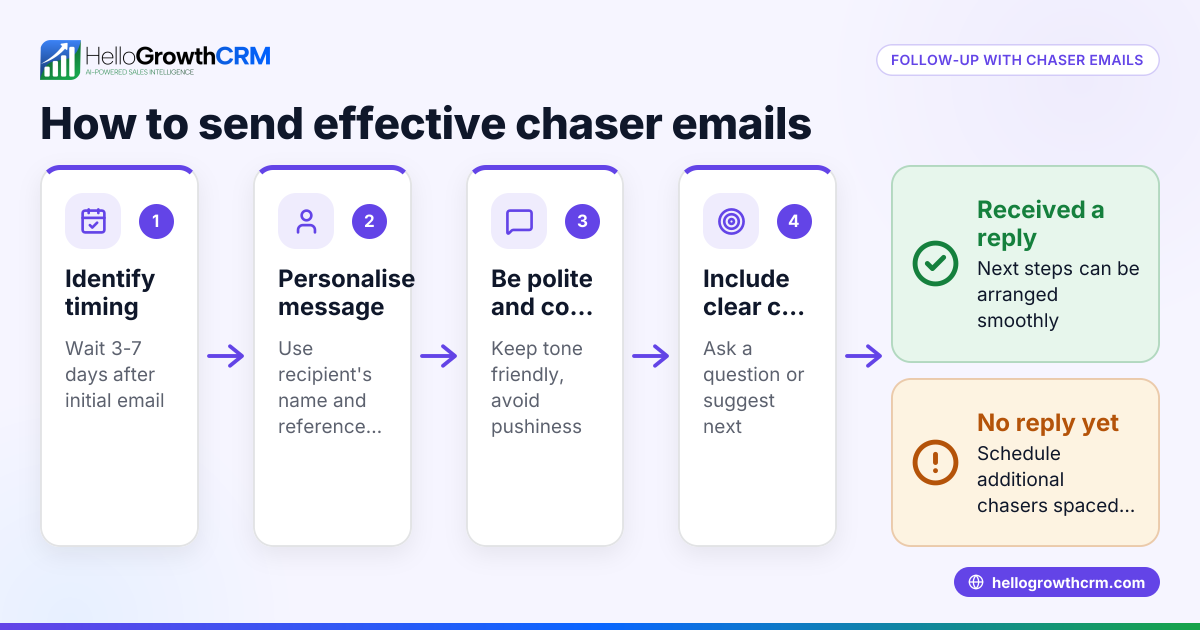
How does payment follow-up automation help small businesses in Singapore? Automation reduces manual work by sending timely reminders and follow-up messages, helping businesses collect payments faster and improve cash flow. It also reduces errors and missed deadlines compared to manual tracking with spreadsheets. For more on automation, see email automation and sequences.
Can spreadsheets handle customer follow-up effectively? Spreadsheets can track basic follow-up data but lack automation, integration, and task management features. They become difficult to maintain as customer numbers grow, leading to missed payments and slower collections.
What are the risks of using spreadsheets for payment follow-up? Risks include human error, delayed updates, lack of reminders, poor collaboration, and no real-time visibility. These can cause cash flow problems and lost revenue.
When should a Singapore business switch from spreadsheets to a CRM? Switch when the volume of payments and customers grows beyond what can be reliably managed manually, or when your team needs better collaboration and automation to speed up payment collection. See how HelloGrowthCRM supports growing teams at HelloGrowthCRM for Singapore.
Key takeaways
- Spreadsheets are simple but prone to errors and lack automation for payment follow-up.
- Dedicated payment follow-up tools improve efficiency with reminders, task boards, and integration.
- Growing Singapore SMEs benefit from tools that combine follow-up tasks and payment tracking.
- Avoid common mistakes like relying on memory or outdated spreadsheets by using task management.
- HelloGrowthCRM provides task boards and integrated quotes, invoices, and payments to streamline follow-ups.
To start improving your payment follow-up today, try HelloGrowthCRM’s Free Forever plan with 200 leads and no credit card required at Start on the Free Forever plan (200 leads, no credit card).
Ready to put this into practice?
Set up your pipeline, WhatsApp follow-ups, and AI lead scoring in minutes — free, no credit card.
Try HelloGrowthCRM freeGet CRM tips in your inbox
Join thousands of sales professionals who get weekly insights on CRM strategy, AI automation, and pipeline optimization.

The HelloGrowthCRM team publishes guides on CRM strategy, AI sales tools, and revenue operations for small business sales teams.