HelloGrowthCRM software
Built for real small-business sales teams
HelloGrowthCRM helps reps qualify faster, follow up on time, and close more deals—with practical automation in one place.
- AI lead scoring and pipeline visibility
- Built-in dialer, WhatsApp, and email automation
- Sales forecasting and RevOps-ready reporting
The best automated follow-up CRM for small and mid-sized US businesses is one that fits your sales team's workflow, supports multiple communication channels, and ensures timely follow-ups without manual effort. Choosing the right CRM helps you keep leads engaged, reduce lost sales, and improve team productivity by automating reminders and messages.
This article explains why automated follow-up CRMs are essential, guides you step-by-step on how to choose one, provides a realistic example with figures, highlights common mistakes to avoid, and describes how HelloGrowthCRM supports automated follow-ups.
Why this comes up / what goes wrong
Many small-business owners in the US manage leads using text messages, emails, spreadsheets, or notes. This manual approach often leads to missed follow-ups, forgotten calls, and lost deals because sales reps have to remember when and how to contact prospects. As the team grows or gets busier, the risk of leads slipping through the cracks increases.
Without automation, there is no consistent system to remind reps or send follow-up messages automatically. This results in lower conversion rates and wasted marketing efforts. An automated follow-up CRM reduces this burden by creating tasks with due dates, sending messages on preferred channels, and logging all interactions. This ensures no lead is neglected and follow-ups happen promptly.
Step-by-step
- Identify your communication channels. Determine which channels your leads prefer—WhatsApp, SMS, email, or phone calls. The CRM should support these channels natively or via integrations to automate follow-ups effectively.
- Evaluate automation capabilities. Look for features like task boards that create follow-up reminders automatically, message sequences that send follow-ups without manual effort, and AI assistance for drafting messages.
- Check ease of use. The CRM must be simple enough for your sales team to use daily. Features like clear task lists and logged conversations help reps stay organized and consistent.
- Consider AI assistance. Some CRMs offer AI agents that draft follow-up messages after calls, speeding up the process and reducing manual work.
- Review reporting and forecasting. Automated follow-up is part of your sales workflow. Ensure the CRM provides visibility into pipeline health, activities, and forecasting to measure impact.
- Compare pricing and plans. Check if the CRM’s pricing fits your budget and offers a free trial or free tier so you can test automation features before committing.
- Test integrations. Confirm the CRM can capture leads automatically from your web forms or marketing tools to start follow-up sequences without manual data entry.
- Look at customer support and onboarding. Good support helps your team adopt the CRM and troubleshoot issues quickly.
For more on evaluating CRMs, see our compare CRMs guide.
Example (fictional figures)
A B2B software reseller in Denver, Colorado, has $1,200,000 in annual sales and a team of 5 sales reps. They lose 15% of leads due to slow or missed follow-up. They want to automate follow-ups to recover half of that lost revenue.
- Annual lost sales: $1,200,000 × 15% = $180,000
- Expected recovery: $180,000 × 50% = $90,000
They select a CRM with task boards and WhatsApp/SMS automation to remind reps daily and send follow-up messages automatically.
- CRM cost per year: $6,000 (assumed)
- Net gain: $90,000 - $6,000 = $84,000
By automating follow-ups, they increase revenue by $84,000 annually after CRM costs.
Common mistakes
- Choosing a CRM without native support for your communication channels. Prevent this by confirming channel support upfront to avoid workarounds.
- Ignoring ease of use, leading to poor adoption. Prevent by involving sales reps in demos and trials to ensure the CRM fits their workflow.
- Relying on manual task creation instead of automation. Prevent by selecting CRMs with automatic task boards to create timely follow-up reminders.
- Overlooking AI features that save time. Prevent by testing AI drafting agents if available to reduce repetitive work.
- Neglecting integration with lead sources, causing manual data entry. Prevent by verifying lead capture integrations to automate lead flow.
- Focusing only on price, ignoring total ROI. Prevent by calculating potential revenue recovery versus CRM cost.
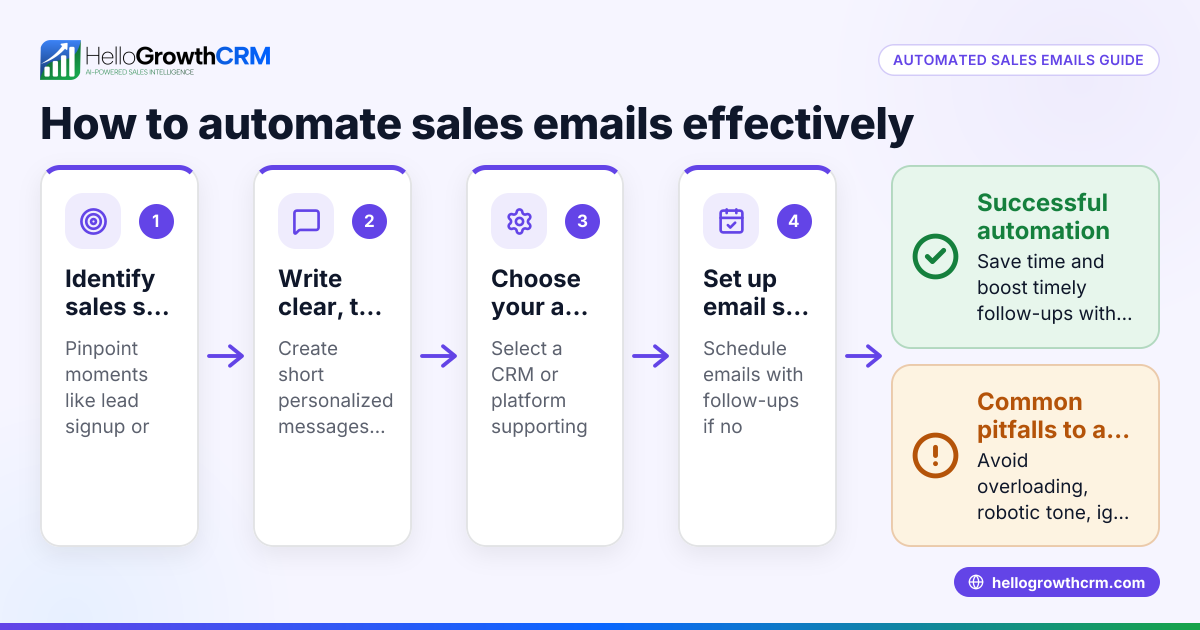
See more on avoiding pitfalls in email automation and sequences.
Doing this in HelloGrowthCRM
HelloGrowthCRM supports automated follow-ups through activities and task boards where each follow-up becomes a task with a due date, so the day's calls appear as a clear list rather than relying on memory. It also logs WhatsApp and SMS conversations on the lead record, enabling follow-ups to be sent as messages on channels leads already use. Additionally, HelloGrowthCRM offers AI agents (in beta on Growth plans) that draft follow-up messages after calls, requiring only review and sending by sales reps. Learn more about these features at HelloGrowthCRM for the United States.
Frequently asked questions
What is the best automated follow-up CRM pricing in the United States? Pricing varies by features, user count, and plan levels. Many CRMs offer free tiers with limited tasks or users and paid plans that add automation and AI. Evaluate pricing relative to expected sales gains and check detailed costs on CRM pricing pages like CRM pricing in the United States.
What are good automated follow-up CRM alternatives in the United States? Alternatives depend on your business size and communication needs. Some focus on email sequences, others on mobile messaging or AI automation. Compare key features and usability in our compare CRMs guide to find the best fit.
How do automated follow-up CRMs improve sales? They reduce human error by creating tasks and sending messages automatically, ensuring timely contact with leads. This increases conversion rates and reduces lost deals from forgotten follow-ups.
Can I use WhatsApp for automated follow-ups? Yes, some CRMs like HelloGrowthCRM support WhatsApp messaging logged on lead records, enabling follow-ups directly via WhatsApp where many leads prefer to communicate.
Key takeaways
- Choose a CRM that supports your preferred communication channels like WhatsApp, SMS, and email.
- Automation features like task boards and message sequences prevent missed follow-ups.
- AI agents can draft follow-up messages to save sales rep time.
- Evaluate CRM pricing against potential sales recovery from faster follow-up.
- Test integrations with your lead sources to automate lead capture.
- Ease of use is critical for adoption and consistent follow-up execution.
To explore pricing options and plans, See US pricing.
Ready to put this into practice?
Set up your pipeline, WhatsApp follow-ups, and AI lead scoring in minutes — free, no credit card.
Try HelloGrowthCRM freeGet CRM tips in your inbox
Join thousands of sales professionals who get weekly insights on CRM strategy, AI automation, and pipeline optimization.

The HelloGrowthCRM team publishes guides on CRM strategy, AI sales tools, and revenue operations for small business sales teams.