HelloGrowthCRM software
Built for real small-business sales teams
HelloGrowthCRM helps reps qualify faster, follow up on time, and close more deals—with practical automation in one place.
- AI lead scoring and pipeline visibility
- Built-in dialer, WhatsApp, and email automation
- Sales forecasting and RevOps-ready reporting
Retail business owners and accountants in New Zealand frequently search for the best retail customer management software to handle growing customer demands and streamline sales and service processes. Retail shops often struggle with slow lead follow-up, scattered customer information across emails and spreadsheets, and difficulty managing after-sale service efficiently. The right software centralises customer data, automates lead capture, and tracks service requests, helping businesses improve sales and customer satisfaction.
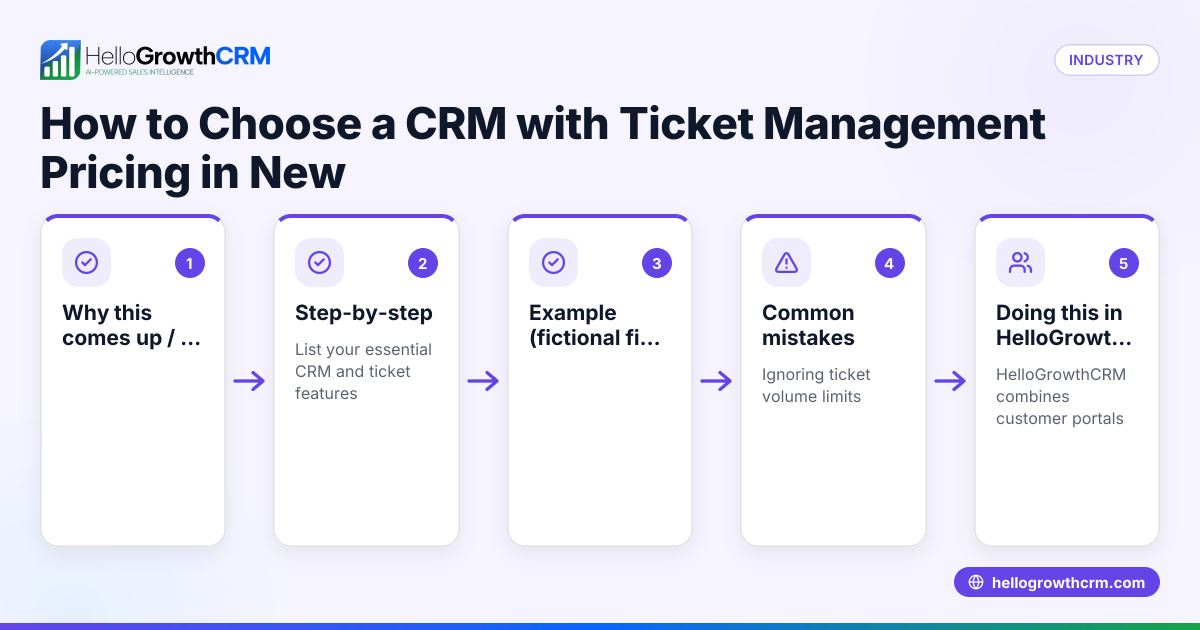
Why this comes up / what goes wrong
Retail businesses in New Zealand typically receive numerous customer enquiries daily via web forms, phone calls, WhatsApp, or in-store visits. Without a dedicated system, leads may get lost in notebooks or spreadsheets, causing slow follow-up and lost sales. After the sale, managing customer service requests separately can lead to poor customer experience and missed referral opportunities. Accountants and business owners want software that integrates sales and service data for better reporting and forecasting.
Step-by-step
- Identify your retail business needs:
- Determine the number of users who will access the system.
- List all customer contact channels (e.g., web forms, phone, WhatsApp).
- Decide if after-sale service tracking is required.
- Check lead management features:
- Confirm the software captures leads automatically from all enquiry sources.
- Ensure leads can be assigned owners and next steps to avoid drop-offs.
- Evaluate customer service capabilities:
- Look for a customer portal that supports self-service and support tickets.
- Verify if service requests stay linked to the original sale for full history.
- Review integration and reporting:
- Check if it integrates with your existing tools.
- Look for sales forecasting and customer health score features; see customer health score for more.
- Compare pricing and plans:
- Ensure pricing fits your budget and scales with your team.
- Watch out for hidden costs or required upgrades.
- Trial and test:
- Use free trials or demos to test ease of use and team adoption.
- Involve your sales and service teams in the evaluation.
- Ask about local support and compliance:
- Confirm the software supports New Zealand business practices and data privacy.
Example (fictional figures)
Wellington Electrical Ltd, a retail electrical shop in Wellington, wants to improve its customer follow-up and service management. They receive about 100 enquiries monthly from web forms, calls, and WhatsApp.
- Current lost leads cause missed sales opportunities, impacting revenue.
- Average sale value: NZ$500.
By choosing software that captures every enquiry as a lead with an owner and next step, they aim to improve follow-up and reduce lost leads significantly.
This investment helps Wellington Electrical Ltd move leads efficiently through the sales pipeline and manage after-sale service on the same customer record, improving customer satisfaction and sales outcomes.
Common mistakes
- Ignoring lead capture automation: Leads scattered in notebooks or spreadsheets cause delays. Prevent this by choosing software that automatically captures leads from all channels.
- Overlooking after-sale service: Not linking service requests to customer records loses valuable history. Choose software with a customer portal and ticketing system.
- Choosing software without team input: If sales and service teams find it hard to use, adoption will be low. Include them in trials.
- Focusing only on price: Cheapest options may lack essential features. Balance cost with capabilities.
- Not checking local support and compliance: Software not suited for New Zealand business practices can cause issues. Confirm local relevance.
- Neglecting integration needs: Software that doesn’t connect with your tools leads to extra work. Check integration options and reporting features like sales forecasting.
Doing this in HelloGrowthCRM
HelloGrowthCRM captures every enquiry from forms, calls, or WhatsApp as a lead with an owner and a next step, keeping your retail leads organised and moving towards conversion instead of lost in notebooks. After the sale, service requests stay on the same customer record as the deal through its customer portal, referrals, tickets, and knowledge base features. This helps retail teams manage sales and service in one place. Learn more about HelloGrowthCRM for New Zealand here.
Frequently asked questions
What is the typical pricing for retail customer management software in New Zealand? Pricing varies widely depending on features and user numbers. Many providers offer tiered plans from free or low-cost starter levels to more advanced packages. Check detailed CRM pricing in New Zealand to compare options.
Are there alternatives to retail-specific customer management software? Yes, some general CRM solutions can be customised for retail use. However, specialised retail software often includes industry-specific workflows and integrations that save time. See our compare CRMs page for alternatives.
How do I choose software that my retail team will actually use? Involve your sales and service teams early in trials to ensure ease of use and fit with daily workflows. Look for software with familiar channels like WhatsApp and email integration to reduce learning curves.
Can retail customer management software track referrals and repeat customers? Many modern CRMs include referral programme tracking and customer health scores to monitor repeat business. HelloGrowthCRM offers these features to help retail businesses grow.
Is it important to have a customer portal for retail businesses? Yes, a self-service portal improves customer satisfaction by allowing easy service requests and access to information, reducing workload on your team.
Key takeaways
- Choose software that automates lead capture from all enquiry channels to avoid lost sales.
- Ensure after-sale service requests link to customer records for better support and referrals.
- Involve your team in testing software to ensure adoption and usability.
- Compare pricing carefully, balancing cost with features and scalability.
- Confirm the software supports New Zealand retail business practices and compliance.
Finding the best retail customer management software for your New Zealand business requires careful comparison and testing. For pricing details and plans that suit local retail teams, see CRM pricing in New Zealand.
Ready to put this into practice?
Set up your pipeline, WhatsApp follow-ups, and AI lead scoring in minutes — free, no credit card.
Try HelloGrowthCRM freeGet CRM tips in your inbox
Join thousands of sales professionals who get weekly insights on CRM strategy, AI automation, and pipeline optimization.

The HelloGrowthCRM team publishes guides on CRM strategy, AI sales tools, and revenue operations for small business sales teams.