HelloGrowthCRM software
Built for real small-business sales teams
HelloGrowthCRM helps reps qualify faster, follow up on time, and close more deals—with practical automation in one place.
- AI lead scoring and pipeline visibility
- Built-in dialer, WhatsApp, and email automation
- Sales forecasting and RevOps-ready reporting
In Singapore, the best way to manage leads for a small business is to treat lead handling as an operating process, not just a sales habit: capture the source properly, collect only data you can justify, respond on the right channel, record local payment events, and move every enquiry through a clear pipeline that fits how customers here actually buy.
That matters because Singapore businesses often get enquiries from a messy mix of Google Business Profile, WhatsApp, Instagram, Facebook, LinkedIn, Carousell and referrals, with public sector opportunities sometimes arriving through GeBIZ. An air-conditioning firm in Jurong, a tuition centre in Tampines and a dental practice in Novena may all call their contacts “leads”, but the work needed after first contact is different. Good lead management starts when you stop treating all enquiries as interchangeable.
Lead source should decide the first action
A Singapore lead record should tell your team what to do next, not just where the person came from. A Google Business Profile enquiry often needs a quick call-back or booking link because the customer is usually comparing nearby options. A Carousell message can require price clarification early because shoppers there often ask short, transactional questions before giving full details. A LinkedIn enquiry for a logistics broker near Changi may need qualification on shipment volume, route and timing before anyone quotes. A GeBIZ opportunity is different again: it is not a casual prospect at all, but a formal buying process where contact details, entity information and submission requirements matter more than charm.
If your staff collapse all of those into one inbox and “follow up later”, you lose context immediately. The useful habit is to set a source-specific first action in the record as soon as the lead arrives. For a home-services business, that may be “confirm postcode, unit type and preferred slot”. For a tuition centre, it may be “ask level, subject and current school”. For a clinic, it may be “book consultation, no treatment claims over chat”.
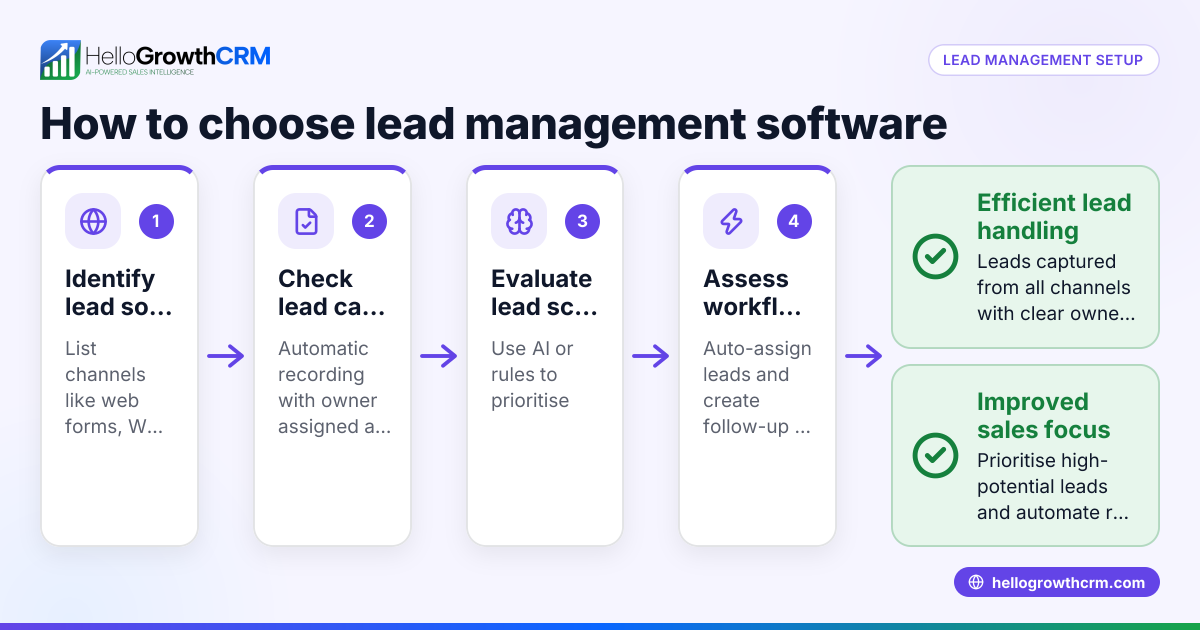
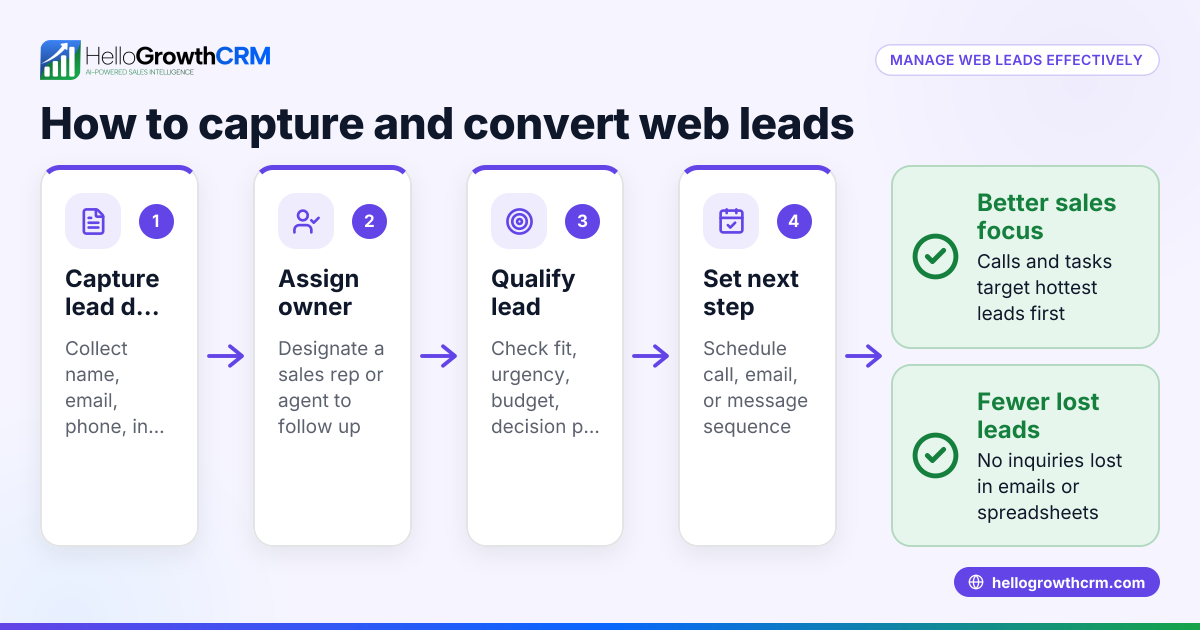
This is where a CRM helps when it does the basic job well. Tools for lead capture and qualification and a proper pipeline are useful because they keep new enquiries organised by source, stage and next action rather than leaving them scattered across phones and spreadsheets.
PDPA rules make enquiry forms a business decision, not a design choice
Singapore’s Personal Data Protection Act is not just a legal footnote for large companies. It changes what a small business should collect at enquiry stage. If a form asks for too much, you create friction for the customer and extra liability for yourself. In practice, many small businesses still ask for data they cannot justify operationally.
One obvious Singapore example is NRIC. PDPC guidance is restrictive about collecting NRIC numbers, and an ordinary booking or contact form should not ask for one by default. For most small businesses, a name, mobile number, email address, service interest and location details are enough to start the conversation. If your team can explain why every field exists, your forms are probably in better shape.
The PDPA also matters for follow-up. If you plan to send marketing messages to Singapore numbers, the Do Not Call provisions mean the sender must check the relevant Do Not Call Registry before sending specified messages unless a valid basis applies, such as clear and unambiguous consent or a message that is truly transactional in nature. That duty sits with the business sending the message, not with the software vendor. So your lead process should store how consent was obtained, what channel it covers and what the next message is actually for.
A short internal check helps here:
- Do we know which fields are necessary at enquiry stage?
- Are we collecting any identity number by habit rather than necessity?
- Can staff tell the difference between a transactional update and a marketing message?
- Do we record when and how consent was given for WhatsApp, SMS or email follow-up?
If your current answer to any of those is “it depends on who handled the lead”, your process is still person-dependent and fragile.
WhatsApp is normal in Singapore, but message purpose matters
Many Singapore customers are comfortable moving quickly to WhatsApp, especially for services, clinics, classes and trades. That makes it tempting to push every lead there immediately. Often that is sensible; sometimes it is sloppy. The better question is what the channel is for at each stage.
WhatsApp works well for confirming an appointment, sending a location pin, checking whether the customer prefers a lunch-hour or post-work slot, or answering a small number of clarifying questions. It is weaker when a business needs a structured requirements trail, formal approval, or a quote that several stakeholders will review. For B2B sales, email may remain the record of substance even when the first reply came through messaging.
Channel choice also interacts with business norms in Singapore. English is the working language, but customer-facing copy in Mandarin or Malay can matter by segment. A tuition centre serving families in Tampines might get better replies from a parent-facing message in plain English with a Mandarin version ready for staff use when needed. A heartland home-services business may find short bilingual replies more practical than polished long-form sales copy. The key is not to make language a branding ornament; make it part of triage and response.
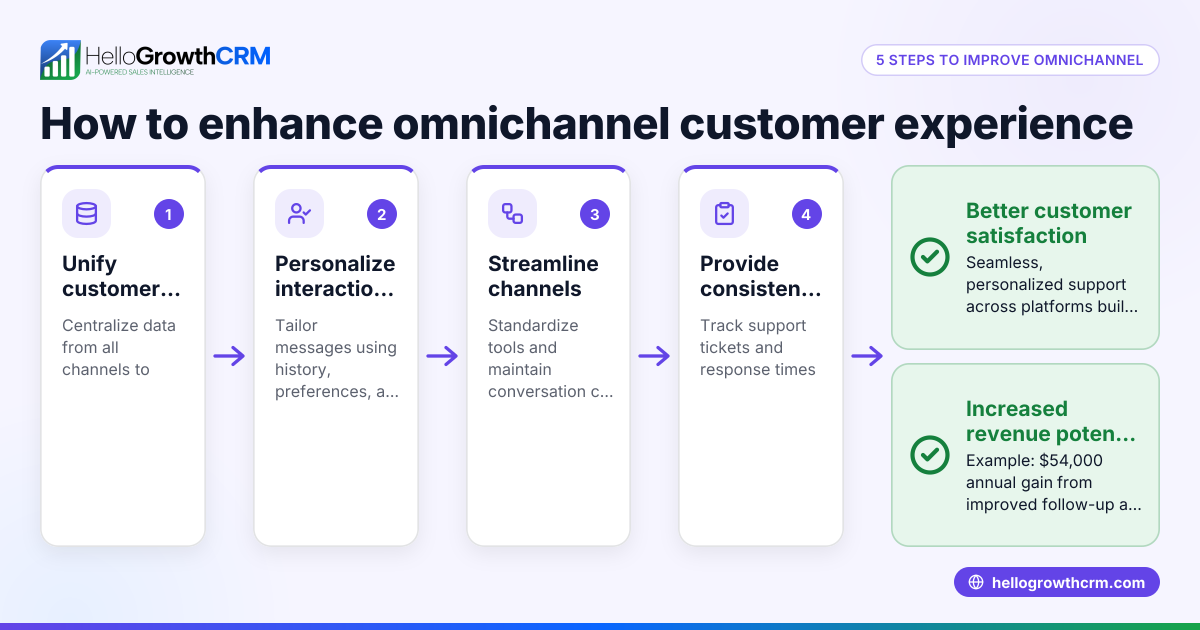
If you use a CRM for this, keep it simple: the useful capability is having WhatsApp and SMS workflows tied to the lead record so staff can see what was sent, what was answered and what still needs a human decision.
PayNow, FAST and bank transfer change how you judge lead quality
In Singapore, payment behaviour often tells you more about seriousness than what the lead said on first contact. That is especially true for businesses that use deposits, booking fees or site-visit charges. Customers may pay by PayNow, FAST, GIRO, NETS, credit card or ordinary bank transfer. Those methods do not land in one place operationally, and that affects lead management.
If a customer pays by card, many teams see the status inside the processor’s dashboard and assume the record is current. But PayNow and direct bank transfer often sit outside that view. Staff then confirm the booking over chat, someone else sees a payment screenshot, and the lead record never gets updated. The result is familiar: duplicate chasing, missed appointments, or work started without a verified payment note.
A practical Singapore process is to treat “payment evidence received” and “payment reconciled” as different stages. The first tells operations the customer is trying to proceed. The second tells finance or admin that the money has actually been matched. That distinction matters more here because PayNow and bank transfers are so common. It also stops you from overvaluing a lead simply because a screenshot was sent.
The arithmetic below is illustrative; the figures are made up to show the shape of the decision. Suppose an air-conditioning service firm charges S$80 for inspection, applies that amount against accepted work, and later quotes S$420 for servicing and minor parts. A customer sends S$80 by PayNow on Friday evening. On Monday, the admin team matches the incoming amount to the booking and marks the inspection as reconciled. After the visit, the customer approves the S$420 work and pays S$200 upfront by bank transfer, with the balance after completion. In the lead record, those are not just payment notes. They are signals that the enquiry has moved from casual shopping to committed buying, and they also affect paperwork. What this leaves out: payment processor fees, refunds, bad debt risk, and the exact tax treatment of each document in your business.
GST can be triggered before the sale feels finished
Lead management in Singapore is not separate from tax administration once money starts moving. The indirect tax is GST, administered by IRAS. If your business is registered or is considering whether it needs to be, deposits and advance payments are not trivial admin details. For a taxable supply, a payment received can matter at the earlier of invoice or payment, so a deposit may affect your obligations on the day it arrives.
That does not mean every small business should become a tax expert inside the CRM. It does mean the lead record should show facts that accounts will later need: whether money has been received, what it was for, whether a quote turned into an accepted job, and which entity is buying. If you leave those facts buried in chat threads, the eventual clean-up becomes slower and riskier.
Do not guess the current GST registration threshold, filing obligations or any timing rule from memory. IRAS publishes the current numbers and guidance, and the governing framework sits under Singapore tax law as administered by IRAS. If your business is near the registration point, handling deposits frequently, or taking prepayments before fulfilment, confirm the current position on the official IRAS material or with an adviser. The lead process should make that review easier by preserving the events, not by improvising the tax answer.
Singapore’s calendar and geography should shape booking logic
Singapore has one time zone, which makes local scheduling easier than in larger countries, but small businesses still lose leads through bad booking assumptions. Public holidays span different communities, and some follow lunar or Islamic calendars, so the exact dates move from year to year. A fixed outreach rhythm copied from another market can clash with how customers actually book.
For many local services, lunch-hour and post-work slots attract stronger demand than mid-morning. CBD customers may prefer a short consultation near the office or an after-hours callback, while heartland customers may be more available around school and household routines. A tuition centre in Tampines is not booking the same pattern as an aesthetic clinic in Orchard. If your calendar only reflects staff convenience, you are asking leads to adapt to you.
Regional business adds another layer. Singapore companies often serve ASEAN buyers whose working hours sit on other offsets even if headquarters are here. If the first meeting link defaults to local assumptions, no-shows rise for avoidable reasons. Booking logic should therefore include service area, meeting type and preferred time band, not just date and email.
Using a tool for scheduling and booking can shorten the path from enquiry to conversation, but only if the available slots match real demand patterns in Singapore rather than a generic calendar template.
Regulated sectors need notes that would survive scrutiny
Some Singapore small businesses can get away with lightweight lead notes. Others cannot. If you operate in a regulated setting, the record needs to be usable, not merely readable. Medical, dental and aesthetic practices are the clearest examples. The Ministry of Health and professional rules affect advertising and communications, so the casual sales habits that work for retail services can create problems here.
For a clinic, a lead note should distinguish an information request from a clinical issue, record what was actually communicated, and avoid claims that drift into prohibited territory. A team member saying “booked after discussing treatment outcome” is a poor note. “Requested consultation for acne concerns; advised consultation required before any recommendation; appointment options sent” is far better. The same discipline helps if there is ever a complaint about what was promised.
Outside healthcare, public sector work also raises the standard. A GeBIZ lead is not just a name and phone number. It may require legal entity details from ACRA records, submission contacts, clarifications and deadlines published in the procurement documents. Lead management here is really document control plus disciplined follow-up.
A small team usually needs routing and record hygiene more than more leads
When owners say they need more leads, many actually need fewer dropped balls. In Singapore small businesses, the recurring failure is simple: the founder answers some WhatsApp messages, an admin watches email, a salesperson keeps private notes, and nobody knows who owns the next move. That is not a volume problem. It is a routing problem.
A better system assigns ownership early, defines what qualifies for handoff, and makes stale records visible. One pipeline is often enough if the stages are real. For instance: new enquiry, qualified, booked, quoted, payment pending, won, lost. Each stage should answer a business question. If you cannot tell why a lead sits in a stage, the stage is decoration.
HelloGrowthCRM is useful here in one narrow, practical sense: it combines activities and task boards with lead capture and pipeline tracking, so follow-ups, notes and stage changes stay attached to the same record. If a team wants a low-friction place to start, the free CRM is an accessible way to impose basic discipline before adding anything more complex.
For a Singapore small business, good lead management is less about chasing every enquiry harder and more about building a process that fits PDPA duties, local payment habits, GST touchpoints and the channels customers here actually use.
Ready to put this into practice?
Set up your pipeline, WhatsApp follow-ups, and AI lead scoring in minutes — free, no credit card.
Try HelloGrowthCRM freeGet CRM tips in your inbox
Join thousands of sales professionals who get weekly insights on CRM strategy, AI automation, and pipeline optimization.

The HelloGrowthCRM team publishes guides on CRM strategy, AI sales tools, and revenue operations for small business sales teams.