HelloGrowthCRM software
Built for real small-business sales teams
HelloGrowthCRM helps reps qualify faster, follow up on time, and close more deals—with practical automation in one place.
- AI lead scoring and pipeline visibility
- Built-in dialer, WhatsApp, and email automation
- Sales forecasting and RevOps-ready reporting
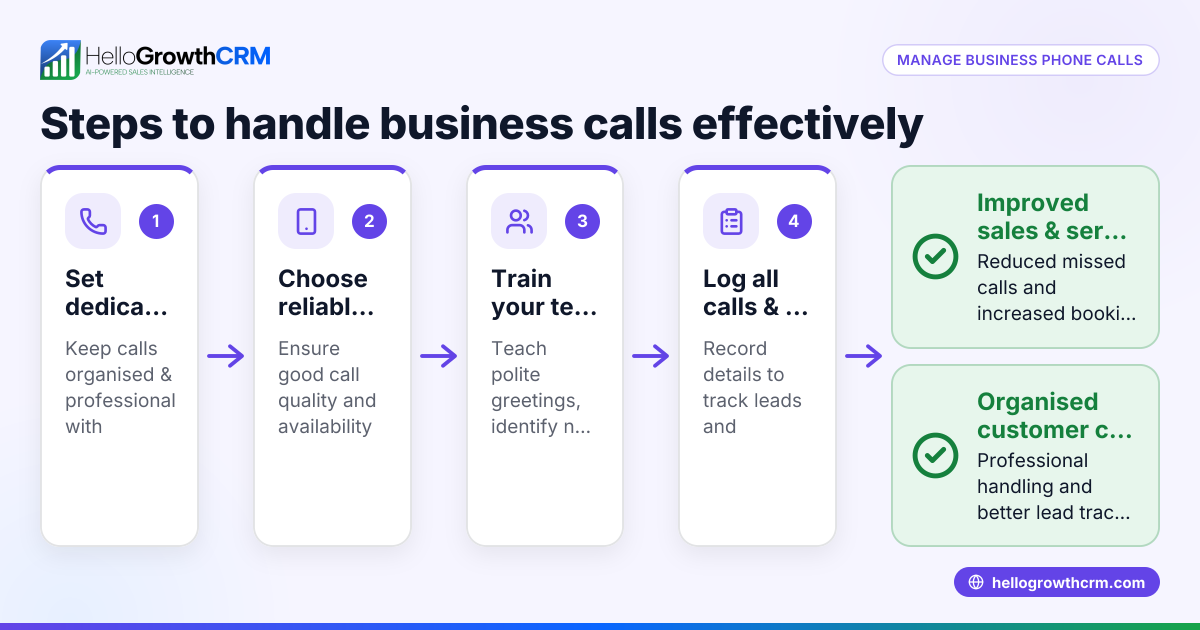
A business phone line is a telephone number that your business uses for all its calls, separate from your personal phone. It allows customers and partners to reach you professionally, helps manage inbound and outbound calls efficiently, and can support features like call forwarding and voicemail tailored to business needs. This guide covers why small businesses consider a business phone line important, how to pick and set it up, a practical example, common pitfalls, and answers to common questions.
Why this comes up / what goes wrong
Small business owners often start by using their personal cell phone or home phone for business calls. This can lead to missed calls, lost leads, or unprofessional impressions. Without a dedicated business phone line, it’s harder to track customer communications, separate work-life boundaries, and maintain consistent availability. As the business grows, relying on personal phones or generic numbers can cause confusion among customers and inefficiencies in follow-up.
Business phone lines also come up when owners want to add features like multiple extensions, call routing, or integrate phone calls with sales and customer management tools. Without a clear phone system, teams that handle sales or support struggle to coordinate and respond promptly.
Step-by-step
- Assess your business needs
- Determine the volume of calls you expect.
- Decide if you need multiple lines or extensions.
- Consider if you want features like voicemail, call forwarding, or texting.
- Choose the type of business phone line
- Traditional landline: Reliable but often more expensive and less flexible.
- VoIP (Voice over Internet Protocol): Uses internet to make calls, often cheaper and feature-rich.
- Virtual phone number: Redirects calls to your existing phone but keeps your business number separate.
- Select a phone number
- Local number: Builds trust with local customers.
- Toll-free number: Good for national presence and customer convenience.
- Pick a service provider
- Compare pricing, features, and customer support.
- Check if they support integration with your CRM or sales tools.
- Set up your phone system
- Install any necessary hardware or apps.
- Configure call forwarding, voicemail, and greetings.
- Train your team on usage and protocols.
- Test your business phone line
- Make and receive calls to ensure quality.
- Check voicemail and message notifications.
- Publicize your business phone line
- Update your website, business cards, and marketing materials.
- Use the number consistently for all customer communications.
Choosing a business phone line that integrates with a CRM can improve follow-up and lead management. For example, HelloGrowthCRM offers a built-in CRM dialer and supports WhatsApp and SMS CRM features to help sales teams manage calls and messages efficiently. Learn more about the built-in CRM dialer and WhatsApp and SMS CRM.
Example (fictional figures)
A B2B software reseller in Denver, Colorado, named TechSolutions, decides to set up a business phone line on 05/10/2026.
- They expect about 200 calls per month.
- They choose a VoIP service at $30/month.
- They add a toll-free number for $10/month.
- One-time setup fee is $50.
Costs calculation:
Monthly service = $30 + $10 = $40
First month total = $40 + $50 = $90
Annual cost after setup = $40 × 12 = $480
TechSolutions uses this number on their website and business cards, improving customer trust and call management.
Common mistakes
- Using a personal phone number for business
- Prevent by setting up a dedicated business phone line early.
- Ignoring call quality and reliability
- Prevent by testing service before committing.
- Choosing a number that’s hard to remember or not local
- Prevent by selecting a simple, local, or toll-free number.
- Not training staff on phone protocols
- Prevent by creating clear guidelines and training.
- Failing to publicize the business phone line consistently
- Prevent by updating all marketing channels with the new number.
- Overlooking integration with sales tools
- Prevent by choosing a phone system that can connect with CRMs or sales platforms, like HelloGrowthCRM (HelloGrowthCRM for the United States).
Frequently asked questions
What is the difference between a business phone line and a personal phone line? A business phone line is dedicated to your company’s communications, keeping calls professional and organized. A personal phone line is for private use and mixing the two can cause confusion and missed business opportunities.
Can I use my cell phone as a business phone line? Technically yes, but it’s better to have a separate line to maintain professionalism, separate business and personal calls, and use business features like call routing and voicemail.
What is VoIP and why should I consider it? VoIP uses the internet to make calls instead of traditional phone lines. It often costs less, offers more features, and is easier to scale for growing businesses.
Should I get a local or toll-free business number? Local numbers build trust with nearby customers, while toll-free numbers are better for national reach and customer convenience. Choose based on your target market.
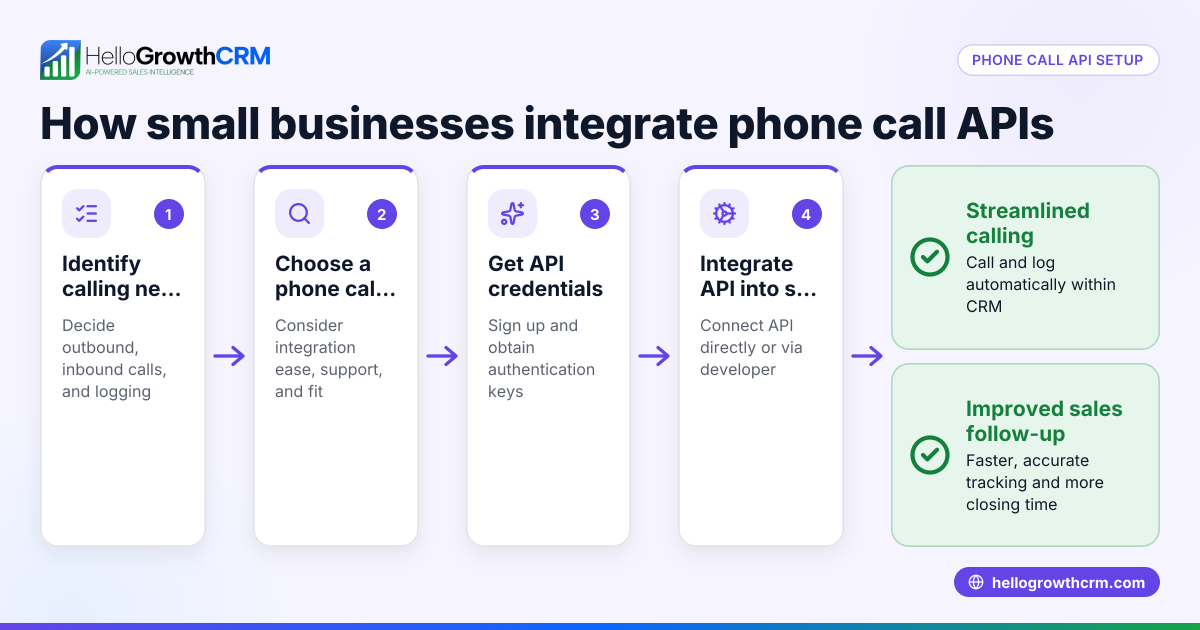
How do I integrate my business phone line with sales tools? Look for phone services or CRMs that offer built-in dialers or APIs. HelloGrowthCRM, for example, includes a built-in CRM dialer that helps sales teams manage calls effectively (/product/crm-dialer).
Key takeaways
- A business phone line separates your business calls from personal ones for professionalism and efficiency.
- Choose the right type of phone line (landline, VoIP, virtual) based on your business needs.
- Select a memorable local or toll-free number that fits your customer base.
- Set up and test your phone system thoroughly before publicizing it.
- Avoid common mistakes like using personal numbers and not training staff.
- Integrate your phone line with CRM tools to improve sales follow-up and customer management.
Setting up a dedicated business phone line is a practical step for any small business owner aiming to improve communication and customer experience. Start on the Free Forever plan (200 leads, no credit card) to organize your contacts and sales communications efficiently.
Ready to put this into practice?
Set up your pipeline, WhatsApp follow-ups, and AI lead scoring in minutes — free, no credit card.
Try HelloGrowthCRM freeGet CRM tips in your inbox
Join thousands of sales professionals who get weekly insights on CRM strategy, AI automation, and pipeline optimization.

The HelloGrowthCRM team publishes guides on CRM strategy, AI sales tools, and revenue operations for small business sales teams.