HelloGrowthCRM software
Built for real small-business sales teams
HelloGrowthCRM helps reps qualify faster, follow up on time, and close more deals—with practical automation in one place.
- AI lead scoring and pipeline visibility
- Built-in dialer, WhatsApp, and email automation
- Sales forecasting and RevOps-ready reporting
Email marketing KPIs are essential metrics that reveal the effectiveness of your email outreach efforts. By monitoring KPIs such as open rate, click-through rate, conversion rate, bounce rate, and unsubscribe rate, you can understand how your audience interacts with your emails and identify where improvements are needed. This guide covers why small businesses focus on these KPIs, practical steps to measure them, a worked example, common pitfalls, and how HelloGrowthCRM supports email marketing through sequences and shared inbox features.
Why this comes up / what goes wrong
Many small-business owners rely on email marketing to nurture leads and close sales but struggle to know if their campaigns work. Without tracking KPIs, you might send emails without understanding engagement levels or reasons for lost leads. This can lead to wasted time, missed sales opportunities, and poor follow-up. Small teams often manage email through personal inboxes or spreadsheets, making it hard to track and analyze results effectively. Understanding email marketing KPIs helps you focus on the right data to improve your campaigns and grow your business.
Step-by-step
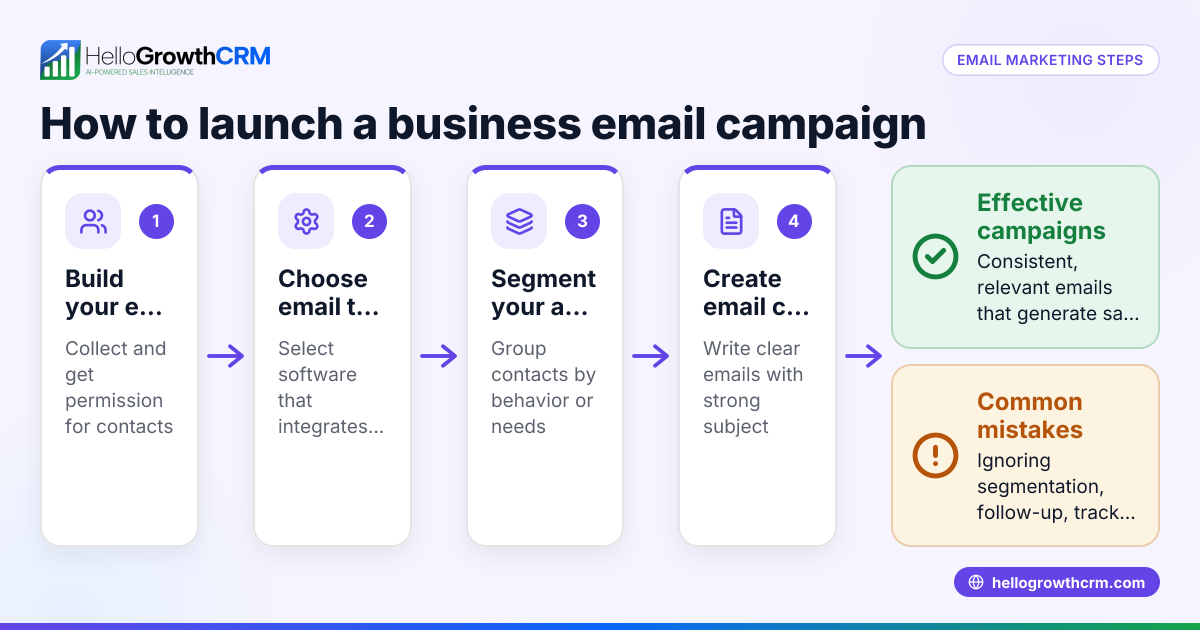
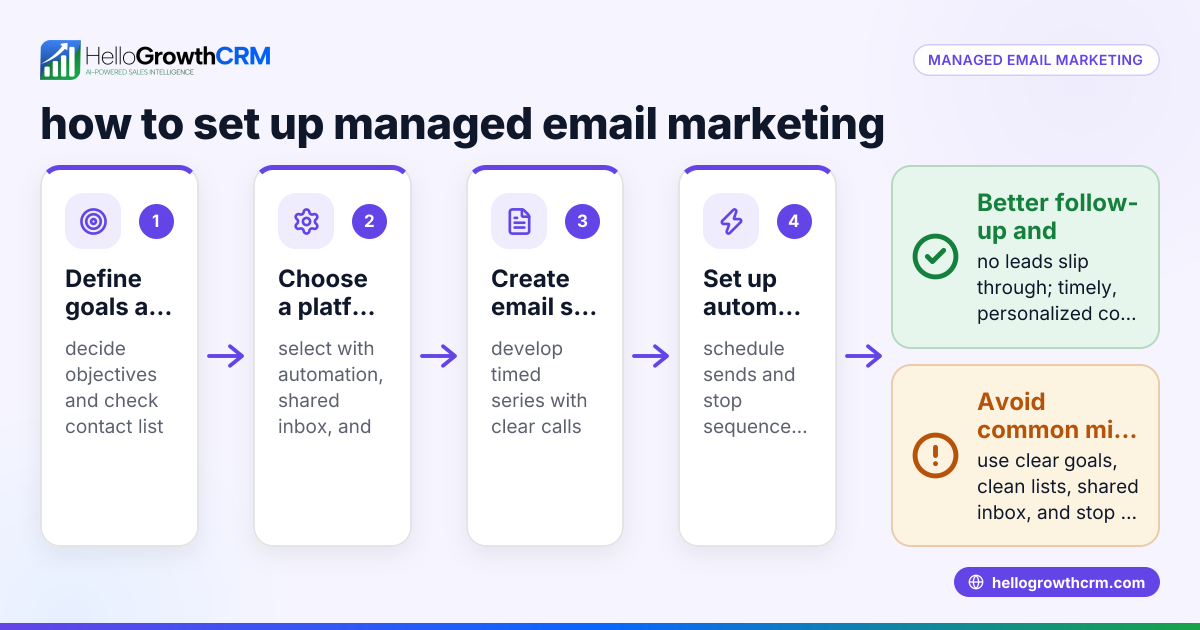
- Define your email goals. Decide what you want from your emails—more website visits, product sales, appointment bookings, or brand awareness. Your KPIs should align with these goals.
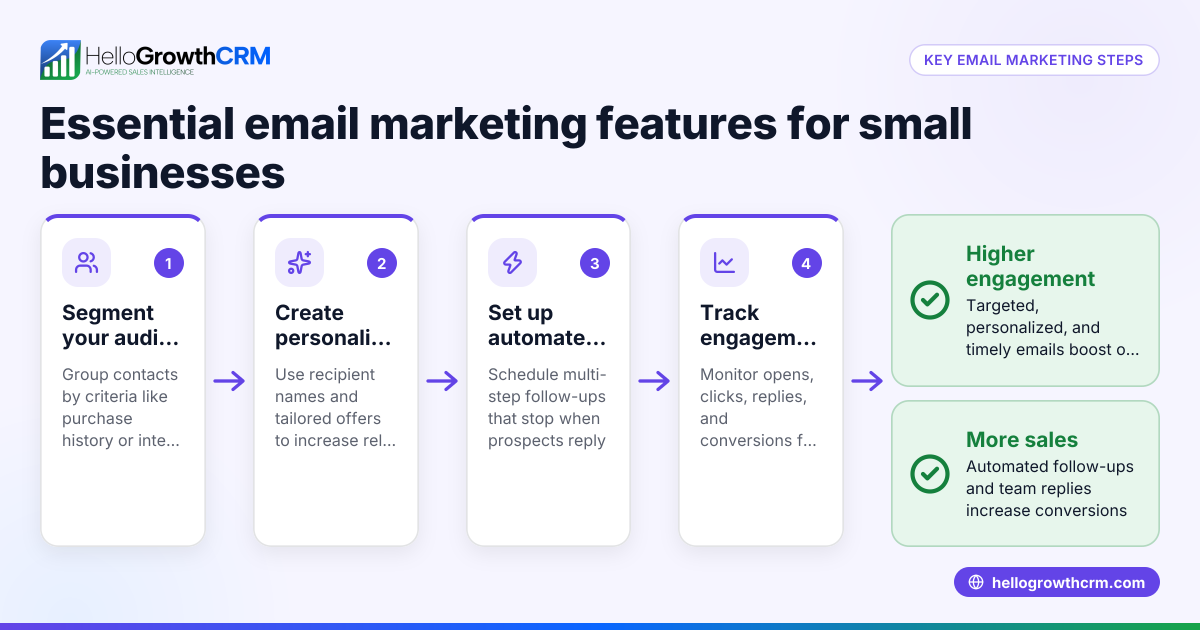
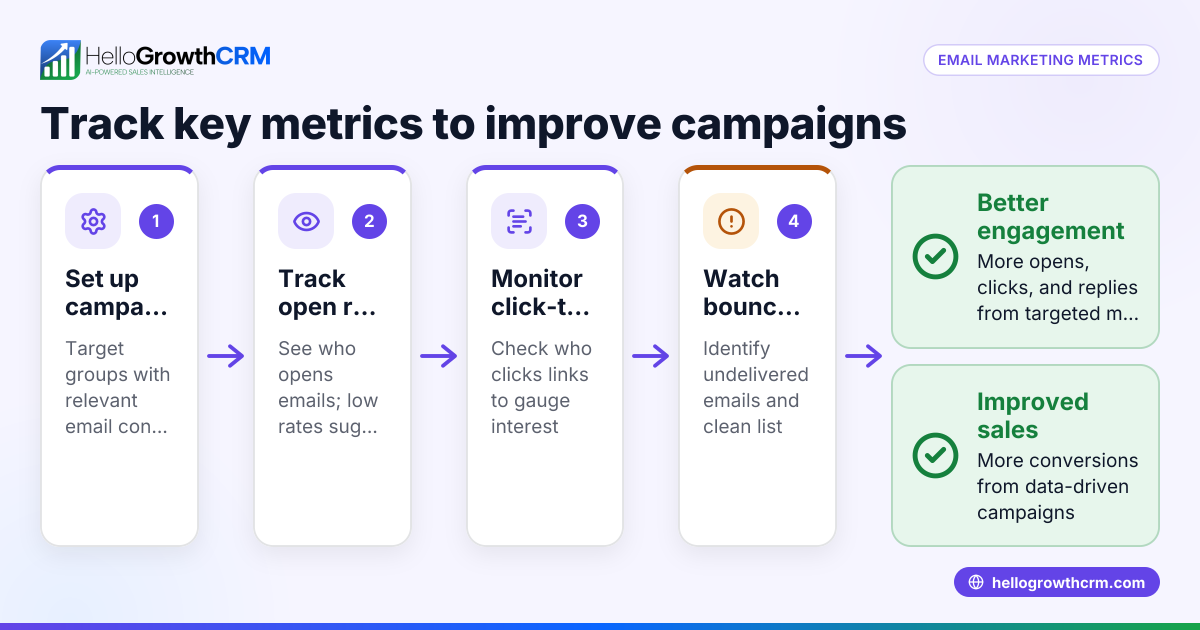
- Set up email tracking tools. Use an email marketing platform or CRM that tracks opens, clicks, bounces, and unsubscribes automatically. This saves manual work and ensures accurate data.
- Monitor open rate. This KPI shows how many recipients open your email. A low open rate suggests your subject line or sender name needs improvement.
- Track click-through rate (CTR). CTR measures how many people clicked links inside your email. It indicates how compelling your content and call-to-action are.
- Measure conversion rate. This is the percentage of recipients who complete a desired action after clicking, like making a purchase or filling out a form.
- Watch bounce rate. Bounces are emails that weren’t delivered. A high bounce rate can harm your sender reputation and should be minimized by cleaning your email list.
- Check unsubscribe rate. This shows how many recipients opt out. A rising unsubscribe rate signals your content may not meet your audience’s expectations.
- Analyze results regularly. Review your KPIs after each campaign to spot trends and adjust your strategy.
- Use automation and sequences. Automate follow-ups to contacts who engage or don’t respond, improving response rates without extra manual effort. Learn more about email automation and sequences.
Example (fictional figures)
A residential real-estate team in Phoenix, Arizona, sent an email campaign on 04/01/2026 to 5,000 leads promoting a new property listing.
- Emails sent = 5,000
- Emails opened = 1,250
- Links clicked = 375
- Leads who scheduled a viewing (conversion) = 75
- Emails bounced = 100
- Unsubscribes = 25
Calculations:
Open rate = (1,250 ÷ 5,000) × 100 = 25%
Click-through rate = (375 ÷ 5,000) × 100 = 7.5%
Conversion rate = (75 ÷ 5,000) × 100 = 1.5%
Bounce rate = (100 ÷ 5,000) × 100 = 2%
Unsubscribe rate = (25 ÷ 5,000) × 100 = 0.5%
This data shows the team’s emails reached most recipients, with a decent open rate and click rate, but only a small percentage converted. They could improve by testing subject lines to increase opens and refining calls-to-action to boost conversions.
Common mistakes
- Ignoring KPIs altogether. Prevent this by setting up automated tracking in your email tool.
- Focusing only on open rates. Open rates don’t show engagement. Always combine with CTR and conversion data.
- Not cleaning email lists. High bounce rates damage deliverability. Regularly remove invalid addresses.
- Sending too many emails. High unsubscribe rates can result. Space campaigns and monitor unsubscribe trends.
- Manual follow-ups only. This wastes time and risks slow responses. Use automated sequences that stop when a prospect replies to improve efficiency. See how email automation and sequences can help.
Doing this in HelloGrowthCRM
HelloGrowthCRM offers a shared inbox called HelloMail, where replies to quotation emails are visible to the whole team on the deal without switching apps. This keeps everyone aligned on sales communication. You can also set up sequences and campaigns—automated five-step follow-ups over two weeks that immediately stop when a prospect responds. This helps you stay on top of leads without manual effort. Learn more about WhatsApp and SMS CRM and email automation features in HelloGrowthCRM.
Frequently asked questions
What is a good open rate for email marketing? Open rates vary by industry but typically range from 15% to 30%. If your open rate is below this, test your subject lines and sender name to improve.
How often should I send marketing emails? Frequency depends on your audience and content quality; consider what works best for your business and customers. Monitor unsubscribe rates to avoid overwhelming your list.
How do I improve my click-through rate? Make your email content clear and engaging with a strong call-to-action. Personalize emails and place links prominently.
Can I track email KPIs without special software? Basic tracking can be done manually but is time-consuming and error-prone. Using a CRM or email marketing platform automates tracking and reporting.
What’s the difference between click-through rate and conversion rate? Click-through rate measures clicks on email links; conversion rate measures how many completed your desired action after clicking.
Key takeaways
- Email marketing KPIs include open rate, click-through rate, conversion rate, bounce rate, and unsubscribe rate.
- Align KPIs with your email campaign goals and track them consistently.
- Use automation and sequences to save time and improve follow-up response rates.
- Avoid common mistakes like ignoring KPIs, focusing only on opens, and neglecting list hygiene.
- HelloGrowthCRM supports email KPI tracking with HelloMail shared inbox and automated sequences.
Start improving your email marketing by tracking the right KPIs today. Try HelloGrowthCRM Free Forever plan and see how automation can help your small business grow.
Ready to put this into practice?
Set up your pipeline, WhatsApp follow-ups, and AI lead scoring in minutes — free, no credit card.
Try HelloGrowthCRM freeGet CRM tips in your inbox
Join thousands of sales professionals who get weekly insights on CRM strategy, AI automation, and pipeline optimization.

The HelloGrowthCRM team publishes guides on CRM strategy, AI sales tools, and revenue operations for small business sales teams.