HelloGrowthCRM software
Built for real small-business sales teams
HelloGrowthCRM helps reps qualify faster, follow up on time, and close more deals—with practical automation in one place.
- AI lead scoring and pipeline visibility
- Built-in dialer, WhatsApp, and email automation
- Sales forecasting and RevOps-ready reporting
A call center quality monitoring form is a structured checklist used by supervisors or quality analysts to evaluate the performance of call center agents during customer interactions. The form typically includes criteria such as greeting quality, product knowledge, adherence to scripts, tone of voice, problem resolution, and compliance with company policies. Small and mid-sized businesses use these forms to maintain consistent service levels, identify training gaps, and improve customer satisfaction.
Why this comes up / what goes wrong
Small-business owners with call centers often struggle with inconsistent customer service, lost sales opportunities, and customer complaints about agent behavior. Without a clear and objective way to evaluate calls, it’s difficult to pinpoint which agents need coaching or which processes require improvement. A quality monitoring form provides a standardized method to assess calls and ensure agents meet the expected service standards. This helps improve overall customer experience and boosts sales effectiveness.
Step-by-step
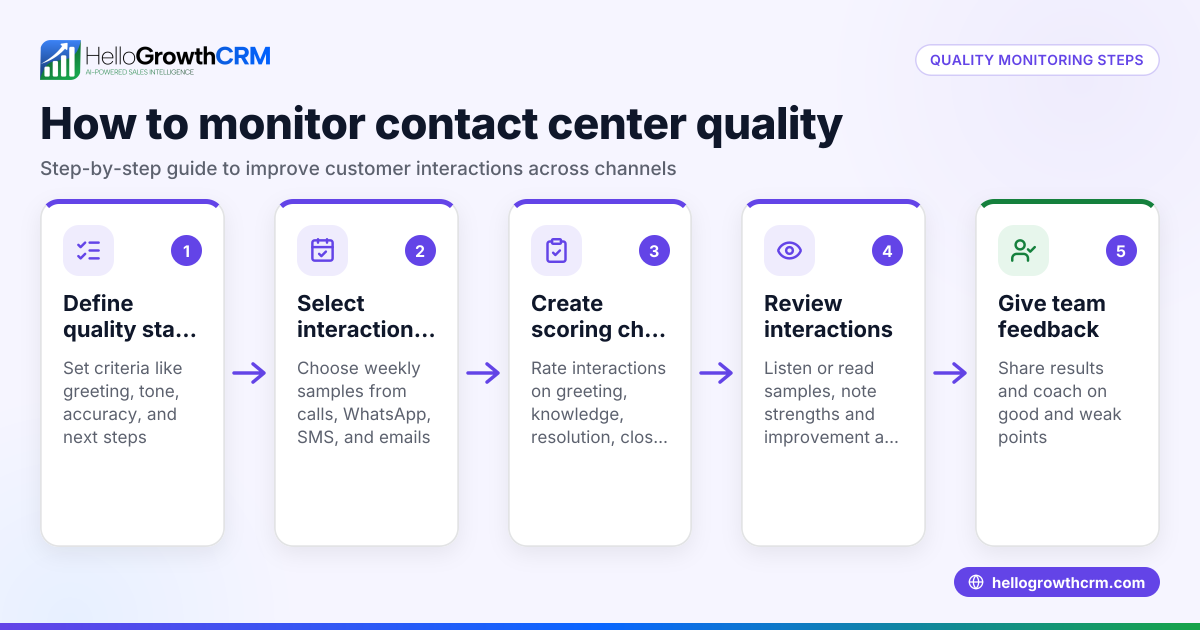
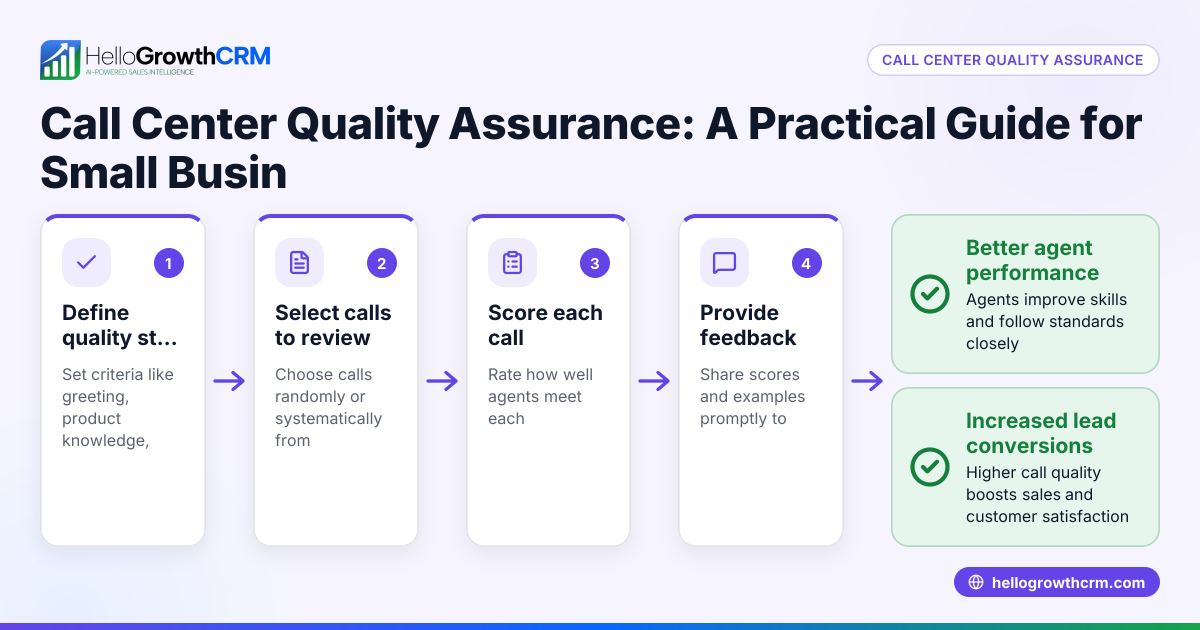
- Define evaluation criteria: Identify the key behaviors and outcomes to monitor. Common criteria include greeting quality, listening skills, product knowledge, script compliance, tone, and problem resolution.
- Create the form: Design a simple checklist or rating scale (for example, 1 to 5) for each criterion. Include fields for call details such as date, time, agent name, and customer information, plus space for comments.
- Train evaluators: Ensure supervisors or quality assurance staff understand how to use the form consistently and fairly to avoid bias.
- Select calls to review: Choose a representative sample of calls regularly. This can be random or focused on new agents, flagged calls, or specific issues.
- Evaluate calls: Listen to or observe calls carefully, filling out the form with scores and notes based on the agent’s performance.
- Provide feedback: Share evaluation results with agents promptly, highlighting strengths and areas for improvement to encourage development.
- Track trends: Collect and analyze scores over time to identify patterns, common issues, and training needs.
- Adjust criteria as needed: Update the form periodically based on business priorities, customer feedback, or regulatory changes.
Example (fictional figures)
GreenLeaf Landscaping, a small landscaping contractor in Charlotte, North Carolina, operates a call center with five agents. They want to improve customer satisfaction by monitoring call quality monthly.
- They define 5 evaluation criteria: Greeting, Product Knowledge, Compliance, Tone, and Problem Resolution.
- Each criterion is scored from 1 (poor) to 5 (excellent).
- For March 2026, they review 20 calls.
Sample evaluation for one agent's call:
Greeting: 4 Product Knowledge: 5 Compliance: 3 Tone: 4 Problem Resolution: 2
Total score = 4 + 5 + 3 + 4 + 2 = 18 out of 25 Average score per criterion = 18 / 5 = 3.6
They set a target average score of 4.0. This agent’s score of 3.6 indicates a need for coaching on compliance and problem resolution to meet company standards.
Common mistakes
- Using overly complex forms: Complex forms can overwhelm evaluators and reduce consistency. Prevent this by focusing on key criteria that directly impact customer satisfaction.
- Infrequent evaluations: Monitoring calls rarely misses ongoing trends and problems. Schedule regular reviews, such as weekly or monthly.
- Lack of feedback to agents: Not sharing evaluation results demotivates agents and slows improvement. Always provide constructive, timely feedback.
- Ignoring qualitative notes: Comments explain scores and guide coaching. Encourage evaluators to add detailed notes.
- Not updating forms: Business needs and customer expectations change. Review and revise the form periodically to stay relevant.
- Evaluating without call context: Understanding the call’s purpose and customer situation is essential for fair scoring. Train evaluators to consider context.
Doing this in HelloGrowthCRM
HelloGrowthCRM provides a built-in dialer that allows reps to work a call list directly inside the CRM. Each call’s outcome is logged on the lead record, making it easy to track and review call performance for quality monitoring. Supervisors can access call histories and outcomes to evaluate agent effectiveness efficiently. Learn more about the built-in CRM dialer.
Frequently asked questions
What is a call center email quality monitoring form? It is similar to a call monitoring form but focuses on evaluating email interactions with customers. The form checks for professionalism, response time, accuracy, and tone to ensure consistent and effective email communication.
How often should calls be monitored using the form? Calls should be monitored regularly, such as weekly or monthly, depending on call volume and team size. Regular monitoring helps catch issues early and track improvements over time.
Can small businesses use software to assist quality monitoring? Yes, CRM software like HelloGrowthCRM can help by logging call outcomes and histories. This makes it easier to select calls for review and maintain organized records for quality assurance.
What should be included in a call center quality monitoring form? Key elements include agent identification, call date and time, criteria for evaluation (such as greeting, compliance, tone), a scoring system, and space for comments or notes.
How does HelloGrowthCRM support call center quality monitoring? Its built-in dialer enables calls to be made and logged directly inside the CRM. Supervisors can review call outcomes linked to each lead, streamlining quality checks and performance tracking.
Learn more about email automation and sequences and how HelloGrowthCRM fits US businesses at HelloGrowthCRM for the United States.
Key takeaways
- A call center quality monitoring form standardizes call evaluations to improve customer service.
- Define clear, focused criteria and keep the form simple for consistent use.
- Regularly review calls and provide timely, constructive feedback to agents.
- Avoid common pitfalls like overly complex forms, infrequent monitoring, and lack of feedback.
- HelloGrowthCRM’s built-in dialer helps log call outcomes and supports efficient quality monitoring.
Start improving your call center quality today. Start on the Free Forever plan (200 leads, no credit card).
Ready to put this into practice?
Set up your pipeline, WhatsApp follow-ups, and AI lead scoring in minutes — free, no credit card.
Try HelloGrowthCRM freeGet CRM tips in your inbox
Join thousands of sales professionals who get weekly insights on CRM strategy, AI automation, and pipeline optimization.

The HelloGrowthCRM team publishes guides on CRM strategy, AI sales tools, and revenue operations for small business sales teams.