HelloGrowthCRM software
Built for real small-business sales teams
HelloGrowthCRM helps reps qualify faster, follow up on time, and close more deals—with practical automation in one place.
- AI lead scoring and pipeline visibility
- Built-in dialer, WhatsApp, and email automation
- Sales forecasting and RevOps-ready reporting
A call schedule is a planned timetable that organizes when and how business calls are made or received. It helps ensure timely follow-up, reduces missed opportunities, and improves communication efficiency. This article explains why small businesses need a call schedule, provides step-by-step instructions to create one, highlights common mistakes, and shows how HelloGrowthCRM features can assist.
Why this comes up / what goes wrong
Small business owners and sales teams often struggle with managing incoming and outgoing calls effectively. Without a call schedule, calls may be delayed, forgotten, or handled inconsistently. This leads to lost leads, frustrated prospects, and inefficient use of time. Many small businesses rely on text messages, emails, or spreadsheets to track calls, which can cause confusion and slow response times. A clear call schedule helps prioritize calls, allocate resources, and maintain consistent communication.
Step-by-step
- Identify your calling goals: Determine the purpose of your calls, such as lead follow-up, customer support, or sales outreach. Knowing this helps prioritize call types.
- List your contacts and leads: Gather all contacts that require calls, including new leads, existing customers, and prospects.
- Segment your calls by priority: Group contacts by urgency or potential value to decide call order.
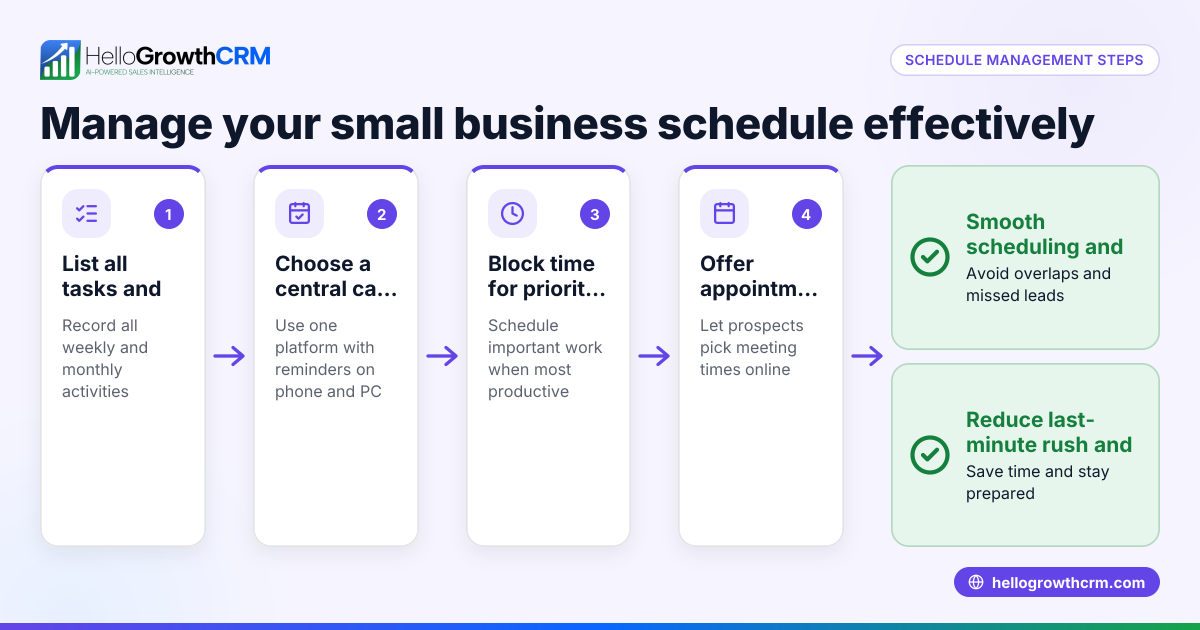
- Allocate time slots: Assign specific times during the day or week to make or receive calls, considering your team's availability.
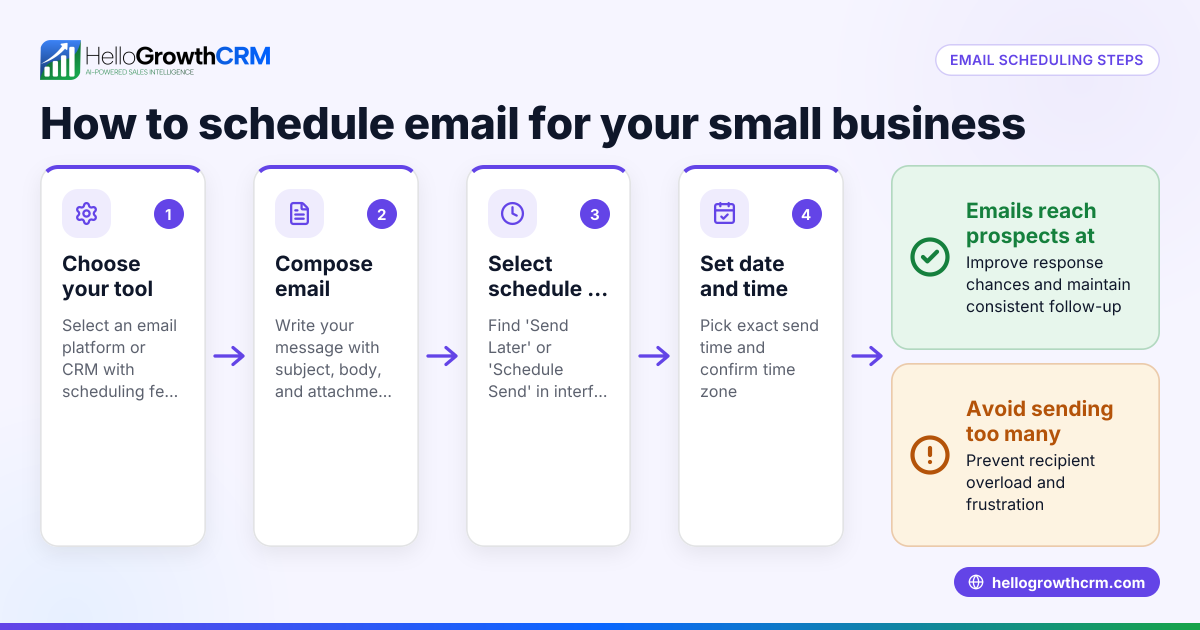
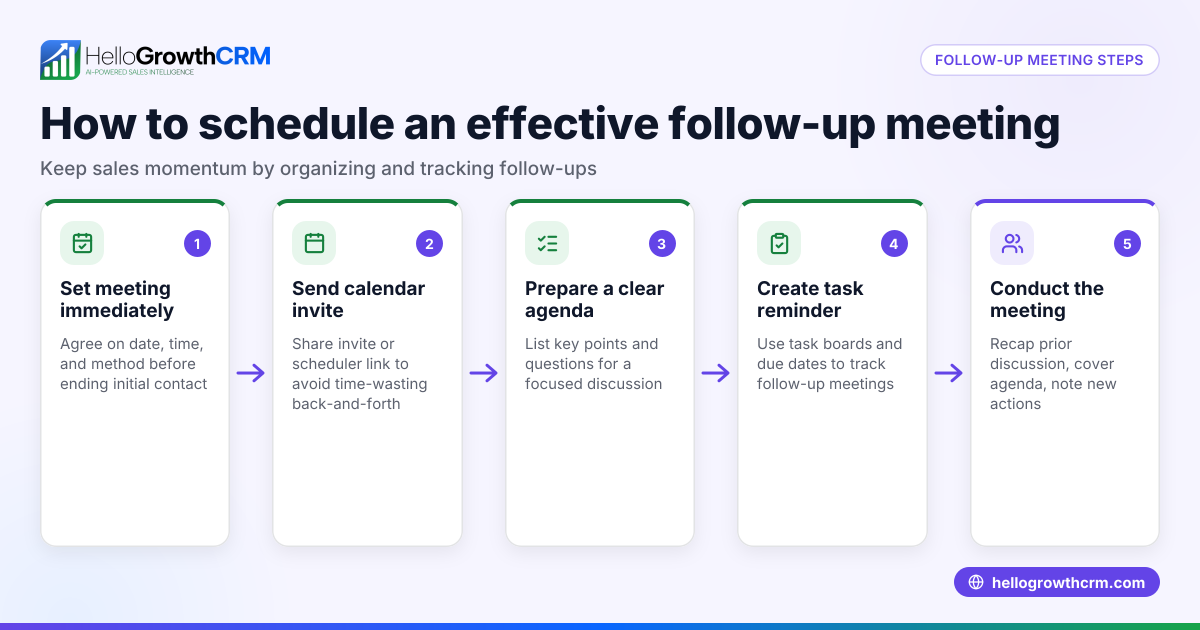
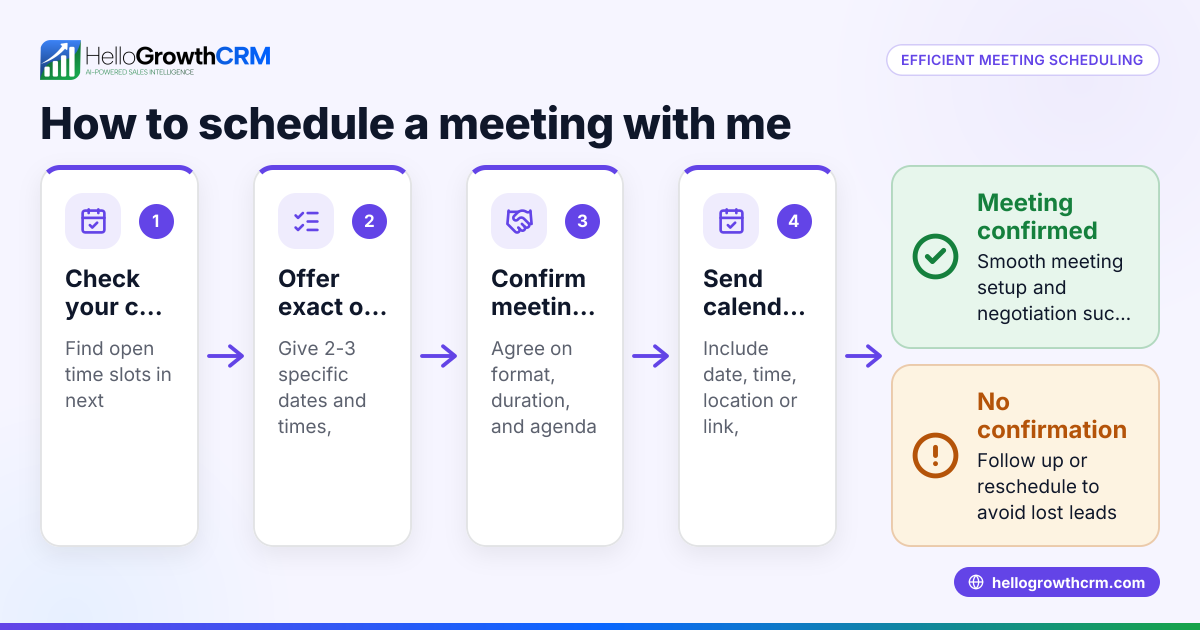
- Choose a scheduling method: Use tools or calendars to book calls, avoiding back-and-forth messages. Ensure prospects can select convenient slots.
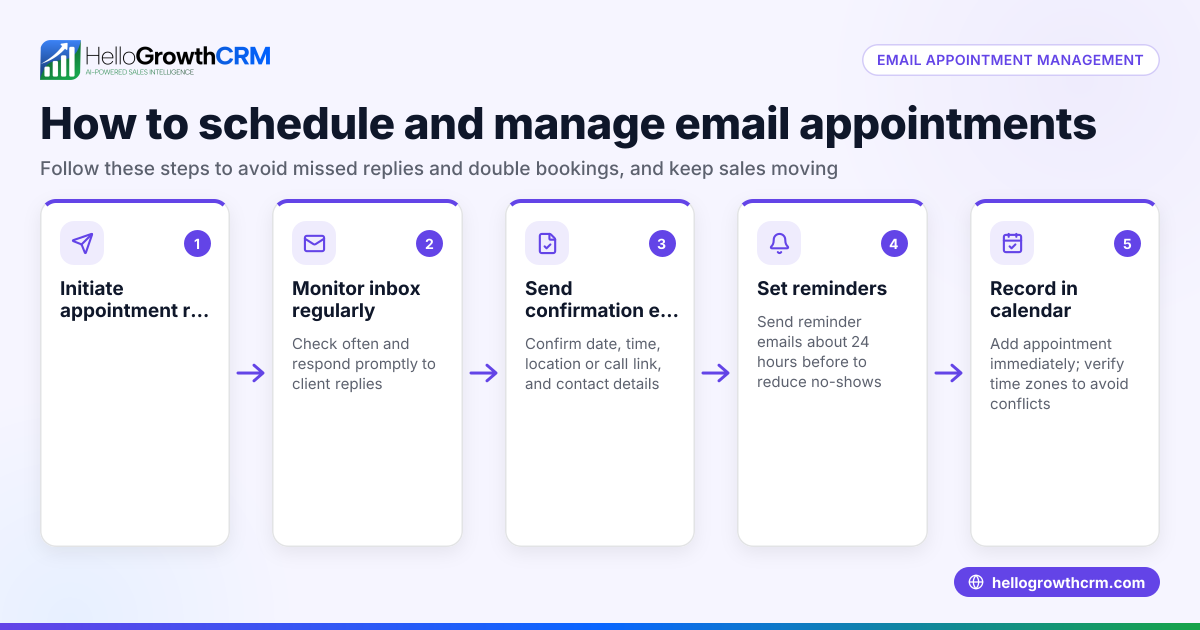
- Set reminders and follow-ups: Schedule alerts before calls and plan follow-up actions.
- Track call outcomes: Record call results to update your pipeline and adjust future schedules.
- Review and adjust regularly: Analyze call success and reschedule as needed to improve efficiency.
Check that your schedule balances workload evenly and that no leads are overlooked.
Example (fictional figures)
A landscaping contractor in Charlotte, North Carolina, wants to organize calls to new leads and existing clients. They plan to call 40 leads weekly and 10 existing clients for updates.
- Total calls per week = 40 + 10 = 50 calls
- Work hours available for calls = 5 days × 4 hours/day = 20 hours
- Average call duration = 20 minutes (including notes)
Calculate total call time:
50 calls × 20 minutes = 1,000 minutes
Convert minutes to hours:
1,000 minutes ÷ 60 = 16.67 hours
Since 16.67 hours < 20 available hours, the schedule is feasible.
They assign:
- 3 hours daily for calls
- Use a scheduling link for prospects to book 20-minute slots
- Set reminders 10 minutes before each call
This plan ensures all calls fit within working hours with time for follow-ups and administrative tasks.
Common mistakes
- Overbooking calls without buffer time: Prevent by estimating realistic call durations and including breaks between calls to avoid fatigue and delays.
- Ignoring time zones of prospects: Prevent by confirming local times before scheduling calls, especially if clients or leads are in different states.
- Failing to track call outcomes: Prevent by logging results immediately after each call to keep your sales pipeline accurate and actionable.
- Using manual scheduling with back-and-forth messages: Prevent by adopting a meeting scheduler to let prospects pick slots directly, saving time and reducing confusion.
- Not reviewing and adjusting the call schedule regularly: Prevent by setting weekly reviews to optimize call times and priorities based on outcomes.
- Forgetting to send reminders: Prevent by automating alerts before calls to reduce no-shows and improve preparedness.
Doing this in HelloGrowthCRM
HelloGrowthCRM offers a built-in dialer that lets your rep work a call list directly inside the CRM, logging the outcome of each call on the lead record. This keeps your call history organized and tied to contacts and deals. Additionally, the meeting scheduler feature allows prospects to pick a call slot from a link, eliminating the need for back-and-forth WhatsApp messages and speeding up booking. Learn more about the built-in CRM dialer and meeting scheduler to streamline your call scheduling process.
Frequently asked questions
What is a call schedule? A call schedule is a planned timetable that organizes when business calls are made or received. It helps ensure timely follow-up and efficient communication.
How do I schedule a phone call with a prospect? Identify available time slots, offer those options to the prospect, and confirm the agreed time. Using a meeting scheduler tool can simplify this by letting prospects pick a slot themselves, reducing the back-and-forth typically done over WhatsApp or email.
Can I schedule calls on WhatsApp? While WhatsApp is good for quick messages, scheduling calls by exchanging availability can be slow and confusing. Using a meeting scheduler link shared via WhatsApp speeds up booking and reduces misunderstandings.
How does a call schedule help sales teams? It prioritizes calls, reduces missed opportunities, and tracks call outcomes, improving overall sales efficiency and customer experience.
What tools can help me manage a call schedule? CRM tools with built-in dialers and meeting schedulers, like HelloGrowthCRM, help organize calls, log results, and let prospects book slots easily, saving time and improving follow-up.
How do I handle no-shows or reschedules in a call schedule? Build buffer time into your schedule and use automated reminders to reduce no-shows. When reschedules happen, update your call schedule promptly and notify your team to stay organized.
Key takeaways
- A call schedule organizes when and how business calls happen to improve follow-up and efficiency.
- Prioritize calls by segmenting leads and allocating realistic time slots.
- Avoid common mistakes like overbooking and ignoring time zones by planning carefully.
- Use scheduling tools to let prospects book calls directly, reducing back-and-forth.
- Automate reminders to reduce no-shows and keep your schedule on track.
- HelloGrowthCRM's built-in dialer and meeting scheduler simplify managing calls and tracking outcomes.
Start organizing your calls effectively today. Start on the Free Forever plan (200 leads, no credit card) to try HelloGrowthCRM and improve your call scheduling.
HelloGrowthCRM for the United States offers tools designed to help small and mid-sized businesses manage calls and sales efficiently.
Ready to put this into practice?
Set up your pipeline, WhatsApp follow-ups, and AI lead scoring in minutes — free, no credit card.
Try HelloGrowthCRM freeGet CRM tips in your inbox
Join thousands of sales professionals who get weekly insights on CRM strategy, AI automation, and pipeline optimization.

The HelloGrowthCRM team publishes guides on CRM strategy, AI sales tools, and revenue operations for small business sales teams.