HelloGrowthCRM software
Built for real small-business sales teams
HelloGrowthCRM helps reps qualify faster, follow up on time, and close more deals—with practical automation in one place.
- AI lead scoring and pipeline visibility
- Built-in dialer, WhatsApp, and email automation
- Sales forecasting and RevOps-ready reporting
Campaign management is the process of planning, executing, tracking, and analysing marketing campaigns to achieve specific business goals such as lead generation or sales growth. This article explains what campaign management involves, why it matters for small businesses, a clear step-by-step guide to running campaigns, a worked example with Australian figures, common mistakes to avoid, and how HelloGrowthCRM supports campaign management.
Why this comes up / what goes wrong
Many small business owners in Australia find themselves struggling to organise their marketing efforts. They may send messages manually through text, email, or WhatsApp, or jot down leads in notebooks or spreadsheets. This often leads to slow follow-up, lost opportunities, and no clear view of which campaigns are working. Without a structured approach to campaign management, businesses waste time and money, and sales teams can become overwhelmed or disorganised.
Step-by-step
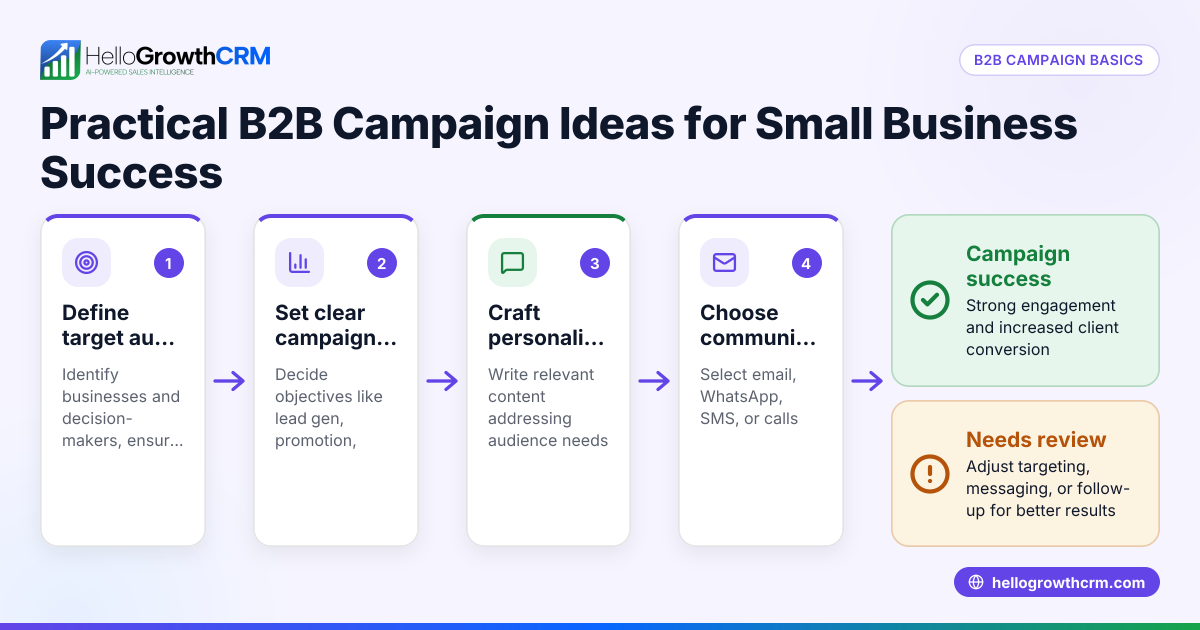
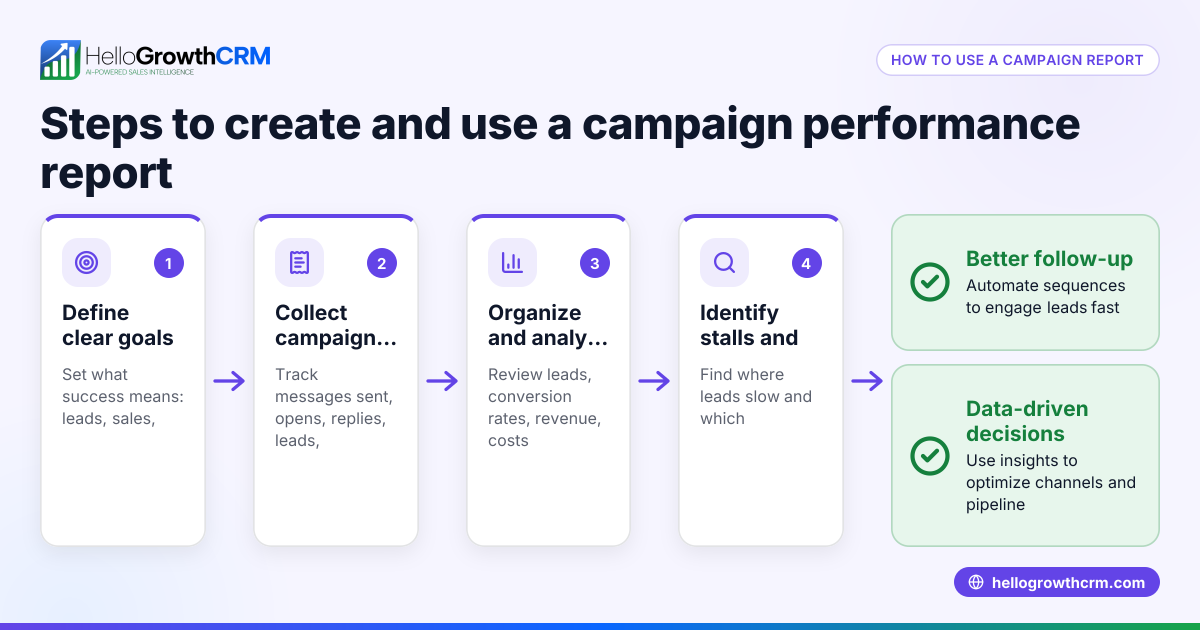
- Define your campaign goal. Decide what you want to achieve, such as increasing enquiries, booking more appointments, or promoting a new product. Check that the goal is specific and measurable.
- Identify your target audience. Understand who you want to reach. This could be existing customers, new leads, or a particular segment. Check your customer data or market research.
- Choose your channels. Decide where to run your campaign: email, SMS, WhatsApp, social media, or a mix. Check which channels your audience prefers and what tools you have available.
- Create your message and offer. Write clear, concise messages that explain the value or offer. Check for spelling, clarity, and compliance with any marketing rules.
- Set up your campaign workflow. Plan the timing and sequence of messages. For example, a five-step follow-up over two weeks. Check that the schedule allows enough time for responses but keeps momentum.
- Capture and assign leads. Make sure enquiries from forms, calls, or messages automatically become leads with assigned owners and next steps. Check that no leads get lost or delayed.
- Launch your campaign. Send out your messages according to the plan. Check delivery and response rates regularly.
- Track and analyse results. Monitor how many leads, replies, and conversions you get. Check which messages or channels perform best.
- Adjust and optimise. Use insights to improve your next campaign. Check feedback and update your approach.
Example (fictional figures)
A landscaping company in Newcastle, New South Wales, plans a campaign to increase garden design enquiries before spring.
- Goal: Get 50 new garden design enquiries by 30/09/2026.
- Budget: A$2,000 for SMS and WhatsApp messages.
Steps:
- Define goal: 50 enquiries by 30/09/2026.
- Target audience: Homeowners in Newcastle suburbs.
- Channels: SMS and WhatsApp.
- Message: “Spring is coming! Book your garden design consultation now with 10% off.”
- Campaign workflow: Five-step follow-up over two weeks.
- Lead capture: Enquiries from web form and WhatsApp assigned to sales rep Jane.
Costs:
- SMS cost per message: A$0.10
- WhatsApp messages: included in platform
- Messages per lead: 5
If 200 prospects receive the campaign:
200 × 5 = 1,000 messages 1,000 × A$0.10 = A$100 SMS cost
Remaining budget: A$2,000 - A$100 = A$1,900 for other expenses or ads.
Tracking:
- 60 enquiries received by 30/09/2026
- 50 converted to consultations
This shows the campaign met its goal within budget.
Common mistakes
- Not defining clear goals. Prevent by setting specific, measurable targets before starting.
- Ignoring lead follow-up. Prevent by assigning leads immediately with clear next steps, not leaving enquiries in notebooks.
- Sending too many or too few messages. Prevent by planning a balanced follow-up sequence, such as a five-step follow-up over two weeks.
- Using too many channels at once without tracking. Prevent by starting with one or two channels and monitoring results.
- Manual message sending. Prevent by automating sequences to save time and ensure timely follow-up.
- Not analysing campaign results. Prevent by regularly reviewing leads and replies to improve future campaigns.
Doing this in HelloGrowthCRM
HelloGrowthCRM helps small businesses manage campaigns with two key features. First, every enquiry from a form, call, or WhatsApp automatically lands as a lead with an owner and a next step, so no leads get lost or forgotten. Second, you can set up sequences and campaigns: a five-step follow-up over two weeks runs on its own and stops the moment the prospect replies. This automation saves time, keeps leads moving, and improves follow-up consistency. Learn more about WhatsApp and SMS CRM and the built-in CRM dialer to support your campaigns. For Australian businesses, see HelloGrowthCRM for Australia.
Frequently asked questions
What is the difference between a campaign and a sequence? A campaign typically broadcasts messages to a list or segment at once, while a sequence is an automated multi-step follow-up workflow that sends timed messages until a prospect replies. Both can be part of campaign management.
How do I measure if my campaign is successful? Track metrics like the number of leads generated, replies received, and conversions or sales made. Compare these against your original goals to see if the campaign met expectations.
Can I use WhatsApp for campaign management? Yes, WhatsApp is a popular channel for direct communication. Using a CRM like HelloGrowthCRM that integrates WhatsApp lets you automate follow-ups and capture leads from WhatsApp inquiries.
How often should I follow up with leads in a campaign? A common approach is a sequence of five messages over two weeks, balancing persistence with respect for the prospect’s time. Adjust based on response rates and feedback.
Do I need special software for campaign management? While you can manage campaigns manually, software like HelloGrowthCRM helps automate follow-ups, organise leads, and track results, making campaigns more efficient and effective.
Key takeaways
- Campaign management is organising and running marketing efforts to meet clear goals.
- Define goals, target audience, channels, message, and follow-up steps before launching.
- Automate lead capture and follow-up to avoid lost opportunities.
- Track results and adjust campaigns for better performance.
- Use tools like HelloGrowthCRM to automate sequences and manage leads efficiently.
Start managing your campaigns better today. Start on the Free Forever plan (200 leads, no credit card) and see how HelloGrowthCRM can keep your leads organised and your follow-ups automated.
Ready to put this into practice?
Set up your pipeline, WhatsApp follow-ups, and AI lead scoring in minutes — free, no credit card.
Try HelloGrowthCRM freeGet CRM tips in your inbox
Join thousands of sales professionals who get weekly insights on CRM strategy, AI automation, and pipeline optimization.

The HelloGrowthCRM team publishes guides on CRM strategy, AI sales tools, and revenue operations for small business sales teams.