HelloGrowthCRM software
Built for real small-business sales teams
HelloGrowthCRM helps reps qualify faster, follow up on time, and close more deals—with practical automation in one place.
- AI lead scoring and pipeline visibility
- Built-in dialer, WhatsApp, and email automation
- Sales forecasting and RevOps-ready reporting
Channel sales management means managing your business’s sales through external partners such as distributors, resellers, or agents instead of selling directly to customers. This approach can expand your market reach and reduce the cost of direct sales efforts, but it requires careful coordination to keep partners productive and aligned with your goals. This article explains why channel sales management matters, walks you through the key steps, shows a realistic example, highlights common pitfalls, and describes how HelloGrowthCRM can help you manage your sales channels effectively.
Why this comes up / what goes wrong
Small-business owners often turn to channel sales to grow without hiring a large direct sales force. For example, a manufacturer might rely on local distributors to sell products in different regions. However, without clear management, partners can underperform, duplicate efforts, or fail to follow up on leads. Owners may lose track of which partner owns which lead, miss timely follow-ups, or fail to see which territories are covered. This leads to lost sales and wasted effort. Channel sales management helps organize partner activities, track deals, and ensure leads and opportunities don’t slip through the cracks.
Step-by-step
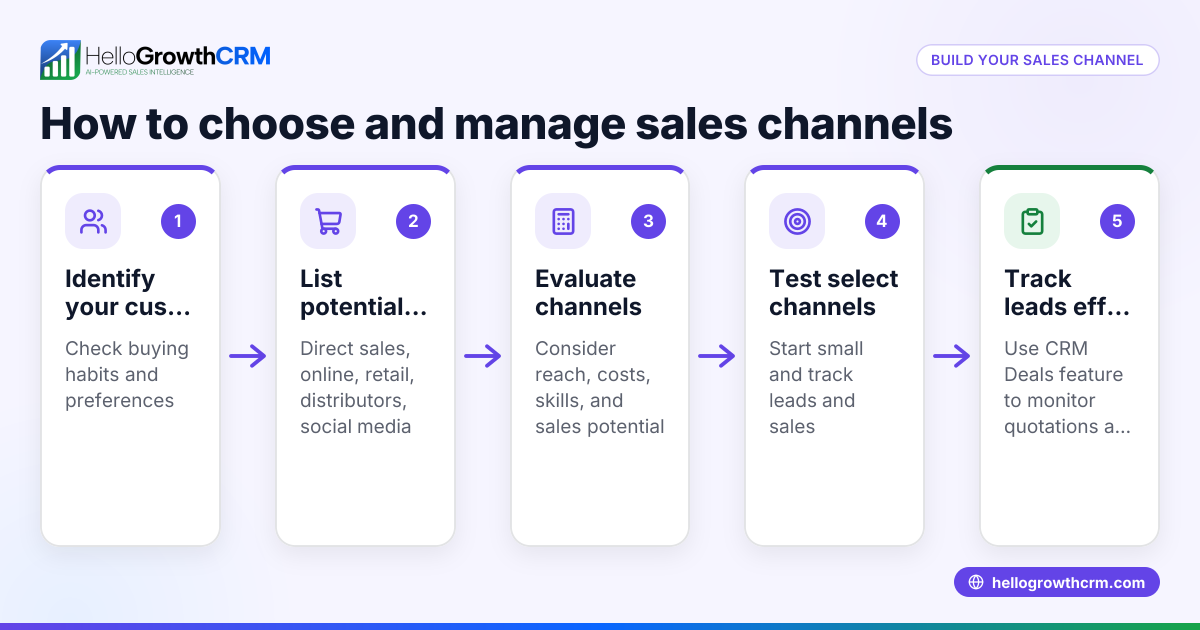
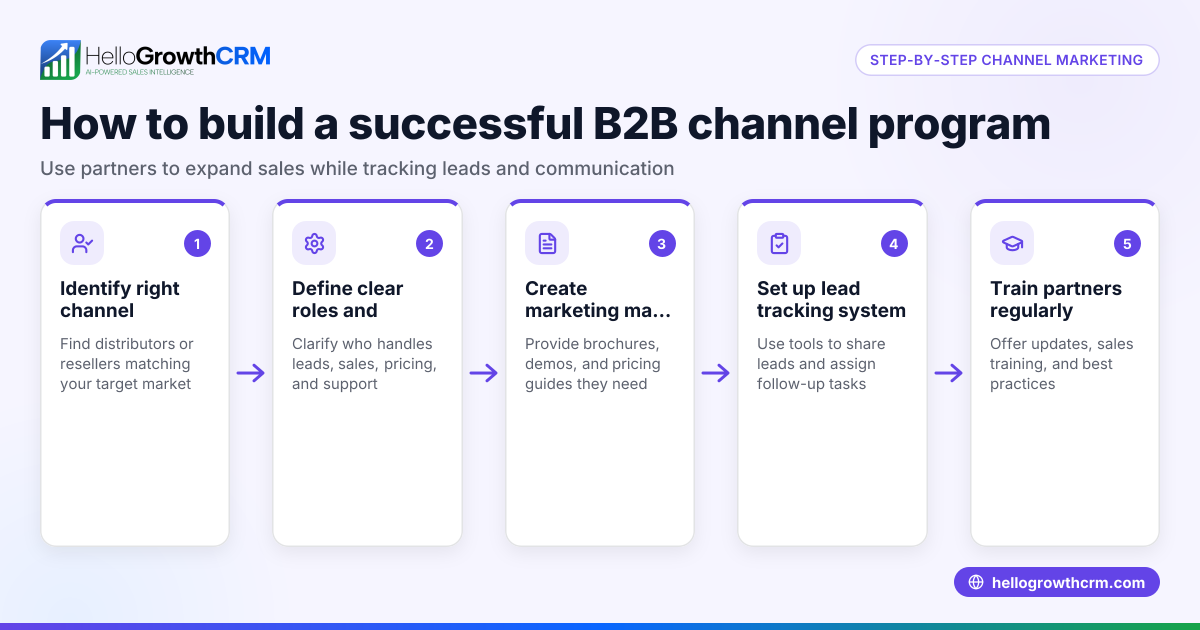
- Identify and recruit channel partners: Find distributors, resellers, or agents who serve your target markets. Check their reputation, capabilities, and alignment with your product.
- Define territories and responsibilities: Assign geographic or customer segments to each partner to avoid overlap and confusion. Use territory management tools to clarify ownership.
- Set clear sales goals and incentives: Agree on targets, commissions, or bonuses to motivate partners. Make these measurable and time-bound.
- Train partners on your products and processes: Provide sales materials, demos, and onboarding sessions so partners can represent your product confidently.
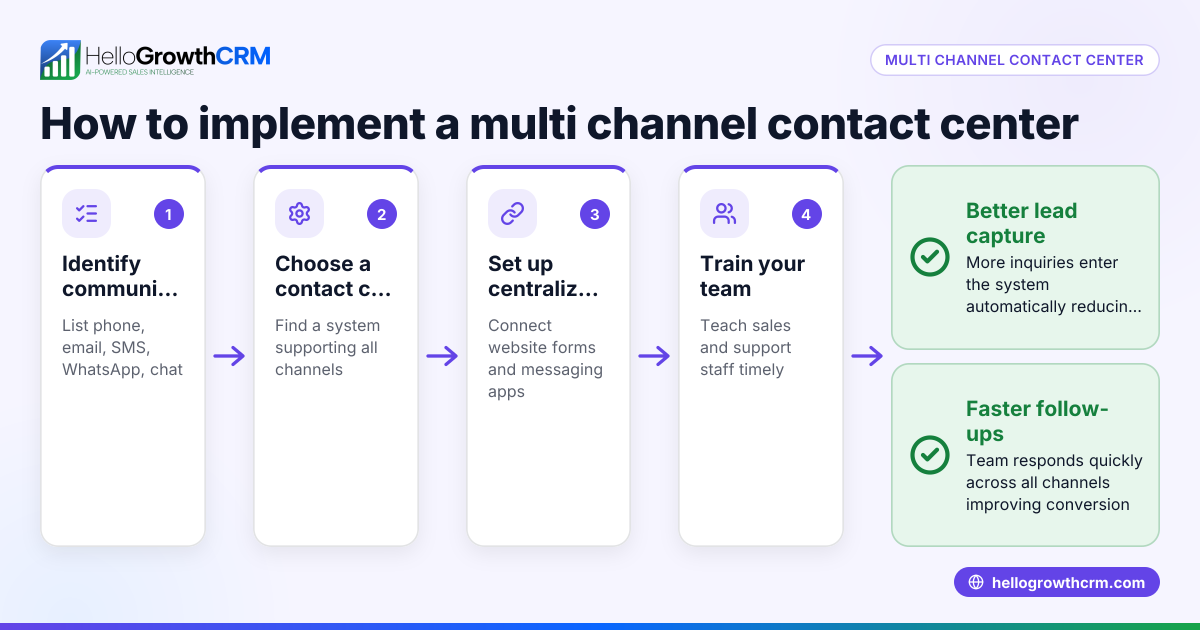
- Capture and assign leads accurately: When leads come from web forms, calls, or WhatsApp, assign them to the correct partner promptly to ensure follow-up.
- Track deals through a sales pipeline: Monitor stages from lead to quotation to close. Set reminders for follow-ups to avoid lost opportunities.
- Collect field activity data: Have partners log visits, calls, or demos so you can verify activity and support their efforts.
- Review sales performance regularly: Analyze which partners and territories are meeting goals and adjust plans accordingly.
- Provide ongoing support and communication: Keep partners informed about new products, promotions, or changes.
- Manage commissions and payments transparently: Link commissions to deal outcomes to ensure accurate and timely payments.
For tools that help with step 5, 6, and 7, see how HelloGrowthCRM supports lead capture, pipeline tracking, and field operations below.
Example (fictional figures)
A landscaping equipment supplier in Charlotte, North Carolina, uses channel sales management to work with three local distributors. Their annual sales target through channels is $1,200,000.
- Distributor A is assigned Charlotte city with a target of $500,000.
- Distributor B covers nearby suburbs with $400,000.
- Distributor C handles the rest of Mecklenburg County with $300,000.
In January, Distributor A receives 20 leads, converts 10 to deals, and closes $45,000 in sales.
In February, Distributor A sends a quotation worth $60,000 and sets a follow-up for 02/15/2026.
Calculation of progress for Distributor A in first two months:
January sales = $45,000
February quotation = $60,000
Total pipeline value = $45,000 + $60,000 = $105,000
Progress toward target = $105,000 ÷ $500,000 = 21%
The supplier reviews these numbers monthly to coach Distributor A and adjust efforts.
Common mistakes
- Not assigning clear territory ownership: Leads get lost or duplicated. Prevent by defining territories clearly and tracking them with tools like HelloGrowthCRM’s territory management.
- Failing to capture leads centrally: Leads end up in notebooks or spreadsheets and get forgotten. Use a CRM that captures every inquiry with an owner and next step.
- Ignoring follow-ups on quotations: Sales stall when partners forget to follow up. Set pipeline stages with automatic reminders.
- Lack of partner training: Partners don’t represent your product well, reducing sales. Schedule regular training and update sessions.
- No visibility into field activities: Without visit logs or check-ins, it’s hard to verify partner effort. Use mobile tools to track field operations.
- Delayed or inaccurate commission payments: This damages partner trust. Automate commission tracking linked to deal outcomes.
For more on managing leads and deals, see WhatsApp and SMS CRM and built-in CRM dialer.
Doing this in HelloGrowthCRM
HelloGrowthCRM helps channel sales management by capturing every inquiry from forms, calls, or WhatsApp as a lead assigned to an owner with a next step, so leads don’t get lost. It tracks deals in a pipeline, showing quotations sent with follow-up dates to keep opportunities active. For field sales, distributors’ reps can log visits from their phones, and managers see the day’s activity beats. Territory ownership tools clarify who covers which area and link commissions to deal outcomes. These features help small and mid-sized businesses keep channel sales organized and productive. Learn more about HelloGrowthCRM for the United States.
Frequently asked questions
What is the difference between direct sales and channel sales? Direct sales involve your own sales team selling to customers. Channel sales use third-party partners like distributors or resellers to sell your product, expanding reach without building a large direct force.
How do I choose good channel partners? Look for partners with strong local market knowledge, a good reputation, sales capability, and alignment with your product and values. Check references and start with clear agreements.
How can I keep track of leads and deals across multiple partners? Use a CRM that captures all leads centrally, assigns ownership, and tracks deals through pipeline stages with follow-up reminders. HelloGrowthCRM offers these features with lead capture and deals pipeline.
What are common challenges in channel sales management? Challenges include unclear territory ownership, lost leads, poor partner communication, lack of training, and delayed commission payments. Avoid these with clear processes and proper tools.
How do I motivate channel partners to meet sales targets? Set clear sales goals, provide training and marketing support, and offer commissions or bonuses tied to performance. Regular reviews and communication keep partners engaged.
Key takeaways
- Channel sales management organizes and supports third-party partners to sell your products.
- Clear territory assignment and partner roles prevent lead confusion and overlap.
- Capturing and assigning leads promptly ensures timely follow-up and higher conversion.
- Tracking deals in a sales pipeline with reminders avoids lost opportunities.
- Logging field visits and activities improves partner accountability.
- Automating commissions linked to sales results maintains partner trust.
Start managing your channel sales more effectively today. You can try these practices with HelloGrowthCRM’s lead capture, deals pipeline, and territory management tools.
Start on the Free Forever plan (200 leads, no credit card) at HelloGrowthCRM.
Ready to put this into practice?
Set up your pipeline, WhatsApp follow-ups, and AI lead scoring in minutes — free, no credit card.
Try HelloGrowthCRM freeGet CRM tips in your inbox
Join thousands of sales professionals who get weekly insights on CRM strategy, AI automation, and pipeline optimization.

The HelloGrowthCRM team publishes guides on CRM strategy, AI sales tools, and revenue operations for small business sales teams.