HelloGrowthCRM software
Built for real small-business sales teams
HelloGrowthCRM helps reps qualify faster, follow up on time, and close more deals—with practical automation in one place.
- AI lead scoring and pipeline visibility
- Built-in dialer, WhatsApp, and email automation
- Sales forecasting and RevOps-ready reporting
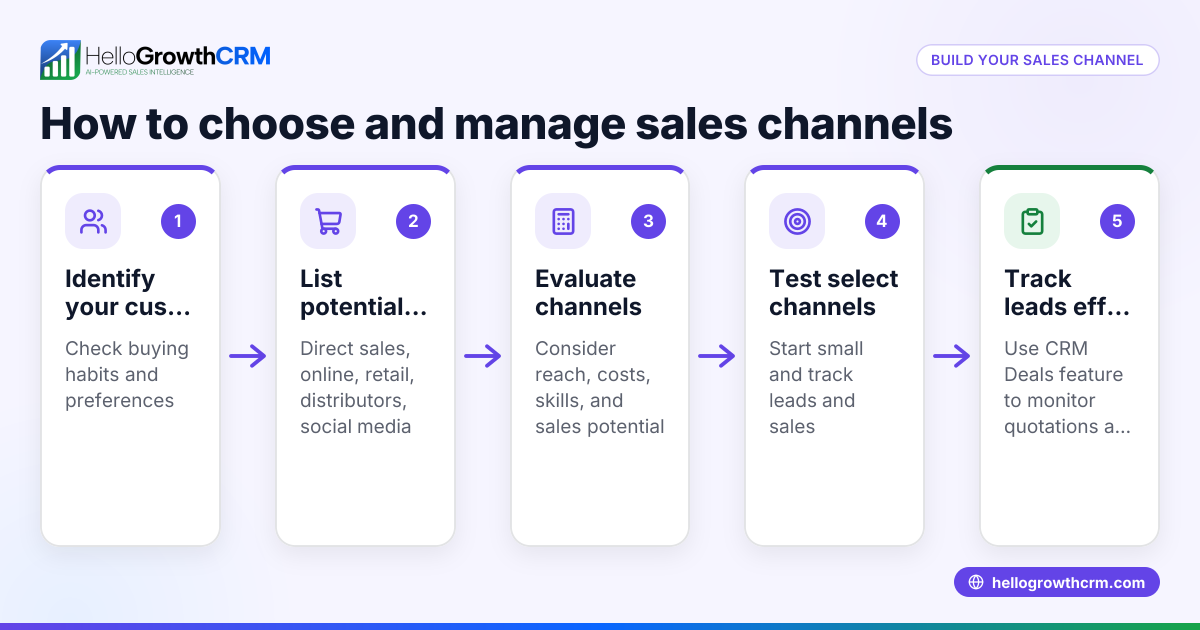
B2B channel marketing means working with partners who sell your products or services to other businesses. Instead of managing every sale yourself, you use a network of intermediaries who already have customer relationships. This can help you expand reach, reduce sales workload, and enter markets that are hard to access alone.
Why this comes up / what goes wrong
Small business owners consider B2B channel marketing when direct sales efforts become too time-consuming or costly. They want to grow sales but may lack the resources to hire a large sales team or enter new geographic areas. Without clear planning, channel marketing can cause confusion about responsibilities, inconsistent messaging, and lost sales opportunities. Owners may also struggle to track leads and coordinate follow-up across multiple partners.
Step-by-step
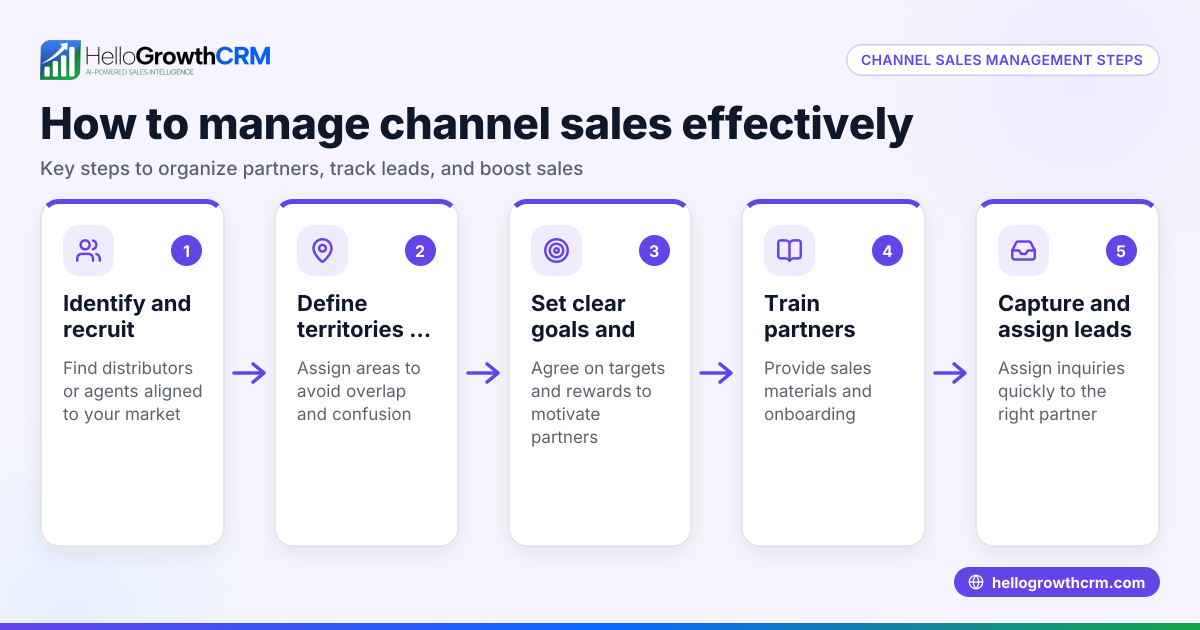
- Identify the right channel partners: Look for distributors, resellers, or agents who serve your target market and have a good reputation. Check their customer base, sales process, and compatibility with your product.
- Define clear roles and expectations: Specify who handles lead generation, sales presentations, pricing, and customer support. Make sure partners understand your product benefits and sales goals.
- Create marketing and sales materials for partners: Provide brochures, presentations, demos, and pricing guides tailored to your partners’ needs.
- Set up a lead tracking and communication system: Use tools that let you and your partners share lead information, assign follow-up tasks, and track progress. This helps prevent leads from slipping through the cracks.
- Train your partners regularly: Offer product updates, sales training, and best practices to keep partners knowledgeable and motivated.
- Monitor performance and provide incentives: Track sales results by partner, reward top performers, and address issues promptly.
- Maintain open communication: Schedule regular meetings or calls to discuss challenges, share feedback, and plan joint marketing activities.
Using a CRM with features like WhatsApp and SMS sequences or a built-in CRM dialer can improve communication with channel partners and streamline lead follow-up. For more on these tools, see WhatsApp and SMS CRM and built-in CRM dialer.
Example (fictional figures)
A residential real-estate team in Phoenix, Arizona, decides to expand sales by partnering with local home inspectors and mortgage brokers who refer clients.
- The team identifies 5 partners who each can refer 10 leads per month.
- Each lead has an average sale value of $300,000.
- The team offers partners a 2% referral fee on closed sales.
Calculations for one month:
Number of leads = 5 partners × 10 leads = 50 leads
Assuming a 20% conversion rate: 50 leads × 20% = 10 sales
Total sales revenue = 10 sales × $300,000 = $3,000,000
Referral fees paid = $3,000,000 × 2% = $60,000
Net revenue after fees = $3,000,000 - $60,000 = $2,940,000
This example shows how channel marketing can generate significant sales while sharing a portion of revenue with partners.
Common mistakes
- Choosing the wrong partners: Avoid partners who don’t align with your target customers or lack sales skills. Prevent this by vetting partners carefully.
- Unclear roles and responsibilities: Confusion leads to missed leads or duplicated efforts. Prevent by documenting and agreeing on each party’s tasks.
- Poor communication and tracking: Without a system, leads can be lost or neglected. Use a CRM or shared platform to track leads and follow-up tasks.
- Ignoring partner training: Partners unfamiliar with your product won’t sell effectively. Schedule regular training sessions.
- Failing to monitor performance: Without metrics, you can’t tell which partners are effective. Set KPIs and review them regularly.
- Neglecting incentives: Lack of rewards can demotivate partners. Offer commissions or bonuses tied to sales.
For managing leads and partner communications easily, consider tools like HelloGrowthCRM for the United States.
Frequently asked questions
What types of businesses use B2B channel marketing? Many industries use channel marketing, including technology, manufacturing, real estate, and professional services. Any business that benefits from partner networks to reach more customers can use this approach.
How do I find good channel partners? Start by researching businesses with complementary products or services that share your target audience. Attend industry events, use LinkedIn, or ask for referrals. Evaluate their reputation and sales capabilities before partnering.
How do I track leads and sales from multiple partners? Use a CRM system that supports lead sharing and communication across teams and partners. Features like WhatsApp and SMS sequences can help keep partners engaged and responsive. See WhatsApp and SMS CRM for details.
What are typical commission rates for channel partners? Commission rates vary widely by industry and product margin. Set rates that motivate partners while keeping your business profitable.
Can I use channel marketing if I already have a direct sales team? Yes, many businesses use a hybrid approach. Just ensure clear rules on territory, lead ownership, and customer management to avoid conflicts.
Key takeaways
- B2B channel marketing uses third-party partners to sell your products or services to other businesses.
- Success depends on choosing the right partners, defining clear roles, and maintaining strong communication.
- Tracking leads and sales through a CRM prevents lost opportunities and improves coordination.
- Regular training and incentives keep partners motivated and effective.
- Avoid common mistakes like unclear responsibilities and poor partner selection.
Start your channel marketing journey by building a partner network and putting in place clear processes and tools. To manage leads and communication efficiently, explore HelloGrowthCRM for the United States.
Start on the Free Forever plan (200 leads, no credit card) at HelloGrowthCRM.
Ready to put this into practice?
Set up your pipeline, WhatsApp follow-ups, and AI lead scoring in minutes — free, no credit card.
Try HelloGrowthCRM freeGet CRM tips in your inbox
Join thousands of sales professionals who get weekly insights on CRM strategy, AI automation, and pipeline optimization.

The HelloGrowthCRM team publishes guides on CRM strategy, AI sales tools, and revenue operations for small business sales teams.