HelloGrowthCRM software
Built for real small-business sales teams
HelloGrowthCRM helps reps qualify faster, follow up on time, and close more deals—with practical automation in one place.
- AI lead scoring and pipeline visibility
- Built-in dialer, WhatsApp, and email automation
- Sales forecasting and RevOps-ready reporting
Cold call objection handling is the process of responding effectively to prospects' reasons for hesitation or refusal during unsolicited sales calls. It involves listening carefully, acknowledging concerns, asking clarifying questions, and guiding the conversation toward a positive next step. This article explains why objections arise, provides a step-by-step method to handle them, offers a practical example, highlights common mistakes to avoid, and shows how a built-in CRM dialer can help manage your calls efficiently.
Why this comes up / what goes wrong
Small business owners and their sales teams often rely on cold calling to generate leads and grow revenue. However, prospects frequently raise objections such as lack of time, budget constraints, satisfaction with current vendors, or the need to consult others before deciding. These objections can halt the conversation or end the call if not handled properly. Additional challenges include slow follow-up, scattered contact data, and failure to track call outcomes, which lead to lost leads and missed opportunities.
Step-by-step
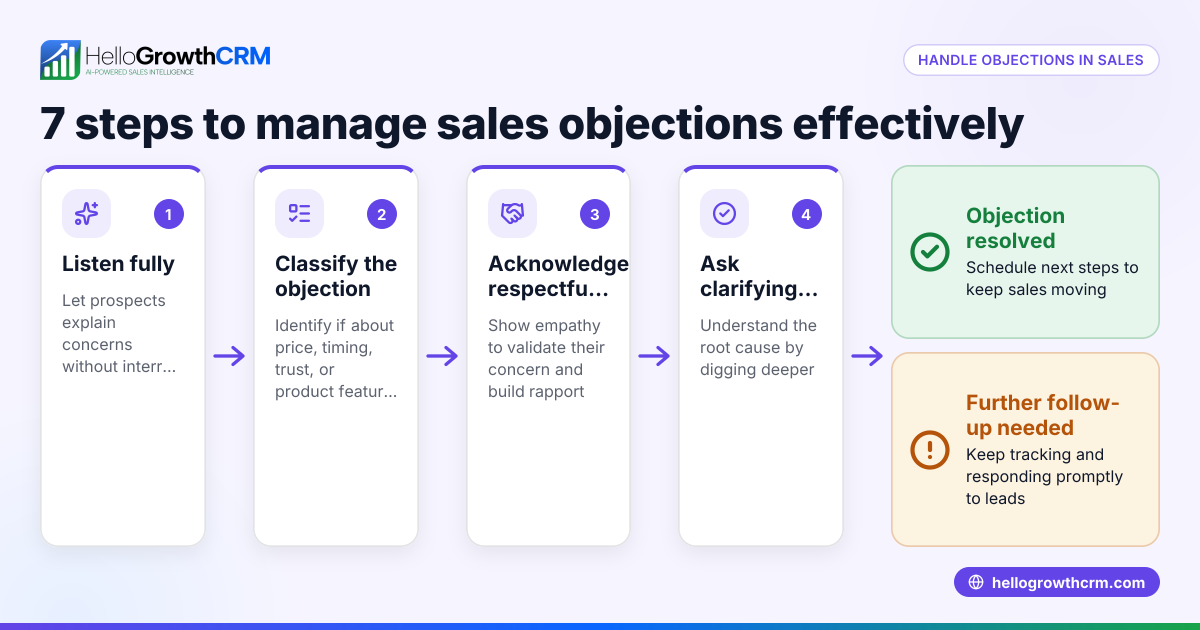
- Listen fully to the objection: Allow the prospect to finish speaking without interruption. Confirm your understanding by briefly repeating their concern back to them.
- Acknowledge and empathize: Show respect for their point of view. For example, say, "I understand that budget is a concern right now."
- Ask clarifying questions: Dig deeper to uncover the root cause or specifics behind the objection. For example, "Could you tell me more about your current solution and what you like about it?"
- Provide a relevant response: Tailor your reply to address their specific concern. If price is an issue, explain the value or flexible payment options. If timing is the problem, suggest a follow-up call at a better time.
- Confirm if your answer helps: Ask, "Does that address your concern?" to check if the objection is resolved.
- Transition to the next step: Suggest a clear action such as scheduling a product demo or sending additional information.
- Log the call outcome immediately: Record the objection and your response to track progress and plan future follow-ups.
- Follow up promptly as agreed: Use the preferred communication method (email, WhatsApp, SMS) and respect agreed timelines to keep the lead engaged.
Using a built-in CRM dialer can help you make calls and log outcomes efficiently, ensuring no lead is forgotten.
Example (fictional figures)
A B2B software reseller in Denver, Colorado, calls a prospect on 04/10/2026. The prospect objects, saying their current software contract costs $48,000 annually and they don’t want to pay more.
Step 1: Listen and repeat — "I hear your concern about cost."
Step 2: Empathize — "It makes sense to stick with a budget you know."
Step 3: Ask — "What features do you find most valuable in your current software?"
Step 4: Respond — "Our product includes automated reporting that could save your team 10 hours a month. Assuming labor costs of $400 per hour, that’s a potential monthly saving of $4,000."
Calculation: $400 × 10 hours = $4,000 monthly savings $4,000 × 12 months = $48,000 annual savings
Step 5: Confirm — "Would these savings justify a higher upfront cost?"
Step 6: Transition — "Can we schedule a 30-minute demo to show you these features?"
Step 7: Log call outcome in CRM as "Objection: price; offered demo scheduled."
Step 8: Follow up with an email confirming the demo time.
Common mistakes
- Interrupting the prospect: Prevent this by waiting until they finish speaking before responding. Interrupting can frustrate the prospect and shut down the conversation.
- Ignoring the objection: Always acknowledge concerns to build trust. Ignoring objections makes prospects feel unheard.
- Giving generic answers: Tailor your responses based on clarifying questions. Generic answers fail to address the prospect’s specific needs.
- Failing to log call outcomes: Use a CRM with a built-in dialer to track objections and next steps. Logging helps plan follow-ups and prevents leads from slipping away.
- Delaying follow-up: Set reminders and follow up promptly as agreed. Delays reduce lead interest and lower conversion chances.
- Arguing with prospects: Avoid arguing or pushing too hard. Respect their viewpoint and offer helpful information instead.
Doing this in HelloGrowthCRM
HelloGrowthCRM provides a built-in dialer that allows reps to work through a calling list directly inside the CRM. Each call outcome, including objections and agreed next steps, is logged on the lead record. This keeps your team organized, speeds up follow-up, and helps track common objections and how they were handled. Learn more about the built-in CRM dialer and how HelloGrowthCRM supports US businesses at HelloGrowthCRM for the United States.
Frequently asked questions
What are the most common cold call objections? Common objections include lack of budget, no time to talk, satisfaction with current providers, and needing approval from others. Knowing these helps you prepare tailored responses.
How can I stay calm when handling objections? Practice active listening and remind yourself objections are not personal rejection. Preparing scripts and responses ahead of time can boost confidence.
Should I argue with a prospect who objects? No. Instead, acknowledge their concern and offer helpful information. Arguing damages trust and often ends the call prematurely.
How do I track objections and follow-ups efficiently? Use a CRM with a built-in dialer to log call results and schedule follow-ups. This prevents leads from falling through the cracks.
Can texting or WhatsApp help after a cold call objection? Yes. Following up with personalized messages via SMS or WhatsApp can keep the conversation going. HelloGrowthCRM includes WhatsApp and SMS CRM features to support this.
Key takeaways
- Listen fully and empathize with objections.
- Ask questions to understand the root cause.
- Tailor your response to address specific concerns.
- Log every call outcome and plan follow-ups.
- Avoid interrupting or arguing with prospects.
- Use a CRM with a built-in dialer to streamline calling and tracking.
Start managing cold call objections more effectively and keep your sales pipeline active. Start on the Free Forever plan (200 leads, no credit card) with HelloGrowthCRM today.
Ready to put this into practice?
Set up your pipeline, WhatsApp follow-ups, and AI lead scoring in minutes — free, no credit card.
Try HelloGrowthCRM freeGet CRM tips in your inbox
Join thousands of sales professionals who get weekly insights on CRM strategy, AI automation, and pipeline optimization.

The HelloGrowthCRM team publishes guides on CRM strategy, AI sales tools, and revenue operations for small business sales teams.