HelloGrowthCRM software
Built for real small-business sales teams
HelloGrowthCRM helps reps qualify faster, follow up on time, and close more deals—with practical automation in one place.
- AI lead scoring and pipeline visibility
- Built-in dialer, WhatsApp, and email automation
- Sales forecasting and RevOps-ready reporting
Cold calling marketing strategies involve reaching out by phone to potential customers who have not previously expressed interest in your product or service. Successful cold calling requires targeting the right audience, preparing a clear call script, and managing follow-ups to convert calls into sales opportunities. This article explains why cold calling remains relevant for small businesses, outlines practical steps to implement it, provides a realistic example, highlights common mistakes, and shows how a built-in dialer can simplify this process.
Why this comes up / what goes wrong
Many small-business owners use cold calling to generate leads but face challenges such as low connection rates, ineffective conversations, and missed follow-ups. Without a clear strategy, calls can feel random and unproductive. Owners may waste time contacting unqualified prospects, fail to quickly communicate value, or neglect to log call results, leading to repeated calls or lost leads. These issues reduce sales efficiency and frustrate teams.
Cold calling can also be time-consuming if not organized properly. Without tracking call outcomes, salespeople might call the same leads multiple times unnecessarily or miss chances to follow up on interested prospects. This inefficiency often results in lost sales and wasted effort.
Step-by-step
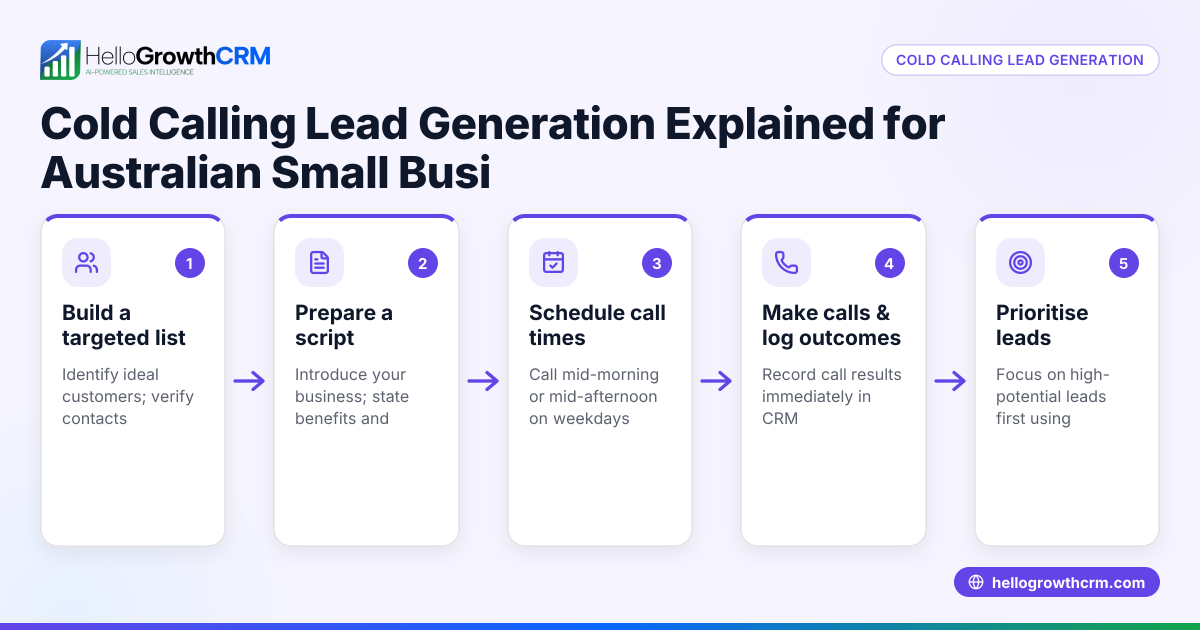
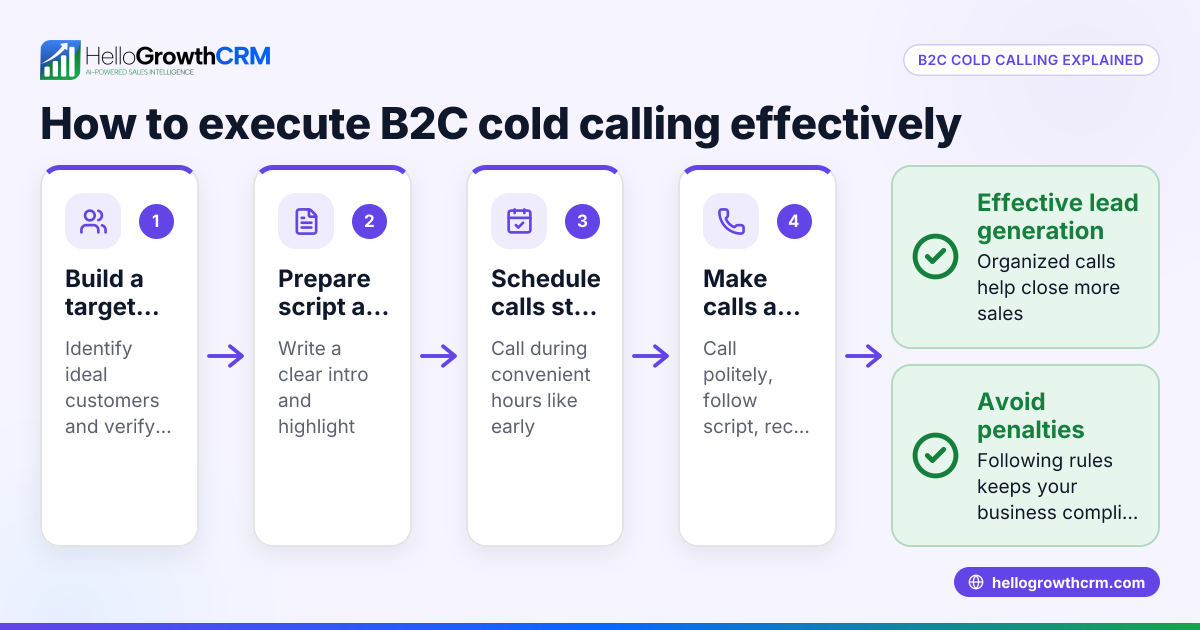
- Identify your target audience: Define your ideal customers by demographics, industry, or behavior. Verify that your contact list aligns with this profile. This ensures you spend time only on prospects likely to need your product or service.
- Prepare a call script: Create a concise script that introduces your business, states the call’s purpose, and includes qualifying questions. Practice it to sound natural and conversational rather than robotic.
- Schedule calling times: Choose times when prospects are most likely available, such as mid-morning or mid-afternoon on weekdays. Avoid early mornings, lunch hours, and late evenings to increase connection rates.
- Use a call tracking system: Record each call’s outcome immediately—interested, no answer, follow-up needed—to prevent losing leads. This helps prioritize who to call back and when.
- Follow up consistently: For interested prospects, schedule follow-up calls or send emails promptly. Track these tasks to ensure nothing is missed and maintain momentum.
- Analyze results regularly: Review call data to identify successful scripts, best calling times, and lead sources. Adjust your approach based on these insights to improve efficiency.
Check that your system supports logging and tracking calls efficiently to maintain momentum. Using a CRM with a built-in dialer can help organize this process. Learn more about the built-in CRM dialer.
Example (fictional figures)
A landscaping contractor in Charlotte, North Carolina, wants to generate new residential clients through cold calling. They prepare a list of 500 homeowners in nearby neighborhoods.
- Total contacts: 500
- Connected calls: 100 (estimated)
- Interested prospects: 30 (estimated)
- Converted paying clients: 15 (estimated)
Calculations: 500 × 0.20 = 100 connected calls 100 × 0.30 = 30 interested prospects 30 × 0.50 = 15 converted clients
If the average job value is $1,200: 15 × $1,200 = $18,000 in new business
They schedule calls over two weeks, logging each call’s result and following up within 48 hours with interested prospects. This organized approach helps turn cold calls into measurable revenue.
Common mistakes
- Calling unqualified leads: Prevent this by clearly defining your target audience before calling. Using a filtered contact list saves time and increases success.
- Reading a script word-for-word: Practice your script until you can speak naturally. This builds rapport and avoids sounding robotic.
- Failing to log call outcomes: Use a CRM or call tracking tool to record results immediately. This prevents lost leads and repeated calls.
- Ignoring follow-ups: Schedule follow-up tasks and set reminders to stay on top of interested prospects.
- Calling at inconvenient times: Research and test the best calling hours. Avoid times when prospects are unlikely to answer.
- Not analyzing results: Regularly review call data to identify what works and adjust your approach accordingly.
Using tools like a CRM with a built-in dialer helps prevent these mistakes by organizing calls and outcomes efficiently. See how HelloGrowthCRM supports this below.
Doing this in HelloGrowthCRM
HelloGrowthCRM offers a built-in dialer that lets your rep work through a contact list directly inside the CRM. Each call’s outcome is logged on the lead record automatically, keeping full call history tied to contacts and deals. This helps your team avoid losing leads, track follow-ups, and improve call efficiency. Learn more about the built-in CRM dialer.
Frequently asked questions
What is the best time to make cold calls? Mid-morning (around 10-11 AM) and mid-afternoon (2-4 PM) on weekdays are generally effective times. Avoid calling too early, during lunch hours, or late in the day to increase the chance of reaching prospects. Adjust based on your specific audience’s habits.
How do I handle rejection during cold calls? Stay polite and professional. Thank the prospect for their time and ask if you can follow up later or provide information by email. Handling rejection gracefully leaves the door open for future contact and maintains your business reputation.
How many calls should I make to get results? Results vary, but consistent calling and follow-up increase your chances of success. Tracking call outcomes helps identify your own conversion rates and optimize your efforts.
Can I use a CRM to manage cold calling campaigns? Yes, a CRM with a built-in dialer lets you call directly from the system and logs outcomes automatically. This streamlines managing your calling lists and follow-ups. See more about the built-in CRM dialer.
Should I combine cold calling with other marketing? Yes, combining cold calling with email sequences or messaging can nurture leads more effectively. Using tools that support multiple channels like WhatsApp and SMS helps engage prospects across touchpoints. Learn about WhatsApp and SMS CRM.
Key takeaways
- Define and target the right audience before cold calling.
- Use a clear, practiced script but stay conversational.
- Log every call outcome to avoid losing leads.
- Schedule and track follow-ups consistently.
- Analyze call data regularly to improve your strategy.
- Use a CRM with a built-in dialer to streamline calls and record keeping.
Start improving your cold calling marketing strategy today. You can Start on the Free Forever plan (200 leads, no credit card) to try HelloGrowthCRM and see how it helps manage your calls and leads.
Ready to put this into practice?
Set up your pipeline, WhatsApp follow-ups, and AI lead scoring in minutes — free, no credit card.
Try HelloGrowthCRM freeGet CRM tips in your inbox
Join thousands of sales professionals who get weekly insights on CRM strategy, AI automation, and pipeline optimization.

The HelloGrowthCRM team publishes guides on CRM strategy, AI sales tools, and revenue operations for small business sales teams.