HelloGrowthCRM software
Built for real small-business sales teams
HelloGrowthCRM helps reps qualify faster, follow up on time, and close more deals—with practical automation in one place.
- AI lead scoring and pipeline visibility
- Built-in dialer, WhatsApp, and email automation
- Sales forecasting and RevOps-ready reporting
Cold calling motivation is the drive and mindset that keep salespeople actively reaching out to potential customers despite frequent rejection. Staying motivated in cold calling means setting clear goals, preparing scripts, tracking progress, and celebrating small wins. This article covers why motivation matters, step-by-step ways to build it, common mistakes to avoid, a practical example, and how HelloGrowthCRM’s built-in dialer helps streamline the process.
Why this comes up / what goes wrong
Small-business owners and sales teams often face low motivation when cold calling because it involves repeated rejection, uncertainty, and a lack of immediate results. Without motivation, calls may be rushed, scripts ignored, and follow-ups forgotten, causing lost leads and stalled sales pipelines. Many rely on scattered tools like text messages, emails, and spreadsheets, which complicate tracking calls and outcomes. This makes cold calling feel inefficient and discouraging, leading teams to give up or avoid calls altogether.
Step-by-step
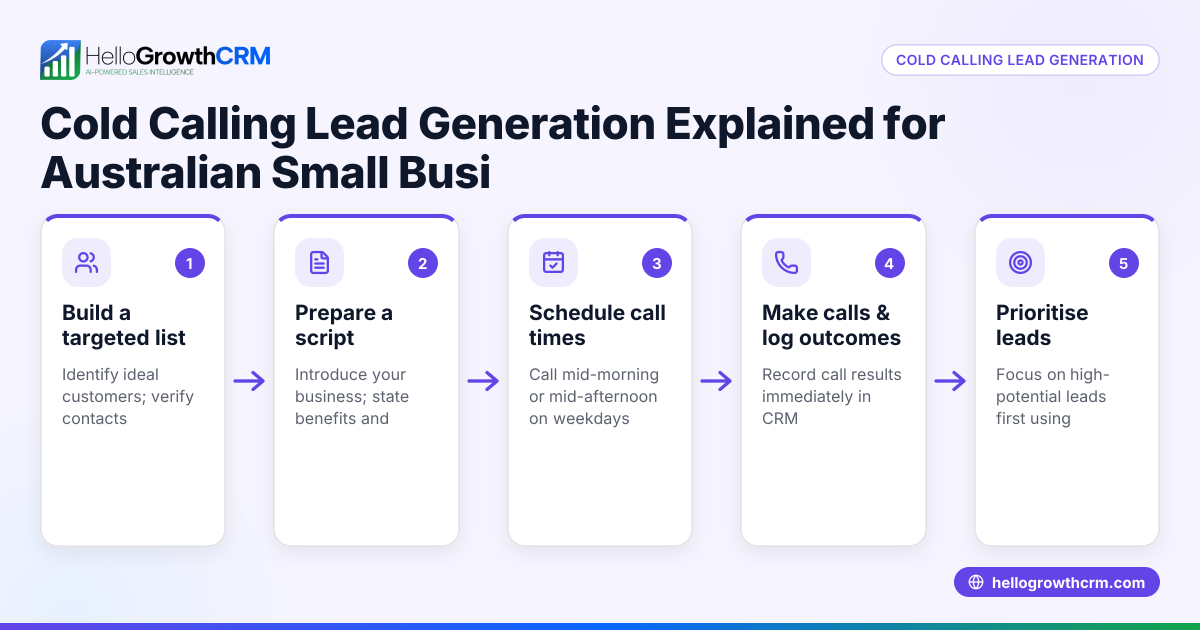
- Set clear, achievable goals. Define how many calls to make daily or weekly and what success looks like (e.g., number of appointments booked). Check your progress regularly to stay accountable.
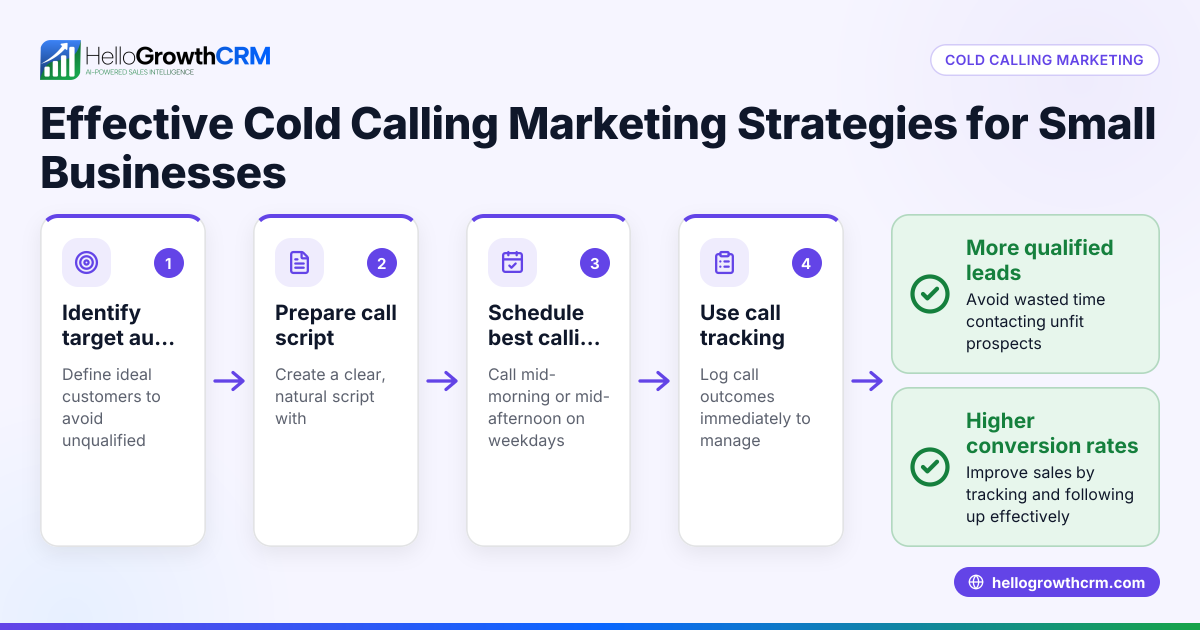
- Prepare and practice your script. Write a simple cold call script tailored to your product or service. Practice it until it feels natural. Check that the script includes a clear value statement and a call to action.
- Schedule dedicated calling times. Block specific times in your calendar for cold calls to create routine and reduce procrastination. Check that distractions are minimized during these periods.
- Track every call outcome. Log results immediately after each call to understand what works and what doesn’t. Check your notes daily to adjust your approach.
- Celebrate small wins. Recognize progress like positive responses or appointments set. This boosts morale and motivation.
- Review and adjust your approach weekly. Analyze call data to identify patterns and improve scripts or targeting. Check if your goals remain realistic and adjust as needed.
- Use tools to simplify calling. A CRM with a built-in dialer helps manage leads and call history in one place, reducing manual work and keeping motivation high.
Example (fictional figures)
A landscaping contractor in Charlotte, North Carolina, wants to improve cold calling motivation. They set a goal to make 40 calls per week starting 06/01/2026.
- Calls per day: 40 ÷ 5 days = 8 calls per day
- Conversion rate (calls to appointments): assumed 15%
- Expected appointments per week: 40 × 15% = 6 appointments
Tracking calls daily, the contractor logs outcomes and adjusts the script after week 1, increasing the conversion rate to 20%.
- New expected appointments: 40 × 20% = 8 appointments
This clear goal and tracking help maintain motivation by showing progress.
Common mistakes
- Skipping goal setting: Without clear targets, cold calling feels aimless. Prevent by writing down specific call and appointment goals.
- Ignoring call outcomes: Not logging results leads to repeating ineffective approaches. Prevent by recording every call outcome immediately.
- Calling without preparation: Lack of a script causes inconsistent messaging. Prevent by preparing and practicing a script.
- Letting rejection discourage you: Taking rejection personally kills motivation. Prevent by focusing on the process, not individual calls.
- Using scattered tools: Managing calls via texts, emails, and spreadsheets wastes time and causes errors. Prevent by using a CRM with a built-in dialer to centralize calling and logging. See more on the built-in CRM dialer.
- Not scheduling calls: Calling sporadically leads to procrastination. Prevent by blocking dedicated calling times.
Doing this in HelloGrowthCRM
HelloGrowthCRM offers a built-in dialer that lets reps work a list directly inside the CRM. Each call’s outcome is logged on the lead, keeping the full call history tied to contact and deal records. This centralizes calling and follow-up tasks, helping sales teams stay organized and motivated. Learn more about the built-in CRM dialer. For US businesses, HelloGrowthCRM supports sales teams running calls alongside WhatsApp and SMS messaging workflows; see HelloGrowthCRM for the United States and WhatsApp and SMS CRM.
Frequently asked questions
How can I stay motivated when facing frequent rejection in cold calling? Focus on the process, not individual calls. Set small goals, celebrate wins, and remember that rejection is part of sales. Tracking progress helps maintain perspective.
What is the best time of day to make cold calls? The best time varies by industry and target audience. Commonly, mid-mornings or late afternoons work well. Test different times and track results to find what fits your customers.
How can a CRM improve cold calling motivation? A CRM with a built-in dialer centralizes calling, logging, and follow-up, reducing manual work and confusion. This streamlines the process, making it easier to stay consistent and motivated.
Should I use a script or speak naturally during cold calls? Use a prepared script as a guide but keep it conversational. Practice so it sounds natural and allows for flexibility based on the prospect’s responses.
How many calls should I aim to make daily? Set a realistic daily call goal based on your schedule and capacity. For many small businesses, making a consistent number of calls each week is a good starting point for cold calling. Adjust based on results and workload.
Key takeaways
- Set clear cold calling goals to create focus and accountability.
- Prepare and practice a call script with a clear value proposition.
- Track call outcomes and adjust your approach regularly.
- Schedule dedicated times for cold calling to reduce procrastination.
- Use a CRM with a built-in dialer to centralize calls and logging.
- Celebrate small wins to maintain motivation despite rejection.
Cold calling motivation is achievable with clear goals, preparation, tracking, and the right tools. To get started, try HelloGrowthCRM’s built-in dialer that helps you call and log outcomes directly inside the CRM. Start on the Free Forever plan (200 leads, no credit card) and see how it can simplify your sales process.
Ready to put this into practice?
Set up your pipeline, WhatsApp follow-ups, and AI lead scoring in minutes — free, no credit card.
Try HelloGrowthCRM freeGet CRM tips in your inbox
Join thousands of sales professionals who get weekly insights on CRM strategy, AI automation, and pipeline optimization.

The HelloGrowthCRM team publishes guides on CRM strategy, AI sales tools, and revenue operations for small business sales teams.