HelloGrowthCRM software
Built for real small-business sales teams
HelloGrowthCRM helps reps qualify faster, follow up on time, and close more deals—with practical automation in one place.
- AI lead scoring and pipeline visibility
- Built-in dialer, WhatsApp, and email automation
- Sales forecasting and RevOps-ready reporting
Customer acquisition strategies are essential for small businesses to grow revenue and market presence. These strategies involve finding ways to attract potential customers, engaging them effectively, and converting them into paying clients. This article explains why customer acquisition is a common challenge, provides clear steps to build your strategy, shares a realistic example, highlights common mistakes to avoid, and shows how HelloGrowthCRM supports customer management after acquisition.
Why this comes up / what goes wrong
Small-business owners often struggle with customer acquisition because they lack a clear plan to reach and convert leads. Many rely on word-of-mouth or a single marketing channel like social media or email without measuring effectiveness. This leads to inconsistent sales and wasted marketing spend. Without tracking and managing leads properly, businesses lose potential customers to slower or disorganized follow-up. Founders and sales teams also juggle communications across text messages, email, and spreadsheets, which makes it hard to maintain momentum. Understanding and implementing a structured customer acquisition strategy is crucial to overcome these hurdles.
Step-by-step
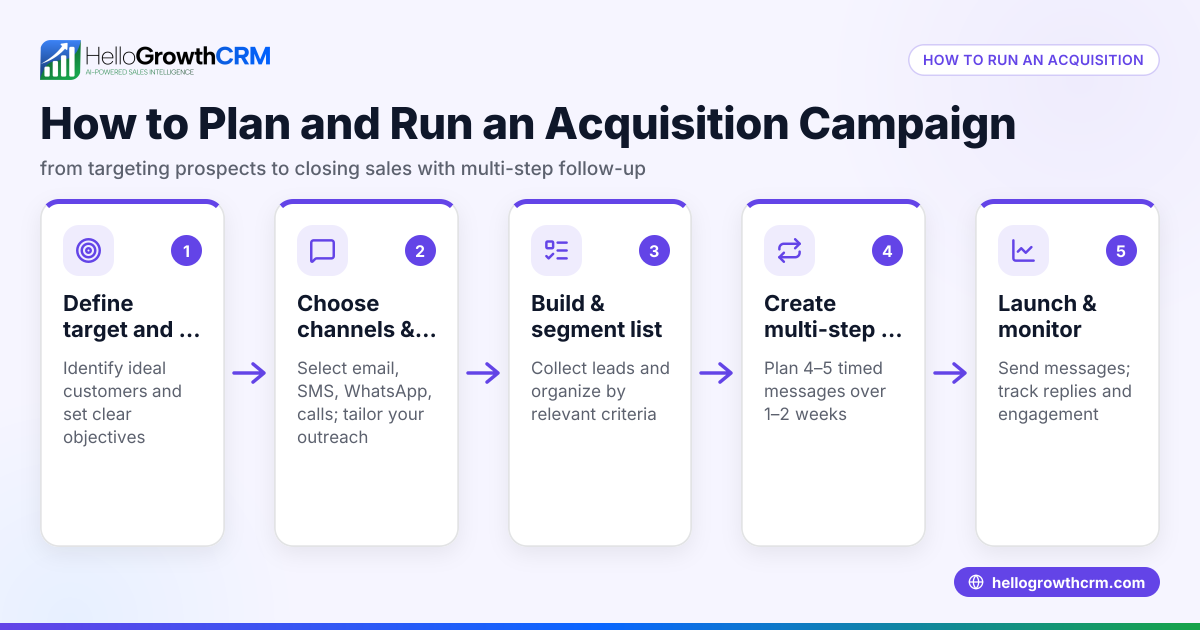
- Define your target customer: Identify who your ideal customers are based on demographics, needs, and buying behavior. Check that this profile aligns with your product or service.
- Choose acquisition channels: Select marketing channels where your target customers spend time, such as social media, email campaigns, paid ads, or referrals. Verify your budget and resources for each channel.
- Create compelling offers and content: Develop offers like discounts, free trials, or valuable content that attract attention. Ensure your messaging clearly communicates benefits.
- Set up lead capture methods: Use web forms, landing pages, or direct messaging to collect contact information. Confirm these methods are easy to use and integrated with your sales process.
- Implement follow-up sequences: Plan timely follow-ups using email, WhatsApp, or SMS to engage leads. Check that follow-ups are personalized and automated where possible.
- Track and score leads: Monitor lead responses and assign scores to prioritize sales efforts. Review lead data regularly to adjust tactics.
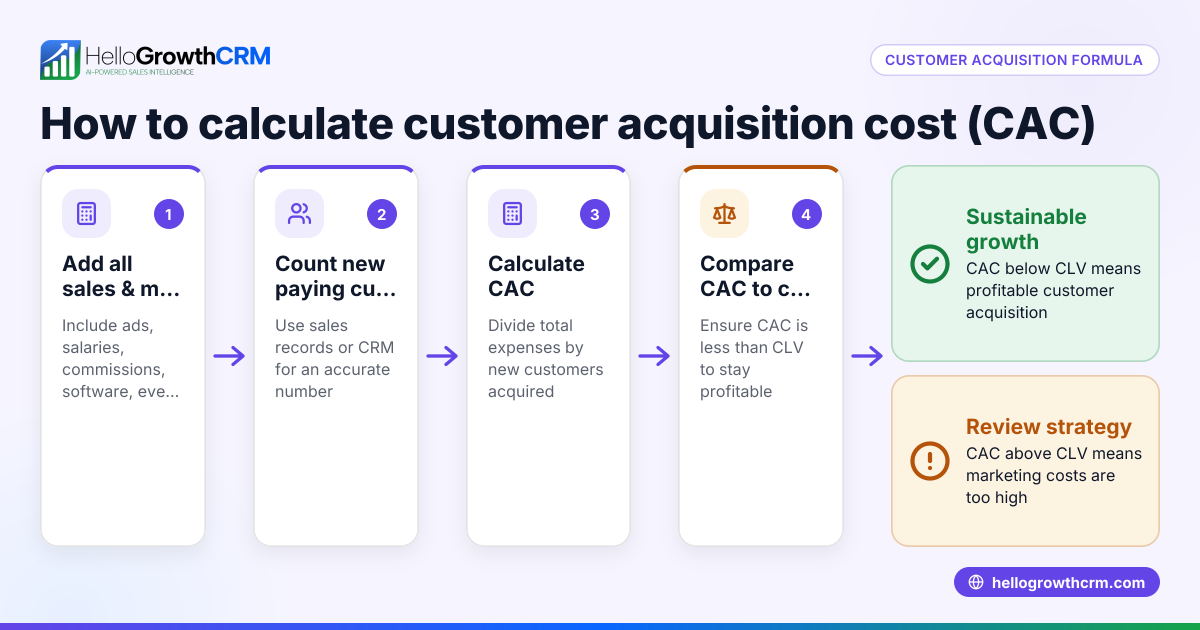
- Measure acquisition costs and conversion rates: Calculate how much you spend to acquire each customer and track conversion from lead to sale. Analyze this data to improve efficiency.
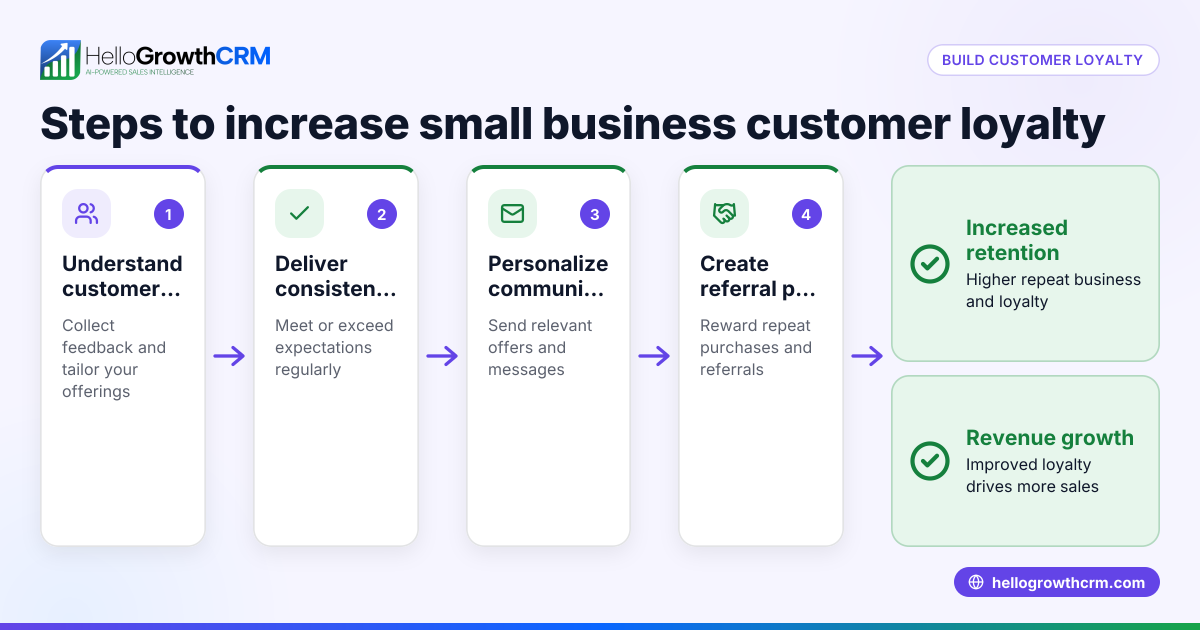
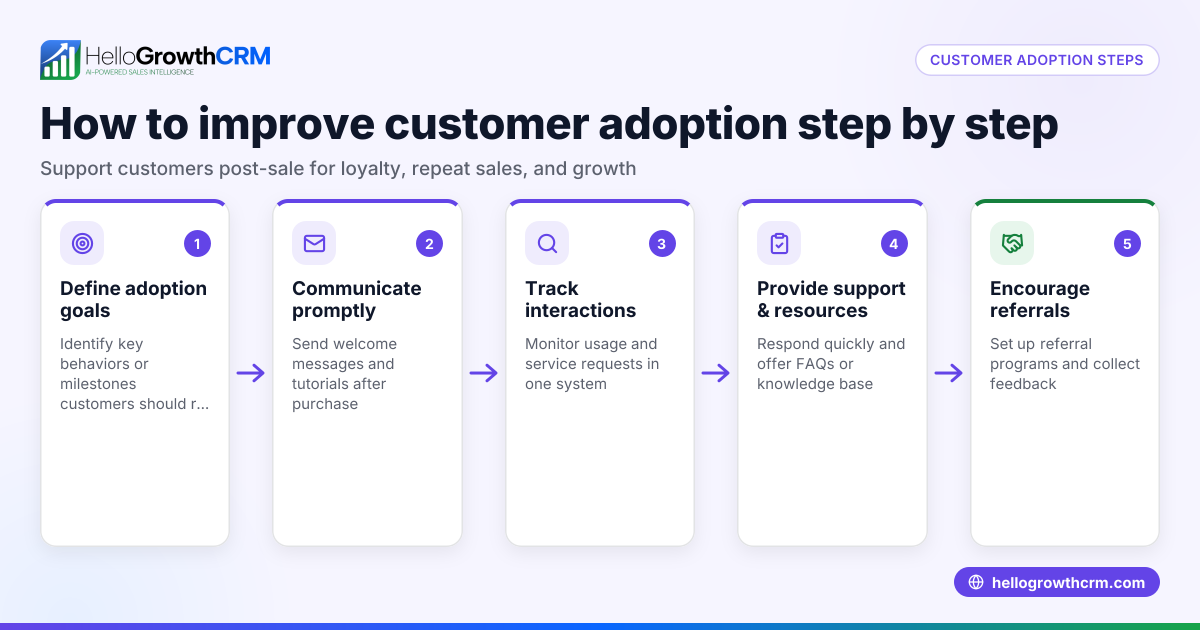
- Encourage referrals: Ask satisfied customers to refer others. Set up referral tracking to reward and measure success.
Use tools like HelloGrowthCRM to manage leads and communications across WhatsApp and SMS, making follow-up more efficient and organized.
Example (fictional figures)
A plumbing company in Austin, Texas, wants to acquire 50 new customers in 3 months starting 07/01/2026.
- Marketing budget: $15,000
- Chosen channels: Facebook ads, referral program, and email campaigns
- Expected customer acquisition cost (CAC): $300 per customer
Calculate total expected cost: $300 × 50 = $15,000
Step-by-step:
- Define target: Homeowners aged 30-60 in Austin
- Choose channels: Facebook ads ($8,000), referrals ($4,000), email campaigns ($3,000)
- Create offers: 10% discount on first service
- Set up lead capture: Facebook lead forms, referral tracking
- Follow-up: Automated WhatsApp and SMS sequences
- Track leads: Score based on engagement
- Measure CAC monthly and adjust budget
This plan aligns budget and goals, ensuring the company can track and optimize acquisition efforts efficiently.
Common mistakes
- Ignoring customer profiles: Leads to wasted marketing on uninterested audiences. Prevent by researching and defining clear target customers.
- Using too many channels at once: Spreads resources thin and complicates tracking. Prevent by focusing on 2-3 channels and mastering them.
- Neglecting follow-up: Leads go cold without timely communication. Prevent by automating follow-ups via WhatsApp or SMS sequences.
- Not measuring cost per acquisition: Makes it impossible to know if spending is effective. Prevent by tracking marketing spend against new customers.
- Overlooking referrals: Missing out on low-cost customer sources. Prevent by setting up referral programs and tracking results.
- Managing leads in spreadsheets or disconnected apps: Causes lost or delayed responses. Prevent by using CRM tools like HelloGrowthCRM that integrate messaging and lead capture.
Doing this in HelloGrowthCRM
HelloGrowthCRM supports customer acquisition and retention by keeping all service requests, referrals, and tickets linked to the same customer record. Its branded self-service customer portal allows customers to interact directly, while referral program tracking helps grow your client base efficiently. After the sale, support tickets and knowledge base articles stay connected to deals, making customer management smoother. Learn more about these features at HelloGrowthCRM for the United States.
Frequently asked questions
What is the best channel for customer acquisition? The best channel depends on your target customers and budget. Popular channels for small businesses include social media ads, email marketing, and referrals. Testing a few channels and measuring results helps find the most effective ones.
How do I calculate customer acquisition cost? Add all marketing and sales expenses over a period, then divide by the number of new customers acquired in that time. For example, $15,000 spent and 50 new customers equals a $300 cost per customer.
Why is follow-up important in customer acquisition? Many leads require multiple contacts before converting. Timely and personalized follow-up via WhatsApp, SMS, or email keeps leads engaged and increases conversion rates. HelloGrowthCRM’s WhatsApp and SMS CRM features help automate this process efficiently. See more at WhatsApp and SMS CRM.
Can referrals really help acquire new customers? Yes, referrals often bring high-quality leads at a lower cost. Tracking referrals ensures you reward customers who recommend your business and helps you understand your referral program’s impact.
How do I keep track of customer interactions after acquisition? Using a CRM that links deals, service requests, and communications in one place helps maintain customer relationships. HelloGrowthCRM’s customer portal and ticketing system keep all information organized on the same customer record.
Key takeaways
- Define your target customer clearly before choosing channels.
- Use focused marketing channels and compelling offers.
- Automate timely follow-ups using WhatsApp and SMS.
- Track customer acquisition cost and conversion rates regularly.
- Encourage and track referrals to grow your customer base.
- Manage leads and customer interactions in a unified CRM system.
Start implementing your customer acquisition strategy with confidence. To manage leads and follow-ups efficiently, consider HelloGrowthCRM for the United States.
Start on the Free Forever plan (200 leads, no credit card) at HelloGrowthCRM.
Ready to put this into practice?
Set up your pipeline, WhatsApp follow-ups, and AI lead scoring in minutes — free, no credit card.
Try HelloGrowthCRM freeGet CRM tips in your inbox
Join thousands of sales professionals who get weekly insights on CRM strategy, AI automation, and pipeline optimization.

The HelloGrowthCRM team publishes guides on CRM strategy, AI sales tools, and revenue operations for small business sales teams.